

Introduction: AI Edge Computing & IoT
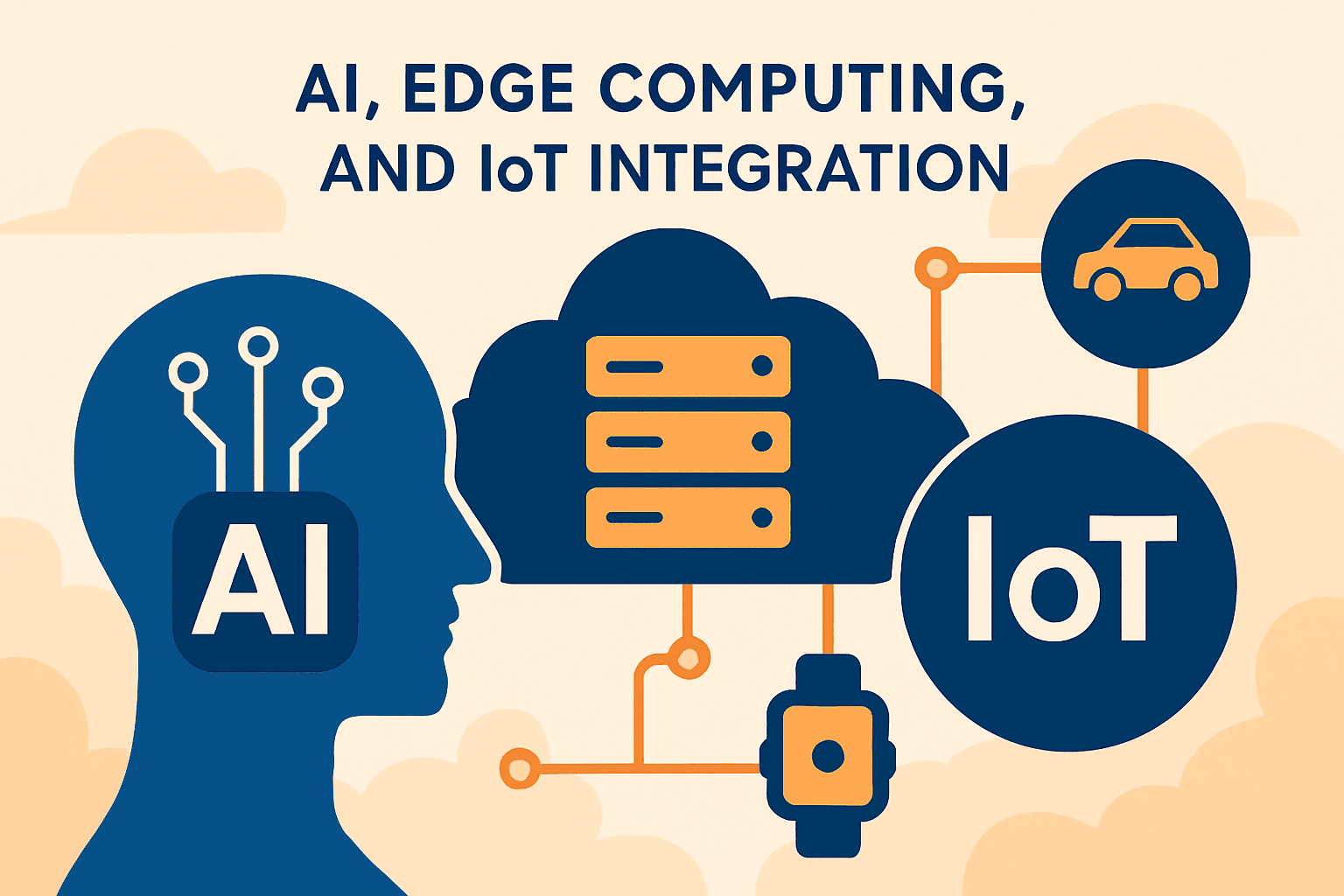
AI Edge Computing & IoT ~ In today’s hyperconnected world, the convergence of Artificial Intelligence (AI), Edge Computing, and the Internet of Things (IoT) is revolutionizing how we interact with technology. From smart homes to industrial automation, this powerful trio is enabling faster decision-making, localized data processing, and intelligent device collaboration.
But what happens when these three technologies are not just combined — but integrated seamlessly?
This article explores how AI, Edge Computing, and IoT are merging to reshape industries, unlock new opportunities, and redefine digital transformation in the modern era.
1. Understanding the Core Concepts
🧠 What is Artificial Intelligence (AI)?
Artificial Intelligence refers to the ability of machines and systems to simulate human intelligence, learn from data, and make decisions. AI technologies include machine learning (ML), natural language processing (NLP), and computer vision.
🌐 What is the Internet of Things (IoT)?
The IoT is a network of interconnected physical devices embedded with sensors, software, and connectivity, enabling them to collect and exchange data.
Examples include:
- Smart thermostats
- Connected cars
- Wearable health monitors
- Industrial machinery
🖥️ What is Edge Computing?
Edge Computing is a distributed computing paradigm that brings computation and data storage closer to the devices (or “edge”) where data is generated, rather than relying solely on centralized cloud servers.
Why it matters: Reduces latency, enhances performance, and allows real-time responses.
2. The Power of Integration AI Edge Computing & IoT
The integration of AI, Edge Computing, and IoT creates a synergistic effect, leading to smarter, faster, and more autonomous systems.
🔁 Real-Time Decision Making
With AI algorithms running on edge devices (known as Edge AI), data collected from IoT sensors can be processed immediately — without needing to send it to the cloud.
For example:
- In autonomous vehicles, sensors detect obstacles and AI makes split-second decisions.
- In manufacturing, AI models on the edge detect equipment failure before it happens.
🔐 Enhanced Security and Privacy
Processing sensitive data locally via edge computing reduces the need to transmit information over networks, lowering the risk of data breaches and improving compliance with data protection laws (like GDPR).
🌎 Reduced Bandwidth and Latency
Instead of sending massive volumes of sensor data to centralized servers, only relevant insights are transmitted. This saves bandwidth, minimizes delays, and increases system efficiency.
3. Real-World Applications of AI Edge Computing & IoT
🏭 AI Edge Computing & IoT: Smart Manufacturing
Known as Industry 4.0, modern factories are integrating IoT devices to monitor equipment, while AI models predict maintenance needs. Edge computing ensures immediate response without relying on cloud access.
Example: Predictive maintenance systems use vibration and temperature data to detect motor failure in real-time.
🚘 Autonomous Vehicles
Self-driving cars use thousands of IoT sensors (radar, lidar, cameras). Edge AI processes this data instantly to make driving decisions, while AI in the cloud handles route optimization and large-scale analysis.
🏥 Healthcare Monitoring
Wearable devices monitor heart rate, oxygen levels, or blood pressure. Edge AI detects anomalies (e.g., potential heart attack) and sends alerts to doctors or emergency services.
🌆 Smart Cities
Streetlights adjust based on foot traffic, waste bins signal when full, and surveillance systems detect threats autonomously — all thanks to AI-driven edge processing integrated with IoT sensors.
🛒 Retail and Logistics
AI analyzes foot traffic, shelf stock, and customer behavior on edge-enabled devices. IoT in logistics tracks product movement, temperature (for perishables), and automates supply chain operations.

4. Benefits of AI Edge Computing & IoT
| Benefit | Description |
|---|---|
| ⚡ Speed | Real-time analytics and actions at the edge |
| 🔒 Privacy | Local data processing enhances data security |
| 💰 Cost Efficiency | Lower bandwidth and cloud storage costs |
| 📶 Offline Functionality | Systems continue operating without internet |
| 🧠 Smart Automation | Intelligent decision-making at the source |
5. Challenges and Considerations of AI Edge Computing & IoT
While the potential is immense, organizations face several challenges in implementing this trio effectively.
🔌 Hardware Limitations
Edge devices must be powerful enough to run AI models efficiently. Lightweight AI models and specialized hardware (like NVIDIA Jetson or Google Coral) are needed.
📶 Network Reliability
Although edge computing reduces dependency on cloud networks, devices still need robust communication protocols (like 5G or LPWAN).
🔐 Security Risks
More connected devices mean more attack surfaces. Securing endpoints, encrypting data, and ensuring firmware integrity is critical.
🧩 System Complexity
Managing a hybrid infrastructure that includes edge nodes, cloud servers, and thousands of IoT devices requires advanced orchestration and monitoring tools.
6. The Future of AI Edge Computing & IoT
The integration of these technologies is just beginning. Here’s what the future holds:
🚀 Edge AI at Scale
AI will increasingly be embedded in edge devices, from household appliances to industrial robots. TinyML (machine learning on microcontrollers) will make even low-powered devices intelligent.
🌐 6G and Beyond
Advanced connectivity will unlock ultra-low latency and seamless integration across millions of edge devices and IoT sensors.
🧠 Federated Learning
This AI technique allows devices to learn collaboratively without sharing raw data. It’s a privacy-preserving approach ideal for edge-based IoT environments.
🧩 Unified Platforms
New frameworks and platforms (like Azure Percept, AWS IoT Greengrass, and Edge Impulse) will make it easier for developers to deploy AI at the edge and manage distributed systems.
7. How Businesses Can Prepare AI Edge Computing & IoT
To leverage AI + Edge + IoT successfully, businesses should:
- ✅ Invest in AI-capable edge hardware
- ✅ Adopt scalable IoT platforms
- ✅ Implement strong cybersecurity practices
- ✅ Upskill teams in data science and edge architecture
- ✅ Start with small pilot projects and scale strategically
Conclusion: AI Edge Computing & IoT
The fusion of AI, Edge Computing, and IoT is not just a technical innovation — it’s a strategic advantage.
Organizations that embrace this trio will benefit from faster insights, smarter automation, and real-time control across their digital ecosystems. Whether in manufacturing, healthcare, retail, or urban development, the possibilities are limitless.
As this convergence evolves, the next frontier of intelligence won’t be in the cloud — it’ll be everywhere.
🎯 Call to Action:
Ready to explore how AI, Edge Computing, and IoT can transform your business? Visit Abi Royen’s blog for more insights, case studies, and innovation strategies.