Introduction
Artificial Intelligence (AI) is no longer just a futuristic concept found in science fiction. It has become one of the most transformative forces in the 21st century, impacting industries, businesses, and everyday life. From personalized recommendations on streaming platforms to self-driving cars and advanced medical diagnostics, AI continues to evolve at an unprecedented pace.
This article explores the fundamentals of Artificial Intelligence, its applications across industries, benefits, challenges, and the future potential that makes it one of the most exciting technologies of our time.
What is Artificial Intelligence (AI)?
Artificial Intelligence refers to the simulation of human intelligence by machines, particularly computer systems. These systems are designed to perform tasks that typically require human intelligence, such as problem-solving, learning, perception, reasoning, and decision-making.
AI can be divided into several categories:
- Narrow AI (Weak AI): Focused on a specific task, such as voice assistants or recommendation engines.
- General AI (Strong AI): A theoretical concept where machines possess human-like intelligence across multiple domains.
- Superintelligent AI: A hypothetical form of AI that surpasses human intelligence in all aspects.
Currently, most AI applications fall under Narrow AI, but advancements in research bring us closer to more advanced forms.
Key Technologies Driving AI
Several core technologies power the development and success of Artificial Intelligence:
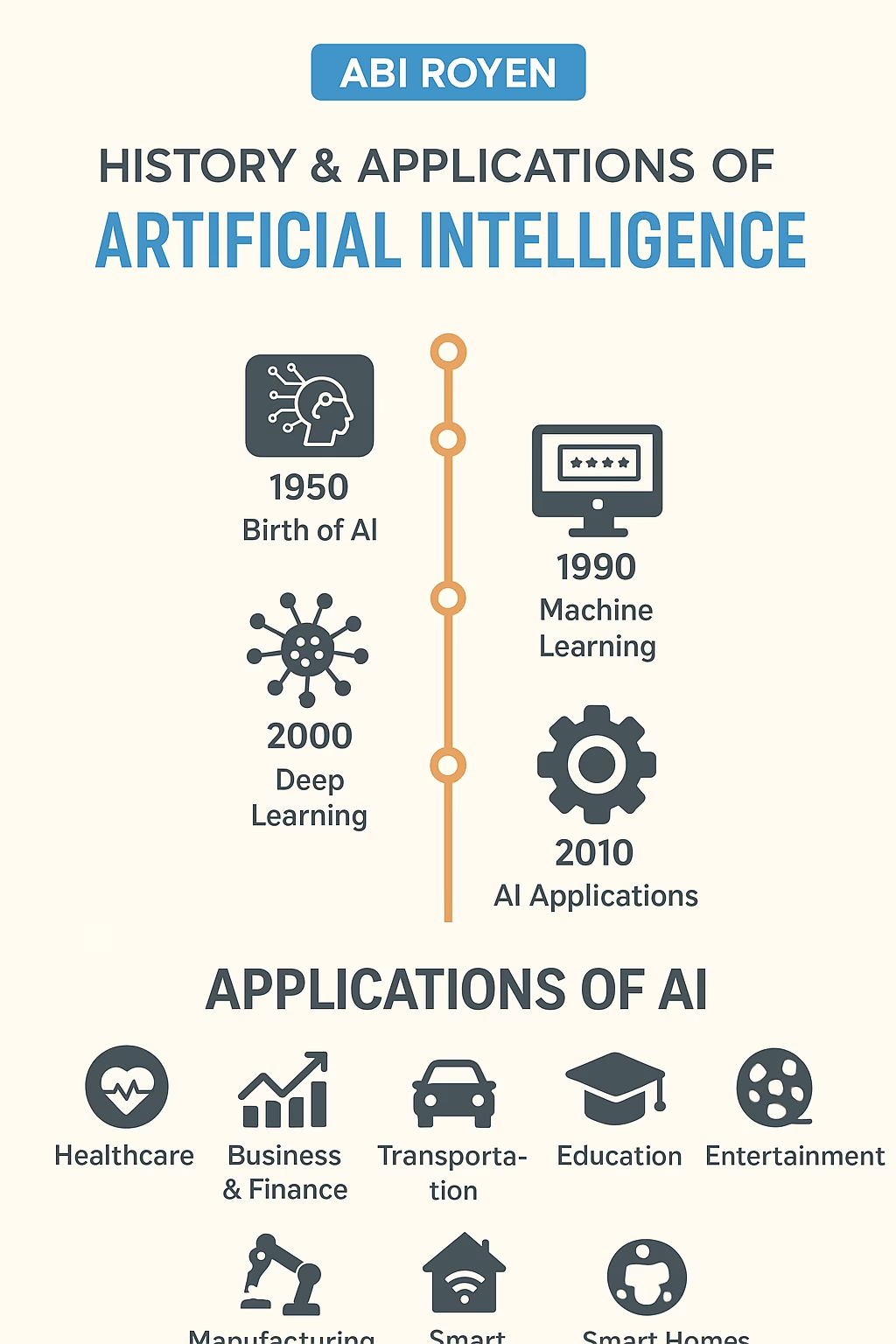
- Machine Learning (ML): Enables machines to learn from data and improve their performance over time without being explicitly programmed.
- Deep Learning: A subset of ML that uses artificial neural networks to process complex data patterns such as images, voice, and text.
- Natural Language Processing (NLP): Allows machines to understand, interpret, and respond to human language.
- Computer Vision: Enables machines to interpret and analyze visual information from the world.
- Robotics: Combines AI with mechanical systems to create intelligent machines capable of performing tasks autonomously.
Applications of Artificial Intelligence (AI)
AI has found applications across almost every industry, revolutionizing how organizations operate and how individuals interact with technology.
1. Healthcare
AI improves diagnostics, predicts patient outcomes, and enhances drug discovery. For example, AI-powered tools can analyze medical imaging for early disease detection.
2. Business and Finance
From fraud detection to customer support chatbots, AI streamlines operations and enhances decision-making. Predictive analytics also help companies forecast market trends.
3. Transportation
Self-driving cars, traffic management systems, and AI-driven logistics optimize the efficiency and safety of transportation networks.
4. Education
AI-powered learning platforms personalize education by adapting to each student’s needs, making education more engaging and effective.
5. Entertainment
Streaming platforms like Netflix and Spotify use AI to recommend content based on user preferences. Video games also integrate AI for realistic gameplay experiences.
6. Manufacturing
AI-driven automation increases productivity, reduces errors, and improves quality control in factories. Predictive maintenance prevents costly downtime.
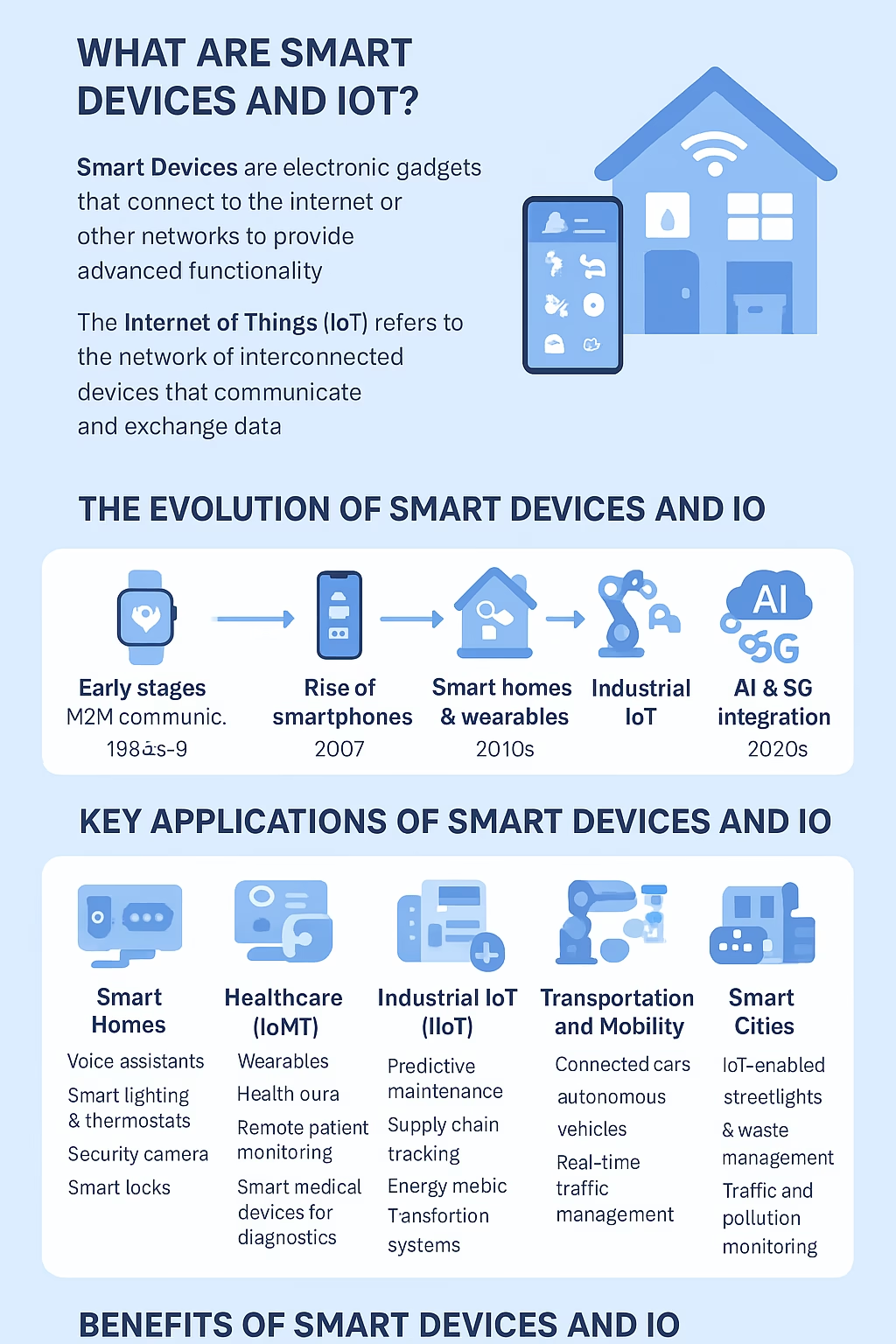
7. Smart Homes and IoT
Voice assistants like Alexa and Google Assistant use AI to control devices, enhance convenience, and optimize energy consumption.
Benefits of Artificial Intelligence (AI)
The rise of AI brings numerous advantages that make it indispensable in today’s world:
- Efficiency and Automation: Automates repetitive tasks, saving time and reducing human error.
- Data Analysis: Processes massive amounts of data faster and more accurately than humans.
- Personalization: Provides tailored recommendations and services for individuals.
- Innovation: Accelerates research and development in various industries.
- Cost Reduction: Optimizes operations and minimizes expenses for businesses.

Challenges and Concerns of Artificial Intelligence (AI)
While AI offers countless benefits, it also presents challenges that must be addressed responsibly:
- Job Displacement: Automation could replace certain jobs, requiring workforce reskilling.
- Bias and Fairness: AI systems can inherit biases from the data they are trained on, leading to unfair outcomes.
- Privacy and Security: Increased data collection raises concerns about privacy and data misuse.
- Ethical Concerns: Questions about AI decision-making and accountability remain unresolved.
- Dependence on Technology: Over-reliance on AI may reduce human critical thinking and decision-making skills.
The Future of Artificial Intelligence (AI)
The future of AI is filled with immense potential. Experts predict AI will play a significant role in advancing fields such as quantum computing, biotechnology, renewable energy, and space exploration.
Emerging trends include:
- AI in Healthcare: Enhanced precision medicine and robotic surgery.
- AI in Cybersecurity: Detecting and preventing sophisticated cyberattacks.
- Explainable AI: Making AI decisions more transparent and understandable.
- AI Ethics and Regulation: Governments and organizations establishing global standards for responsible AI use.
- Integration with IoT and 5G: Creating smarter, faster, and more connected environments.
Conclusion
Artificial Intelligence is transforming the way we live, work, and interact with technology. While it brings challenges that must be managed carefully, the opportunities for innovation and progress are limitless. As AI continues to evolve, it will remain at the forefront of technological advancement, shaping the future in ways we are only beginning to imagine.
For businesses, individuals, and governments alike, understanding and leveraging AI responsibly is essential for success in the digital era.