

In today’s competitive and fast-evolving global economy, Research and Development (R&D) has become one of the most critical pillars of success for businesses, governments, and academic institutions. Whether it’s a tech startup or a large manufacturing company, investing in R&D is essential to stay ahead, meet evolving customer demands, and deliver breakthrough products or services.
This article explores the essence of R&D, its types, its strategic importance, and how organizations can leverage it for long-term success.
1. What is Research and Development (R&D)?
Research and Development (R&D) refers to the set of innovative activities undertaken by an organization to discover new knowledge, create new products or processes, or improve existing ones. It involves systematic investigation, experimentation, and application of findings to solve practical problems or explore new opportunities.
R&D is not limited to scientific experiments. It covers a wide range of sectors—technology, pharmaceuticals, engineering, food and beverages, and even service industries.
Read More about What is Research and Development (R&D)? A Complete Guide
2. Types of Research and Development (R&D)
R&D activities can be broadly categorized into three main types:
a. Basic Research
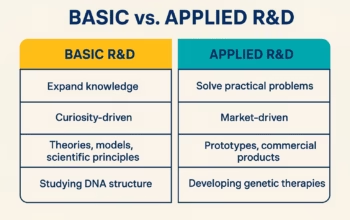
This is theoretical and exploratory in nature. It seeks to increase fundamental understanding without immediate commercial goals. For instance, studying quantum physics or genetic behavior.
b. Applied Research
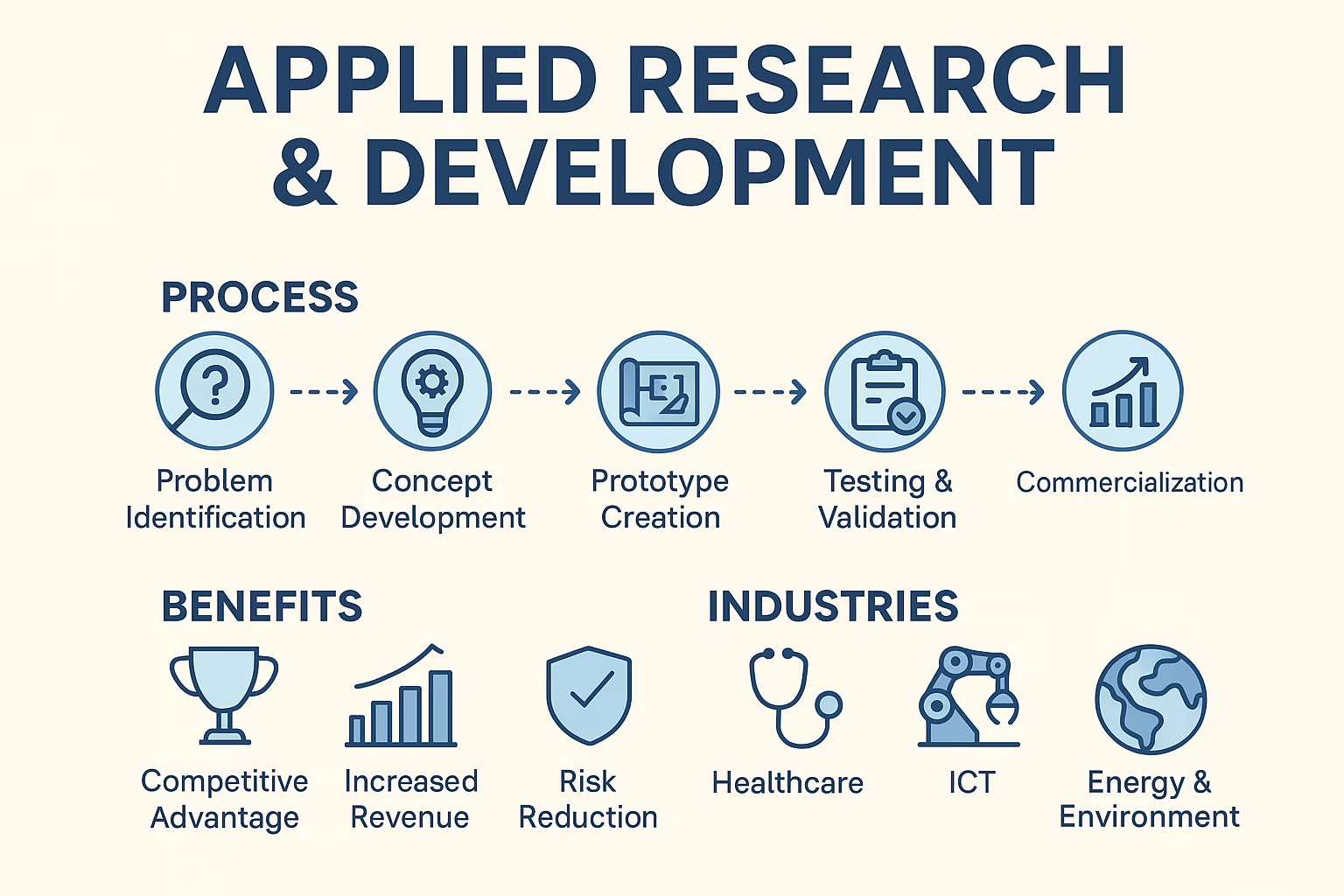
Applied research is directed toward solving specific, practical problems. It focuses on developing new technologies or improving existing products, often based on the findings of basic research.
c. Experimental Development
This involves using existing knowledge to create new or improved products, processes, or services. This stage is closest to market deployment and is crucial in product innovation.
Read More about Understanding the Different Types of Research and Development (R&D)
3. Importance of Research and Development (R&D) in Business
a. Driving Innovation
Innovation is the backbone of a successful company. R&D is the engine that powers innovation by enabling the creation of unique products, efficient processes, and advanced technologies.
b. Gaining Competitive Advantage
Companies that invest heavily in R&D often lead the market. They are first to deliver cutting-edge solutions, making it difficult for competitors to catch up.
c. Enhancing Product Quality
R&D helps improve the quality, efficiency, and safety of products, leading to higher customer satisfaction and brand loyalty.
d. Expanding Market Reach
R&D enables businesses to explore new markets by developing products that cater to specific regional or global needs.
e. Cost Efficiency
By improving processes and materials, R&D can reduce production costs and minimize waste, which leads to increased profitability over time.
Read More about The Importance of Research and Development (R&D) in Modern Business Growth
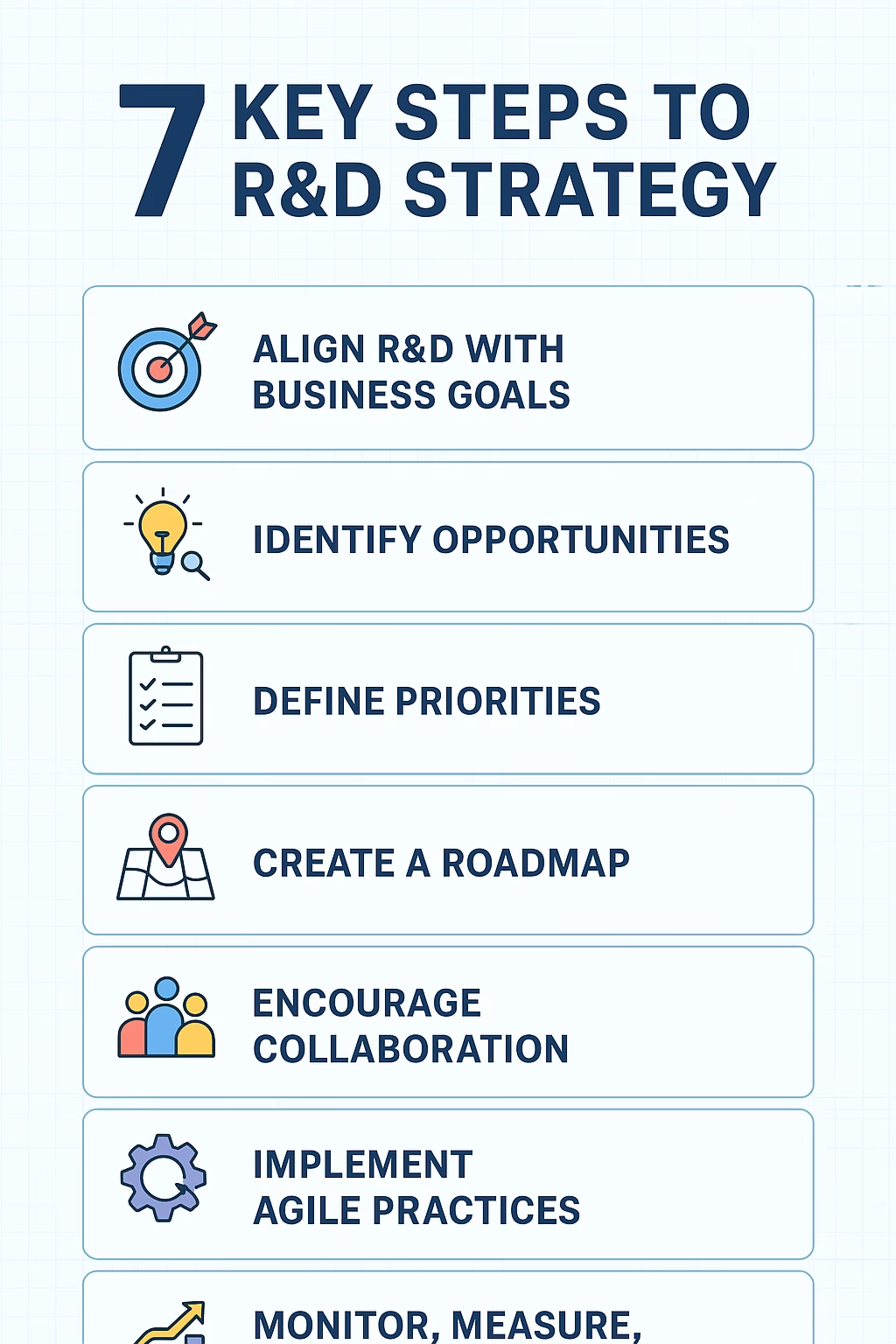
4. Research and Development (R&D) Strategy: Key Elements
A successful R&D program doesn’t happen by chance. It requires a well-defined strategy aligned with the company’s vision. Here are key components:
a. Clear Objectives
Define what the R&D initiative aims to achieve—new product launches, improved efficiency, entering new markets, etc.
b. Talent Acquisition
Skilled researchers, engineers, and scientists are the backbone of effective R&D. Investing in the right talent is crucial.
c. Collaboration
Partnering with universities, research institutes, or other companies can provide access to new ideas, resources, and technologies.
d. Budget Allocation
Set aside a sustainable budget for R&D. According to OECD, top innovative companies invest around 5–15% of their revenue into R&D.
e. Performance Measurement
Establish metrics to evaluate the effectiveness and ROI of R&D activities—number of patents, product launches, time to market, etc.
Read More about Building a Successful Research and Development (R&D) Strategy for Sustainable Growth
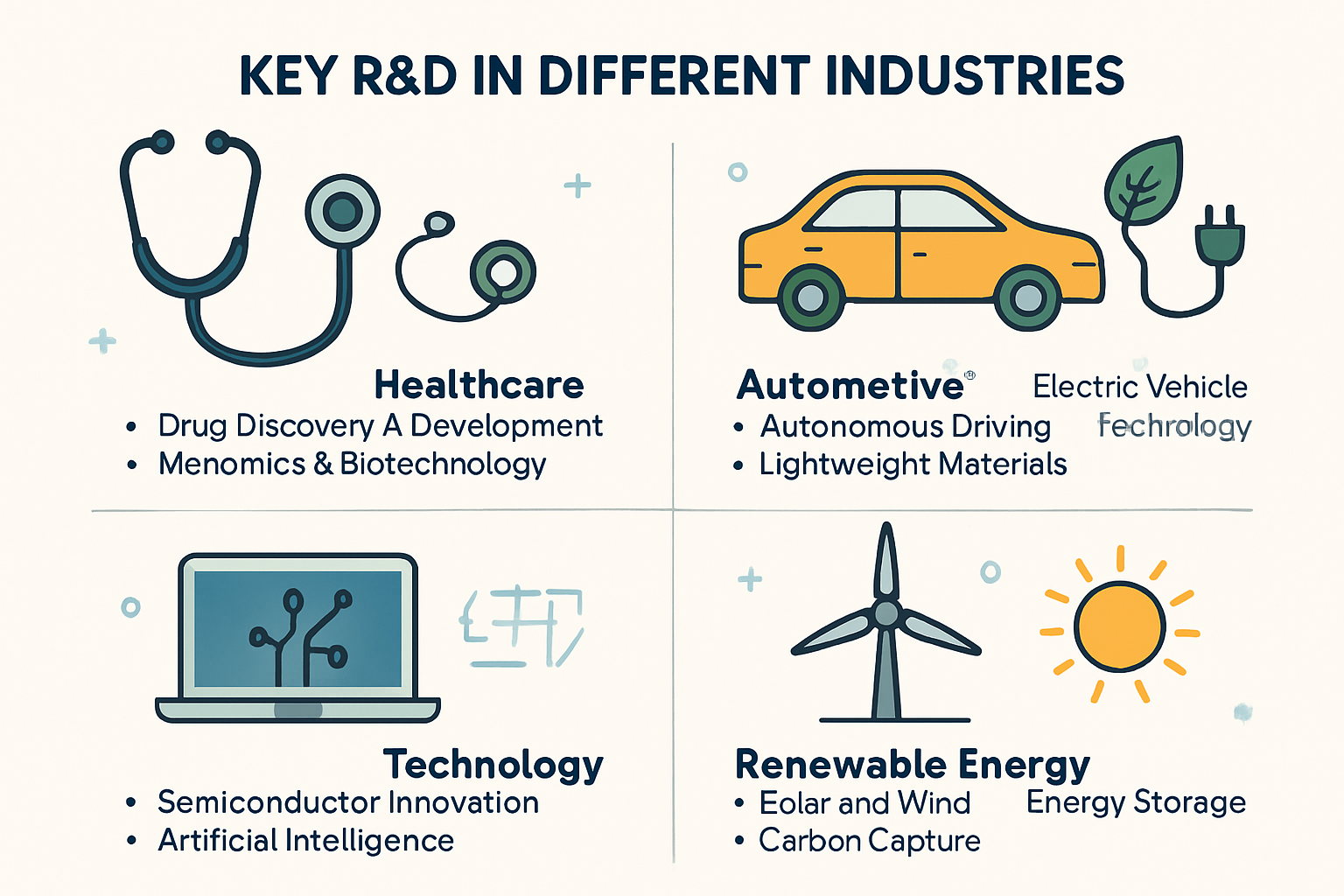
5. Research and Development (R&D) in Different Industries
a. Technology
R&D is the heart of innovation in the tech industry. Companies like Apple, Google, and Tesla allocate billions for product development, AI, and advanced computing.
b. Pharmaceuticals
Pharma companies conduct extensive clinical trials and lab research to develop new drugs, vaccines, and therapies.
c. Manufacturing
Improving automation, enhancing material strength, and optimizing production processes are key R&D goals.
d. Agriculture
R&D drives advancements in crop yield, pest resistance, and sustainable farming methods.
Read More about Research and Development (R&D) in Different Industries: Innovation Across Sectors


6. Government and Research and Development (R&D)
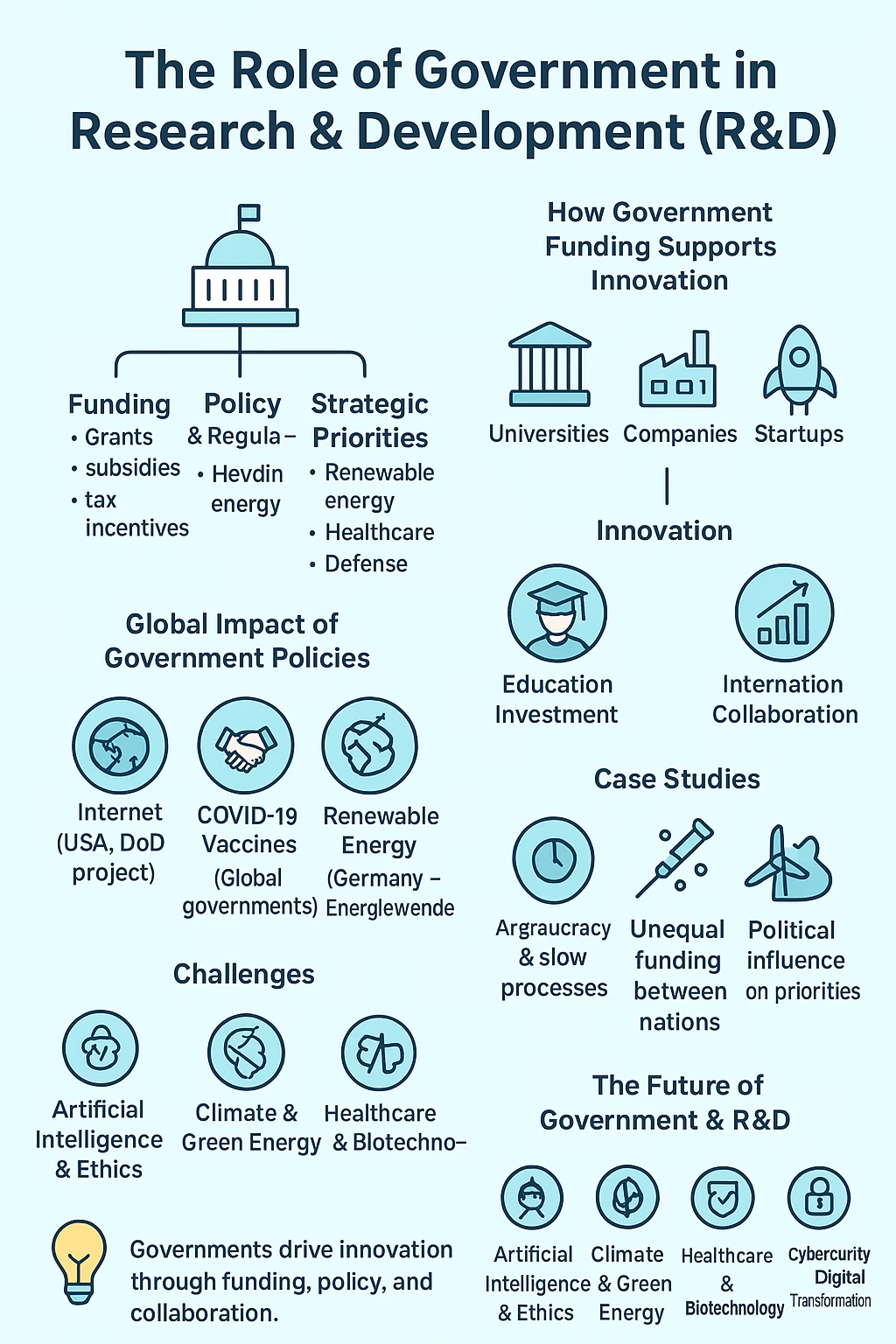
Governments also play a vital role in funding and regulating R&D. Many nations offer tax incentives, grants, and R&D credits to encourage businesses to innovate. Public R&D institutions and universities contribute significantly to scientific progress and technological advancement.
Read More about Government and Research & Development: Building a Sustainable Future
7. Challenges in Research and Development (R&D)
Despite its importance, R&D poses several challenges:
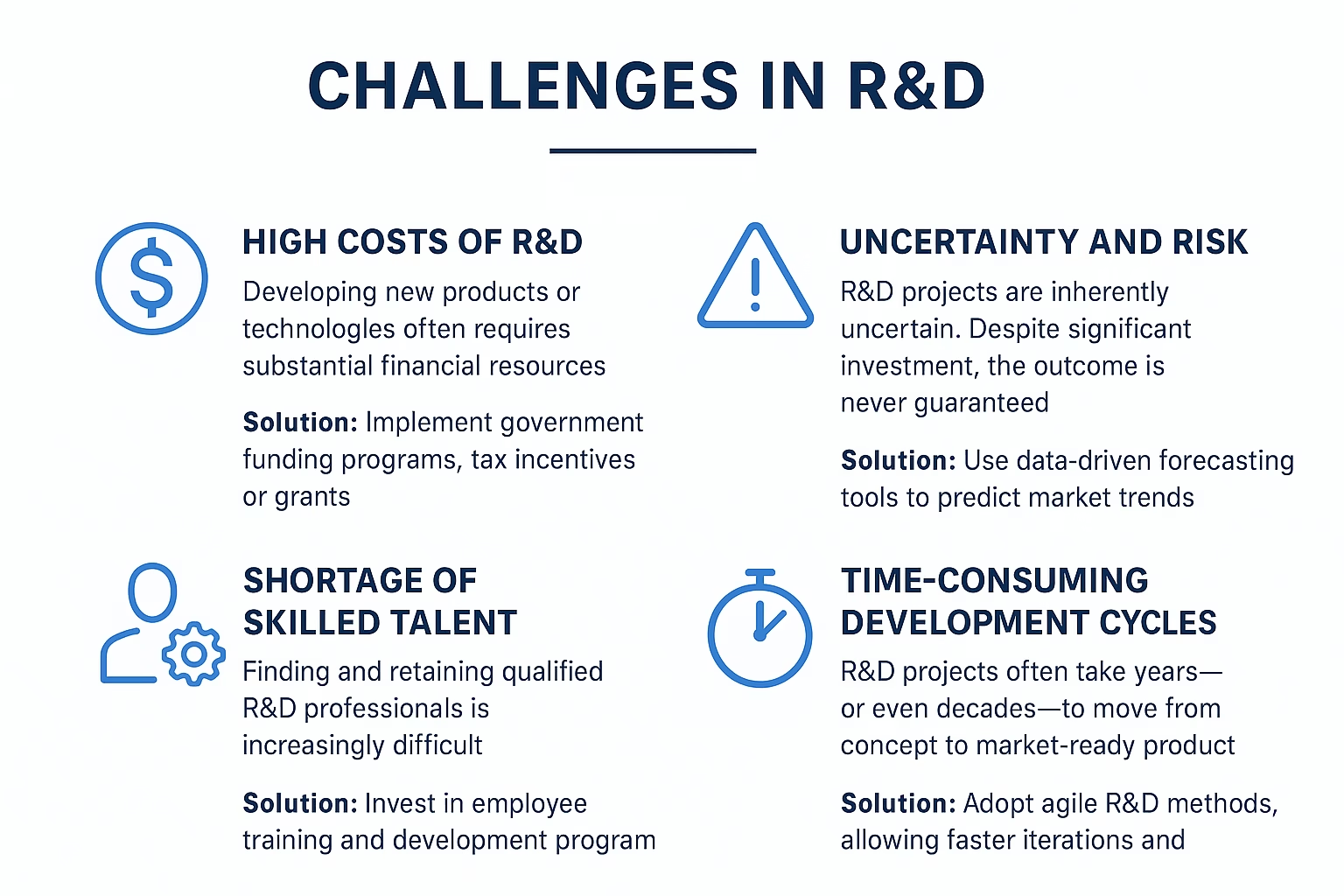
- High Costs: R&D can be expensive with uncertain returns.
- Long Development Cycles: It may take years before an innovation reaches the market.
- Risk of Failure: Not all R&D efforts lead to viable solutions.
- Regulatory Hurdles: In sectors like pharmaceuticals, regulatory approvals can delay deployment.
Organizations must carefully balance these risks with potential rewards.
Read More about Challenges in Research and Development: Overcoming Barriers to Innovation
8. Future Trends in R&D
The R&D landscape is evolving with the rise of new technologies and methodologies. Some emerging trends include:
- AI and Machine Learning in R&D
Accelerating drug discovery, materials science, and design processes. - Open Innovation Models
Involving external ideas, startups, and consumers in R&D processes. - Sustainable R&D
Focused on eco-friendly processes and climate-resilient products. - Digital Twins & Simulation
Using digital replicas to test innovations before real-world implementation.
Read More about Future Trends in Research and Development: Shaping the Innovation Landscape
Conclusion of Research and Development (R&D)
Research and Development is no longer optional—it is a strategic imperative for businesses aiming to innovate, grow, and compete in a dynamic marketplace. Organizations that commit to structured R&D are more likely to lead their industries, adapt to change, and deliver lasting value.
Whether you’re a startup founder, an executive in a manufacturing company, or a policy maker, understanding and investing in R&D is key to shaping a better, more sustainable future.