Introduction Challenges in R&D
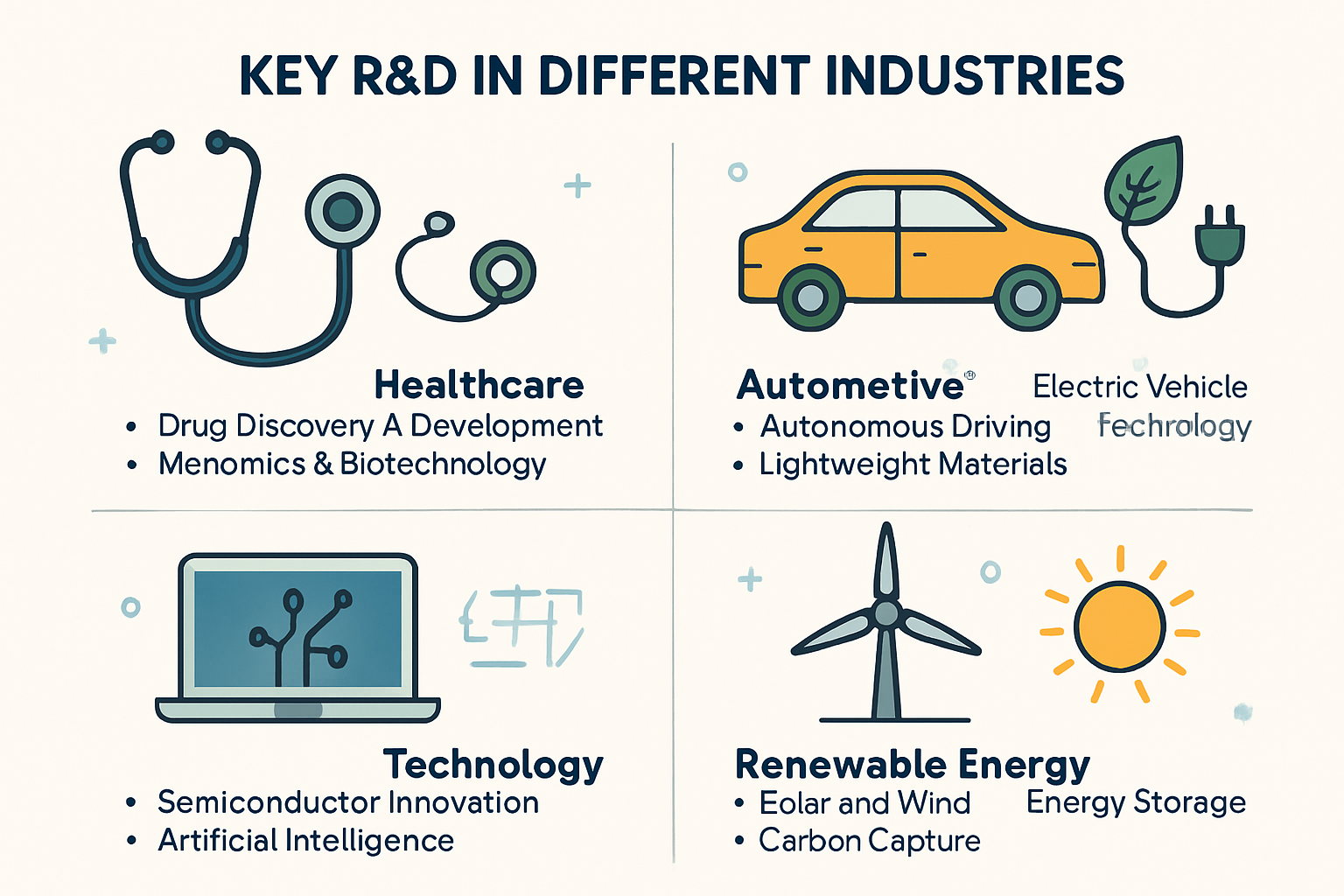
Challenges in R&D ~ Research and Development (R&D) is the backbone of innovation, driving progress in industries ranging from pharmaceuticals and automotive to information technology and renewable energy. Companies that invest in R&D are more likely to create groundbreaking products, improve efficiency, and maintain a competitive edge in global markets.
However, R&D is not without its challenges. The process often demands significant investment, involves substantial risks, and requires highly skilled talent. Moreover, organizations must balance market demands, regulatory compliance, and technological uncertainties.
In this article, we will explore the key challenges in R&D, analyze why they exist, and provide strategies to overcome them.
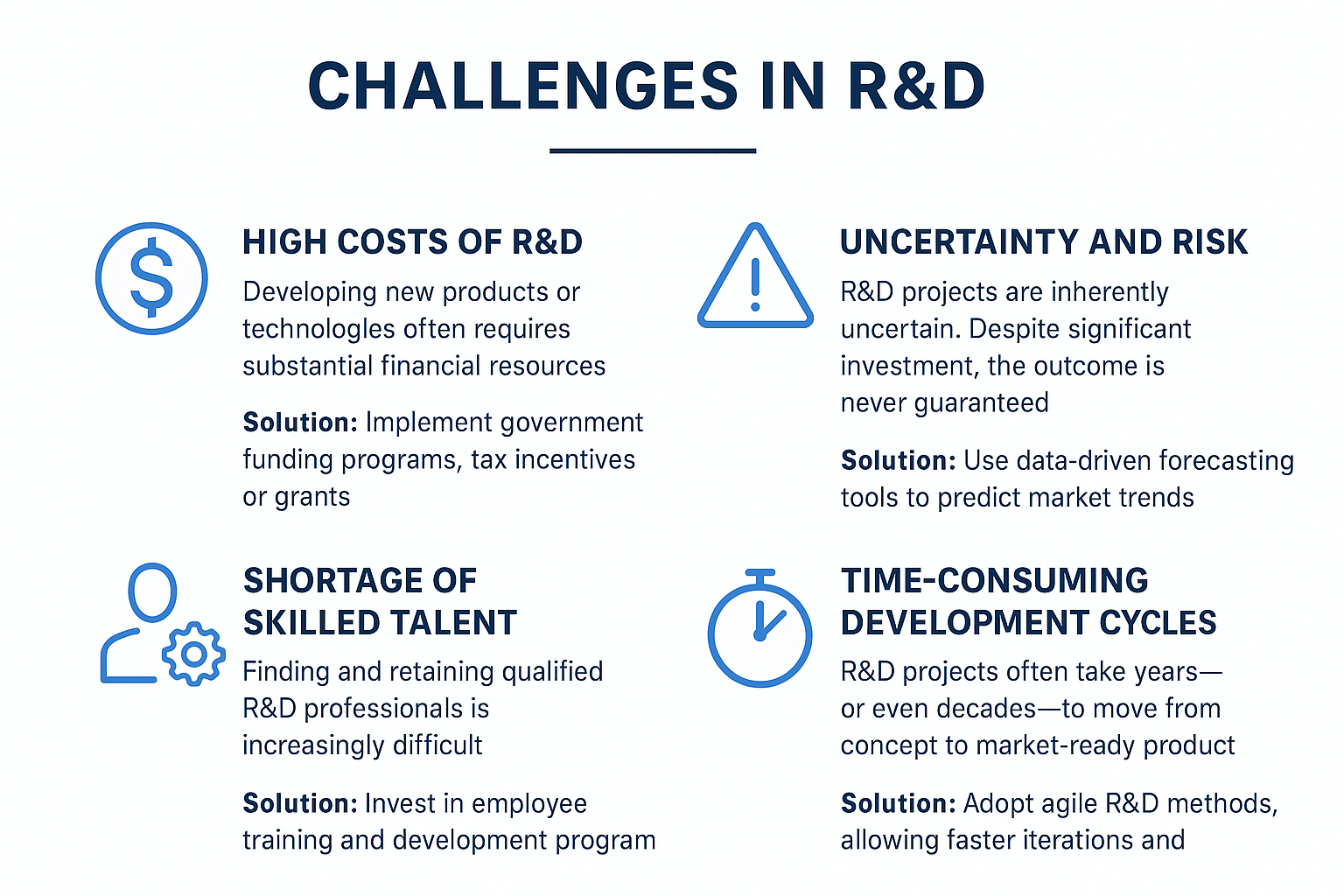
1. Challenges in R&D: High Costs of R&D
One of the most pressing challenges in R&D is its cost-intensive nature. Developing new products or technologies often requires substantial financial resources for:
- Laboratory equipment and infrastructure
- Advanced software and digital tools
- Hiring skilled researchers and engineers
- Conducting experiments, prototypes, and testing
For example, the pharmaceutical industry spends billions of dollars annually on drug development, with only a small fraction of compounds making it to market. This high cost creates barriers for small and medium-sized enterprises (SMEs), which may lack the budget for large-scale R&D projects.
Solution:
- Implement government funding programs, tax incentives, or grants.
- Form partnerships with universities and research institutions to share resources.
- Adopt lean R&D strategies by focusing on incremental innovation rather than high-risk radical innovation.
2. Uncertainty and Risk
R&D projects are inherently uncertain. Despite significant investment, the outcome is never guaranteed. Failure rates can be extremely high—sometimes exceeding 90% in certain industries like biotech.
Uncertainty arises from multiple factors:
- Market acceptance of new products
- Technical feasibility of innovations
- Unpredictable competitor activities
- Regulatory hurdles
This risk discourages some organizations from investing in ambitious projects, leading to stagnation in innovation.
Solution:
- Use data-driven forecasting tools to predict market trends.
- Apply risk management frameworks to identify and mitigate potential failures early.
- Diversify R&D portfolios rather than focusing all resources on a single high-risk project.
3. Shortage of Skilled Talent
Talent is the fuel of innovation, but finding and retaining qualified R&D professionals is increasingly difficult. The demand for experts in AI, biotechnology, nanotechnology, and sustainable energy far exceeds the supply.
Factors contributing to the shortage include:
- Global competition for skilled professionals
- Rapid technological advancements requiring constant upskilling
- Brain drain from developing countries to developed economies
Solution:
- Invest in employee training and development programs.
- Collaborate with universities to nurture future talent.
- Create attractive work environments that foster creativity, flexibility, and long-term career growth.
4. Challenges in R&D: Time-Consuming Development Cycles
R&D projects often take years—or even decades—to move from concept to market-ready product. Long development cycles can be discouraging and costly.
For example:
- New car technologies may require 5–7 years of testing and approval.
- Pharmaceutical drugs may take 10–15 years from discovery to launch.
Lengthy timelines make it difficult for companies to keep up with rapid market changes and evolving consumer expectations.
Solution:
- Adopt agile R&D methods, allowing faster iterations and prototyping.
- Leverage digital tools such as simulation and AI-based modeling to speed up testing.
- Encourage cross-functional collaboration between departments to reduce bottlenecks.
5. Intellectual Property (IP) and Legal Barriers
Securing intellectual property rights is another major challenge in R&D. Without strong IP protection, competitors may copy innovations, undermining a company’s competitive advantage.
Key barriers include:
- High cost of filing and maintaining patents across multiple jurisdictions
- Lengthy approval processes
- Risk of patent disputes or litigation
Solution:
- Develop a robust IP strategy aligned with global standards.
- Monitor competitors’ patents to avoid infringement issues.
- Work with legal experts to streamline the patent process and secure early protection.
6. Regulatory and Compliance Issues
Many industries, particularly healthcare, automotive, and energy, face strict regulatory requirements. While these rules ensure safety and quality, they also increase the complexity and cost of R&D.
Challenges include:
- Navigating different international regulatory frameworks
- Lengthy approval timelines from authorities
- Adapting to constantly changing compliance standards
Solution:
- Integrate compliance considerations early in the R&D process.
- Employ regulatory experts who can guide projects efficiently.
- Use digital compliance tools to track and document processes accurately.
7. Pressure for Sustainability
Modern R&D must also address environmental sustainability. Companies face growing pressure from governments, stakeholders, and consumers to develop eco-friendly products and reduce carbon footprints.
Challenges in sustainable R&D include:
- High cost of developing green technologies
- Limited availability of sustainable raw materials
- Balancing profitability with environmental responsibility
Solution:
- Embrace circular economy principles in design and production.
- Seek partnerships for sustainable supply chains.
- Invest in renewable energy and environmentally friendly technologies.

8. Challenges in R&D: Global Collaboration Challenges
In today’s interconnected world, R&D often requires collaboration across borders. While collaboration offers benefits, it also creates challenges such as:
- Cultural and language barriers
- Intellectual property protection concerns
- Logistical difficulties in managing distributed teams
Solution:
- Use advanced digital collaboration platforms.
- Establish clear agreements regarding IP ownership.
- Promote cross-cultural training to improve team communication.
Conclusion of Challenges in R&D
R&D is both a driver of progress and a source of significant challenges. From high costs and risks to regulatory hurdles and sustainability demands, organizations must navigate a complex landscape to succeed.
The good news is that with strategic planning, digital tools, collaboration, and government support, many of these challenges can be mitigated. Companies that master the art of overcoming R&D barriers will not only survive but thrive in an increasingly competitive world.
Ultimately, embracing innovation despite these challenges is what distinguishes leaders from followers in the global marketplace.