Introduction
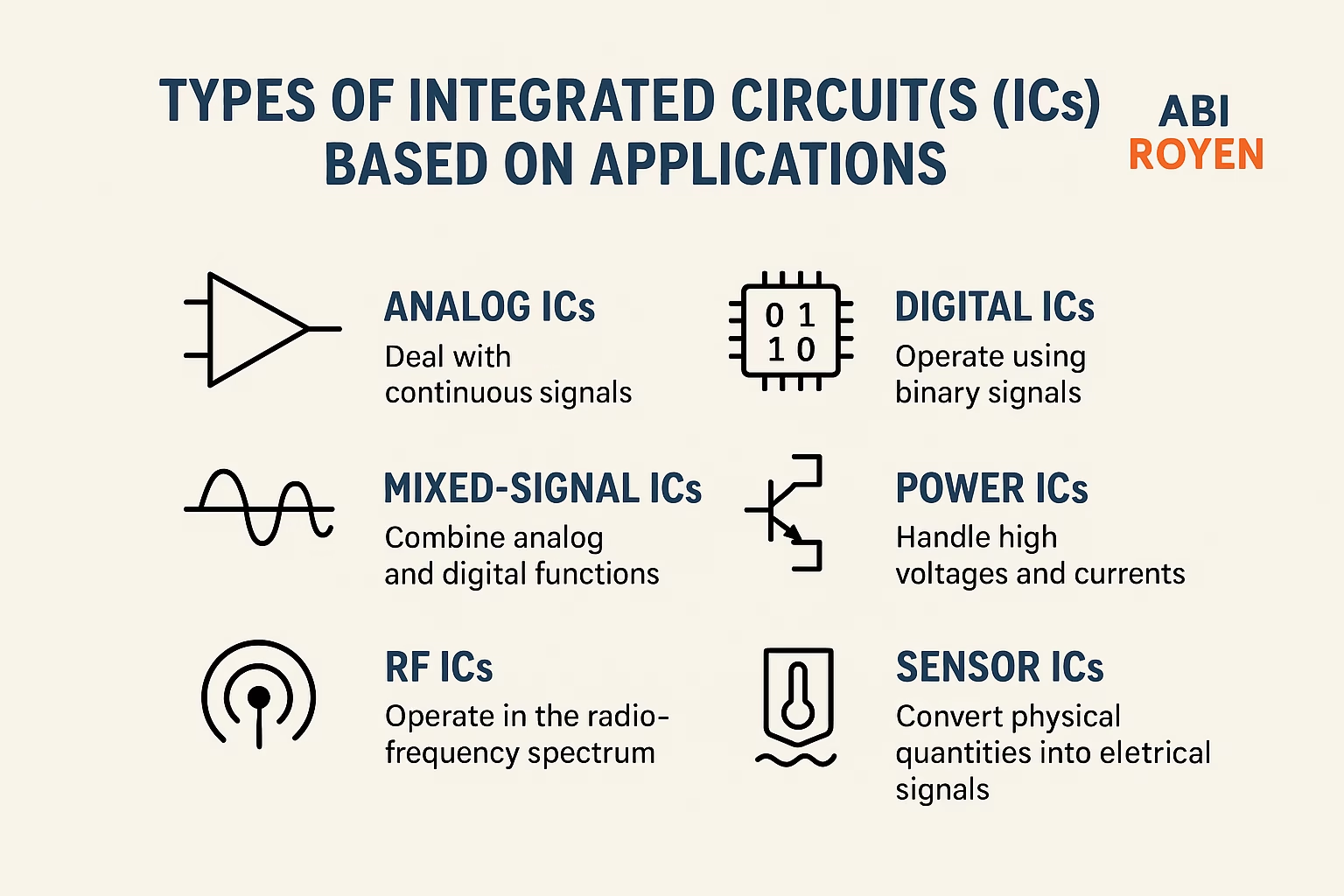
Power Integrated Circuits, commonly known as Power ICs, are essential components in modern electronics. These devices integrate multiple power management functions into a single chip, enabling efficient control, distribution, and regulation of electrical energy within electronic systems. They are widely used in everything from smartphones and computers to industrial machinery and automotive systems.
As electronic devices become smaller, faster, and more energy-efficient, the role of Power ICs has grown significantly. This article explores the fundamentals, classifications, and practical applications of Power-ICs, giving you a complete understanding of their importance in today’s technology-driven world.
What is a Power ICs?
A Power IC is a semiconductor device designed to manage electrical power in an electronic system. Unlike general-purpose ICs that focus on logic or signal processing, Power-ICs handle higher currents and voltages, delivering energy where it is needed while maintaining stability and efficiency.
Power ICs can perform multiple functions such as:
- Voltage regulation
- Power switching
- Current limiting
- Energy conversion
- Load management
The integration of these capabilities into one compact package reduces the need for multiple discrete components, saving space and improving reliability.
Key Functions of Power ICs
Power-ICs can be tailored to serve various roles, depending on the application. The most common functions include:
1. Voltage Regulation
Power ICs stabilize voltage levels, ensuring that sensitive electronic components receive a consistent and precise power supply. Examples include Linear Regulators and Switching Regulators.
2. Power Conversion
They can convert power from one voltage level to another efficiently. For instance, DC-DC converters step down (buck) or step up (boost) voltage levels.
3. Power Distribution
In systems with multiple subsystems, Power-ICs manage the distribution of energy, ensuring each module receives adequate power.
4. Protection Features
Modern Power ICs include protection against over-voltage, over-current, over-temperature, and short circuits to prevent damage.
5. Energy Efficiency
By minimizing energy losses during conversion and regulation, Power-ICs improve battery life in portable devices and reduce energy costs in large systems.
Types of Power ICs
Power ICs can be classified according to their functions, topology, and applications. Below are the most common types:
1. Linear Regulators
- Provide a steady output voltage.
- Simple design and low noise.
- Less efficient compared to switching regulators.
- Common in audio and RF applications where noise minimization is critical.
2. Switching Regulators
- Convert power more efficiently than linear regulators.
- Include buck, boost, and buck-boost configurations.
- Suitable for portable electronics, industrial controls, and automotive systems.
3. Power Management ICs (PMICs)
- Integrate multiple power regulation and distribution functions.
- Common in smartphones, laptops, and IoT devices.
- Optimize battery usage and system power efficiency.
4. Motor Driver ICs
- Control the speed, direction, and torque of motors.
- Used in robotics, drones, and home appliances.
5. LED Driver ICs
- Regulate the power supplied to LEDs.
- Ensure consistent brightness and extend LED lifespan.
6. Power Amplifier ICs
- Boost signal power for transmission or driving speakers.
- Widely used in audio systems, wireless communications, and radar.
Applications of Power ICs
Power ICs are present in nearly every modern electronic device. Their applications include:
1. Consumer Electronics
Smartphones, tablets, and laptops rely on PMICs for battery management, voltage regulation, and charging control.
2. Automotive Systems
Used in electric vehicles (EVs), infotainment systems, LED lighting, and motor control modules.
3. Industrial Equipment
Control power for automation systems, sensors, and communication networks.
4. Telecommunication
Provide regulated power for network switches, routers, and wireless base stations.
5. Medical Devices
Ensure stable and safe power supply for diagnostic and monitoring equipment.
Advantages of Power ICs
- Compact Size – Multiple functions integrated into a single chip save PCB space.
- Improved Efficiency – High conversion efficiency reduces heat and power waste.
- Enhanced Reliability – Fewer external components reduce potential points of failure.
- Cost Savings – Integration lowers manufacturing costs over time.
- Advanced Protection – Built-in safety features protect the system.


Challenges and Considerations of Power ICs
While Power ICs bring numerous benefits, designers must also consider:
- Thermal Management – High power handling can generate heat that needs dissipation.
- EMI (Electromagnetic Interference) – Switching regulators may introduce noise.
- Voltage & Current Ratings – Ensuring the IC matches system requirements.
- Efficiency vs. Cost – High-efficiency designs can be more expensive.
Future Trends in Power ICs Technology
The demand for energy-efficient, miniaturized, and intelligent power solutions is driving innovation in Power ICs. Some future trends include:
- GaN (Gallium Nitride) and SiC (Silicon Carbide) Technology – For higher efficiency and higher voltage operation.
- AI-Powered Power Management – Adaptive power control based on system needs.
- Integration with Wireless Power Transfer – For contactless charging systems.
- Ultra-Low Power Designs – Extending battery life for IoT and wearable devices.
Conclusion of Power ICs
Power ICs are the backbone of modern electronics, ensuring that devices operate efficiently, safely, and reliably. From smartphones to electric vehicles, their presence is crucial for stable power delivery and energy management. As technology continues to evolve, Power-ICs will become even more advanced, supporting next-generation devices with higher efficiency, smaller footprints, and smarter control.
Whether you are designing a compact consumer gadget or a large industrial system, understanding and selecting the right Power IC can make the difference between a reliable product and a costly failure.