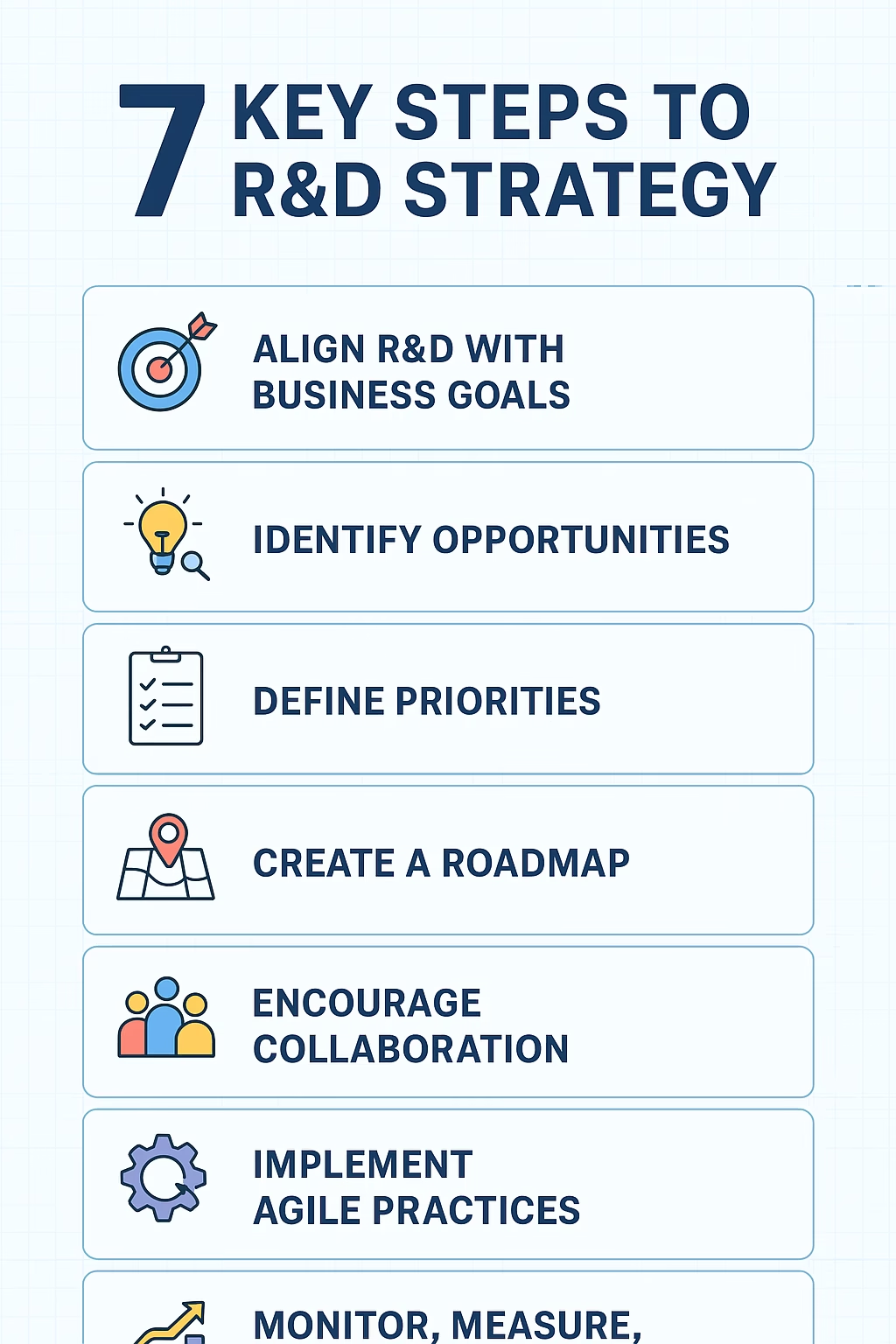
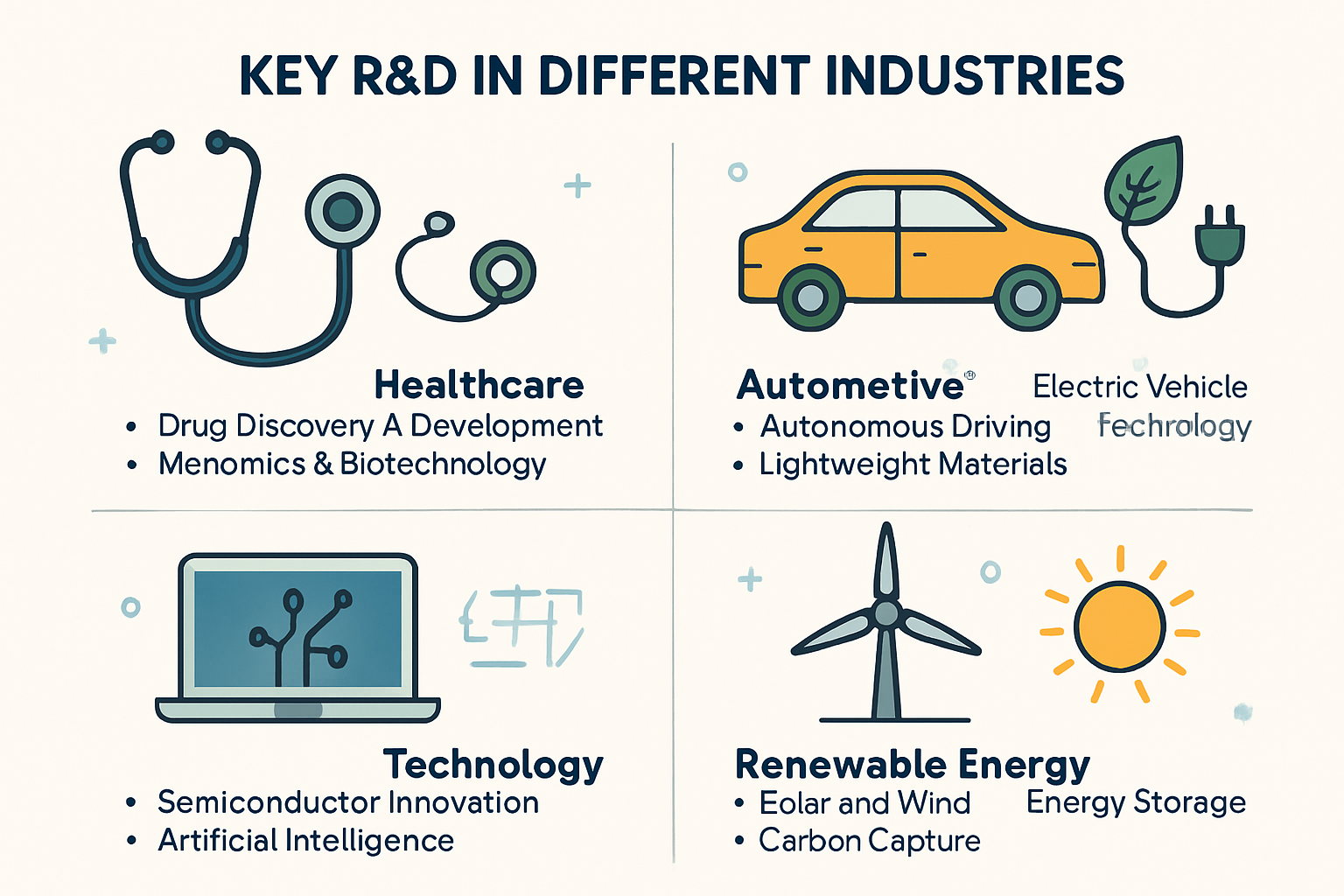
Types Research and Development (R&D) ~ In the modern era, innovation is the driving force behind sustainable growth and competitiveness. Whether in technology, pharmaceuticals, manufacturing, or services, organizations that invest in Research and Development (R&D) are better positioned to lead in their industries. However, R&D is not a one-size-fits-all process. There are various types of R&D, each with its specific goals, methodologies, and outcomes. This article explores the three primary types of R&D: Basic Research, Applied Research, and Experimental Development.
1. What Is Research and Development (R&D)?
Research and Development (R&D) refers to a set of activities undertaken by companies, governments, or academic institutions to innovate, improve products, create new technologies, or advance scientific knowledge. R&D plays a crucial role in long-term economic development, helping organizations stay ahead of the curve.
Objectives of R&D may include:
- Discovering new knowledge
- Creating or improving products or services
- Developing more efficient processes
- Solving technical challenges
- Gaining a competitive advantage
To better understand how R&D contributes to these objectives, we need to explore its three main types.
Read More about What is Research and Development (R&D)? A Complete Guide
2. Types Research and Development (R&D)
Read More about Understanding the Different Types of Research and Development (R&D)
A. Types Research and Development (R&D): Basic Research
Definition:
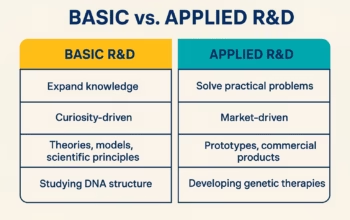
Basic research, also called pure or fundamental research, is conducted to gain a deeper understanding of fundamental principles without a specific commercial objective in mind. It focuses on exploring scientific phenomena, theories, and laws.
Key Characteristics:
- Not aimed at immediate practical application
- Conducted in universities or research institutes
- Generates new knowledge or insights
- May take years before leading to commercial use
Example:
A physicist studying the behavior of quantum particles without a clear application in mind is conducting basic research. Although it may not yield immediate returns, such knowledge can eventually revolutionize technology.
Impact on Innovation:
While basic research doesn’t lead to direct commercial products, it forms the foundation upon which applied research and product innovation are built.
Read More about Basic R&D: Understanding the Foundation of Research and Development
B. Types Research and Development (R&D): Applied Research
Definition:
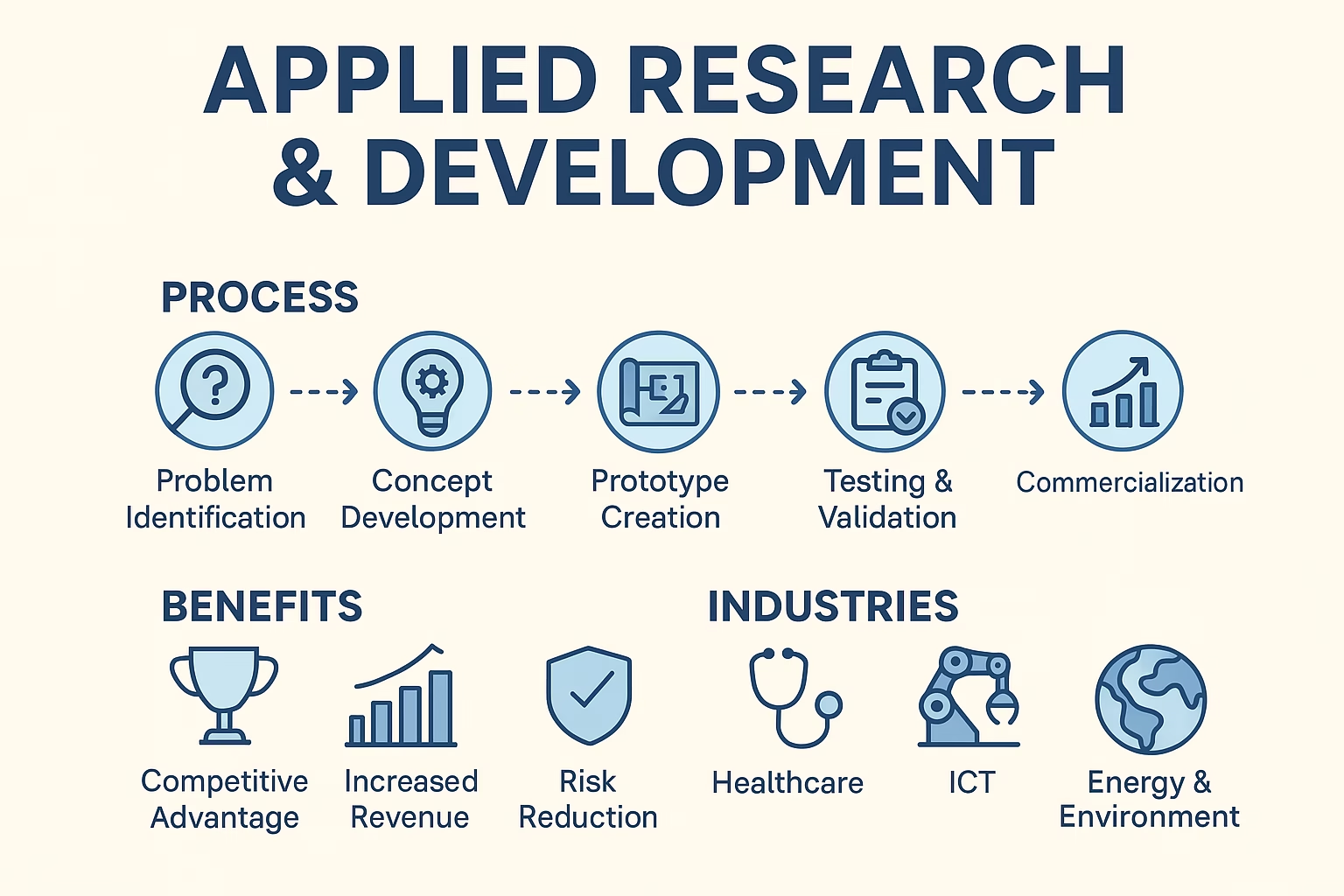
Applied research is aimed at solving specific, practical problems. It takes the insights gained from basic research and applies them toward the development of new products, processes, or services.
Key Characteristics:
- Goal-oriented and practical
- Often conducted in corporate or industrial settings
- Focused on market or customer needs
- Bridges the gap between theory and application
Example:
A tech company studying how machine learning algorithms can be optimized for autonomous vehicles is engaging in applied research.
Impact on Industry:
Applied research is essential for organizations looking to innovate or improve existing technologies. It allows companies to stay competitive by addressing customer demands or solving industry-specific challenges.
Read More about Applied Research and Development: Driving Innovation into Real-World Impact
C. Types Research and Development (R&D): Experimental Development
Definition:
Experimental development involves systematic work based on existing knowledge gained from research and practical experience. The goal is to create new or improved products, services, or processes.
Key Characteristics:
- Focused on turning ideas into tangible outcomes
- Includes prototyping, testing, and refining
- Conducted primarily in the private sector
- Often results in patents or commercial products
Example:
Developing a new smartphone model with an innovative foldable screen technology involves experimental development.
Impact on Market:
This type of R&D is directly tied to product launches and commercialization. It transforms research findings into market-ready innovations.
Read More about Experimental Research & Development: Driving Innovation Through Scientific Exploration


3. Comparison Table: Types Research and Development (R&D) Basic vs. Applied vs. Experimental
| Aspect | Basic Research | Applied Research | Experimental Development |
|---|---|---|---|
| Purpose | Expand knowledge | Solve practical problems | Create or improve products |
| Application | Long-term | Medium-term | Short-term, product-focused |
| Setting | Academic | Industrial or academic | Corporate/Industrial |
| Output | Theories, models | Prototypes, solutions | Products, processes |
| Risk | High | Medium | Low to medium |
| Return on Investment | Indirect, long-term | Measurable, medium-term | Direct, short-term |
4. Why Understanding Types of R&D Matters
A. For Businesses
Knowing the distinctions helps allocate budgets effectively. While basic research can be outsourced or partnered with universities, applied research and development are often handled in-house to maintain competitive advantage.
B. For Policymakers
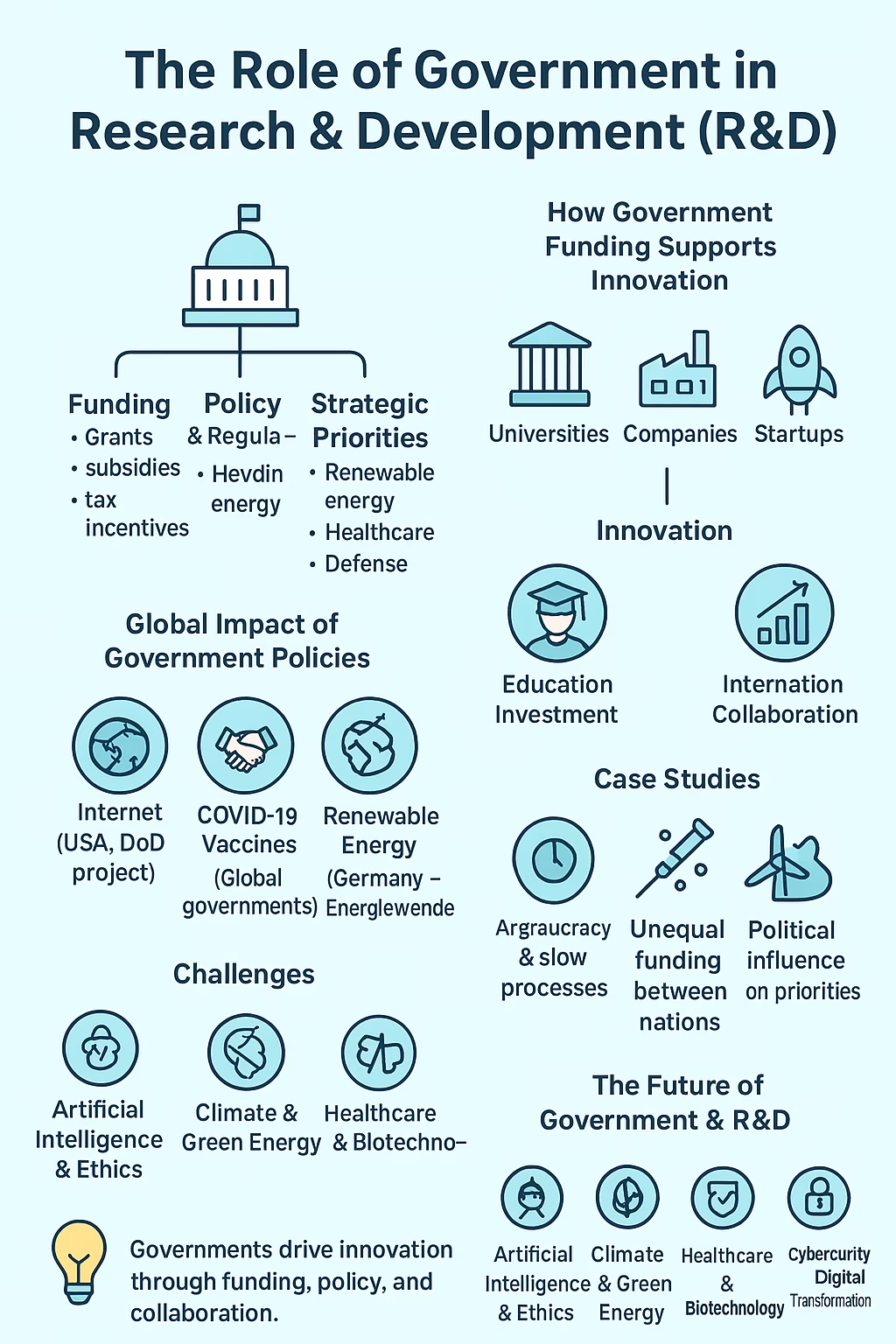
Investing in all three R&D types fosters national innovation ecosystems. Countries with strong basic research capabilities often lead global scientific rankings, while those focusing on development produce globally competitive products.
C. For Students and Researchers
Understanding the R&D spectrum helps clarify career paths and funding opportunities. Basic researchers may seek academic grants, while applied researchers can work in industrial labs.
5. R&D Across Industries
– Pharmaceuticals:
Heavily invested in basic and applied research to discover new drugs, followed by clinical trials (experimental development).
– Technology Sector:
Balances all types — from fundamental AI research to developing market-ready devices.
– Manufacturing:
Focuses more on applied research and development to improve efficiency and automation.
6. Challenges in Managing R&D
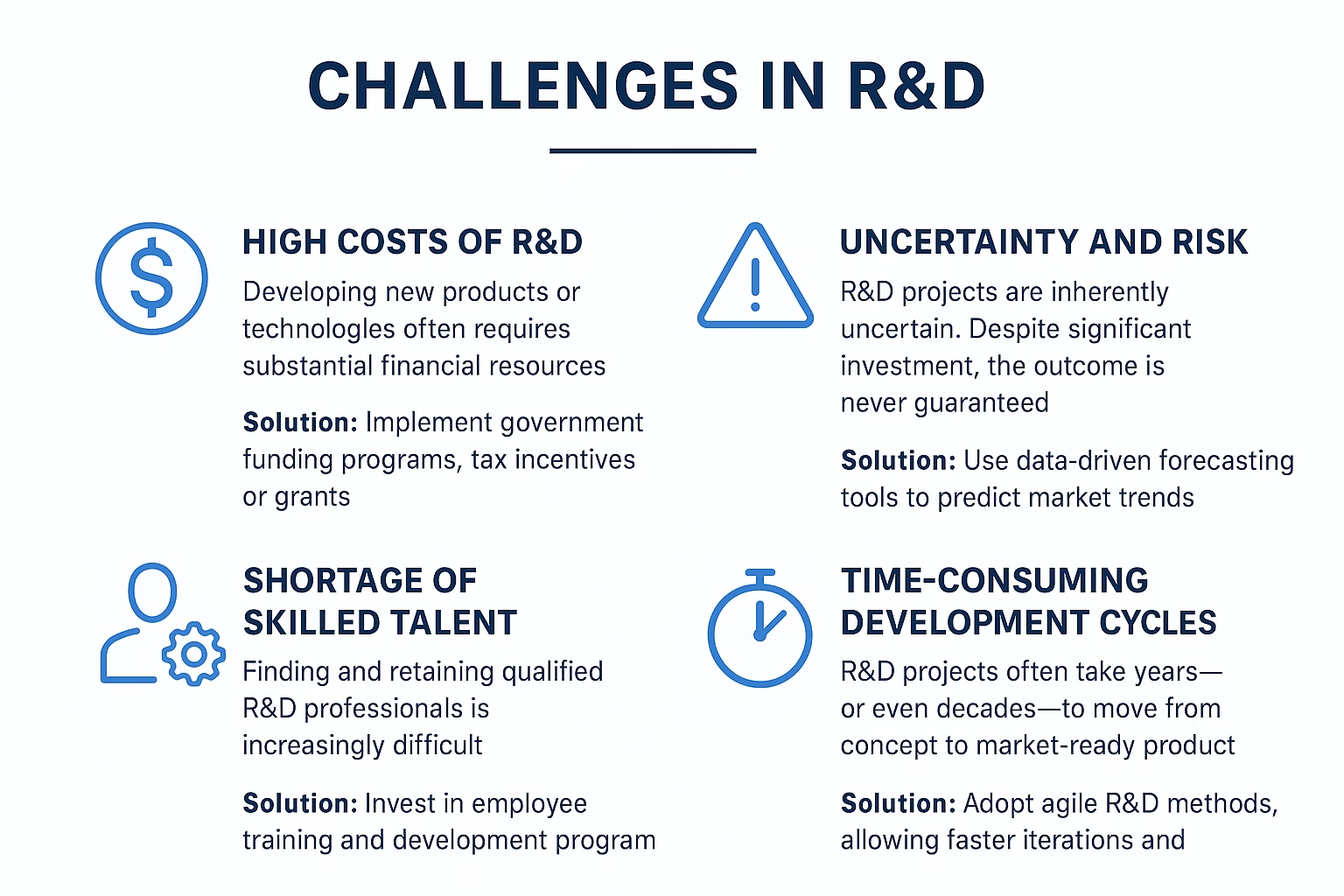
- High Costs: Especially for experimental development and long-term basic research.
- Uncertain Outcomes: Many R&D projects don’t lead to successful commercialization.
- Intellectual Property: Protecting ideas through patents is crucial but complex.
- Talent Acquisition: Finding and retaining skilled researchers across the spectrum can be difficult.
7. Conclusion of Types Research and Development (R&D)
Understanding the types of Research and Development—basic research, applied research, and experimental development—offers critical insights into how innovation occurs. Each type serves a distinct purpose, from uncovering scientific truths to creating market-ready products. For companies, governments, and educational institutions, investing in the right mix of R&D can drive technological progress, boost economic growth, and ensure long-term competitiveness.
Whether you’re a student, researcher, business leader, or policymaker, recognizing the role of each R&D type is key to making informed decisions that shape the future.