

Introduction
Modern Trends Electrical Systems ~ Electrical systems are the backbone of modern civilization, powering industries, homes, transportation, and digital infrastructure. Over the last decade, technological advancements have dramatically reshaped how electrical systems are designed, managed, and optimized. From the integration of renewable energy sources to the rise of smart grids and Internet of Things (IoT) applications, the electrical engineering field is undergoing a significant transformation.
This article explores the modern trends in electrical systems, highlighting innovations that are enhancing efficiency, safety, sustainability, and adaptability in an ever-changing energy landscape.
1. Modern Trends Electrical Systems: Smart Grids and Digitalization
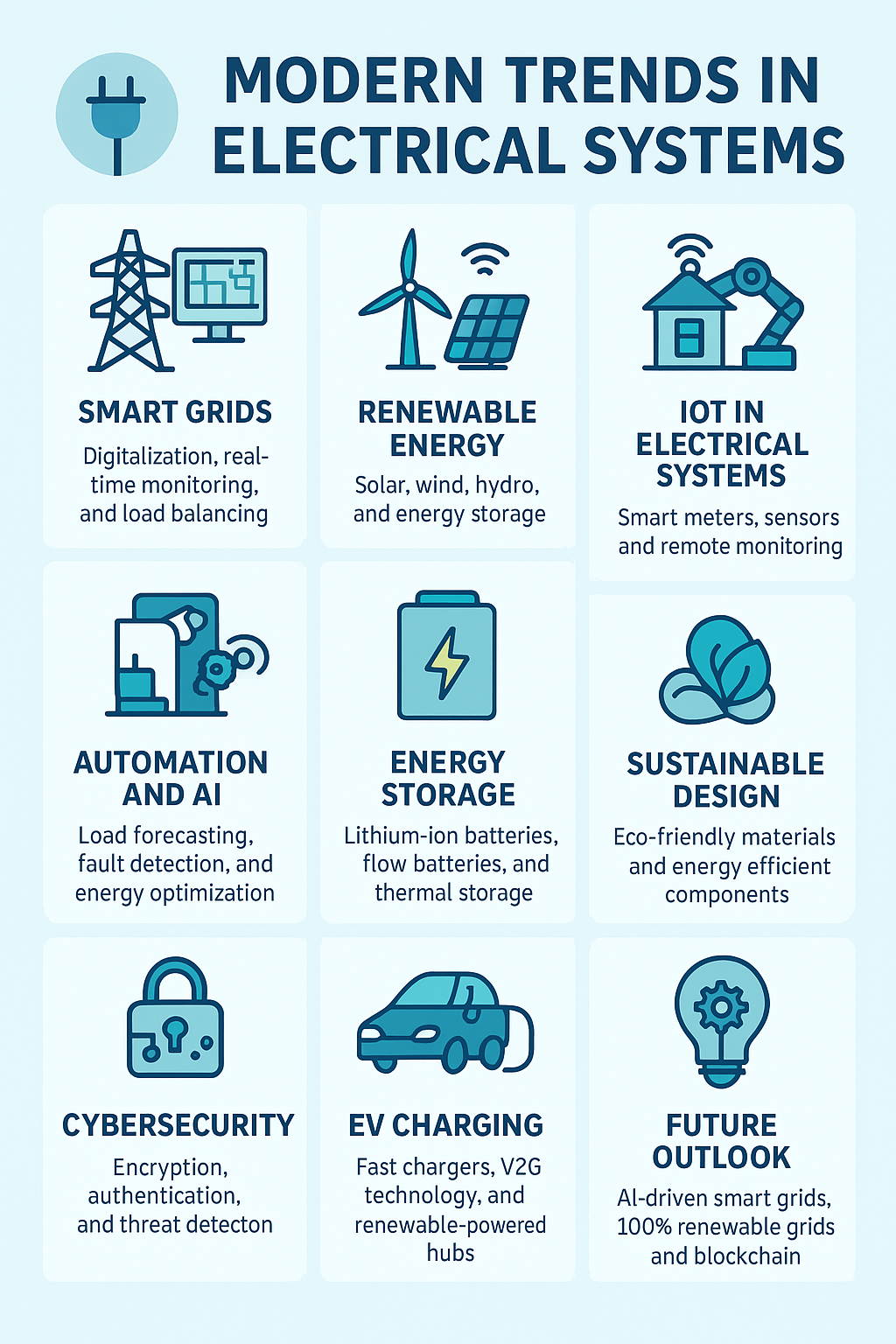
One of the most important trends in modern electrical systems is the development of smart grids. Unlike traditional power grids, smart grids use digital technology, sensors, and automation to monitor and manage electricity distribution in real time.
Key Benefits of Smart Grids:
- Real-time Monitoring: Utilities can detect faults and prevent outages faster.
- Load Balancing: Power supply and demand are optimized to reduce waste.
- Integration of Renewables: Smart grids handle fluctuations in solar and wind energy production effectively.
Digitalization in power systems also allows for predictive maintenance, reducing downtime and extending equipment life.
2. Modern Trends Electrical Systems: Renewable Energy Integration
With the global push toward sustainability, renewable energy sources such as solar, wind, and hydro are being integrated into electrical systems more than ever before. This integration is supported by:
- Energy Storage Systems (ESS): Battery technology has improved, allowing excess energy to be stored and used later.
- Hybrid Energy Systems: Combining multiple energy sources for more stable and reliable power.
- Microgrids: Localized grids that can operate independently, improving resilience during large-scale outages.
The growth of renewable integration not only reduces carbon emissions but also transforms the way energy is generated and distributed.
3. Modern Trends Electrical Systems: Internet of Things (IoT) in Electrical Systems
IoT technology is revolutionizing electrical systems by connecting devices, sensors, and control units through the internet. Applications include:
- Smart Meters: Providing real-time consumption data to both consumers and utilities.
- Predictive Maintenance Sensors: Detecting anomalies before they cause equipment failure.
- Remote Monitoring & Control: Allowing engineers to adjust electrical systems without being physically on-site.
IoT also enables greater consumer engagement, as homeowners and businesses can actively monitor and reduce their electricity usage.
4. Modern Trends Electrical Systems: Automation and Artificial Intelligence (AI)
Automation is streamlining power generation, transmission, and distribution processes. Coupled with AI, these technologies provide advanced analytics, enabling:
- Load Forecasting: Predicting demand patterns to optimize generation.
- Fault Detection: AI-powered algorithms identify electrical faults instantly.
- Energy Optimization: Adjusting supply and distribution for maximum efficiency.
AI-driven automation reduces operational costs while enhancing safety and system stability.
5. Modern Trends Electrical Systems: Energy Storage Advancements
Energy storage is crucial for balancing fluctuating renewable energy output. Modern advancements include:
- Lithium-Ion Batteries: Widely used for their high energy density and reliability.
- Flow Batteries: Offering long-duration storage for grid-scale applications.
- Thermal Energy Storage: Converting electricity into heat for later use.
These innovations ensure that renewable energy can be stored and used even when sunlight or wind is unavailable.
6. Sustainable and Eco-Friendly Designs
Electrical systems are moving toward green engineering principles, using materials and designs that minimize environmental impact. Examples include:
- Eco-friendly Cable Insulation: Made from recyclable materials.
- Low-Loss Transformers: Reducing energy waste during voltage conversion.
- Energy-Efficient Lighting and Appliances: Lowering overall power consumption.
Sustainability is now a major design criterion for new projects worldwide.

7. Cybersecurity in Electrical Infrastructure
With increasing digitalization, cybersecurity has become a priority in modern electrical systems. Smart grids, IoT devices, and automated control systems are potential targets for cyberattacks, making robust security measures essential.
- Encryption and Authentication: Ensuring secure communication between devices.
- Regular Security Audits: Identifying and mitigating vulnerabilities.
- AI-based Threat Detection: Quickly responding to suspicious activities.
8. Electric Vehicle (EV) Charging Infrastructure
The rapid adoption of electric vehicles is creating new demands on electrical systems. Modern grids are adapting through:
- Fast-Charging Stations: Reducing charging times for EV users.
- Vehicle-to-Grid (V2G) Technology: Allowing EVs to return stored electricity to the grid.
- Renewable-Powered Charging Hubs: Combining clean energy with transportation.
This trend is set to grow as EV adoption becomes mainstream.
9. Decentralized Energy Systems
Decentralized systems such as microgrids and home-based solar installations are reducing dependency on large, centralized power plants.
Advantages:
- Resilience: Continued operation during main grid failures.
- Local Control: Communities can manage their own energy production and distribution.
- Lower Transmission Losses: Electricity is consumed close to where it is generated.
10. Future Outlook
The electrical systems of the future will be smarter, cleaner, and more resilient. We can expect:
- Widespread adoption of AI-driven smart grids.
- 100% renewable-based grids in some regions.
- Blockchain technology for transparent energy trading.
- Fully autonomous energy management systems in smart cities.
The pace of innovation suggests that electrical engineers will need to continually adapt, learning new technologies and applying creative solutions to meet future challenges.
Conclusion
Modern trends in electrical systems are transforming the way we generate, distribute, and consume electricity. From smart grids and renewable integration to IoT and AI automation, these advancements are making energy systems more efficient, sustainable, and resilient. Businesses, governments, and consumers alike must stay informed about these developments to fully benefit from the technological revolution shaping our energy future.