

Introduction
VHF Radio ~ Very High Frequency (VHF) radio plays a vital role in the realm of communication, especially in maritime, aviation, and emergency services. It is widely known for its reliability, simplicity, and wide coverage range over short distances. Whether used by seafarers, coast guards, or rescue services, VHF radios are indispensable tools that ensure smooth communication and safety.
This article will provide an in-depth look at how radio VHF work, where they are used, and why they are crucial in specific sectors such as maritime navigation and emergency response.
What is a VHF Radio?
VHF stands for Very High Frequency, which refers to the radio frequency range between 30 MHz and 300 MHz. Radio VHF are two-way communication devices that use this frequency spectrum for transmitting and receiving voice or data.
VHF radios are commonly found in handheld, mobile, or fixed-mount formats and are widely used across industries due to their strong signal quality in open spaces.
How Does VHF Radio Work?
VHF radios waves travel primarily in straight lines (line-of-sight propagation). Because of this, their effectiveness depends largely on the height of the antenna and the surrounding environment. Obstacles such as hills or buildings can limit their range.
Key components of a radio VHF system include:
- Transmitter and Receiver: For sending and receiving signals.
- Antenna: Usually mounted on high points to maximize range.
- Microphone and Speaker: For voice communication.
- Tuning Mechanism: To select specific channels or frequencies.
Primary Features of VHF Radios
- Line-of-Sight Communication: Works best in open areas, especially over water or flat terrain.
- Multiple Channels: Most marine radio VHF offer 50+ channels, including emergency and weather frequencies.
- Channel 16 Monitoring: A global emergency and distress frequency that is constantly monitored by coast guards and vessels.
- DSC (Digital Selective Calling): Enables direct digital calls to other radios or emergency services.
- Weather Alerts: Provides real-time marine weather information.
- Waterproofing: Many marine VHF radios are waterproof and buoyant.
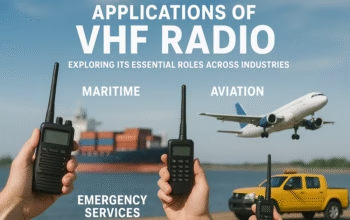
Applications of VHF Radio
1. Maritime Communication
VHF radios are extensively used in the maritime industry. They serve as the primary method for:
- Ship-to-ship and ship-to-shore communication.
- Receiving weather updates.
- Navigating harbors and ports.
- Coordinating with maritime authorities.
Channel 16 (156.8 MHz) is universally recognized for hailing and emergency communication at sea.
2. Emergency Services
Police, firefighters, ambulance crews, and disaster response units rely on radio VHF for:
- Dispatch communication.
- Coordinated rescue efforts.
- Crowd and traffic control during emergencies.
VHF radios remain functional during network outages, making them ideal for crisis scenarios.
3. Aviation
Air traffic control and aircraft use VHF for ground-to-air and air-to-air communication, particularly during approach and landing phases.
4. Land Mobile Services
In rural and remote areas, VHF radios are used by park rangers, forest services, and construction teams to stay connected.
5. Recreational Use
Hikers, campers, and outdoor enthusiasts often use handheld radio VHF in remote locations where cellphone coverage is unavailable.
Benefits of Using VHF Radio
- Reliability: Works independently of cellular or internet networks.
- Ease of Use: Simple push-to-talk operation.
- Wide Coverage: Can transmit over 5–25 nautical miles depending on the terrain and antenna.
- Durability: Especially marine models are built to withstand harsh environments.
- Cost-Effective: No ongoing subscription or service fees required.


Limitations of VHF Radio
- Line-of-Sight Dependency: Cannot transmit through obstructions like mountains or buildings effectively.
- Limited Range: Compared to HF (High Frequency) or satellite communication.
- Channel Congestion: In busy harbors or events, available channels may become overcrowded.
Marine VHF Radio Regulations and Licensing
In many countries, operating a marine radio VHF requires a license. Operators may need to complete a short training course covering:
- Operating procedures.
- Emergency communication.
- International maritime regulations.
For instance, the GMDSS (Global Maritime Distress and Safety System) framework includes VHF radios as a key component for ship safety at sea.
Choosing the Right VHF Radio
When selecting a radio VHF for marine or emergency use, consider the following:
| Feature | Recommendation |
|---|---|
| Power Output | At least 5 watts for handheld, 25 watts for fixed |
| Waterproof Rating | IPX7 or higher |
| Display | Backlit, easy-to-read LCD |
| Battery Life | Long-lasting lithium-ion preferred |
| DSC Capability | Required for emergency digital alerts |
| GPS Integration | Useful for location tracking |
Brands like ICOM, Standard Horizon, and Uniden are well-known for producing high-quality radio VHF.
Maintenance and Safety Tips
- Test regularly to ensure transmission and reception work properly.
- Keep batteries charged and carry spares if using handheld models.
- Log communication when navigating or during emergencies.
- Keep antennae high and clear for maximum range.
- Update firmware if applicable to enhance performance.
Conclusion
VHF radios remain a cornerstone of safe, efficient communication—especially in marine environments. With the increasing demand for reliable communication tools in remote and emergency situations, radio VHF offer unmatched benefits.
From ship captains navigating open waters to emergency responders coordinating rescue efforts, the VHF radio is a tool that continues to save lives and ensure safety in a connected yet unpredictable world.
Call to Action:
If you’re involved in marine operations, emergency services, or simply enjoy outdoor adventures, consider investing in a reliable VHF radio. Visit Abi Royen to explore high-quality VHF radio systems and other marine communication tools tailored for professionals and enthusiasts alike.