

Introduction
In modern communication systems, Radio Modulator and Demodulator (modems) play a crucial role in transmitting and receiving information efficiently. Whether it is wireless radio communication, satellite transmission, or internet data exchange, the process of modulation and demodulation ensures that signals can travel long distances without significant loss or distortion. This article explores the functions, principles, types, and applications of radio modulators and demodulators, commonly known as modems.
What is a Radio Modulator?
A radio modulator is an electronic device or circuit that modifies a carrier signal (usually a high-frequency radio wave) with the information signal, such as voice, video, or data. The primary purpose of modulation is to make low-frequency signals suitable for long-distance transmission.
Key Functions of a Modulator:
- Carrier Utilization – Allows information signals to “ride” on a carrier wave.
- Efficient Transmission – Enables transmission over longer distances.
- Frequency Allocation – Ensures multiple signals can be transmitted without interference.
- Improved Signal Strength – Increases resistance against noise and interference.
What is a Demodulator?
A demodulator performs the opposite function of a modulator. It extracts the original information signal (audio, video, or data) from the modulated carrier wave at the receiver’s end. Without demodulation, the transmitted information would remain encoded and unusable.
Key Functions of a Demodulator:
- Signal Recovery – Retrieves the original message from the carrier.
- Noise Filtering – Reduces interference and distortion.
- Conversion – Converts analog or digital modulated signals into usable output.
- Compatibility – Ensures proper synchronization with transmitter modulation type.
What is a Radio Modulator and Demodulator (modems)?
The term modem is derived from MOdulator-DEModulator. A modem is a device that integrates both a modulator and a demodulator. It encodes data into carrier signals at the transmitting end and decodes them at the receiving end.
In everyday technology, modems are used for internet connections, wireless communication, and radio frequency systems.
Types of Modulation Techniques
Several modulation techniques are used depending on the nature of the signal and application:
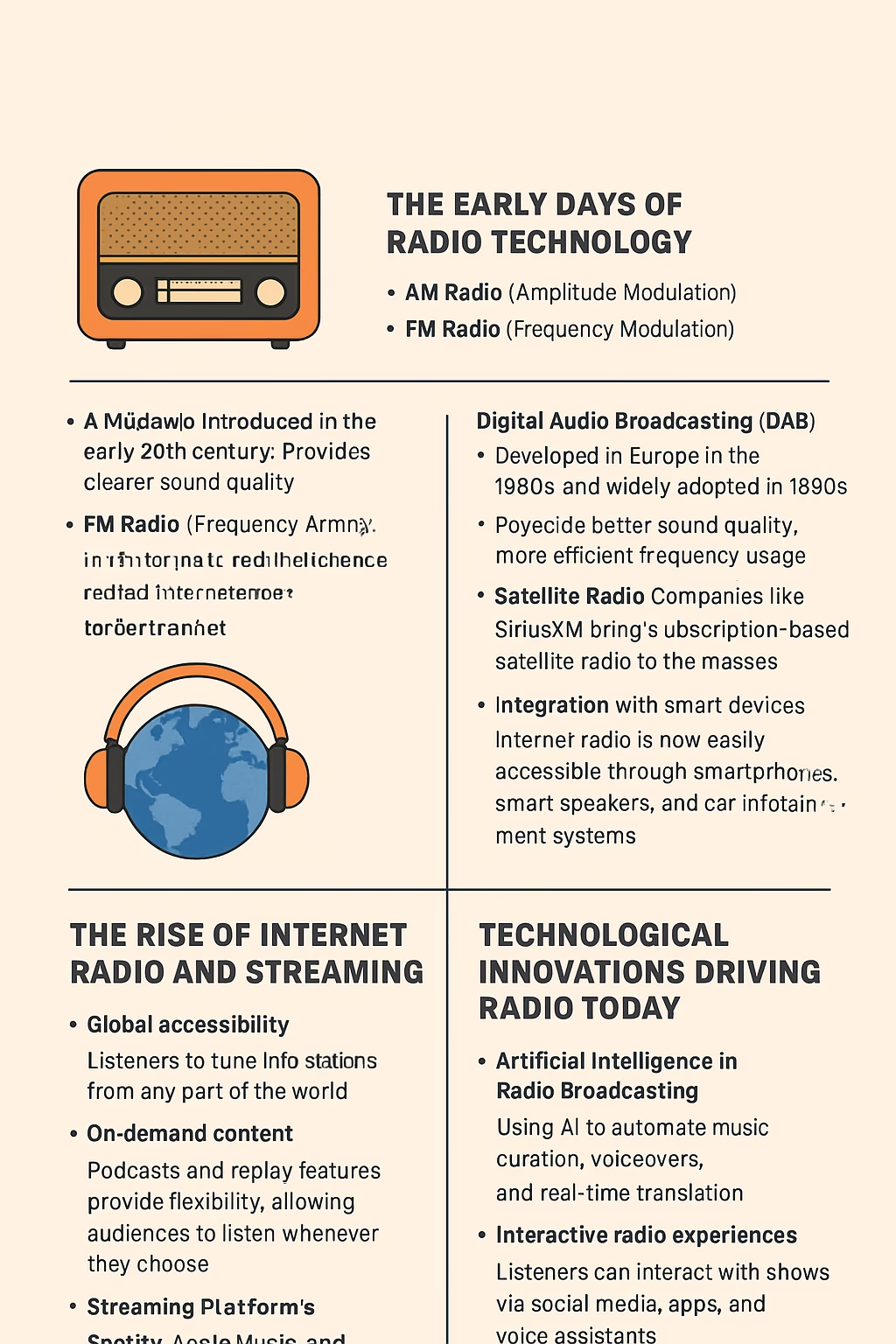
- Amplitude Modulation (AM) – The amplitude of the carrier wave changes with the signal.
- Frequency Modulation (FM) – The frequency of the carrier varies based on the input signal.
- Phase Modulation (PM) – The phase of the carrier wave shifts according to the signal.
- Quadrature Amplitude Modulation (QAM) – A combination of amplitude and phase modulation, widely used in digital communications.
- Pulse Code Modulation (PCM) – Converts analog signals into digital format for modern communication systems.
Types of Radio Modulator and Demodulator (modems)
Modems can be classified based on the communication channel and application:
1. Analog Modems
- Use traditional AM, FM, or PM techniques.
- Common in radio broadcasting and legacy telephone systems.
2. Digital Modems
- Use digital modulation techniques such as QAM, PSK (Phase Shift Keying), and OFDM (Orthogonal Frequency Division Multiplexing).
- Widely used in internet data transmission.
3. Radio Modems
- Specially designed for wireless communication over radio frequencies.
- Used in telemetry, remote monitoring, and industrial control systems.
4. Optical Modems
- Used in fiber-optic communication systems.
- Employs light wave modulation for high-speed data transfer.
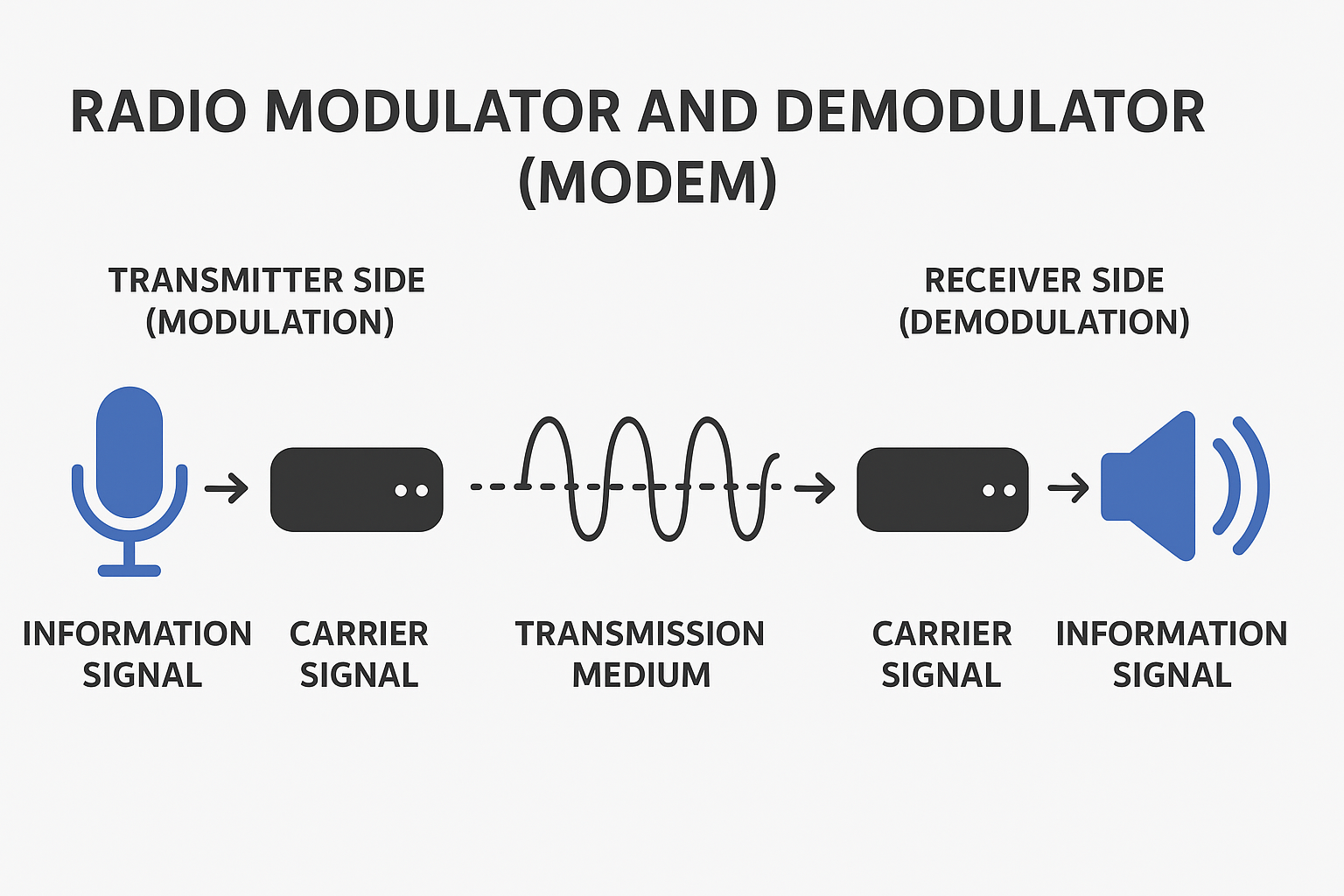
Working Principle of a Radio Modulator and Demodulator (modems)
- At the Transmitter Side (Modulation):
- The information signal (digital or analog) is combined with a carrier signal.
- The carrier wave is modulated using amplitude, frequency, or phase changes.
- At the Transmission Medium:
- The modulated carrier travels through the medium (radio waves, cables, optical fibers).
- At the Receiver Side (Demodulation):
- The demodulator extracts the original information.
- Noise reduction and error correction are applied.
Applications of Radio Modulator and Demodulator (Modem)
The role of modulators and demodulators is significant across industries and technologies:
- Radio Broadcasting – Used in AM and FM radio stations for transmitting music, news, and voice.
- Television Transmission – Video and audio signals are modulated for broadcasting.
- Satellite Communication – Essential for transmitting data between earth stations and satellites.
- Internet Connectivity – Modems are widely used in DSL, cable, and fiber internet.
- Military Communication – Secure and reliable radio frequency communication.
- Industrial Automation – Radio modems used in remote monitoring and SCADA systems.
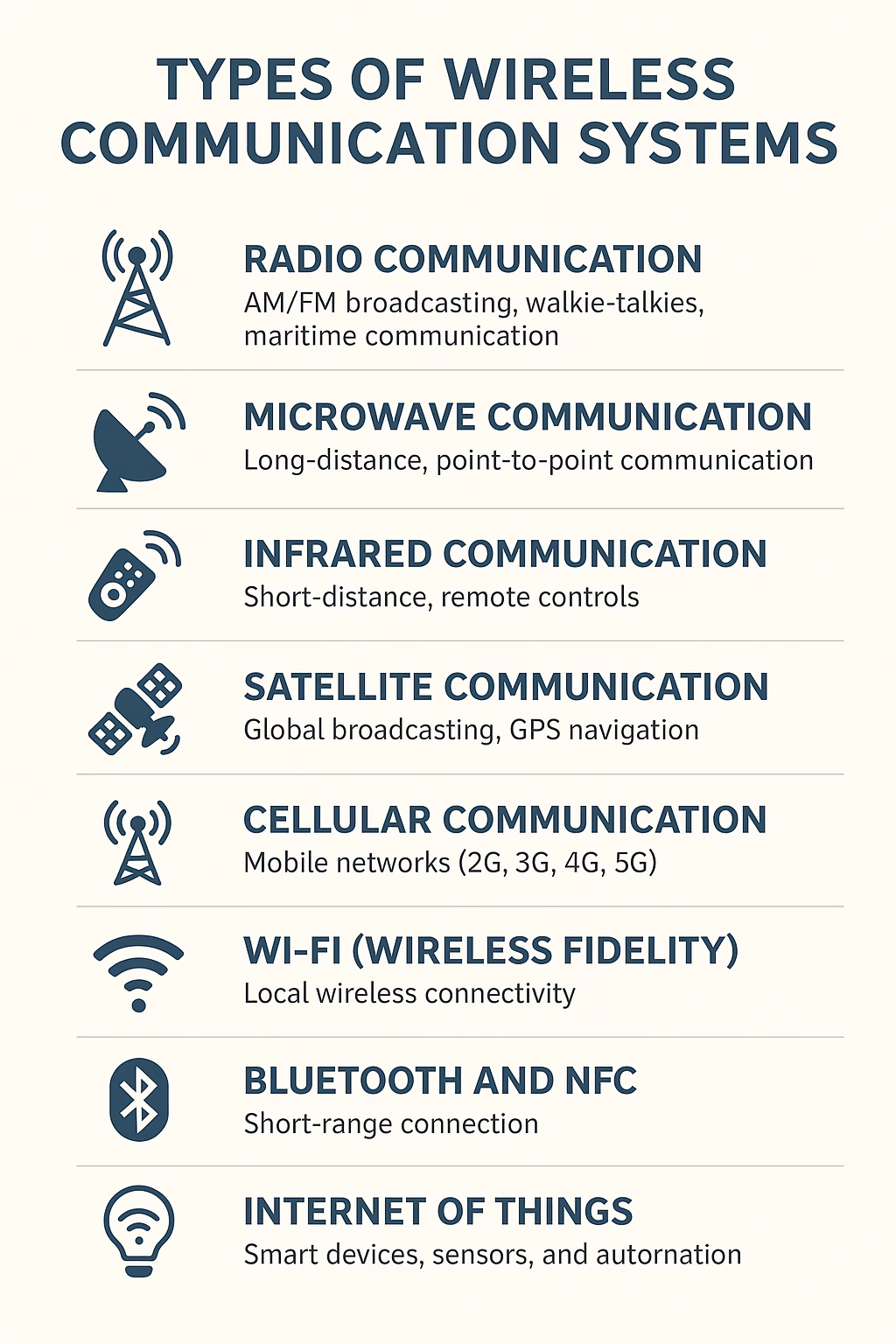
- Wireless Communication – Mobile phones, Wi-Fi, and Bluetooth rely on modulation and demodulation.

Advantages of Radio Modulator and Demodulator (modems)
- Efficient long-distance transmission.
- Better signal strength and reduced interference.
- Multiple channels and frequency allocations.
- Compatibility with both analog and digital systems.
Challenges and Limitations
- Susceptibility to noise in analog modulation.
- High bandwidth requirements for advanced digital modulation.
- Equipment complexity in modern communication systems.
- Security vulnerabilities in data transmission.
Future of Modulation and Modems
The future of modems lies in 5G technology, satellite internet, and IoT (Internet of Things) systems. With advancements in software-defined radio (SDR) and AI-based modulation techniques, communication systems will achieve higher efficiency, security, and speed.
Conclusion
The radio modulator and demodulator (modem) is one of the most vital inventions in communication engineering. From traditional AM radios to modern high-speed internet, modulation and demodulation enable seamless transmission and reception of information. As technology advances, modems will continue to evolve, supporting faster, more reliable, and more secure communication systems.