Introduction
Radio has been one of the most influential communication tools of the 20th century. From live music shows to breaking news broadcasts, radio has shaped cultures and connected societies worldwide. However, with the rapid growth of the internet and digital technologies, Internet Radio has emerged as the modern evolution of traditional broadcasting. Unlike conventional radio, which relies on AM, FM, or shortwave signals, Internet Radio leverages online streaming to deliver audio content across the globe.
In this article, we will explore the history, working principles, advantages, challenges, and future of Internet Radio, highlighting why it continues to thrive in the digital age.
1. What is Internet Radio?
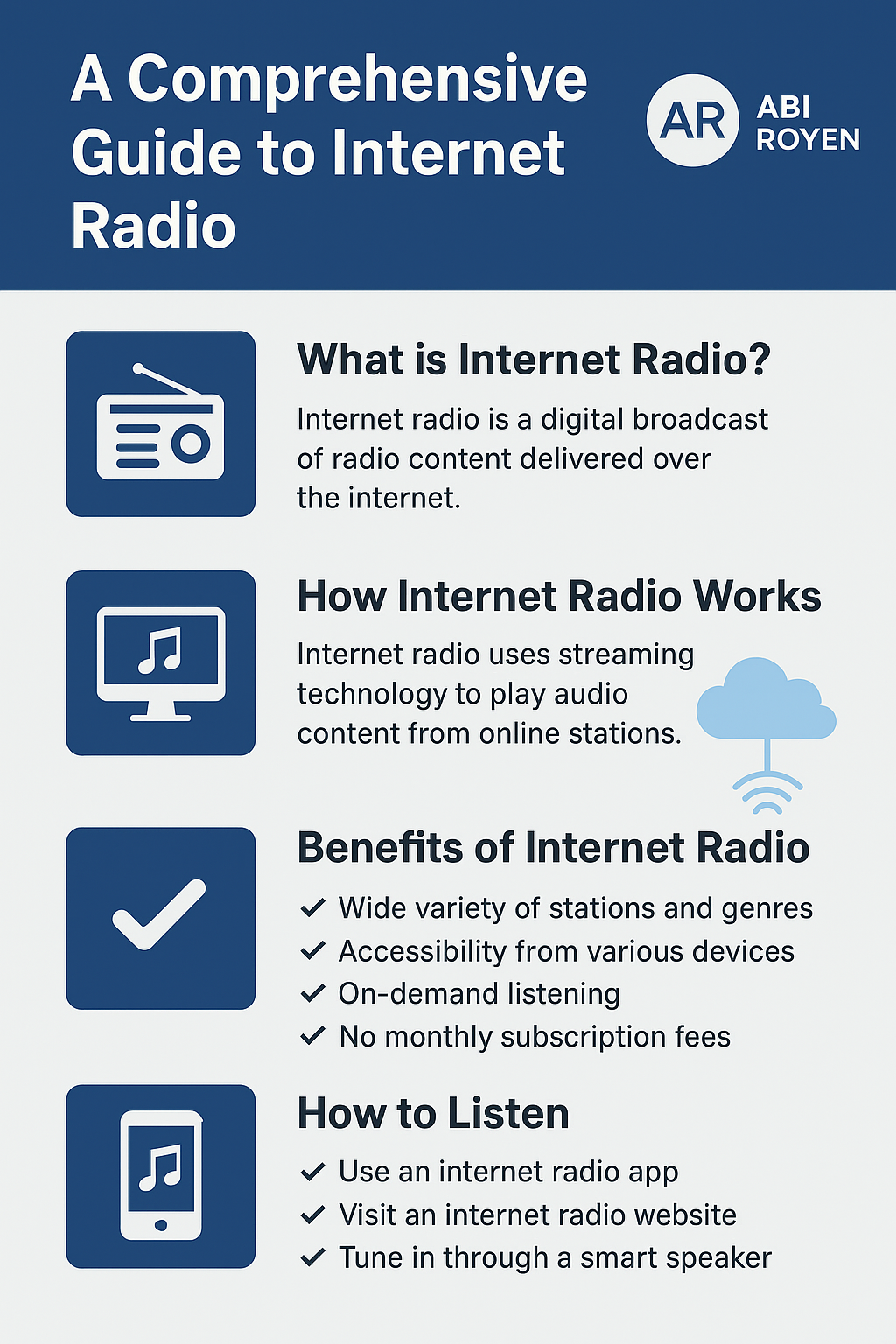
Internet Radio, also known as online radio, web radio, or streaming radio, is a digital audio service transmitted over the internet. Instead of being confined to physical frequencies, it delivers content through data streaming. This allows listeners to access broadcasts from anywhere in the world, provided they have an internet connection.
Key features of Internet Radio include:
- Global Accessibility – Listen to radio stations from any country.
- On-Demand Content – Many platforms offer podcasts and replay options.
- Diverse Genres – From classical music to niche talk shows, options are unlimited.
- Multimedia Integration – Some platforms include video, live chat, or interactive features.
2. The History of Internet Radio
The concept of streaming audio over the internet began in the early 1990s:
- 1993 – The First Internet Radio Broadcast
Carl Malamud launched “Internet Talk Radio,” the world’s first internet-based talk show. - Mid-1990s – Expansion of Streaming Technology
With the development of RealAudio by RealNetworks, audio could be streamed live without full downloads. - 2000s – Online Radio Platforms Rise
Services like Pandora, Last.fm, and Shoutcast became popular, introducing music personalization and user interactivity. - 2010s – Integration with Smartphones
The spread of mobile internet allowed apps like TuneIn and iHeartRadio to thrive, making online radio more accessible. - 2020s – Smart Speakers & AI Integration
Devices like Amazon Echo, Google Home, and AI-driven recommendations continue to enhance the Internet Radio experience.

3. How Internet Radio Works
Internet Radio operates using a simple but powerful mechanism:
- Content Creation – DJs, radio hosts, or automated playlists produce audio content.
- Encoding – Audio is digitized and compressed into formats like MP3, AAC, or OGG.
- Streaming Servers – The encoded audio is uploaded to servers that distribute it.
- Listeners Access – Using apps, browsers, or smart devices, users connect to the server stream.
Unlike podcasts, which are downloaded, Internet Radio works in real-time, similar to traditional radio but without geographic limits.
4. Advantages of Internet Radio
🌍 Global Reach
Traditional FM stations are restricted by frequency ranges, but Internet Radio can broadcast worldwide.
🎵 Diverse Content Choices
From local community radio to international music shows, listeners enjoy unparalleled variety.
📱 Multi-Device Access
Internet Radio is available on PCs, smartphones, smart TVs, and smart speakers.
🎤 Personalization
AI algorithms recommend content based on user preferences, making listening more engaging.
💰 Cost-Effective Broadcasting
For creators, setting up an Internet Radio station is far cheaper than maintaining FM or AM stations.
5. Challenges of Internet Radio
Despite its benefits, Internet Radio faces several challenges:
- Licensing and Royalties – Broadcasters must pay fees for copyrighted music.
- Internet Dependency – Poor connections can cause buffering or interruptions.
- Competition – Platforms like Spotify and YouTube Music compete for listener attention.
- Monetization Issues – Many stations rely heavily on ads or donations.
6. The Role of Internet Radio in Today’s Society
Internet Radio has grown into more than just entertainment. It plays roles in:
- Education – Online lectures and e-learning content.
- Community Building – Local stations promoting cultural identity.
- Emergency Communication – Streaming important news during crises.
- Independent Music Promotion – Helping small artists reach global audiences.
7. Future Trends of Internet Radio
The future of Internet Radio looks promising, shaped by innovation:
- AI and Machine Learning – Smarter recommendations and automated DJs.
- Voice Integration – Deeper connection with smart assistants.
- 5G Technology – Faster, more reliable streaming experiences.
- Virtual Reality Radio – Immersive listening with interactive elements.
- Blockchain Integration – Transparent royalty payments for artists.
Conclusion
Internet Radio is more than just the digital successor of traditional broadcasting—it represents a revolution in communication and entertainment. With its global accessibility, diverse content, and constant innovation, it continues to thrive in the modern digital landscape. While challenges remain, the opportunities for growth and cultural impact are limitless.
For listeners, it means freedom of choice and access to endless audio experiences. For creators, it opens the door to global audiences without geographical barriers.
As technology evolves, Internet Radio will likely remain at the forefront of digital media, blending tradition with innovation in the age of connectivity.