Introduction
In today’s world, electricity has become the backbone of modern civilization. From industrial machinery to household appliances, everything depends on reliable and efficient electrical power. At the heart of this energy flow lies power sources in electrical systems. These sources act as the origin point of electricity, ensuring that all connected devices receive the energy required for operation.
This article provides an in-depth look at the types of power sources, their importance, and their applications in various sectors. Whether you are a student of electrical engineering, a professional in the power industry, or simply curious about how electricity is generated and distributed, this guide will give you a clear understanding.
What Are Power Sources in Electrical Systems?
A power source in an electrical system is any device or mechanism that generates, stores, or supplies electrical energy to connected loads. These sources can vary widely in form, ranging from large-scale power plants that supply entire cities to small batteries that power electronic gadgets.
Without a reliable source of electrical energy, an electrical system cannot function. The choice of power source depends on factors such as:
- Energy demand (industrial vs. residential usage)
- Location (urban vs. remote areas)
- Sustainability goals (fossil fuels vs. renewable energy)
- Reliability and backup needs
Types of Power Sources in Electrical Systems
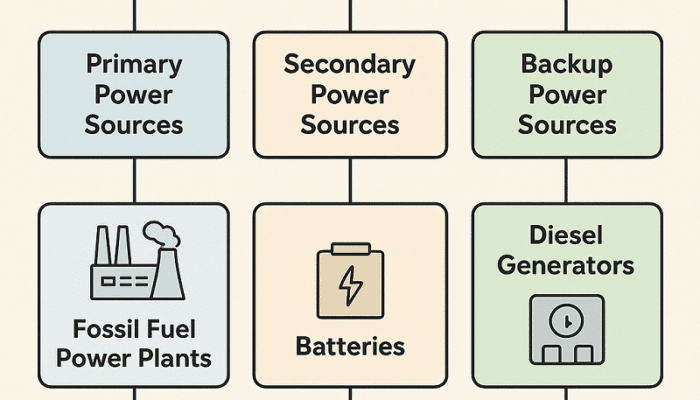
Power sources can generally be divided into three main categories: primary sources, secondary sources, and backup sources.
1. Primary Power Sources
Primary sources provide the main electricity supply for large-scale distribution systems.
- Fossil Fuel Power Plants
- Coal, oil, and natural gas are burned to generate steam that drives turbines.
- Still widely used but face environmental concerns due to greenhouse gas emissions.
- Nuclear Power Plants
- Use nuclear fission to produce heat, which generates electricity.
- Provide high energy output with low carbon emissions, but safety and waste disposal remain challenges.
- Renewable Energy Sources
- Solar Power: Converts sunlight into electricity using photovoltaic (PV) panels.
- Wind Power: Uses wind turbines to produce electricity.
- Hydropower: Harnesses flowing water to drive turbines.
- Geothermal Power: Utilizes Earth’s internal heat to generate energy.
- These sources are increasingly important due to their sustainability and low environmental impact.
2. Secondary Power Sources
These sources store and deliver electricity when needed, often supporting the main grid.
- Batteries
- Commonly used in portable electronics, electric vehicles, and backup power systems.
- Lithium-ion batteries dominate modern applications due to efficiency and energy density.
- Fuel Cells
- Generate electricity through chemical reactions, often using hydrogen as fuel.
- Considered a clean energy source with applications in transportation and stationary power supply.
- Capacitors and Supercapacitors
- Store energy temporarily and release it quickly.
- Useful in systems requiring rapid power delivery, such as elevators or regenerative braking in trains.
3. Backup Power Sources
Backup sources ensure uninterrupted electricity in case of a grid failure.
- Diesel Generators
- Widely used in hospitals, data centers, and critical infrastructure.
- Provide reliable power but contribute to emissions and fuel dependency.
- Uninterruptible Power Supply (UPS)
- Protects sensitive electronic devices from power outages and fluctuations.
- Usually integrated with batteries to provide instant backup.
- Hybrid Systems
- Combine renewable energy sources with batteries or generators.
- Increasingly popular in remote or off-grid areas.
Importance of Power Sources in Electrical Systems
- Reliability of Supply – Ensures continuous operation of industries, hospitals, transportation, and households.
- Energy Security – Reduces dependence on external fuel imports and enhances national security.
- Economic Growth – Stable electricity supply supports manufacturing, IT, and service sectors.
- Sustainability – Renewable energy sources reduce carbon emissions and environmental impact.
- Backup Readiness – Prevents losses and accidents during unexpected power failures.
Applications of Different Power Sources
- Residential Use: Solar panels, batteries, and grid electricity.
- Commercial Buildings: UPS systems, diesel generators, renewable integration.
- Industrial Plants: High-voltage power from fossil, nuclear, or hydro plants.
- Remote Areas: Off-grid solar, wind, and hybrid systems.
- Transportation: Electric vehicles powered by batteries and fuel cells.

Challenges in Power Source Selection
- Environmental Concerns – Fossil fuels remain dominant, contributing to climate change.
- High Initial Costs – Renewable energy systems require significant investment.
- Storage Limitations – Batteries and capacitors have capacity and lifespan constraints.
- Grid Integration – Balancing intermittent sources like solar and wind with stable supply is complex.
- Maintenance and Safety – Nuclear plants, generators, and high-voltage systems demand strict safety protocols.
Future of Power Sources in Electrical Systems
The future of power generation and supply will be shaped by renewable integration, smart grids, and energy storage advancements. Key trends include:
- Decentralized Power Generation: More homes and businesses adopting rooftop solar and small wind turbines.
- Smart Grids: Intelligent distribution networks that balance supply and demand in real-time.
- Energy Storage Innovation: Development of advanced batteries, such as solid-state and flow batteries.
- Green Hydrogen: Fuel cells powered by hydrogen produced from renewable sources.
- Carbon-Neutral Strategies: Governments and industries focusing on sustainable energy transitions.
Conclusion
Power sources are the foundation of any electrical system. From fossil fuels and nuclear plants to solar panels and fuel cells, each source plays a unique role in powering modern society. While challenges remain—such as environmental impact, cost, and reliability—the future is moving toward cleaner and more efficient solutions.
Understanding power sources in electrical systems not only helps in designing better infrastructure but also supports sustainable growth for future generations.