

Introduction
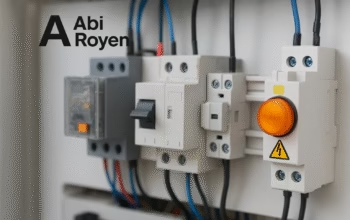
In modern industries and everyday applications, motor control and drives play a crucial role in ensuring the efficient operation of machines and electrical systems. From powering household appliances to running large-scale industrial plants, motors are at the heart of mechanical motion. However, without proper control systems and drive technologies, these motors cannot deliver the precision, efficiency, and reliability required in today’s world.
This article explores the principles of motor control and drives, their classifications, working mechanisms, applications, and the latest advancements in technology. Whether you are an electrical engineer, automation specialist, or student, understanding motor control systems is essential to mastering the field of electrical engineering.
What is Motor Control and Drives?
Motor control refers to the process of regulating the performance of electric motors. It involves managing variables such as:
- Speed control – Adjusting the motor’s rotation speed according to load requirements.
- Torque control – Maintaining optimal torque output under varying operating conditions.
- Direction control – Reversing motor direction when needed.
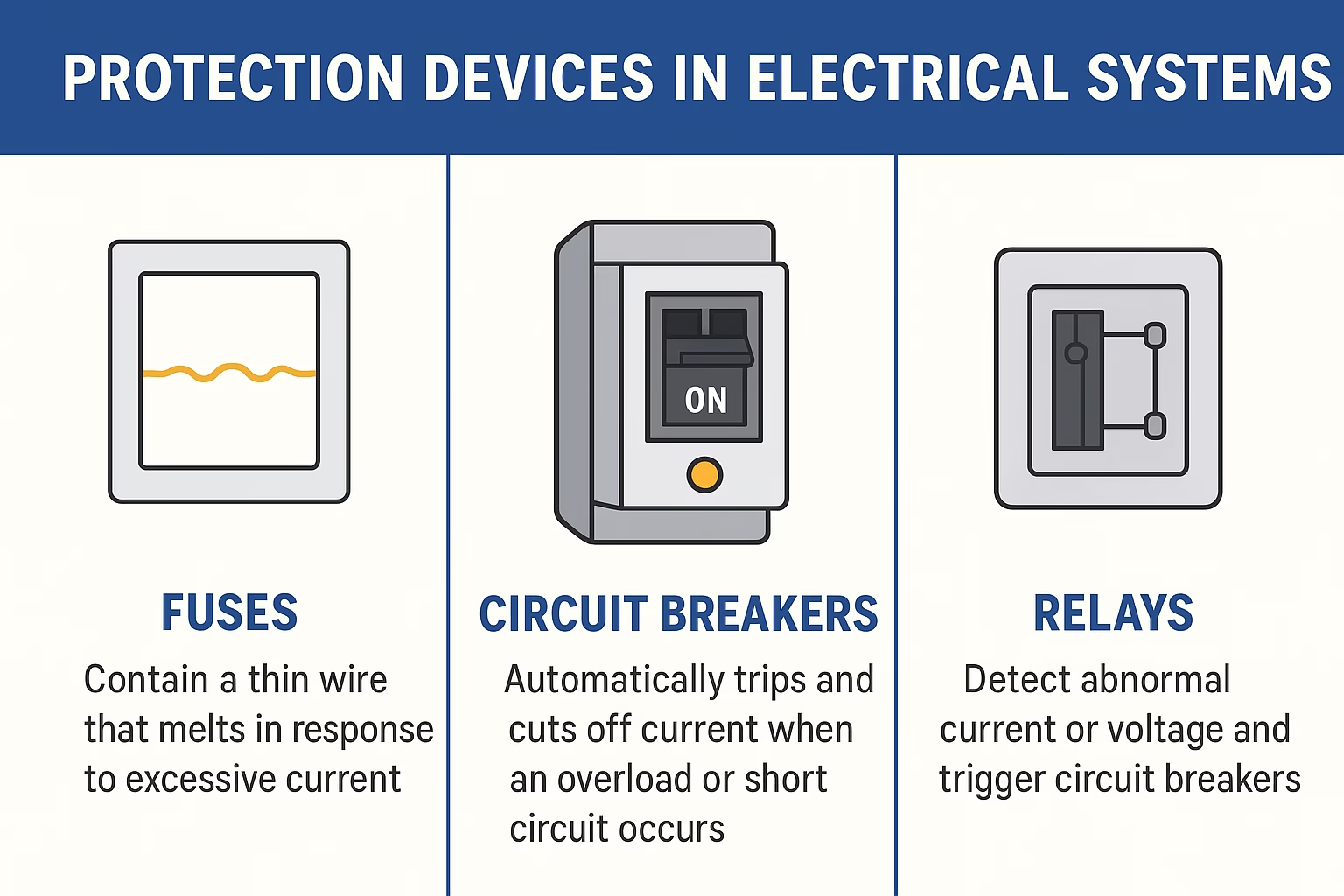
- Protection – Safeguarding motors from faults such as overcurrent, overheating, and voltage fluctuations.
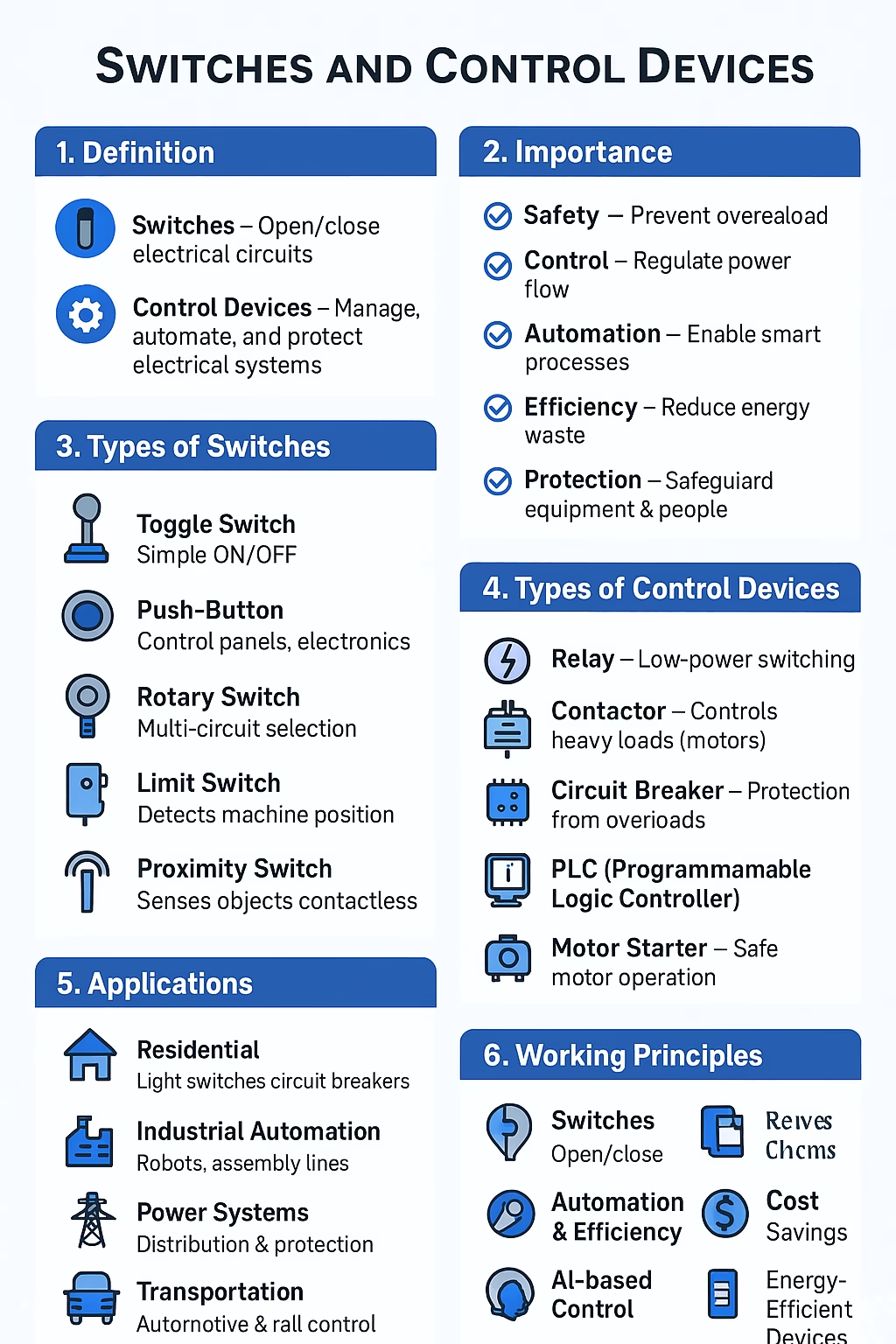
Motor control systems can be as simple as an on-off switch or as advanced as computer-controlled automation systems integrated with sensors and feedback loops.
What are Motor Control and Drives?
A motor drive is an electronic device or system that controls the speed, torque, and direction of an electric motor. Motor drives regulate the electrical power supplied to the motor, making them essential for energy efficiency and precise motion control.
Key components of motor drives include:
- Power converter (inverter/rectifier): Converts electrical energy into the required form (AC/DC).
- Controller: Processes input commands and feedback signals to regulate motor performance.
- Sensors: Provide real-time data on motor speed, position, and load conditions.
Types of Motor Control and Drives
Motor drives can be broadly categorized based on the type of motor they control:
1. DC Motor Drives
DC drives control direct current motors by adjusting the voltage and current supplied. They are known for:
- High starting torque
- Precise speed control
- Applications in elevators, rolling mills, and traction systems
2. AC Motor Drives
AC drives regulate alternating current motors, commonly induction and synchronous motors. Types include:
- Variable Frequency Drives (VFDs): Control motor speed by varying supply frequency.
- Servo Drives: Provide precise motion control for robotics and CNC machines.
- Vector Drives: Maintain optimal torque and performance under load variations.
3. Stepper and Servo Drives
- Stepper motor drives control motors in discrete steps, ideal for printers, robotics, and CNC machines.
- Servo drives use feedback loops for high-precision applications like automation and robotics.
Working Principle of Motor Control and Drives
The fundamental working principle of motor drives is based on power conversion and control. A drive system typically includes:
- Power Source → AC mains or DC supply.
- Power Converter → Converts electrical energy into suitable voltage and frequency.
- Controller → Adjusts motor operation based on set commands and feedback signals.
- Motor → Converts electrical energy into mechanical motion.
For example, a VFD converts incoming AC supply to DC (rectification), smooths it using capacitors, and then converts it back to AC with variable frequency and voltage to regulate motor speed.
Applications of Motor Control and Drives
Motor control and drives are widely used in various sectors:
1. Industrial Automation
- Conveyor systems
- Robotic arms
- Packaging machines
2. HVAC Systems
- Fans, pumps, and compressors
- Energy-efficient air conditioning and ventilation
3. Transportation
- Electric vehicles (EVs)
- Railway traction systems
- Elevators and escalators
4. Renewable Energy Systems
- Wind turbine generators
- Solar-powered pumps and drives
5. Household Appliances
- Washing machines
- Refrigerators
- Electric fans


Advantages of Modern Motor Control and Drives
Modern motor drive systems bring numerous benefits, such as:
- Energy Efficiency: Optimized energy consumption with reduced losses.
- Precision Control: Accurate speed and torque regulation for demanding applications.
- Extended Motor Life: Protection features reduce wear and tear.
- Automation Integration: Seamless compatibility with PLCs, SCADA, and IoT platforms.
- Reduced Maintenance Costs: Smart diagnostics and predictive maintenance capabilities.
Recent Advancements in Motor Control and Drives
With technological evolution, motor drive systems are becoming smarter and more energy-efficient. Some key innovations include:
- IoT-enabled Drives: Remote monitoring and predictive maintenance using cloud platforms.
- Regenerative Drives: Recovering energy during braking and feeding it back to the grid.
- AI-based Control Systems: Machine learning algorithms for adaptive and self-optimizing motor performance.
- Compact High-Efficiency Drives: Smaller, lighter, and more powerful units for industrial applications.
Future Trends in Motor Control and Drives
The future of motor control and drives will be shaped by:
- Integration with Industry 4.0 technologies.
- Increased adoption of electric vehicles (EVs) requiring advanced drive systems.
- Development of eco-friendly drives to minimize carbon footprint.
- Use of wireless communication protocols for smart automation.
Conclusion: Motor Control and Drives
Motor control and drives are fundamental to modern electrical and industrial systems. They ensure that motors operate efficiently, safely, and with precision. From household appliances to advanced robotics and renewable energy systems, motor drives are the backbone of automation and energy management.
As industries continue to embrace smart technologies, IoT, and AI-driven solutions, the role of motor control and drive systems will only become more significant in shaping a sustainable and technologically advanced future.