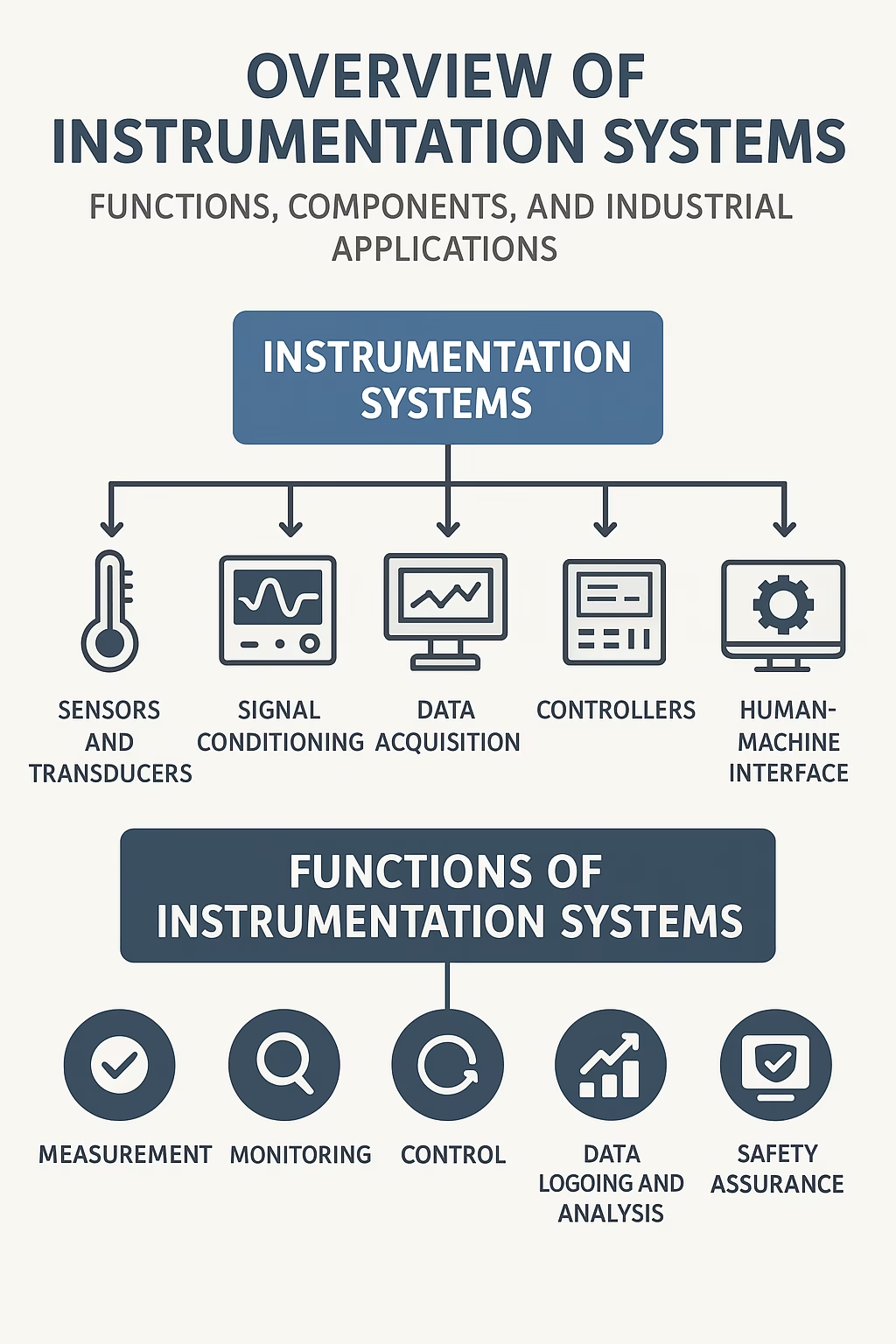
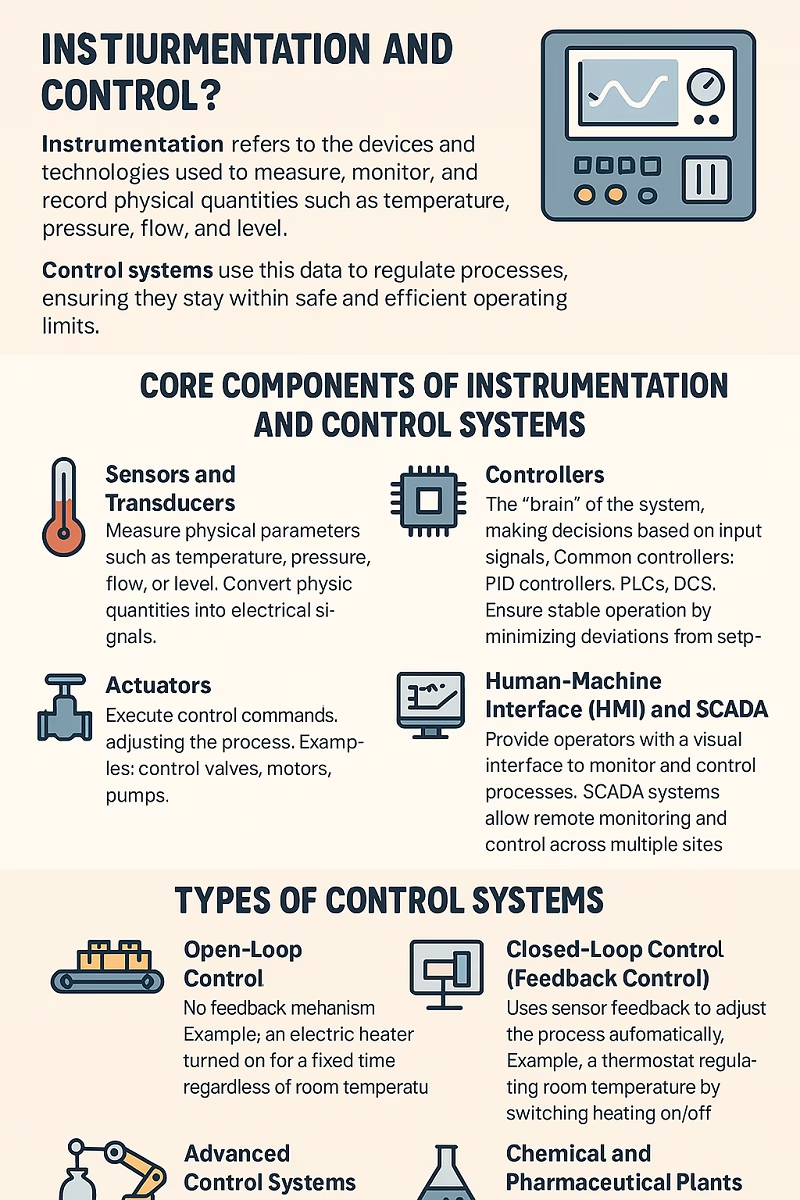
Instrumentation plays a critical role in almost every industrial and engineering process. From controlling complex machinery to monitoring environmental conditions, instrumentation enables precise measurement and control of various physical quantities. Understanding the main categories of instrumentation is essential for engineers, technicians, and anyone involved in automation, manufacturing, or research and development.
In this article, we’ll explore the core categories of instrumentation, including their functions, key components, and real-world applications.
1. Main Categories of Instrumentation: Temperature Instrumentation
Temperature measurement is one of the most fundamental categories in instrumentation. Many industrial processes rely on accurate temperature control to ensure quality, safety, and efficiency.
📌 Common Devices:
- Thermocouples
Measure temperature based on the voltage generated at the junction of two dissimilar metals. - RTDs (Resistance Temperature Detectors)
Use the principle of resistance change in metals with temperature. - Thermistors
Semiconductor devices with resistance that varies significantly with temperature. - Infrared Sensors
Non-contact measurement tools useful for moving or inaccessible surfaces.
🔧 Applications:
- Boilers and furnaces
- Chemical processing
- Food and beverage industry
- HVAC systems
Read More: Temperature Instrumentation: Principles, Types, and Applications
2. Main Categories of Instrumentation: Pressure Instrumentation
Pressure instrumentation measures the force exerted by gases or liquids in a system. Accurate pressure readings are vital for safety and performance monitoring.
📌 Common Devices:
- Pressure Gauges
Mechanical devices indicating pressure via a dial. - Transducers and Transmitters
Convert pressure into an electrical signal for control systems. - Differential Pressure Sensors
Measure the difference between two pressure points — critical in flow measurement and filtration.
🔧 Applications:
- Hydraulic and pneumatic systems
- Oil and gas pipelines
- Industrial process plants
- Medical equipment (e.g., blood pressure monitors)
Read More: Pressure Instrumentation: Principles, Types, and Industrial Applications
3. Main Categories of Instrumentation: Flow Instrumentation
Flow instrumentation deals with the measurement of liquids, gases, and steam moving through pipes and channels. Flow rate monitoring is essential for process optimization and energy management.
📌 Common Devices:
- Rotameters
Use a float in a conical tube to indicate flow rate. - Magnetic Flow Meters
Use electromagnetic fields to measure conductive fluid flow. - Ultrasonic Flow Meters
Employ sound waves to detect fluid velocity. - Turbine and Vortex Flow Meters
Mechanical and vortex-based methods used in high-pressure environments.
🔧 Applications:
- Water and wastewater treatment
- Petrochemical refineries
- Pharmaceutical manufacturing
- HVAC systems
Read More: Flow Instrumentation: Principles, Types, and Applications in Modern Industries
4. Main Categories of Instrumentation: Level Instrumentation
Level instrumentation determines the height of materials (liquids, solids, or slurries) within a container, tank, or silo. This is vital in inventory management and preventing overflow or dry-run situations.
📌 Common Devices:
- Float Switches
Simple mechanical devices that indicate liquid level. - Ultrasonic Level Sensors
Measure the time delay of a sound wave to determine the level. - Capacitive and Radar Level Transmitters
Offer high-accuracy, non-contact measurements even in harsh environments.
🔧 Applications:
- Water reservoirs
- Chemical tanks
- Food processing silos
- Fuel storage
Read More: Understanding Level Instrumentation: Principles, Types, and Applications
5. Main Categories of Instrumentation: Analytical Instrumentation
Analytical instruments are used to measure chemical composition and physical properties. These devices provide insights into the quality, purity, and behavior of materials.
📌 Common Devices:
- pH Meters
Measure the acidity or alkalinity of a solution. - Gas Chromatographs (GC)
Separate and analyze compounds in a gas sample. - Spectrophotometers
Measure light absorption to identify chemical concentrations.
🔧 Applications:
- Environmental monitoring
- Pharmaceutical labs
- Water quality testing
- Petrochemical analysis
Read More: Analytical Instrumentation: Principles, Types, and Applications
6. Main Categories of Instrumentation: Control and Recording Instrumentation
Instrumentation is not just about measurement—it’s also about control and data recording. These tools integrate feedback systems to automate processes and maintain system stability.
📌 Common Devices:
- PID Controllers
Provide precise control based on proportional, integral, and derivative calculations. - SCADA Systems
Centralized systems that gather, analyze, and visualize data in real-time. - Data Loggers and Chart Recorders
Record and store process variables over time for auditing and analysis.
🔧 Applications:
- Industrial automation
- Power generation
- Transportation systems
- Manufacturing plants
Read More:
Control Instrumentation: Principles, Types, and Applications in Modern Industries
Recording Instrumentation: Principles, Applications, and Modern Trends


7. Main Categories of Instrumentation: Motion and Vibration Instrumentation
These instruments are designed to detect movement, position, or mechanical vibrations, which are crucial for predictive maintenance and equipment monitoring.
📌 Common Devices:
- Accelerometers
Measure acceleration or vibration. - Proximity Sensors
Detect the presence or movement of objects. - Gyroscopes
Monitor angular position and rotation.
🔧 Applications:
- Aerospace navigation
- Machine health monitoring
- Automotive testing
- Robotics
Read More:
Motion Instrumentation: Principles, Applications, and Future Trends
Understanding Vibration Instrumentation: Principles, Applications, and Industry Benefits
8. Main Categories of Instrumentation: Humidity and Environmental Instrumentation
In many industries, environmental conditions such as humidity, light, and air quality must be tightly controlled.
📌 Common Devices:
- Hygrometers
Measure relative humidity. - Dew Point Sensors
Detect the temperature at which moisture condenses. - Air Quality Monitors
Measure particulate matter and gaseous pollutants.
🔧 Applications:
- Cleanrooms
- Data centers
- Agriculture
- HVAC systems
Read More: Understanding Humidity Instrumentation: Principles, Types, and Applications
Why Understanding Main Categories of Instrumentation
Understanding the different categories of instrumentation enables professionals to:
- Choose the right sensor or device for the task
- Design more efficient and safer systems
- Improve process accuracy and quality
- Reduce maintenance and downtime
- Ensure compliance with industry standards
In integrated control systems, these devices often work together, providing data that feeds into automation and decision-making frameworks. As technology evolves, instruments are becoming smarter with built-in diagnostics, wireless connectivity, and AI-based analysis.
Read More: Environmental Instrumentation: Key Tools for Monitoring and Protecting Our Planet
Conclusion
Instrumentation is the backbone of modern industrial systems. Whether measuring temperature, pressure, flow, level, or chemical composition, each category plays a pivotal role in ensuring accurate control, safety, and efficiency.
As industries continue to adopt Industry 4.0 and digital transformation, the importance of understanding and applying the main categories of instrumentation becomes even more critical.
Engineers, operators, and decision-makers must stay informed about instrumentation technologies to keep their operations competitive and reliable.
📌 Want more insights on industrial automation and engineering topics?
Visit Abi Royen for expert-written content, industry trends, and technical guidance.