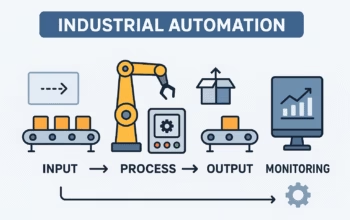
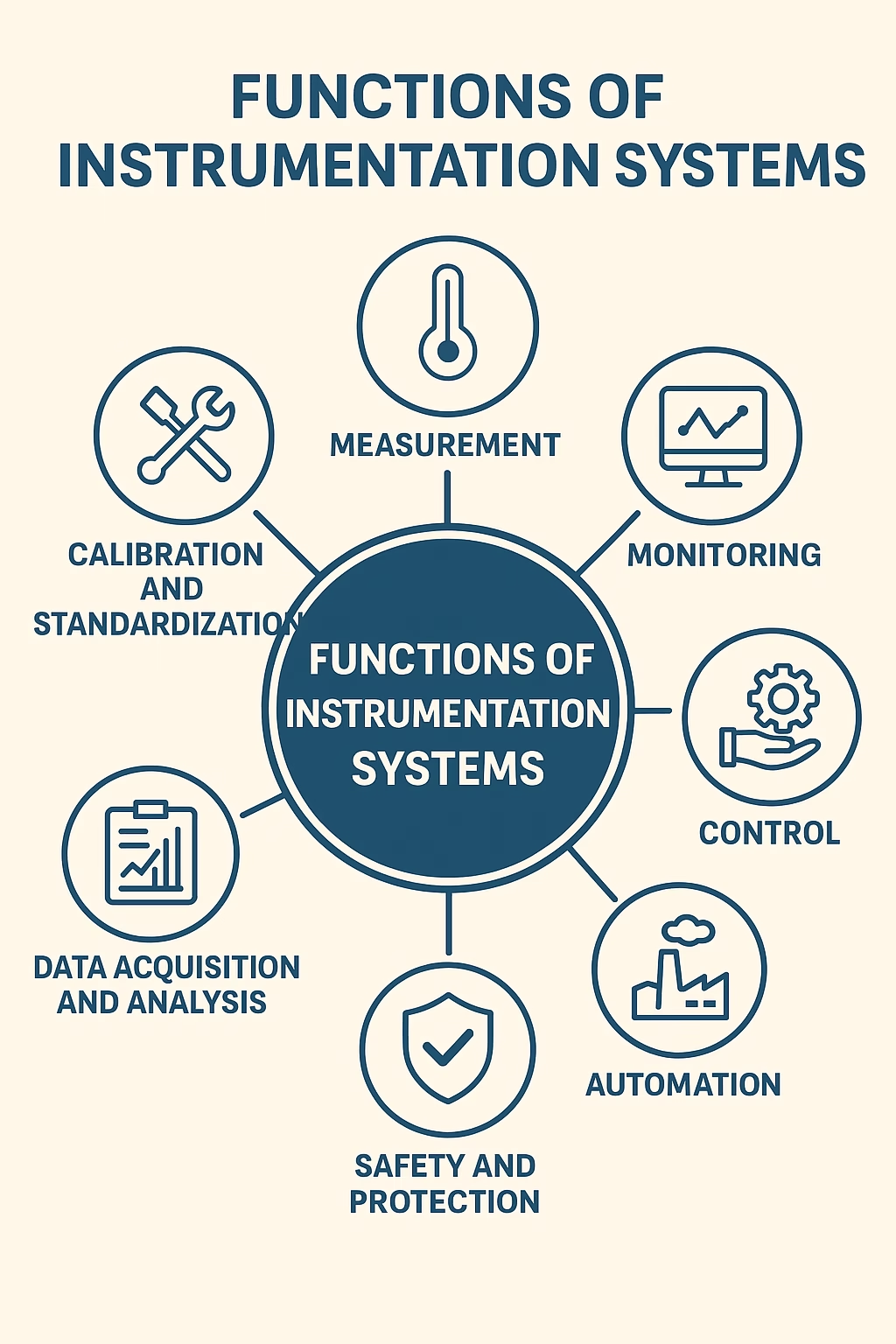
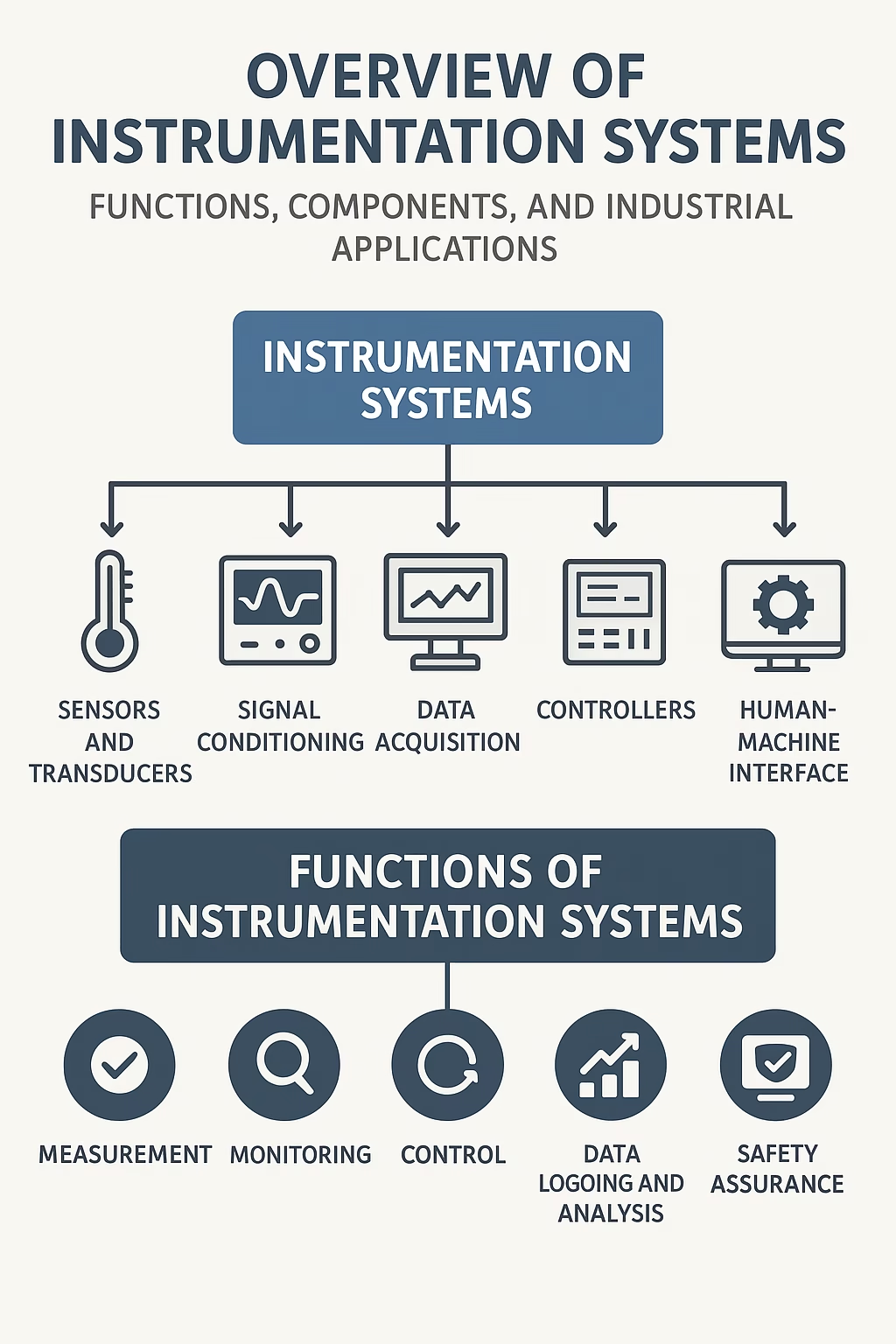
In today’s fast-paced industrial landscape, instrumentation and control systems play a critical role in ensuring efficiency, safety, and productivity. These systems are the backbone of industrial automation, enabling operators to monitor, measure, and regulate processes with precision. From oil refineries and power plants to manufacturing facilities and chemical industries, instrumentation and control systems ensure that every process runs smoothly and within desired parameters.
This article explores the principles, components, and applications of instrumentation and control systems, highlighting their benefits in modern industries.
What is Instrumentation and Control Systems?
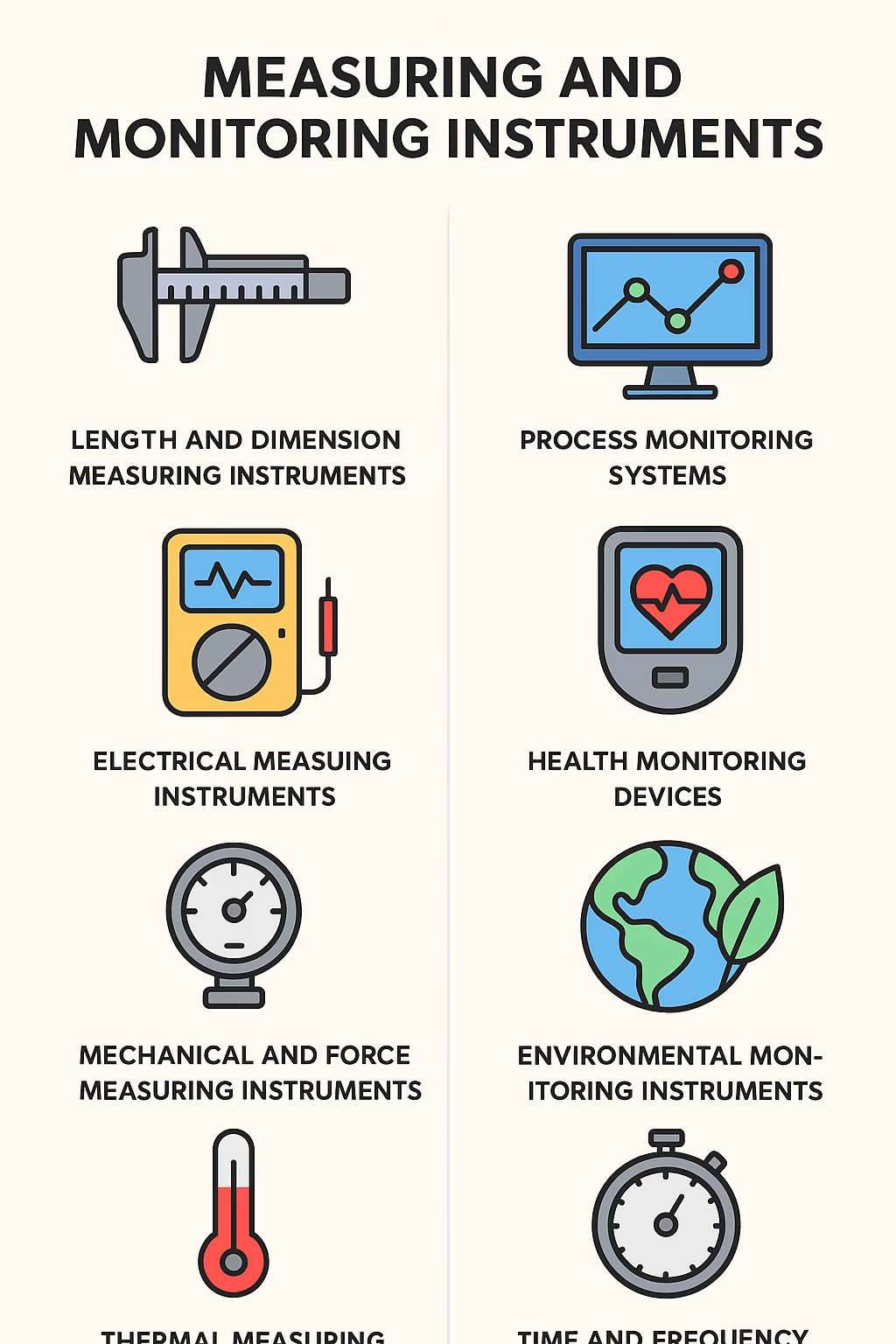
Instrumentation refers to the devices and technologies used to measure, monitor, and record physical quantities such as temperature, pressure, flow, and level. These instruments provide vital data that form the foundation of decision-making in industrial processes.
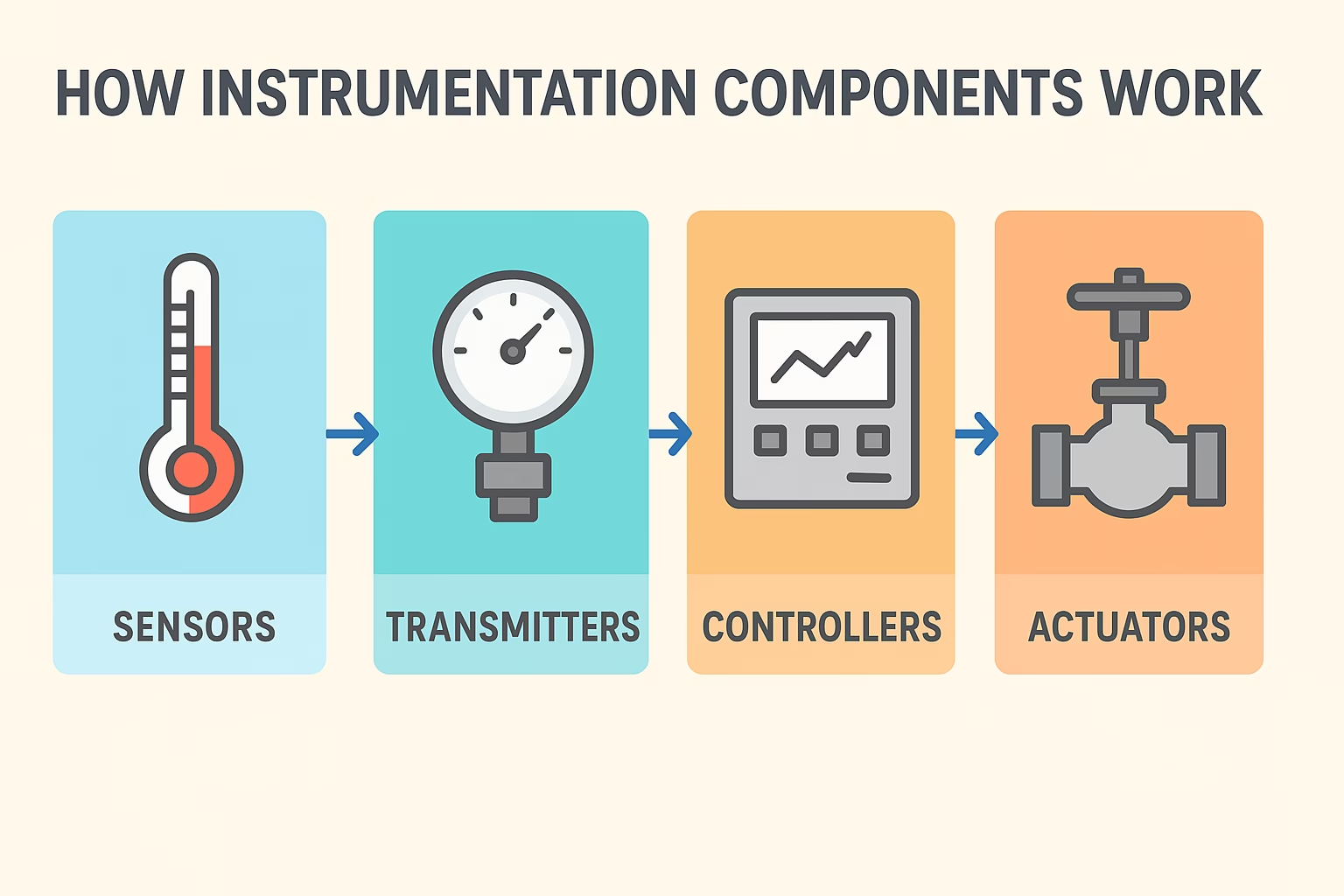
Control systems, on the other hand, use this data to regulate processes, ensuring they stay within safe and efficient operating limits. Together, instrumentation and control systems create a closed loop where measurement leads to action, ensuring continuous and optimized operations.
For example, in a chemical plant, temperature sensors (instruments) measure the heat in a reactor. A control system, such as a PLC (Programmable Logic Controller), uses this data to adjust valves or heaters, keeping the process within safe limits.
Core Components of Instrumentation and Control Systems
To understand these systems better, let’s break down their main components:
1. Sensors and Transducers
- Measure physical parameters such as temperature, pressure, flow, or level.
- Convert physical quantities into electrical signals.
- Examples: thermocouples, RTDs, pressure transmitters, flowmeters.
2. Controllers
- The “brain” of the system, making decisions based on input signals.
- Common controllers: PID controllers, PLCs, DCS (Distributed Control Systems).
- Ensure stable operation by minimizing deviations from setpoints.
3. Actuators
- Execute control commands, adjusting the process.
- Examples: control valves, motors, pumps.
4. Human-Machine Interface (HMI) and SCADA
- Provide operators with a visual interface to monitor and control processes.
- SCADA systems allow remote monitoring and control across multiple sites.
Types of Instrumentation and Control Systems
1. Open-Loop Control
- No feedback mechanism.
- Example: an electric heater turned on for a fixed time regardless of room temperature.
2. Closed-Loop Control (Feedback Control)
- Uses sensor feedback to adjust the process automatically.
- Example: a thermostat regulating room temperature by switching heating on/off.
3. Advanced Control Systems
- Incorporate modern technologies such as model predictive control (MPC), fuzzy logic, and AI-based controls.
- Widely used in complex industries like petrochemicals and pharmaceuticals.
Applications of Instrumentation and Control Systems
Instrumentation and control systems are everywhere in industrial sectors. Key applications include:
1. Oil and Gas Industry
- Monitoring pressure, flow, and temperature in pipelines.
- Ensuring safety through automatic shutdown systems.
2. Power Generation
- Controlling steam boilers, turbines, and generators.
- Improving efficiency of renewable energy plants such as solar and wind.
3. Manufacturing Industry
- Robotics and automated assembly lines rely on precise instrumentation.
- Quality control through real-time monitoring.
4. Chemical and Pharmaceutical Plants
- Ensuring precise mixing, heating, and reaction control.
- Meeting safety standards and regulatory compliance.
5. Water and Wastewater Treatment
- Monitoring pH levels, turbidity, and chemical dosing.
- Automated control ensures environmental compliance.
Benefits of Instrumentation and Control Systems
- Increased Efficiency
Automation reduces human error, optimizes resources, and minimizes downtime. - Enhanced Safety
Critical alarms and emergency shutdowns protect equipment and personnel. - Cost Savings
Better process control reduces waste, energy consumption, and operational costs. - Data-Driven Decisions
Continuous monitoring provides valuable insights for predictive maintenance and optimization. - Scalability
Modern control systems integrate easily with digital platforms and Industry 4.0 technologies.
Instrumentation and Control Systems in the Era of Industry 4.0
The rise of Industry 4.0 and the Industrial Internet of Things (IIoT) has transformed instrumentation and control. Smart sensors, wireless communication, and cloud-based analytics now allow real-time process optimization on a global scale.
Key trends include:
- Smart Sensors for predictive maintenance.
- Edge Computing for faster decision-making.
- AI and Machine Learning to enhance control strategies.
- Cybersecurity integration to protect critical industrial assets.


Challenges in Instrumentation and Control Systems
While these systems offer many advantages, industries face challenges such as:
- High installation and maintenance costs.
- Cybersecurity threats in connected systems.
- Need for skilled engineers and technicians.
- Integration of legacy systems with modern technologies.
Overcoming these challenges requires investment in workforce training, adoption of secure digital solutions, and continuous system upgrades.
Conclusion
Instrumentation and control systems are the backbone of modern industrial automation. By integrating precise measurement devices with intelligent control strategies, industries can achieve higher efficiency, improved safety, and long-term sustainability. As technology continues to advance with Industry 4.0, these systems will play an even more critical role in shaping the future of manufacturing, energy, and process industries.
For businesses looking to remain competitive, investing in advanced instrumentation and control solutions is no longer an option—it’s a necessity.