Introduction of Importance of Electronic Components
Importance of Electronic Components ~ Electronic components form the foundation of nearly every modern device we use daily. From smartphones, computers, and medical devices to industrial machinery, automation systems, and renewable energy solutions, these components enable innovation and functionality. Without electronic components, the world would not have experienced the digital transformation that has reshaped industries, economies, and lifestyles.
This article explores the importance of electronic components, their types, applications, and how they influence modern life and industry.
What Are Electronic Components?
Electronic components are basic building blocks used in electrical circuits. They are designed to control the flow of current, process signals, and perform essential functions within devices. Components are typically categorized as either active components (such as transistors and integrated circuits) or passive components (such as resistors, capacitors, and inductors).
Each component has a specific role, and when combined, they create functional circuits that power the devices we rely on.
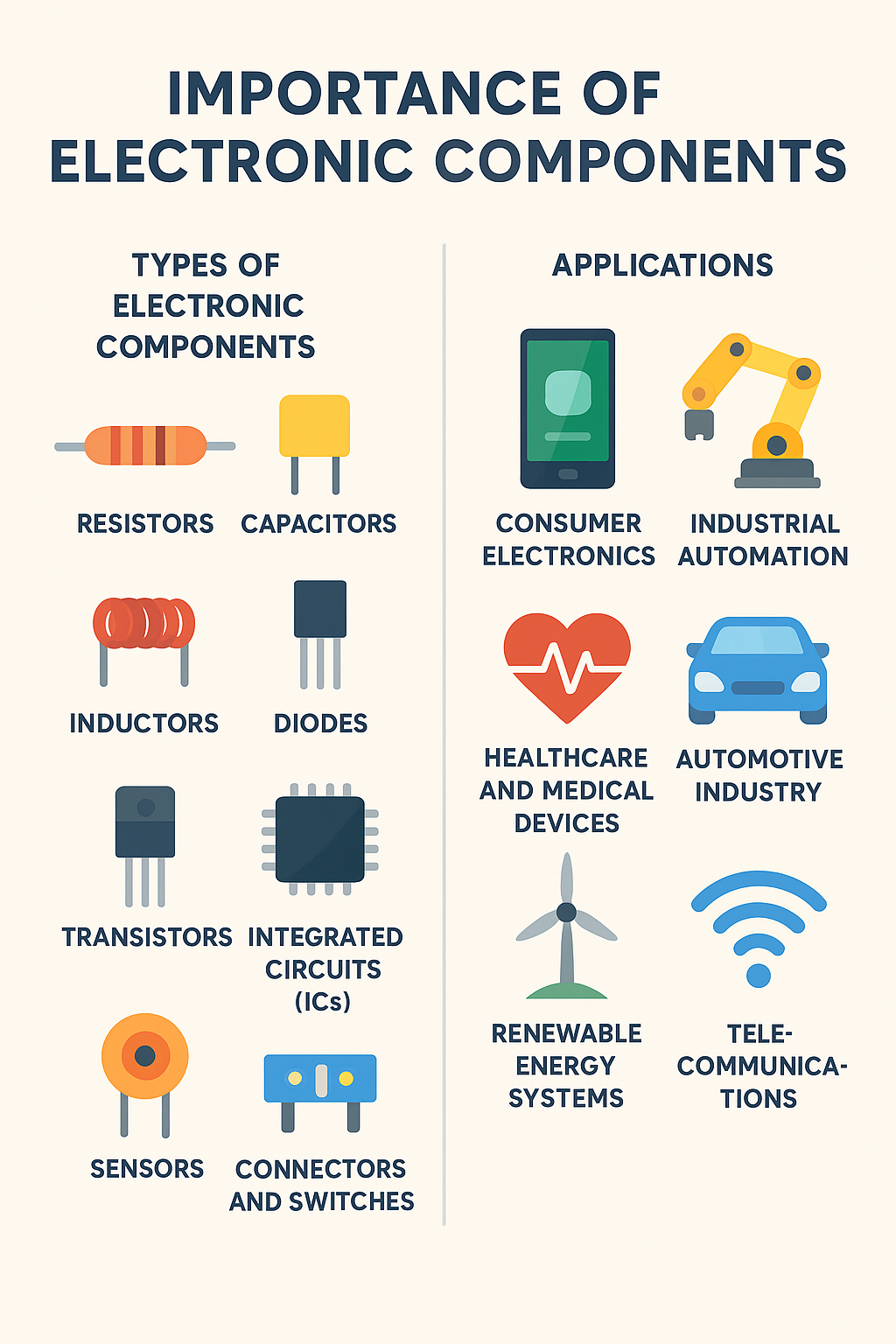
Types of Electronic Components
Understanding the types of electronic components highlights their diverse roles in modern technology.
1. Resistors
Resistors limit or regulate the flow of electric current. They are critical in preventing circuit damage, controlling voltage, and ensuring stability.
2. Capacitors
Capacitors store and release electrical energy. They are widely used in power supplies, signal processing, and energy storage applications.
3. Inductors
Inductors resist changes in current and are mainly used in power supplies, filters, and communication systems.
4. Diodes
Diodes allow current to flow in one direction only. They are essential in rectifiers, LED technology, and voltage regulation.
5. Transistors
Transistors are fundamental active components that amplify or switch electronic signals. They are the backbone of computing and telecommunications.
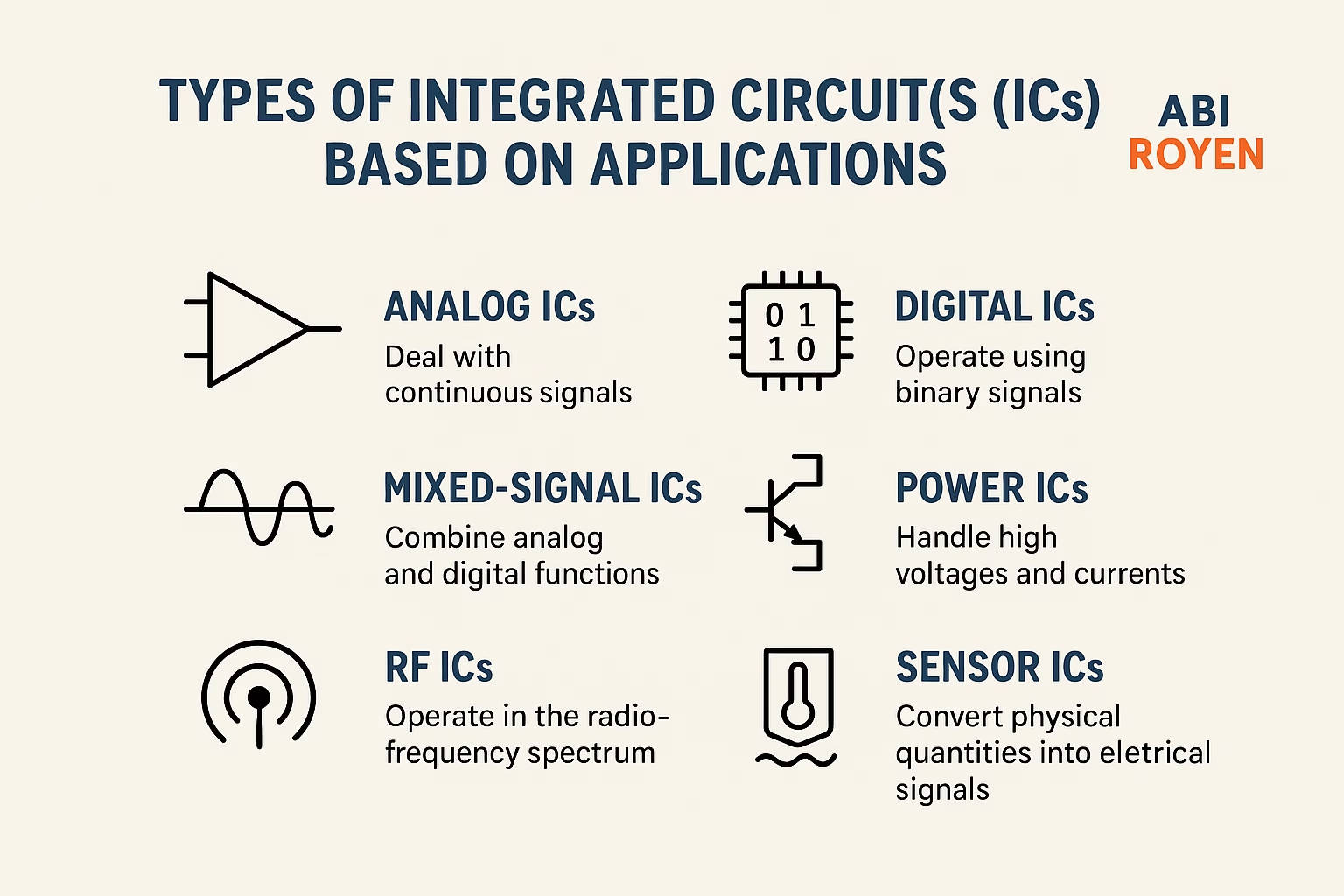
6. Integrated Circuits (ICs)
ICs combine multiple components into a single package, enabling complex functions in small, efficient designs. They power everything from microcontrollers to advanced processors.
7. Sensors
Sensors convert physical parameters (temperature, pressure, light, motion) into electrical signals. They are indispensable in IoT, robotics, and industrial automation.
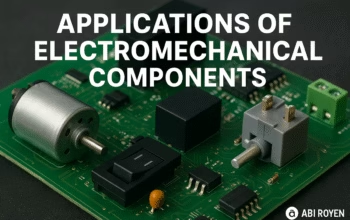
8. Connectors and Switches
These ensure reliable connectivity and control in devices, supporting user interaction and system integration.
Why Are Importance of Electronic Components?
Electronic components are vital because they:
- Enable Functionality: Every electronic device relies on components for operation. Without them, circuits cannot process, store, or transmit signals.
- Drive Innovation: Advances in component technology lead to smaller, faster, and more powerful devices.
- Support Industrial Growth: Electronics power automation, robotics, and Industry 4.0, boosting productivity and efficiency.
- Ensure Reliability: High-quality components improve system performance and reduce downtime.
- Enable Energy Efficiency: Modern components are designed for lower power consumption, supporting sustainable technology.
Applications of Electronic Components in Modern Life
1. Consumer Electronics
Smartphones, laptops, televisions, and gaming consoles rely heavily on integrated circuits, resistors, and capacitors to function efficiently.
2. Industrial Automation
Factories use sensors, controllers, and transistors for precision manufacturing, robotics, and process control.
3. Healthcare and Medical Devices
Pacemakers, diagnostic machines, and wearable health monitors rely on specialized electronic components for life-saving functionality.
4. Automotive Industry
Modern vehicles use electronic components for engine control units (ECUs), safety systems, infotainment, and autonomous driving features.
5. Renewable Energy Systems
Solar inverters, wind turbine controllers, and battery storage systems depend on electronic components for efficient energy conversion and management.
6. Telecommunications
Electronic components are essential for data transmission, signal amplification, and wireless communication networks.
The Future of Electronic Components
The future of electronic components is driven by miniaturization, smart integration, and sustainability. Key trends include:
- Nanoelectronics: Smaller, more efficient components enabling advanced computing.
- Flexible Electronics: Wearable and bendable devices for healthcare and consumer markets.
- Power Electronics: Components that manage renewable energy and electric vehicles.
- IoT and Smart Devices: Growth in sensors and wireless components connecting billions of devices.
As industries continue to evolve, the demand for advanced electronic components will only increase.

Challenges in the Electronics Industry
While electronic components are crucial, the industry faces challenges:
- Supply Chain Disruptions: Shortages of semiconductors can halt production.
- Counterfeit Components: Fake parts reduce reliability and safety.
- Environmental Concerns: E-waste management and sustainable production are critical.
- Rapid Obsolescence: Fast technological progress leads to short component lifecycles.
Addressing these challenges requires global collaboration, innovation in recycling, and smarter manufacturing practices.
Conclusion of Importance of Electronic Components
The importance of electronic components cannot be overstated. They are the invisible force powering modern technology, industrial progress, and everyday life. From the smallest resistor to the most advanced microprocessor, each component contributes to building a connected, efficient, and innovative world.
As technology continues to advance, electronic components will remain at the heart of innovation, driving industries forward and shaping the future of human society.