

Introduction
First ATM in United States ~ The Automated Teller Machine (ATM) has become an essential part of modern banking, allowing customers to access their money anytime without visiting a bank branch. While ATMs are common today, their origins tell a fascinating story of innovation, technological advancement, and transformation in the financial world. The first Automated Teller Machine in the United States marked a turning point in how Americans managed their money, setting the stage for 24/7 banking.
This article explores the history of the first ATM in the United States, its impact on banking, how it changed customer behavior, and the evolution of ATM technology over the decades.
Origins of the ATM Concept
Before discussing the first U.S. ATM, it is important to understand the global context of its invention. The very first ATM in the world was installed in London in 1967 by Barclays Bank. This machine was designed by John Shepherd-Barron and allowed customers to withdraw a fixed amount of cash using special vouchers.
The idea quickly spread, and banks around the world recognized the potential of self-service machines. In the United States, demand for such technology grew as banks sought to provide better convenience for customers during the rise of suburban living and 24-hour lifestyles.
The First ATM in the United States
The very first Automated Teller Machine in the United States was installed by Chemical Bank on September 2, 1969, at its branch in Rockville Centre, New York. The event was marked with the famous slogan:
“On September 2, our bank will open at 9:00 and never close again!”
This slogan symbolized a dramatic shift in banking accessibility. For the first time, American customers could withdraw cash outside traditional banking hours.
The machine used at Chemical Bank was different from today’s advanced ATMs. It was primarily designed for cash withdrawals and did not offer other services such as deposits, transfers, or balance inquiries. Customers were issued a specially coded card and a personal identification number (PIN) to access their money, which laid the foundation for modern debit card usage.
How the First ATM Worked
The early ATM technology in the U.S. was relatively simple compared to today’s machines. Some of its features included:
- Card Access – Customers were given a magnetic-striped card or token to use the machine.
- PIN System – A personal identification number ensured security.
- Limited Withdrawals – The ATM could only dispense a set amount of cash.
- Basic Operation – No deposits or other transactions were supported at the time.
Despite its simplicity, the convenience of withdrawing money at any hour made the machine an instant success.
Public Reaction and Acceptance
At first, some customers were skeptical about trusting a machine with their money. Many preferred traditional tellers, who could explain transactions and provide personal service. However, the convenience of ATMs quickly won over the public.
Within a few years, more banks across the U.S. adopted ATM technology. By the mid-1970s, ATMs were being installed in major cities, and by the 1980s, they had become standard banking infrastructure nationwide.
Impact on the U.S. Banking Industry
The introduction of the first ATM in the United States revolutionized the banking industry in several ways:
- Extended Banking Hours – Customers were no longer limited to banking during business hours.
- Reduced Bank Congestion – ATMs helped reduce long lines in bank branches.
- Increased Customer Independence – People could perform transactions without needing a teller.
- New Business Models – Banks began to compete on accessibility and convenience, leading to ATM networks.
The success of ATMs also contributed to the rise of electronic banking, credit cards, and online financial services.
Evolution of ATM Technology in the U.S.
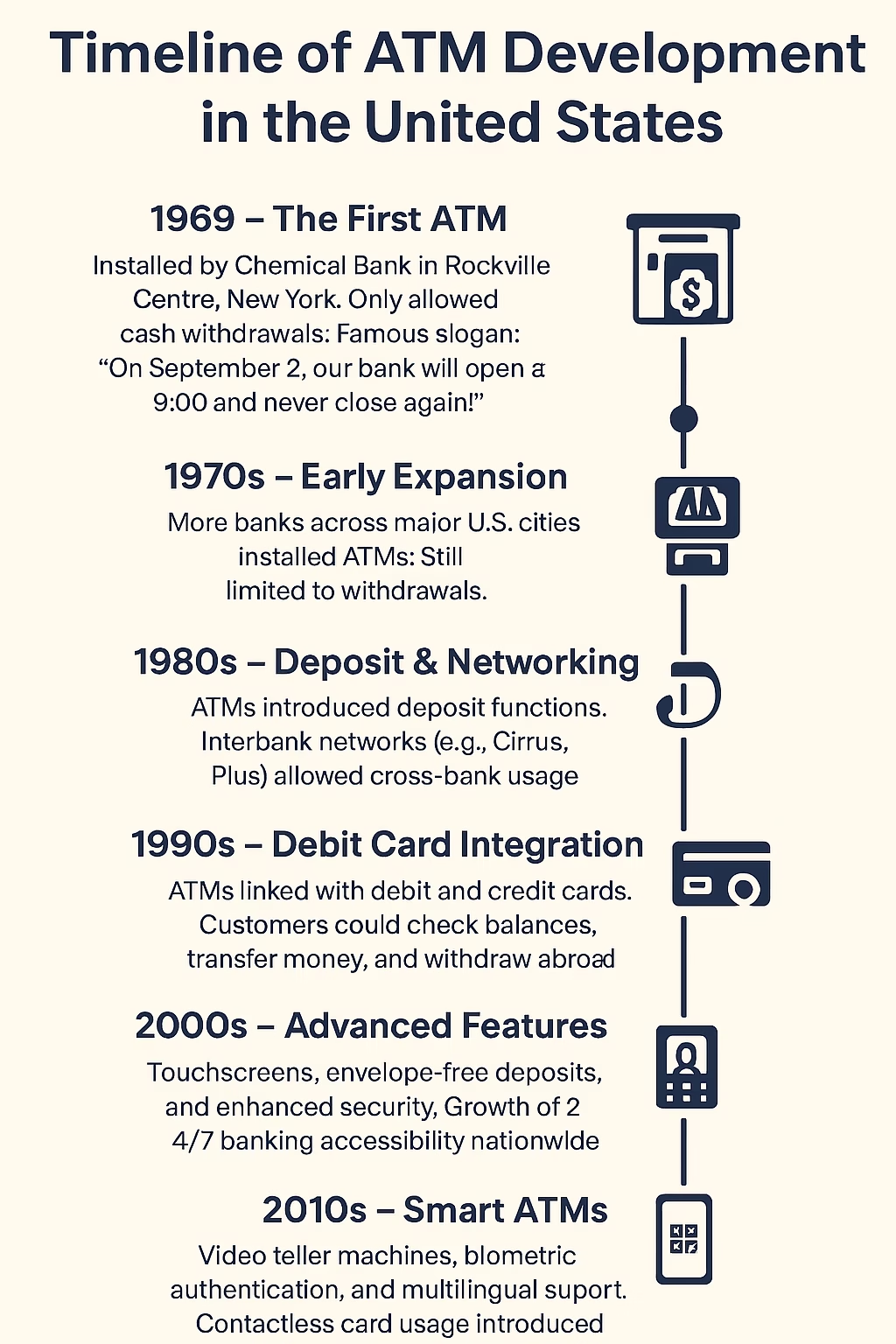
Since the installation of the first ATM in 1969, technology has advanced significantly. Some of the key developments include:
- 1970s – Widespread adoption of ATMs in major U.S. cities. Machines could only dispense cash.
- 1980s – Introduction of deposit features and expanded ATM networks across different banks.
- 1990s – ATMs integrated with debit and credit card systems, allowing balance inquiries, transfers, and international usage.
- 2000s – Touchscreen interfaces, envelope-free deposits, and enhanced security features.
- 2010s–2020s – Smart ATMs offering video teller assistance, biometric authentication (fingerprint/iris scanning), and contactless card usage.
Today’s ATMs are far more advanced, offering multilingual interfaces, accessibility for disabled users, and global connectivity through interbank networks.

The Legacy of Chemical Bank’s First ATM
The installation of the first ATM in Rockville Centre was not just a technological milestone but also a cultural shift in how Americans viewed money and banking. It symbolized the beginning of round-the-clock financial access and paved the way for modern banking innovations such as mobile banking and online transactions.
The legacy of that first machine lives on, as ATMs continue to serve millions of people across the United States every day. Even with the rise of digital banking, ATMs remain an essential part of financial infrastructure.
Conclusion
The first Automated Teller Machine in the United States, installed by Chemical Bank in 1969, marked a revolutionary step in banking technology. What began as a simple cash-dispensing machine has evolved into a global network of sophisticated financial tools that empower customers with 24/7 access to their money.
From its humble beginnings in New York to becoming a worldwide standard, the ATM has reshaped the banking industry and continues to adapt to new technologies. As the financial world moves toward digital transformation, the story of the first ATM in the United States remains a landmark moment in the history of banking innovation.
📌 1969 – The First ATM
- Installed by Chemical Bank in Rockville Centre, New York.
- Only allowed cash withdrawals.
- Famous slogan: “On September 2, our bank will open at 9:00 and never close again!”
📌 1970s – Early Expansion
- More banks across major U.S. cities installed ATMs.
- Still limited to withdrawals.
📌 1980s – Deposit & Networking
- ATMs introduced deposit functions.
- Interbank networks (e.g., Cirrus, Plus) allowed cross-bank usage.
📌 1990s – Debit Card Integration
- ATMs linked with debit and credit cards.
- Customers could check balances, transfer money, and withdraw abroad.
📌 2000s – Advanced Features
- Touchscreens, envelope-free deposits, and enhanced security.
- Growth of 24/7 banking accessibility nationwide.
📌 2010s – Smart ATMs
- Video teller machines, biometric authentication, and multilingual support.
- Contactless card usage introduced.
📌 2020s – Digital Integration
- ATMs connected with mobile banking apps.
- Cardless withdrawals via QR codes and smartphones.