Introduction
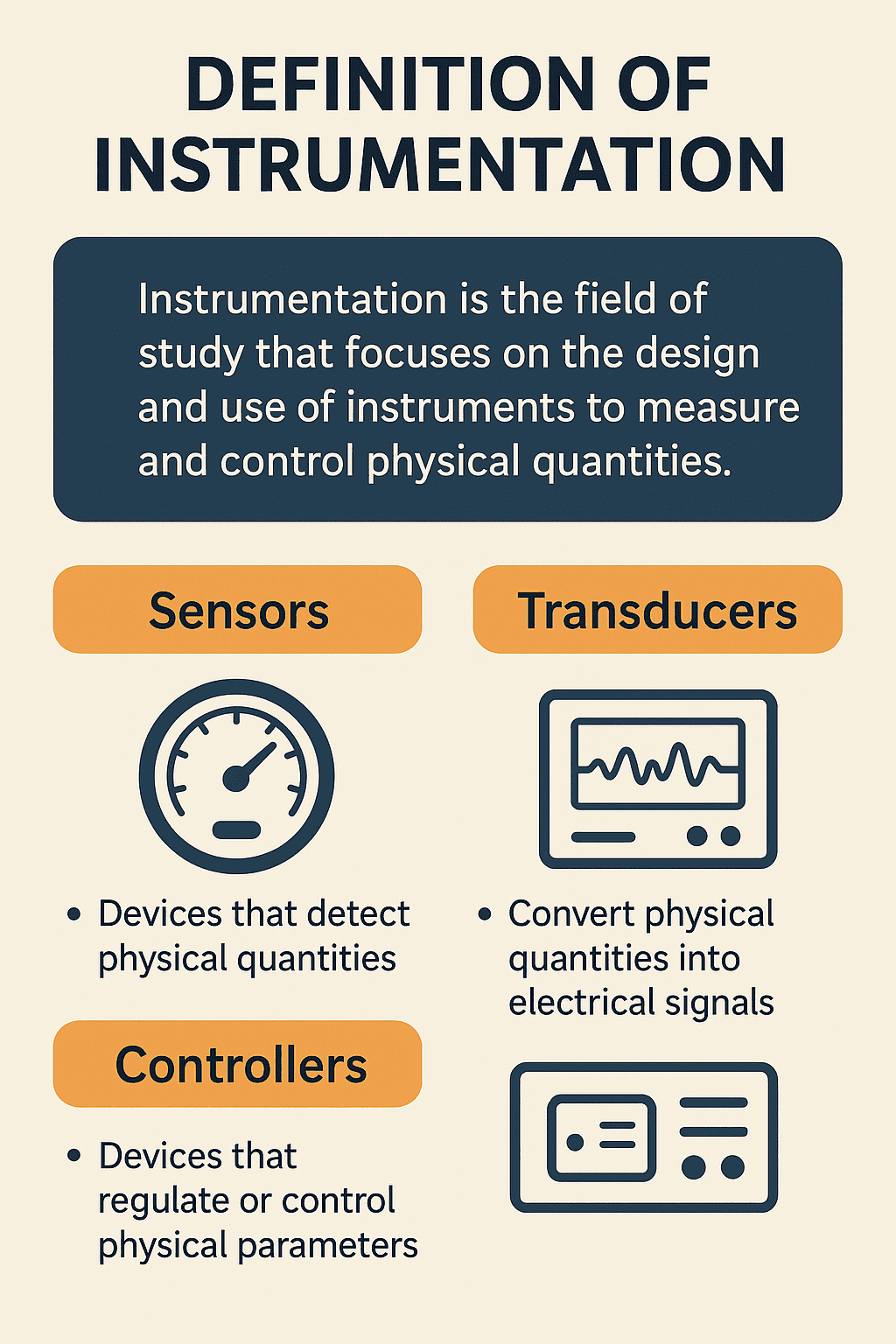
Instrumentation plays a critical role in modern industries, enabling precise measurement, monitoring, and control of various processes. From industrial automation to laboratory research, instrumentation ensures accuracy, safety, and efficiency in operations. Understanding the definition of instrumentation is essential for engineers, technicians, and students in technical fields.
This article will explain what instrumentation is, its basic principles, core components, and real-world applications, as well as its importance in various sectors.
1. What is Instrumentation?
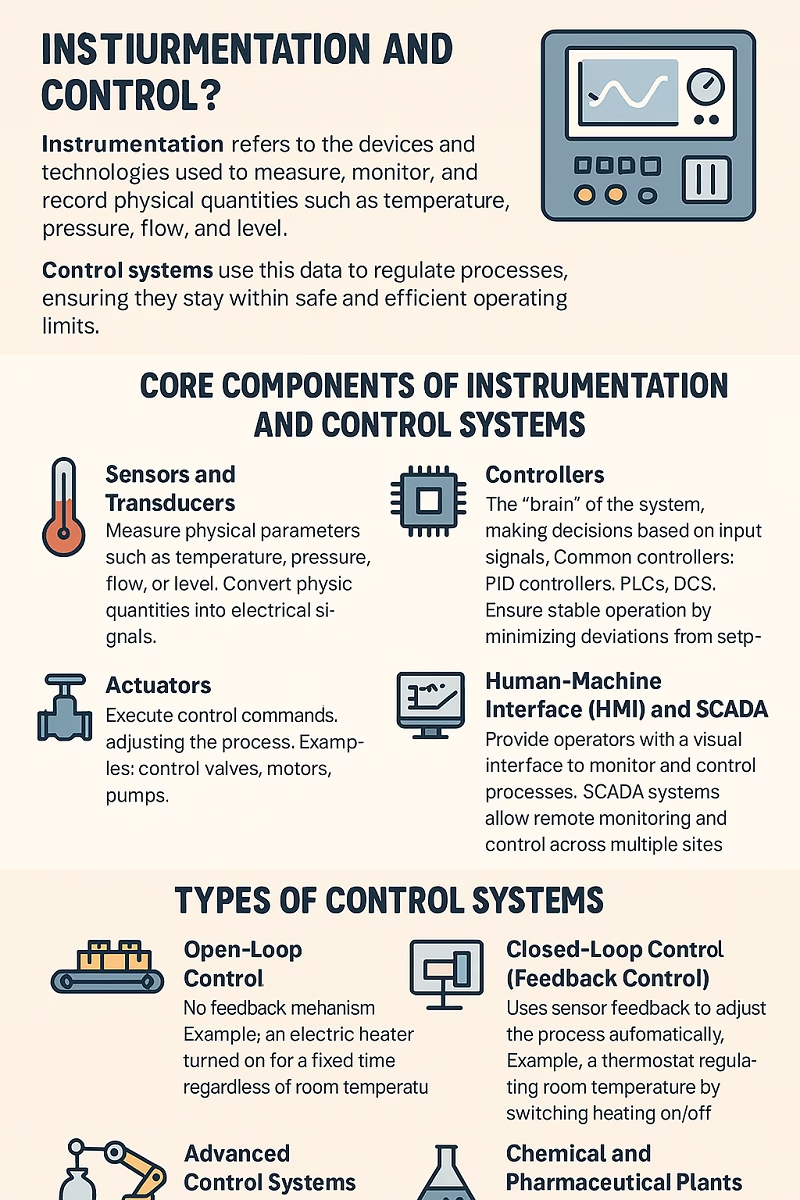
Instrumentation is the science and practice of measuring and controlling physical quantities such as pressure, flow, temperature, level, and speed. It involves using devices known as instruments to monitor these parameters, ensuring processes run efficiently and within safe limits.
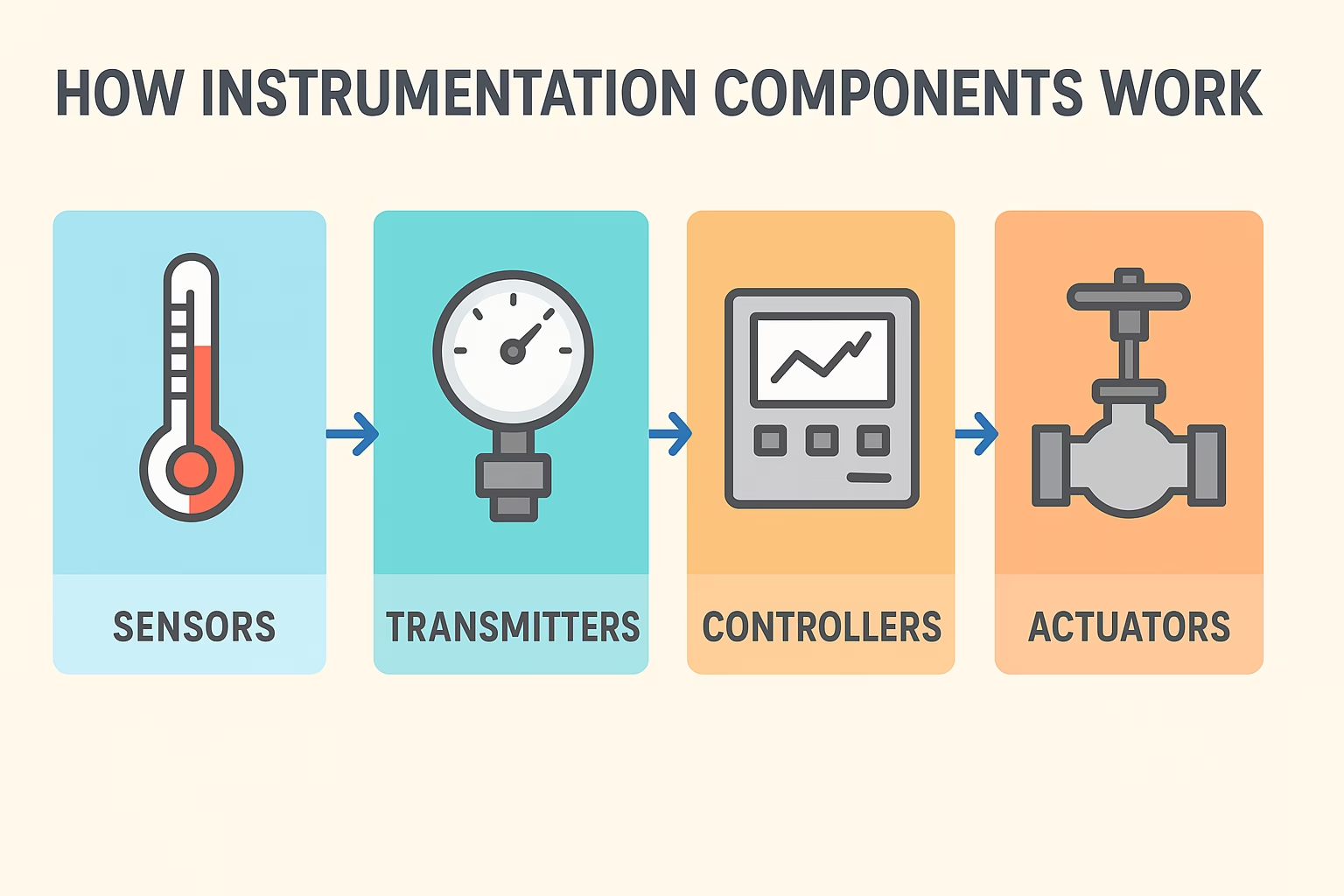
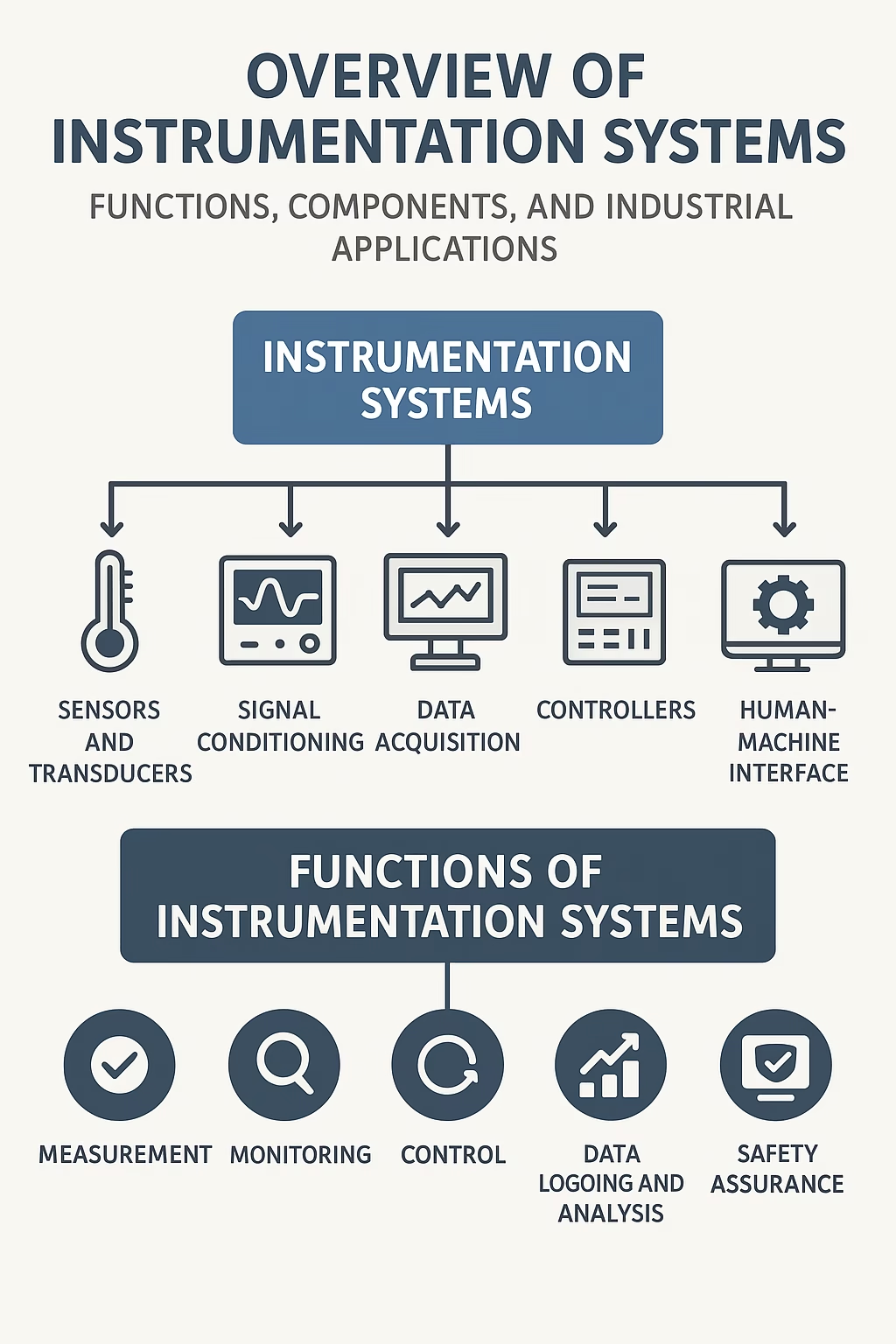
In a broader sense, instrumentation combines sensors, transmitters, controllers, and display units to provide real-time feedback and control. For example:
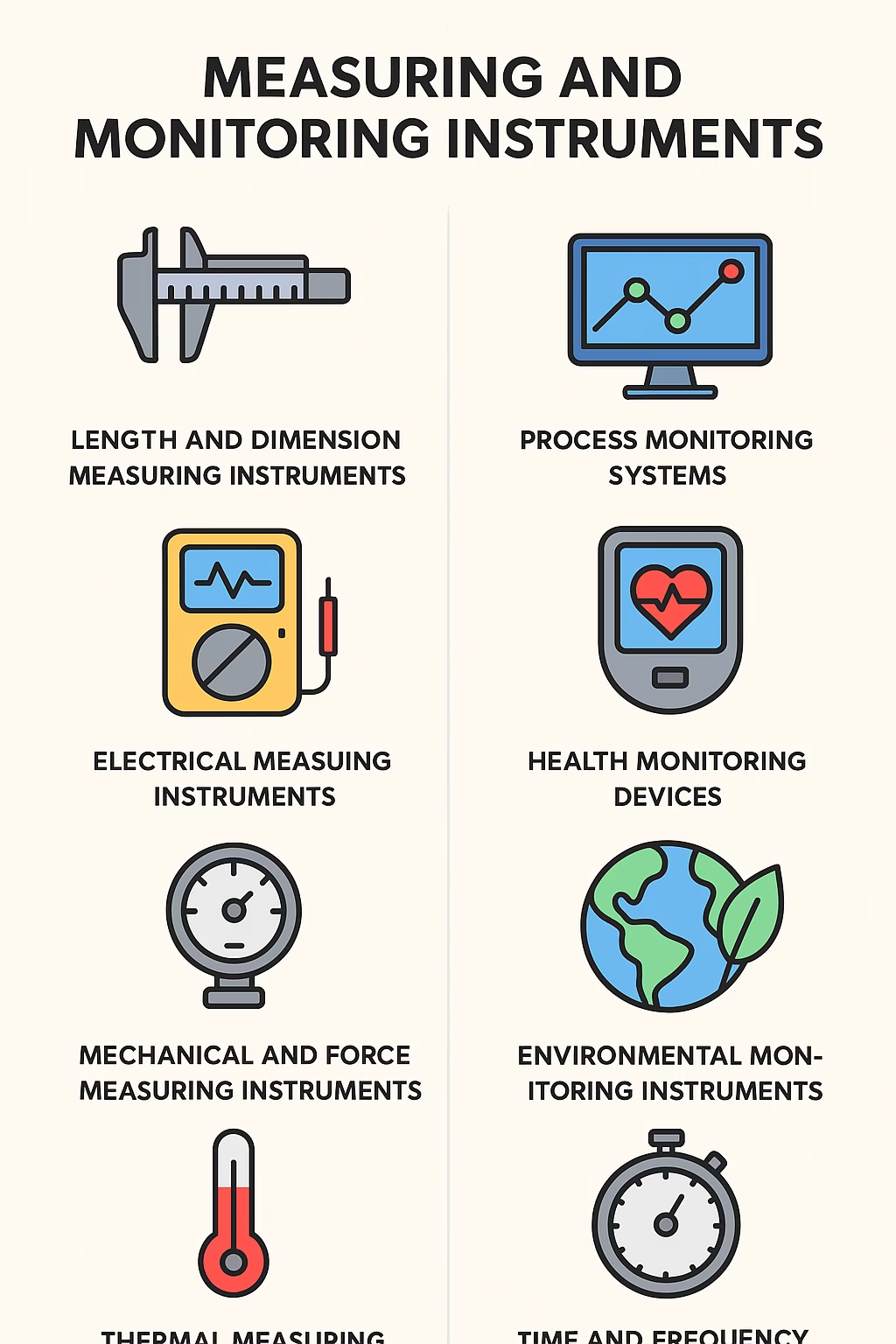
- A thermometer measures temperature.
- A pressure gauge monitors gas or liquid pressure.
- A flow meter measures fluid flow rates.
In industrial settings, these instruments are often integrated into automation and control systems for consistent operation.
Need detailed information? Read this article: What is Instrumentation? A Complete Guide to Principles, Types, and Applications
2. Definition of Instrumentation: The Purpose of Instrumentation
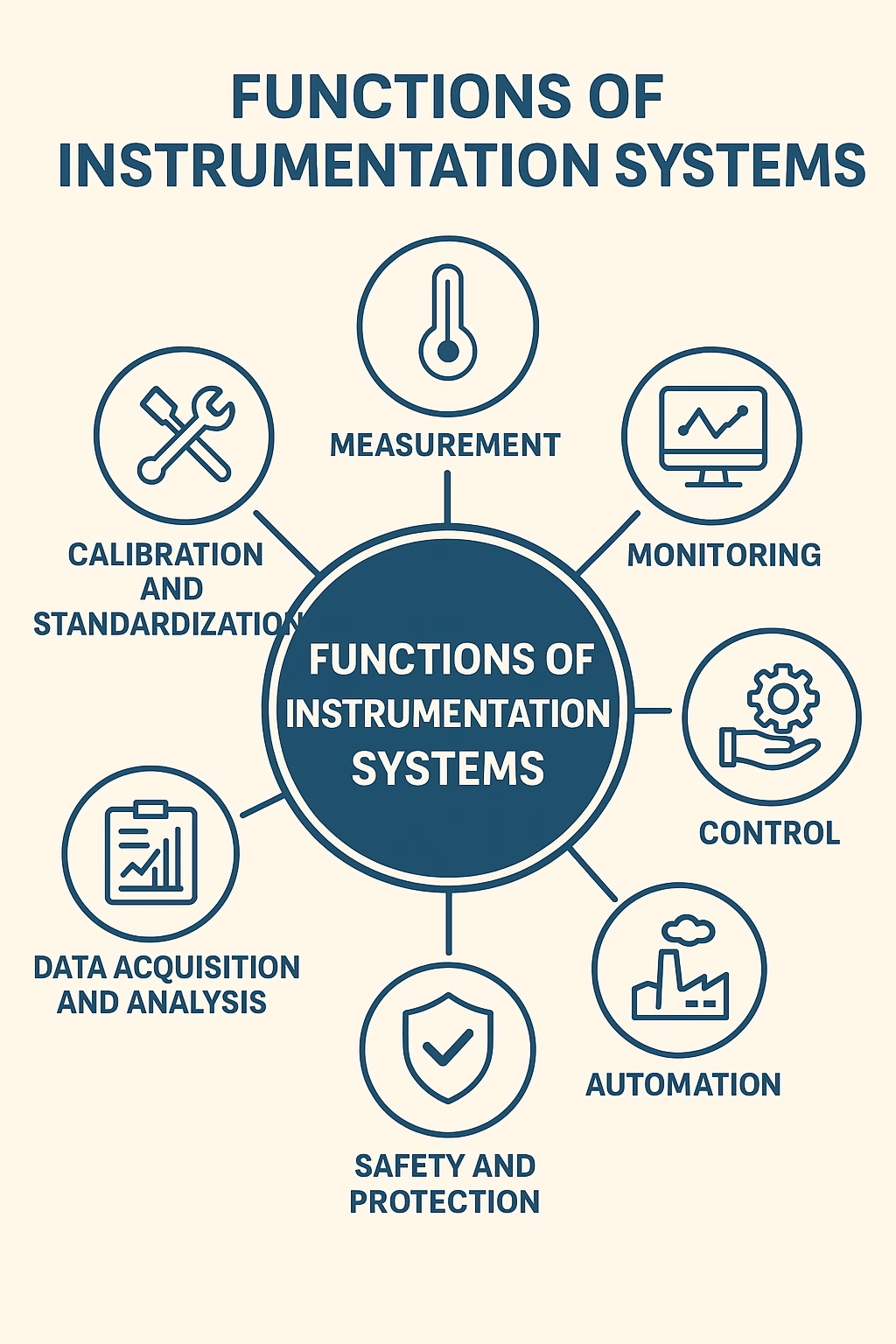
The main purposes of instrumentation include:
- Measurement – Accurately quantifying physical variables.
- Monitoring – Tracking changes in system parameters over time.
- Control – Regulating processes automatically or manually.
- Safety – Preventing hazardous conditions through alarms and shutdown systems.
- Optimization – Improving efficiency and reducing operational costs.
For example, in a chemical plant, instrumentation ensures the right temperature and pressure levels are maintained, preventing accidents and ensuring product quality.
Need detailed information? Read this article: The Purpose of Instrumentation: Enhancing Efficiency, Safety, and Precision in Modern Industries
3. Definition of Instrumentation: Principles of Instrumentation
Instrumentation is based on several key principles:
- Accuracy – The ability to measure a parameter close to its true value.
- Precision – Repeated measurements produce the same results.
- Sensitivity – How small a change the instrument can detect.
- Range – The span between the minimum and maximum values the instrument can measure.
- Response Time – How quickly the instrument reacts to changes.
These principles ensure that measurements are reliable, repeatable, and meaningful.
Need detailed information? Read this article: Principles of Instrumentation: Understanding the Fundamentals for Accurate Measurements
4. Core Components of Instrumentation Systems
Instrumentation systems consist of several main elements:
a. Sensors and Transducers
- Sensors detect changes in a physical quantity.
- Transducers convert the sensed information into an electrical signal for processing.
- Example: A thermocouple converts temperature differences into voltage.
b. Signal Conditioners
These devices modify sensor signals to a usable form by amplifying, filtering, or converting them.
c. Controllers
Controllers compare measured values with desired setpoints and make adjustments.
- Example: PID controllers in temperature regulation.
d. Actuators
Actuators carry out the physical changes needed to control a process, such as opening a valve or adjusting a motor speed.
e. Display and Recording Devices
These provide visual or digital readings and store data for analysis.
Need detailed information? Read this article: Core Components of Instrumentation Systems: Functions and Applications
5. Definition of Instrumentation: Types of Instrumentation
Instrumentation can be classified into:
- Analog Instrumentation – Continuous signal measurements, like analog voltmeters.
- Digital Instrumentation – Discrete numerical readings, often with microprocessors.
- Smart Instrumentation – Instruments with embedded intelligence for advanced diagnostics and communication.
Need detailed information? Read this article: Understanding the Different Types of Instrumentation in Modern Industry
6. Definition of Instrumentation: Applications of Instrumentation
Instrumentation is applied in various fields:
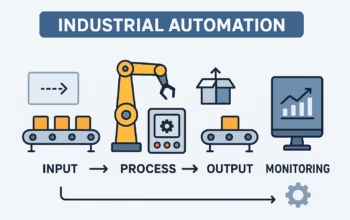
- Industrial Automation – Monitoring and controlling manufacturing processes.
- Oil and Gas Industry – Pressure, temperature, and flow measurement in drilling and refining.
- Medical Sector – Instruments like ECG machines and blood pressure monitors.
- Research Laboratories – Precision measurement for scientific experiments.
- Aerospace and Defense – Flight control systems and environmental monitoring.
Need detailed information? Read this article: Applications of Instrumentation: Enhancing Accuracy, Safety, and Efficiency Across Industries

7. Importance of Instrumentation in Industry
- Safety – Avoiding accidents through real-time monitoring.
- Quality Control – Maintaining consistency in products.
- Efficiency – Optimizing resources and reducing waste.
- Cost Savings – Minimizing downtime and maintenance costs.
Need detailed information? Read this article: Instrumentation in Industrial Applications: Enhancing Efficiency, Accuracy, and Safety
8. Future Trends in Instrumentation
The future of instrumentation is evolving with:
- IoT Integration – Remote monitoring and control via the Internet.
- Wireless Sensors – Flexible installation without extensive wiring.
- AI and Machine Learning – Predictive maintenance and advanced analytics.
Need detailed information? Read this article: Future Trends in Instrumentation: Shaping the Next Industrial Revolution
Conclusion of Definition of Instrumentation
Instrumentation is the backbone of process control, ensuring accuracy, safety, and efficiency in countless industries. Understanding the definition of instrumentation is not only important for engineers but also for anyone working in technical fields where precision measurement is essential.
As technology advances, instrumentation will continue to evolve, making industries smarter, safer, and more efficient.