

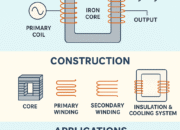
Step-up transformer. Learn power transmission, industries, and renewable energy systems. Definition, working principle, construction, and applications
Electronic Component
An electronic component is a basic element used in electronic circuits to control the flow of electricity. These components include resistors, capacitors, diodes, transistors, and integrated circuits. Each plays a specific role in signal processing, power management, and circuit functionality, making them essential for all electronic devices.
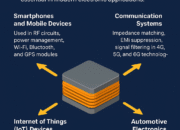
Applications of Multilayer Inductors in Modern Electronics
Applications of multilayer inductors in modern electronics, communication systems, automotive, IoT, medical devices. Performance, stability, miniaturization.
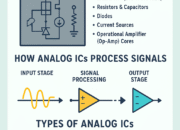
How Analog ICs Work: A Complete Guide to Their Principles and Applications
How analog ICs work, their internal structure, working principles, and applications in electronics. Learn why they remain essential in modern technology.
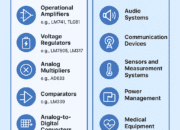
What Are Analog ICs? A Complete Guide to Analog Integrated Circuits
What Analog ICs, work, types, applications in modern electronics. Discover why analog integrated circuits are essential in communication, audio, sensor systems.
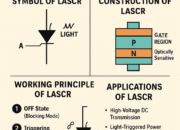
Understanding LASCR (Light Activated Silicon Controlled Rectifier): Working, Applications, and Advantages
Light Activated Silicon Controlled Rectifier
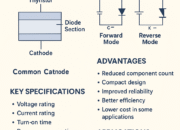
Understanding Reverse Conducting Thyristor (RCT): Structure, Working, and Applications
Reverse Conducting Thyristor (RCT)
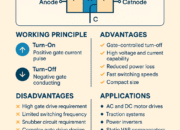
Gate Turn-Off Thyristor (GTO): Working Principle, Applications, and Advantages
Gate Turn-Off Thyristor (GTO)
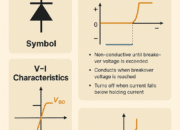
DIAC (Diode for Alternating Current): Working Principle, Characteristics, and Applications
DIAC (Diode for Alternating Current)
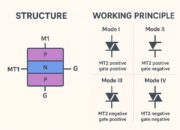
Understanding TRIAC (Triode for Alternating Current): Structure, Working Principle, and Applications
TRIAC (Triode Alternating Current)
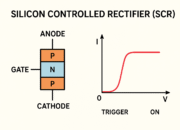
Silicon Controlled Rectifier (SCR): Working Principle, Applications, and Advantages in Industrial Electronics
Silicon Controlled Rectifier (SCR)