

Benefits of Automation ~ Automation has become one of the most influential drivers of technological progress in the 21st century. From manufacturing plants to smart homes, automation plays a vital role in improving efficiency, accuracy, and overall quality of life. Businesses, industries, and even individuals increasingly rely on automation to reduce human errors, optimize workflows, and save time.
In this article, we will explore the major benefits of automation, its role in business and daily life, and why embracing it is essential for a future of growth and innovation.
1. What Is Automation?
Automation refers to the use of technology, machines, and control systems to operate processes with minimal human intervention. It can range from simple tasks such as automatically turning off lights when not in use, to advanced robotic systems in manufacturing, artificial intelligence in business, or self-driving vehicles.
Automation combines hardware, software, and intelligent systems to achieve efficiency, reduce costs, and provide better outcomes compared to manual processes.
Read More about What is Automation? A Complete Guide to Understanding Its Role in Modern Technology
2. Key Benefits of Automation
a) Benefits of Automation: Increased Efficiency and Productivity
One of the most significant benefits of automation is the boost in efficiency. Machines and automated systems can work continuously without fatigue, unlike human workers who require rest. This leads to higher productivity levels and faster task completion.
For example, in the manufacturing sector, automated assembly lines can produce thousands of products per day with minimal downtime, ensuring that production targets are met consistently.
b) Cost Reduction
Automation reduces operational costs by minimizing the need for manual labor and lowering the chances of costly errors. Businesses save money on repetitive tasks, allowing resources to be redirected toward innovation and customer service.
For instance, automated data entry systems help companies save hours of labor costs while reducing the risk of mistakes that could lead to financial losses.
c) Benefits of Automation: Improved Accuracy and Quality
Machines perform tasks with high precision, which results in consistent and reliable outputs. Automated quality control systems in factories ensure that products meet the required standards before reaching consumers.
This is particularly important in industries like pharmaceuticals, where the smallest error can have serious consequences. Automation ensures accuracy and safety in every step of the process.
d) Better Workplace Safety
Automation reduces the need for humans to perform dangerous tasks. Robots and automated machinery can handle hazardous materials, operate in extreme temperatures, or work in environments unsafe for humans.
For example, in mining or chemical industries, automation helps prevent workplace accidents, protecting workers’ health and well-being.
e) Scalability and Flexibility
Businesses can easily scale their operations using automation. Once systems are in place, increasing production levels requires minimal additional effort. Moreover, modern automation systems are flexible and can adapt to new products, processes, or customer demands.
f) Benefits of Automation: Time Savings
By automating repetitive tasks, individuals and organizations save valuable time that can be spent on strategic planning, creativity, or innovation. Something as simple as email automation helps companies respond quickly to customer inquiries, improving overall satisfaction.
Read More about The Benefits of Automation: Transforming Industries and Daily Life
3. Benefits of Automation in Different Sectors
a) Manufacturing
Automation in manufacturing allows for mass production, reduced errors, and higher output. Robotics and computer-controlled systems ensure consistent quality while lowering production costs.
b) Healthcare
Hospitals use automation in diagnostic tools, robotic surgeries, and patient record management. This reduces human error and improves patient outcomes. Automated monitoring systems also enhance the efficiency of medical staff.
c) Business Operations
Automation streamlines accounting, payroll, customer relationship management (CRM), and marketing processes. Tools such as chatbots and automated data analytics provide businesses with valuable insights and improve customer engagement.
d) Agriculture
Smart farming technologies such as automated irrigation, drone monitoring, and robotic harvesting are transforming agriculture. These systems increase crop yield, reduce waste, and promote sustainable farming.
e) Daily Life
Automation also benefits individuals at home. Smart devices such as automated lighting, voice assistants, and robotic vacuum cleaners make life easier and more efficient.
Read More about The Benefits of Automation: Transforming Industries and Daily Life
4. Environmental Benefits of Automation
Automation not only improves business outcomes but also contributes to sustainability. Automated energy management systems reduce electricity consumption, while precision farming reduces the use of water, fertilizers, and pesticides.
These improvements lower the carbon footprint of industries and promote eco-friendly practices.


5. Challenges of Automation
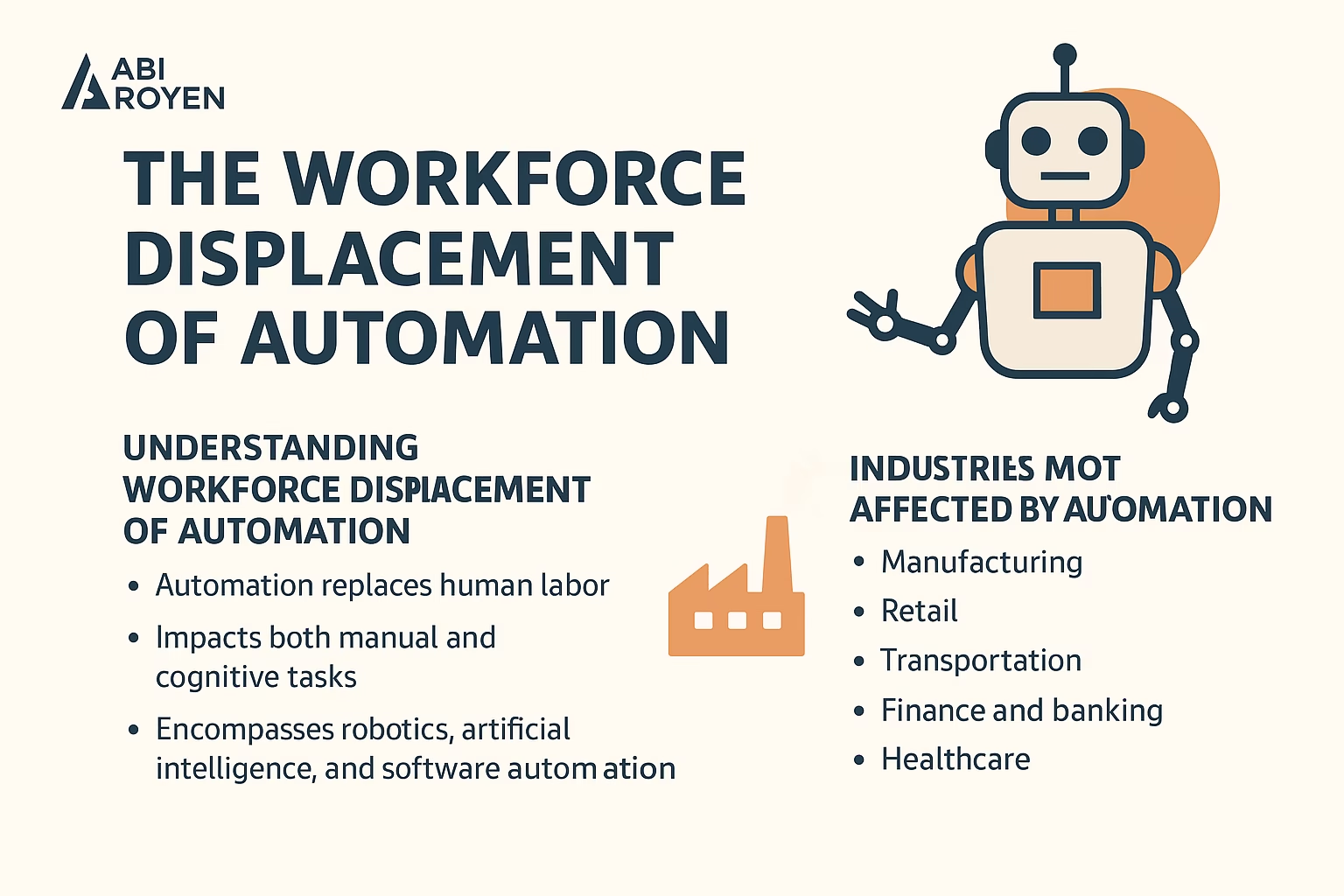
While automation provides many benefits, it also comes with challenges such as job displacement, high initial investment costs, and the need for continuous system upgrades. However, experts agree that automation creates new job opportunities in system management, maintenance, and advanced technology development.
The key is to balance automation with human skills, ensuring that both work together to achieve progress.
Read More about Challenges of Automation: Overcoming Barriers in the Modern Era
6. The Future of Automation
The future of automation lies in artificial intelligence (AI), machine learning, and robotics. With advancements in these fields, automation will become smarter, more adaptive, and more integrated into every aspect of life.
From self-driving cars to AI-driven business decisions, the possibilities are limitless. Organizations that embrace automation now will gain a competitive advantage in the years ahead.
Read More about Future Trends in Automation: Shaping the Next Industrial Revolution
Conclusion
Automation is more than just a technological trend; it is a necessity for growth, efficiency, and innovation. Its benefits—ranging from cost reduction and improved accuracy to sustainability and better quality of life—are undeniable.
As automation continues to evolve, industries, businesses, and individuals must adapt and embrace its potential to remain competitive in a rapidly changing world.
By understanding the benefits of automation, we prepare ourselves for a future where humans and machines collaborate to achieve more than ever before.