Introduction of Cybersecurity in Automation Systems
Cybersecurity in Automation Systems ~ Automation systems are at the heart of modern industries, from manufacturing plants to smart cities and critical infrastructure. As organizations embrace Industry 4.0, industrial control systems (ICS), supervisory control and data acquisition (SCADA) systems, and programmable logic controllers (PLCs) are becoming increasingly interconnected. While this integration improves efficiency, productivity, and scalability, it also exposes automation systems to cybersecurity threats.
Cybersecurity in automation systems is no longer optional—it is essential for protecting sensitive data, ensuring operational continuity, and safeguarding national security. This article explores the importance of cybersecurity in automation, the threats industries face, and the strategies required to mitigate risks.
What is Cybersecurity in Automation Systems?
Cybersecurity in automation systems refers to the application of security measures, technologies, and best practices to protect automation infrastructure against unauthorized access, manipulation, and cyberattacks. These systems include:
- Industrial Control Systems (ICS): The backbone of automation in industries.
- SCADA Systems: Used for monitoring and controlling large-scale industrial processes.
- Programmable Logic Controllers (PLCs): Essential for automating machinery and processes.
- Human-Machine Interfaces (HMIs): Connect operators with automated processes.
The goal of cybersecurity in automation is to protect these critical components from malware, ransomware, insider threats, and nation-state cyberattacks.
The Importance of Cybersecurity in Automation Systems
1. Protection of Critical Infrastructure
Industries such as energy, water, transportation, and healthcare depend heavily on automation. A cyberattack on these systems could disrupt essential services, causing economic losses and even endangering lives.
2. Data Integrity and Confidentiality
Automation systems collect massive amounts of operational data. Cybersecurity ensures that this data is accurate, confidential, and protected from unauthorized access.
3. Operational Continuity
Downtime in automated systems leads to costly production delays. Cybersecurity reduces the risk of downtime caused by malicious attacks.
4. Compliance with Regulations
Governments and industry bodies mandate strict compliance standards (e.g., NIST, ISO 27001, IEC 62443). Organizations must adhere to these frameworks to avoid penalties.
5. Safeguarding Reputation
A successful cyberattack can damage a company’s reputation and erode trust among clients and stakeholders.
Common Threats Cybersecurity in Automation Systems
Automation systems face unique cybersecurity risks because of their reliance on legacy systems and real-time operations. Some of the most common threats include:
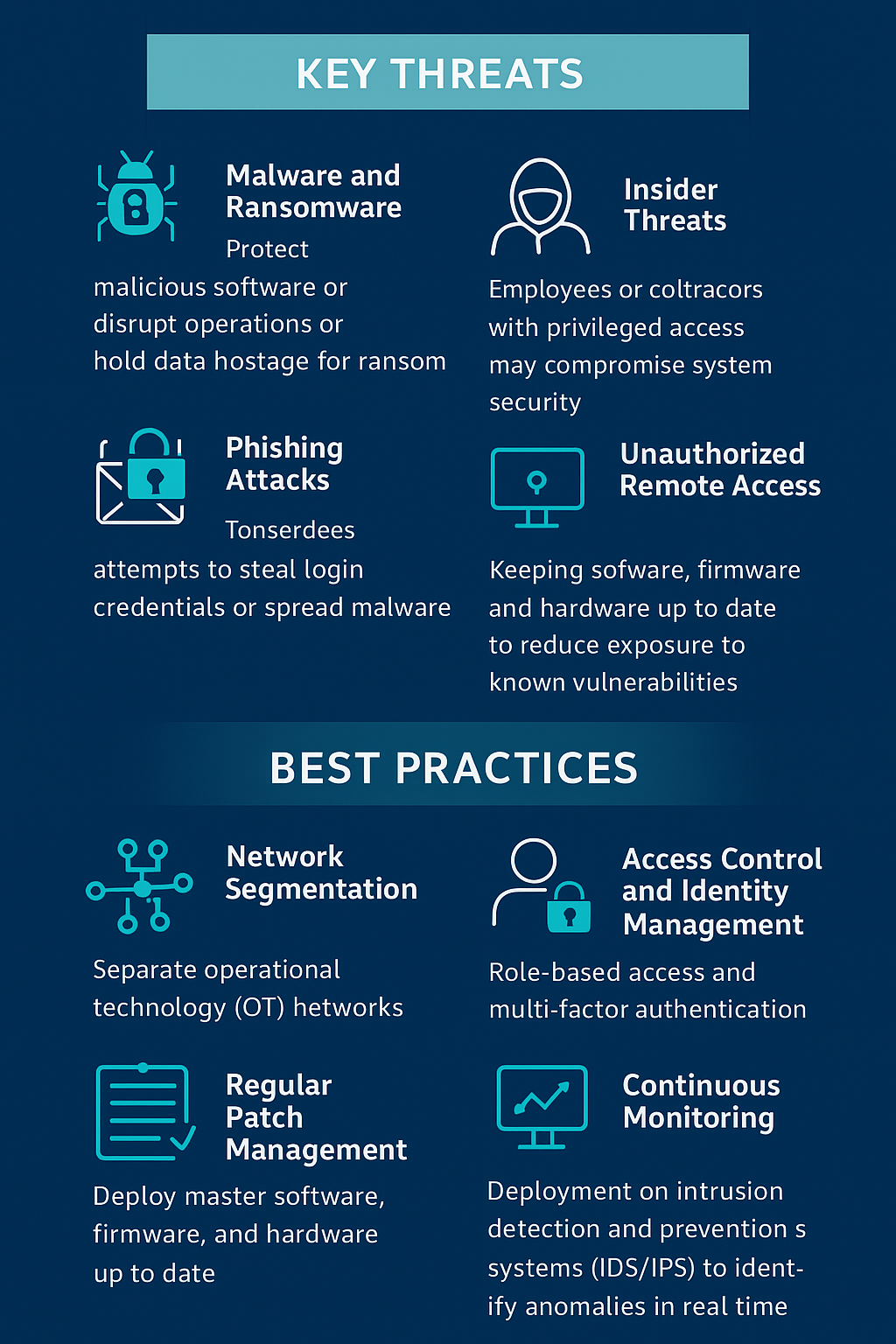
1. Malware and Ransomware
Cybercriminals deploy malicious software to disrupt operations or hold data hostage for ransom. Ransomware attacks on ICS and SCADA systems have been rising sharply.
2. Insider Threats
Employees or contractors with privileged access can accidentally or intentionally compromise system security.
3. Phishing Attacks
Hackers use phishing emails to steal login credentials or spread malware within industrial networks.
4. Unauthorized Remote Access
As automation systems become more connected, unauthorized access through remote connections poses a serious threat.
5. Supply Chain Attacks
Compromising third-party vendors can allow attackers to infiltrate automation systems.
6. Zero-Day Vulnerabilities
Unpatched vulnerabilities in automation software or hardware can be exploited by attackers before developers release security fixes.
Case Studies: Cyberattacks on Automation Systems
Stuxnet (2010)
A sophisticated worm specifically targeting Iranian nuclear facilities, Stuxnet demonstrated the destructive potential of malware on industrial automation.
Colonial Pipeline Attack (2021)
A ransomware attack on a major U.S. fuel pipeline disrupted energy supplies and highlighted vulnerabilities in critical infrastructure.
Triton Malware (2017)
Triton targeted safety instrumented systems (SIS), threatening to disable safety mechanisms in industrial plants.
These cases emphasize why proactive cybersecurity strategies are critical for protecting automation systems.
Best Practices for Cybersecurity in Automation Systems
To safeguard automation systems, industries must adopt a comprehensive cybersecurity strategy that addresses people, processes, and technology.
1. Network Segmentation
Separate operational technology (OT) networks from information technology (IT) networks to minimize the spread of cyberattacks.
2. Access Control and Identity Management
Implement role-based access and multi-factor authentication to prevent unauthorized entry.
3. Regular Patch Management
Keep software, firmware, and hardware up to date to reduce exposure to known vulnerabilities.
4. Continuous Monitoring
Deploy intrusion detection and prevention systems (IDS/IPS) to identify anomalies in real time.
5. Employee Training and Awareness
Educate staff on recognizing phishing attempts, safe password practices, and cybersecurity hygiene.
6. Incident Response Plans
Develop clear response protocols to minimize damage during a cyberattack.
7. Encryption of Data
Encrypt sensitive data both in transit and at rest to protect against interception.
8. Third-Party Risk Management
Ensure that vendors and partners follow strict cybersecurity standards.

Cybersecurity Standards and Frameworks for Automation
Several standards guide organizations in securing automation systems:
- NIST Cybersecurity Framework (CSF): Provides guidelines for identifying, protecting, detecting, responding, and recovering from cyber threats.
- IEC 62443: A standard specifically designed for industrial automation and control systems.
- ISO/IEC 27001: Focuses on information security management systems (ISMS).
- CIS Critical Security Controls: Offers prioritized best practices for improving cybersecurity posture.
Adopting these frameworks ensures compliance and strengthens security.
The Role of Artificial Intelligence and Machine Learning in Cybersecurity in Automation Systems
AI and ML are transforming how cybersecurity in automation systems is managed:
- Anomaly Detection: AI can detect unusual patterns in network traffic that may indicate a cyberattack.
- Automated Response: Machine learning enables automated containment of threats before they spread.
- Predictive Analysis: AI can predict vulnerabilities and suggest proactive security measures.
These technologies improve speed and accuracy in identifying and mitigating cyber threats.
Challenges in Implementing Cybersecurity in Automation Systems
While essential, cybersecurity in automation systems comes with challenges:
- Legacy Systems: Many automation systems were not designed with cybersecurity in mind.
- Cost of Implementation: Advanced cybersecurity measures require significant investment.
- Skill Shortages: The demand for skilled cybersecurity professionals often exceeds supply.
- Balancing Security and Productivity: Overly strict security can hinder operational efficiency.
Organizations must balance these challenges with the need for robust protection.
Future of Cybersecurity in Automation Systems
As industries continue to digitalize, the role of cybersecurity will only grow. Future trends include:
- Zero Trust Architecture: Eliminating implicit trust across networks.
- Integration of Blockchain: Enhancing data security and transparency in automation systems.
- Cloud Security in Industrial IoT (IIoT): Protecting data as more automation systems move to cloud environments.
- Quantum-Resistant Security: Preparing for future threats posed by quantum computing.
By adopting these emerging technologies, industries can stay ahead of evolving cyber threats.
Conclusion of Cybersecurity in Automation Systems
Cybersecurity in automation systems is the foundation of modern industrial resilience. From protecting critical infrastructure to ensuring operational continuity, robust cybersecurity measures are essential for Industry 4.0 and beyond. Organizations must invest in proactive security strategies, employee training, and compliance with international standards to safeguard automation systems from cyber threats.
In a world where cyberattacks are becoming more sophisticated, the industries that prioritize cybersecurity will lead the way in innovation, trust, and long-term sustainability.