Applications of Automation ~ Automation has become one of the most transformative forces in the 21st century. From industrial manufacturing to healthcare, finance, and even our homes, automation is shaping how we live and work. By replacing repetitive manual tasks with machines, software, and intelligent systems, automation not only improves productivity but also enhances safety, accuracy, and innovation across multiple fields.
In this article, we will explore the diverse applications of automation, focusing on its role in industries, businesses, healthcare, agriculture, and everyday life. We will also highlight the benefits and challenges that come with the adoption of automation technologies.
What is Automation?
Automation is the process of using technology, machines, or systems to perform tasks with minimal human intervention. It often involves robotics, software, artificial intelligence (AI), and control systems to streamline operations. The goal of automation is to improve efficiency, reduce costs, minimize human error, and free workers from repetitive tasks so they can focus on higher-value activities.
Explanation about: What is Automation? A Complete Guide to Understanding Its Role in Modern Technology
Applications of Automation in Different Sectors
1. Applications of Automation: Industrial Manufacturing
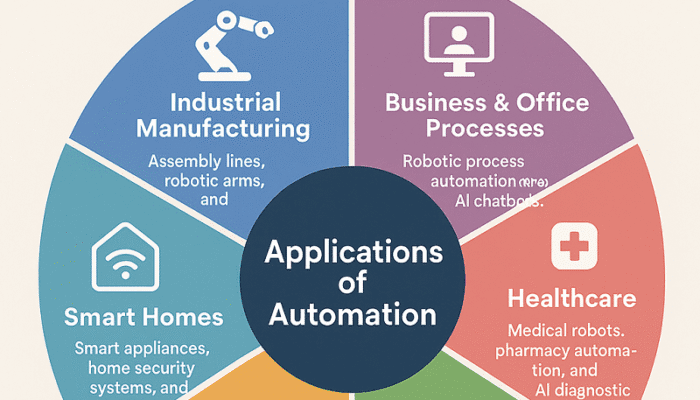
One of the earliest and most impactful uses of automation is in manufacturing. Assembly lines, robotic arms, and computer-controlled machines allow factories to produce goods faster, more accurately, and at a lower cost.
- Robotic Welding and Painting: Automotive industries use robots for welding car parts and applying paint with precision.
- Quality Control: Automated inspection systems check products for defects using sensors and AI.
- Supply Chain Automation: Smart systems manage inventory, order processing, and logistics in real time.
Automation in manufacturing has led to the concept of Industry 4.0, where digital technologies like the Internet of Things (IoT), AI, and machine learning integrate with physical production systems.
2. Business and Office Processes
Automation is not limited to machines; it also extends to business processes.
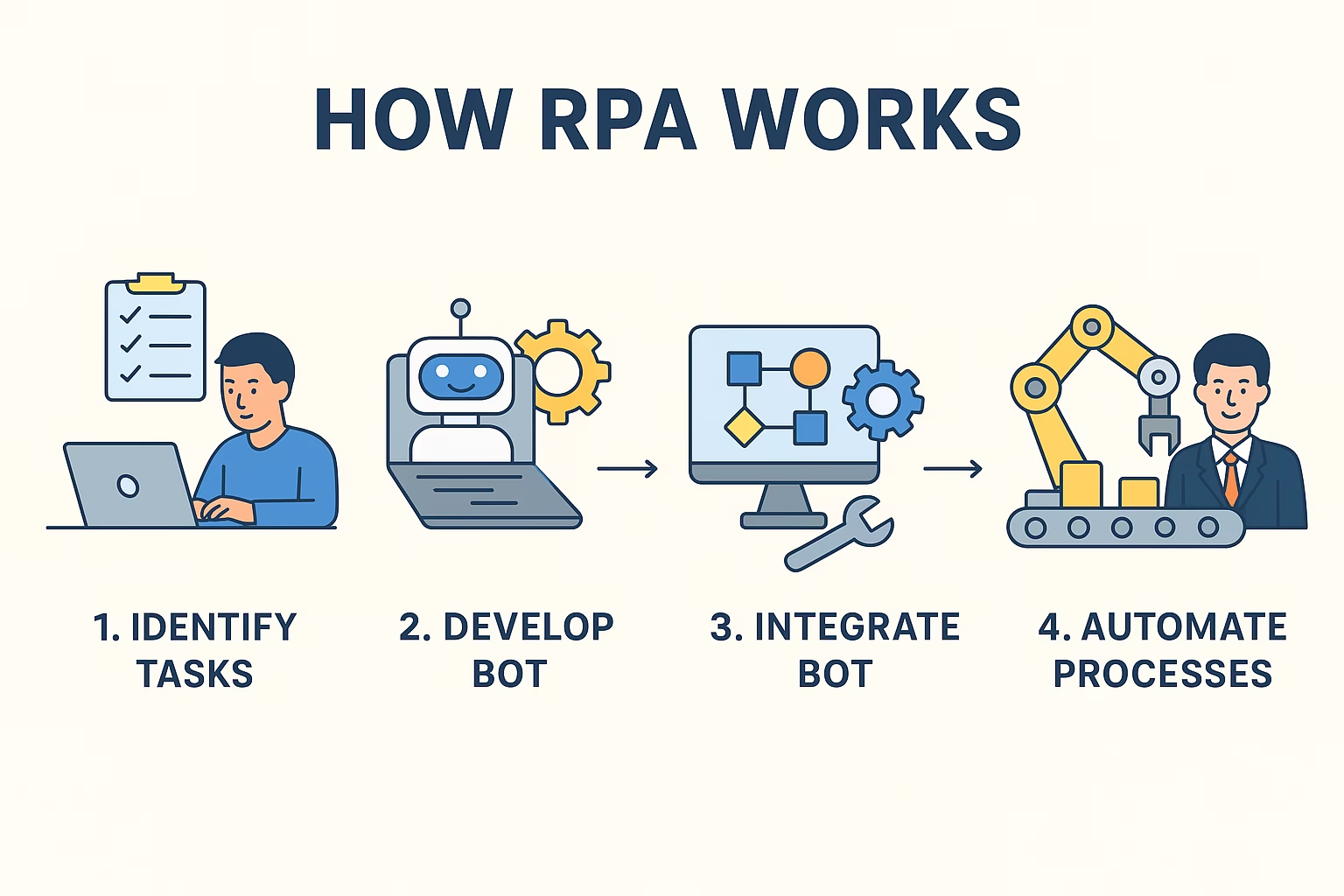
- Robotic Process Automation (RPA): Software robots handle repetitive tasks such as data entry, invoice processing, and payroll.
- Customer Service: Chatbots and AI-powered assistants respond to customer inquiries 24/7.
- Marketing Automation: Businesses use automation tools to send targeted emails, manage campaigns, and track customer behavior.
This type of automation reduces operational costs while improving accuracy and customer satisfaction.
3. Applications of Automation: Healthcare Automation
Healthcare is another sector where automation has had a revolutionary impact.
- Medical Robots: Robotic surgical systems assist doctors in performing minimally invasive procedures with high precision.
- Pharmacy Automation: Machines dispense medications accurately and safely in hospitals.
- Administrative Automation: Appointment scheduling, billing, and electronic health records (EHR) are managed with AI-driven software.
- Diagnostics and AI: Automated diagnostic systems analyze medical images such as X-rays and MRIs faster than human radiologists.
These applications not only save time but also improve patient outcomes and reduce the risk of human error.
4. Agriculture and Farming
Modern farming heavily relies on automation to increase crop yields and optimize resources.
- Automated Irrigation Systems: Sensors and AI manage water usage efficiently.
- Drones in Agriculture: Used for crop monitoring, pesticide spraying, and soil analysis.
- Autonomous Tractors and Harvesters: Machines that plant, monitor, and harvest crops without human intervention.
Automation in agriculture plays a crucial role in addressing global food demands while reducing environmental impact.
5. Transportation and Logistics
Automation is reshaping how goods and people move around the world.
- Autonomous Vehicles: Self-driving cars, trucks, and drones are being developed to improve safety and efficiency.
- Warehouse Automation: Companies like Amazon use robotic systems for inventory management, picking, and packing.
- Traffic Management Systems: Automated traffic control reduces congestion and improves urban mobility.
These technologies create safer and faster transportation systems while reducing human error.
6. Applications of Automation: Smart Homes and Daily Life
Automation has entered our homes through smart technology.
- Smart Appliances: Refrigerators that track food, washing machines with AI-driven cycles, and voice-controlled assistants like Alexa or Google Home.
- Home Security: Automated surveillance systems, smart locks, and alarm systems enhance safety.
- Energy Management: Smart thermostats and lighting systems reduce electricity usage and costs.
This level of automation provides convenience, efficiency, and enhanced quality of life for individuals and families.
Explanation about: Exploring the Applications of Automation in Modern Industries
Benefits of Automation
- Increased Efficiency – Tasks are completed faster with consistent results.
- Cost Savings – Reduces labor costs and minimizes waste.
- Improved Accuracy – Machines eliminate human errors in repetitive processes.
- Enhanced Safety – Reduces human involvement in dangerous tasks.
- Scalability – Businesses and industries can easily expand operations with automated systems.
Explanation about: The Benefits of Automation: Transforming Industries and Daily Life

Challenges of Automation
Despite its benefits, automation also presents certain challenges:
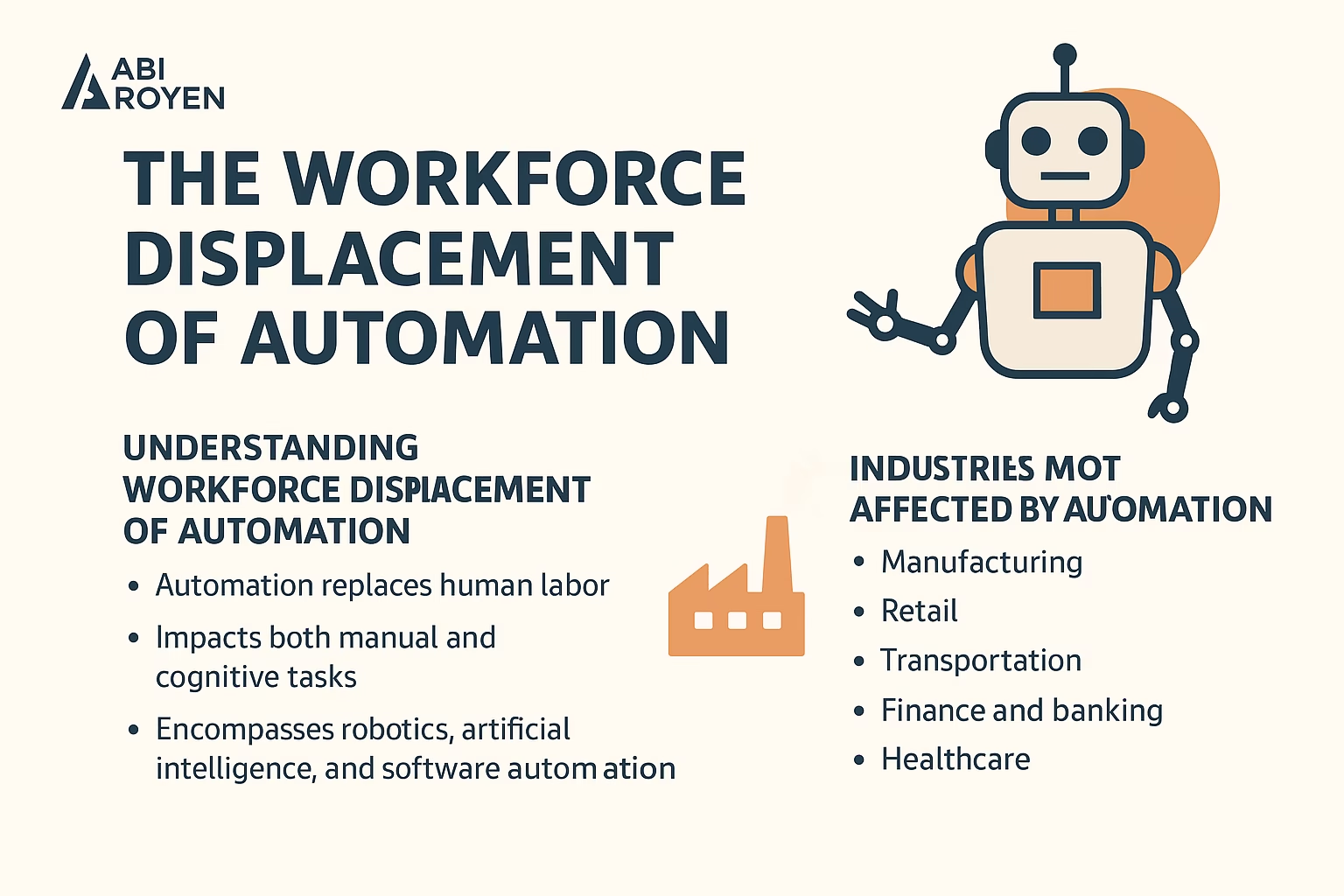
- Job Displacement: Workers may lose jobs to machines, leading to unemployment concerns.
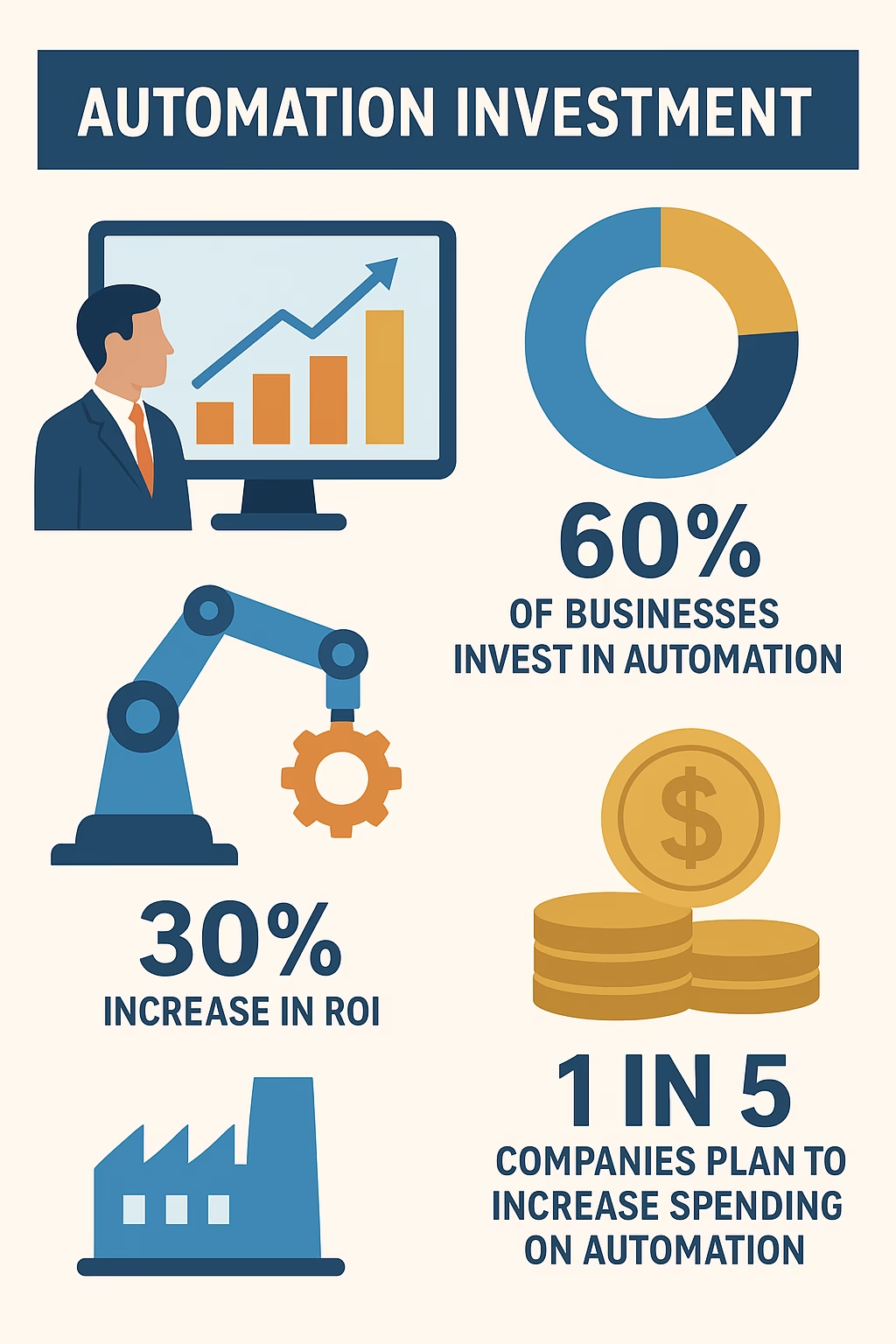
- High Initial Costs: Installing advanced systems can be expensive for small businesses.
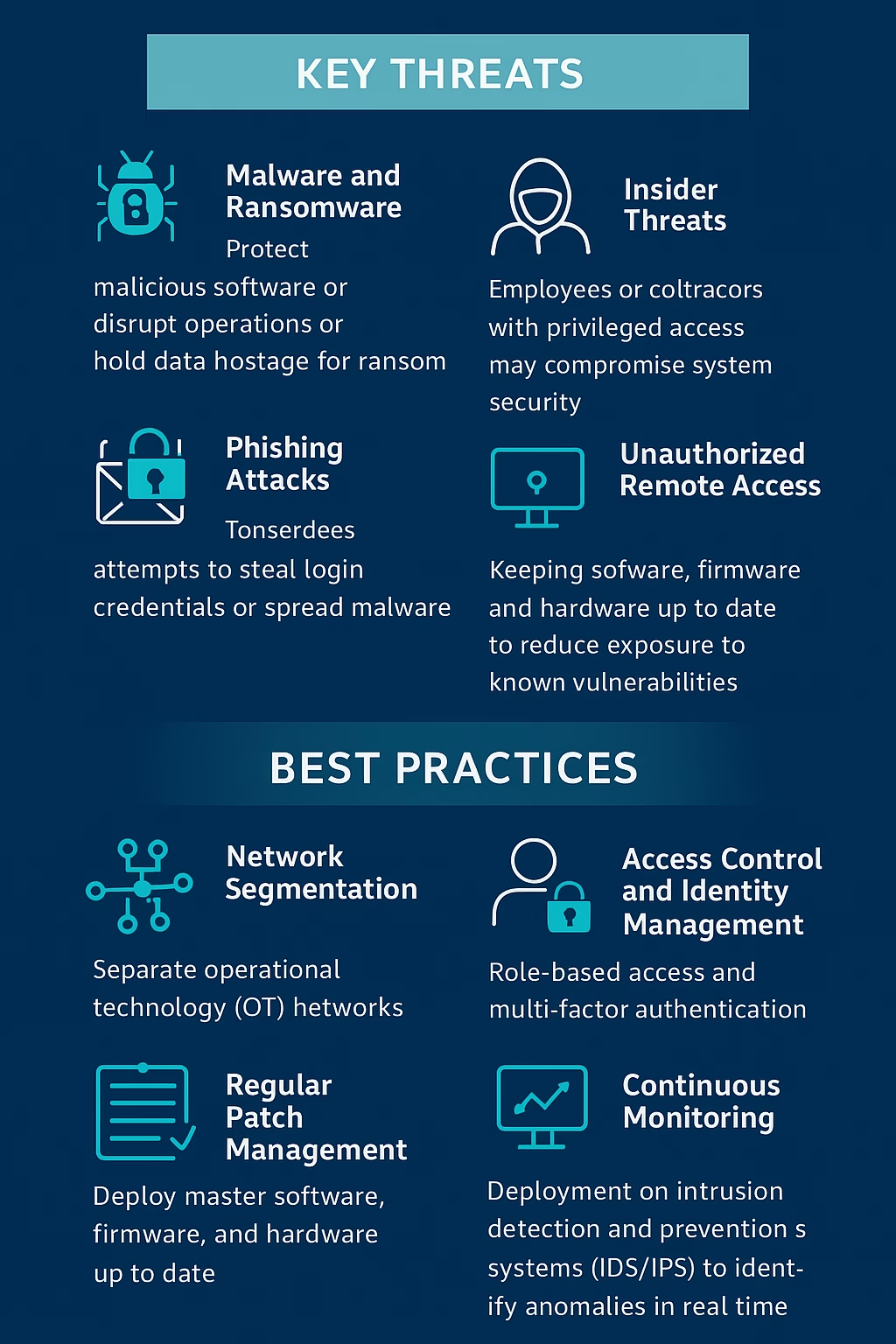
- Cybersecurity Risks: Automated systems connected to the internet are vulnerable to cyberattacks.
- Dependency on Technology: Over-reliance on automation may reduce critical thinking and adaptability in humans.
Explanation about: Challenges of Automation: Overcoming Barriers in the Modern Era
The Future of Automation
The future of automation lies in the integration of AI, IoT, and robotics. We are moving toward hyperautomation, where every process that can be automated will be. Smart cities, autonomous supply chains, and personalized AI-driven services will become the norm.
Governments, businesses, and individuals must balance the advantages of automation with the need for human employment, ethics, and security.
Explanation about: Future Trends in Automation: Shaping the Next Industrial Revolution
Conclusion of Applications of Automation
Automation is no longer just a futuristic idea—it is already transforming industries and everyday life. From manufacturing and healthcare to agriculture and smart homes, automation is increasing efficiency, reducing costs, and improving safety. While it comes with challenges, its potential benefits make it a crucial driver of innovation and progress in the modern world.
By understanding and adopting automation responsibly, societies can leverage its power to create a better future.