

Introduction of Why Learning Electricity Matters
Why Learning Electricity Matters ~ Electricity is the backbone of modern civilization. From powering our homes and industries to enabling global communication, electricity plays a central role in nearly every aspect of daily life. Yet, many people take it for granted without fully understanding how it works or why it is crucial to learn about it.
Whether you are a student, an engineer, or simply a curious learner, understanding electricity matters because it not only enhances knowledge but also opens up opportunities for innovation, safety, and career growth. This article will explain why learning electricity is so important, its practical applications, and how it benefits individuals and society as a whole.
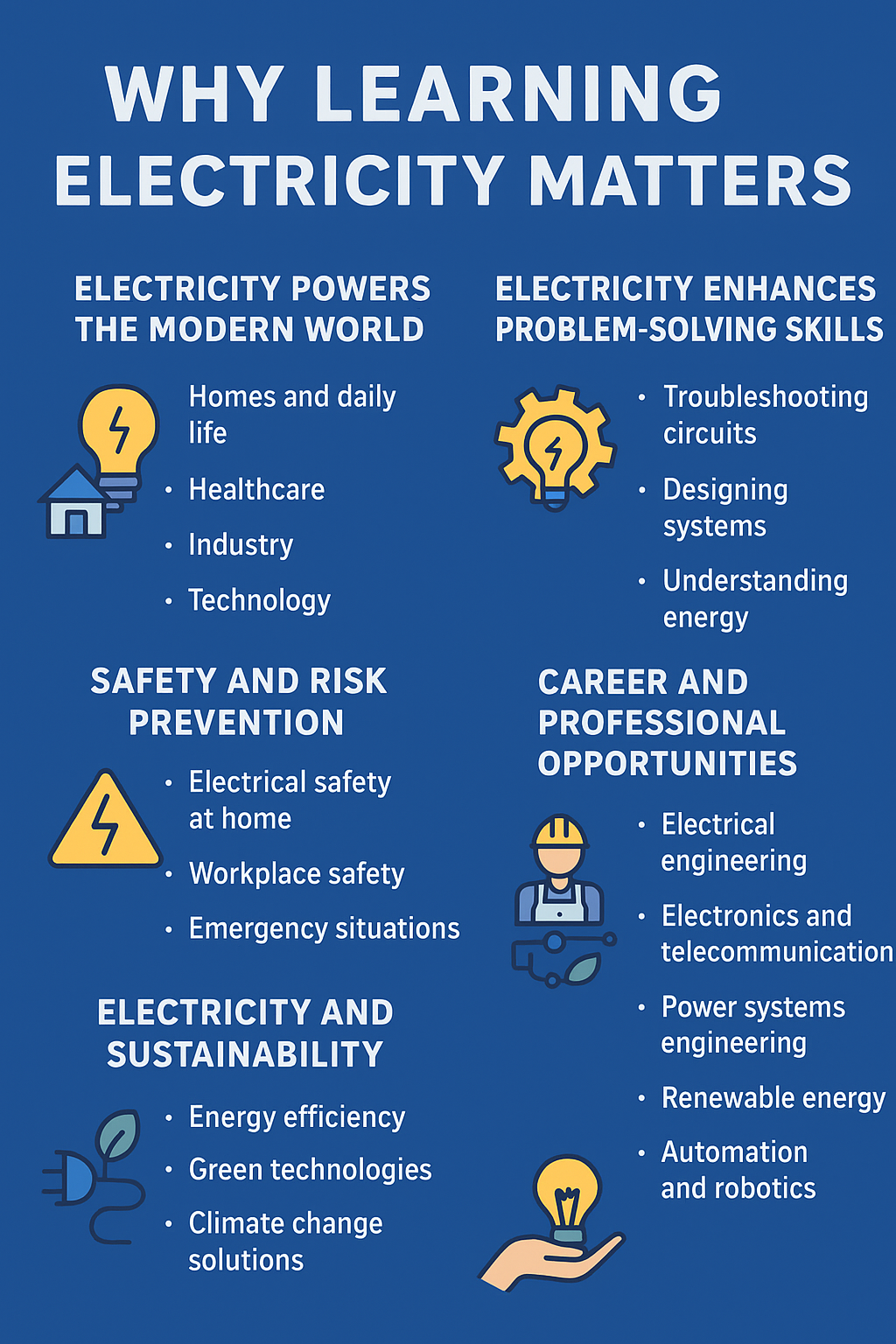
1. Electricity Powers the Modern World
Electricity is no longer a luxury; it is a necessity. Without it, modern society would come to a standstill. From lighting and heating to transportation and healthcare, every sector relies on electrical energy.
- Homes and daily life: Lighting, cooking, charging devices, and entertainment systems.
- Healthcare: Medical equipment like MRI machines, ventilators, and surgical tools require electricity.
- Industry: Factories use electricity to power machines, automation systems, and production lines.
- Technology: The internet, computers, and smartphones all rely on stable electrical systems.
By learning how electricity works, individuals gain a better appreciation of the systems that sustain everyday life.
2. Electricity Enhances Problem-Solving Skills
Learning electricity is not only about memorizing formulas and theories. It involves critical thinking, logic, and practical problem-solving.
For example:
- Troubleshooting a faulty electrical circuit requires systematic analysis.
- Designing efficient electrical systems involves creativity and engineering knowledge.
- Understanding energy consumption helps in creating sustainable solutions.
These problem-solving skills are transferable across many fields, making knowledge of electricity a valuable asset.
3. Safety and Risk Prevention
Electricity is powerful but also dangerous if not handled properly. Learning about it helps reduce risks and prevent accidents.
- Electrical safety at home: Knowing how to use appliances correctly, avoid short circuits, and prevent electrical fires.
- Workplace safety: Engineers and technicians must understand electrical hazards to comply with safety standards.
- Emergency situations: Recognizing signs of electrical failure can save lives.
Proper knowledge ensures that electricity is used efficiently and safely, both at home and in industrial environments.
4. Career and Professional Opportunities
The demand for electrical knowledge spans multiple industries. By learning electricity, individuals open doors to numerous career paths, including:
- Electrical Engineering – designing and maintaining electrical systems.
- Electronics and Telecommunications – developing communication devices and networks.
- Power Systems Engineering – working with energy generation, transmission, and distribution.
- Renewable Energy – solar, wind, and hydroelectric technologies depend on electrical expertise.
- Automation and Robotics – combining electricity with programming to build smart machines.
These industries are growing rapidly, and professionals with electrical knowledge are always in demand.
5. Electricity and Sustainability
The world is shifting towards renewable energy and sustainable practices. Understanding electricity is crucial in this transition.
- Energy efficiency: Learning how electrical systems consume power helps reduce waste.
- Green technologies: Solar panels, wind turbines, and smart grids require deep knowledge of electricity.
- Climate change solutions: Engineers and scientists use electrical knowledge to design eco-friendly alternatives.
By learning electricity, individuals contribute to building a sustainable and energy-efficient future.

6. Real-Life Applications of Learning Electricity
Knowledge of electricity applies to countless everyday situations.
- DIY Repairs: Fixing a light switch, installing fans, or wiring small devices.
- Smart Homes: Setting up automated systems like lighting, security, and energy monitoring.
- Automobiles: Electric vehicles and hybrid systems rely heavily on electrical circuits.
- Business Efficiency: Companies save costs by optimizing electrical usage and investing in efficient systems.
This practical knowledge makes individuals more independent and resourceful.
7. The Future of Electricity Learning
The future of education and technology is deeply connected to electricity. With the rise of Artificial Intelligence (AI), Internet of Things (IoT), and renewable energy systems, understanding electricity is more relevant than ever.
- Smart cities will depend on intelligent electrical systems for traffic, security, and energy management.
- Electric transportation will expand, requiring more professionals skilled in electrical design.
- Robotics and automation will become essential in manufacturing and healthcare.
Anyone who learns electricity today is preparing for the technological challenges of tomorrow.
Conclusion of Why Learning Electricity Matters
Electricity is more than just a form of energy—it is the lifeblood of modern civilization. Learning electricity matters because it improves problem-solving skills, ensures safety, opens up career opportunities, and contributes to sustainability. From powering homes to driving future innovations, electricity knowledge is essential for both personal and professional growth.
By investing time in learning electricity, students, professionals, and everyday individuals gain the tools to understand the world around them and to contribute to building a smarter, safer, and more sustainable future.