What is electricity ~ Electricity is one of the most essential forces in modern civilization. From lighting homes to running factories and powering digital devices, electricity is an invisible phenomenon that has revolutionized how we live, communicate, and work.
But what exactly is electricity? How does it work, and why is it so important in our daily lives? This article will break down the concept of electricity in an easy-to-understand manner, covering its definition, types, sources, units of measurement, and practical applications.
1. What is Electricity: Defining Electricity
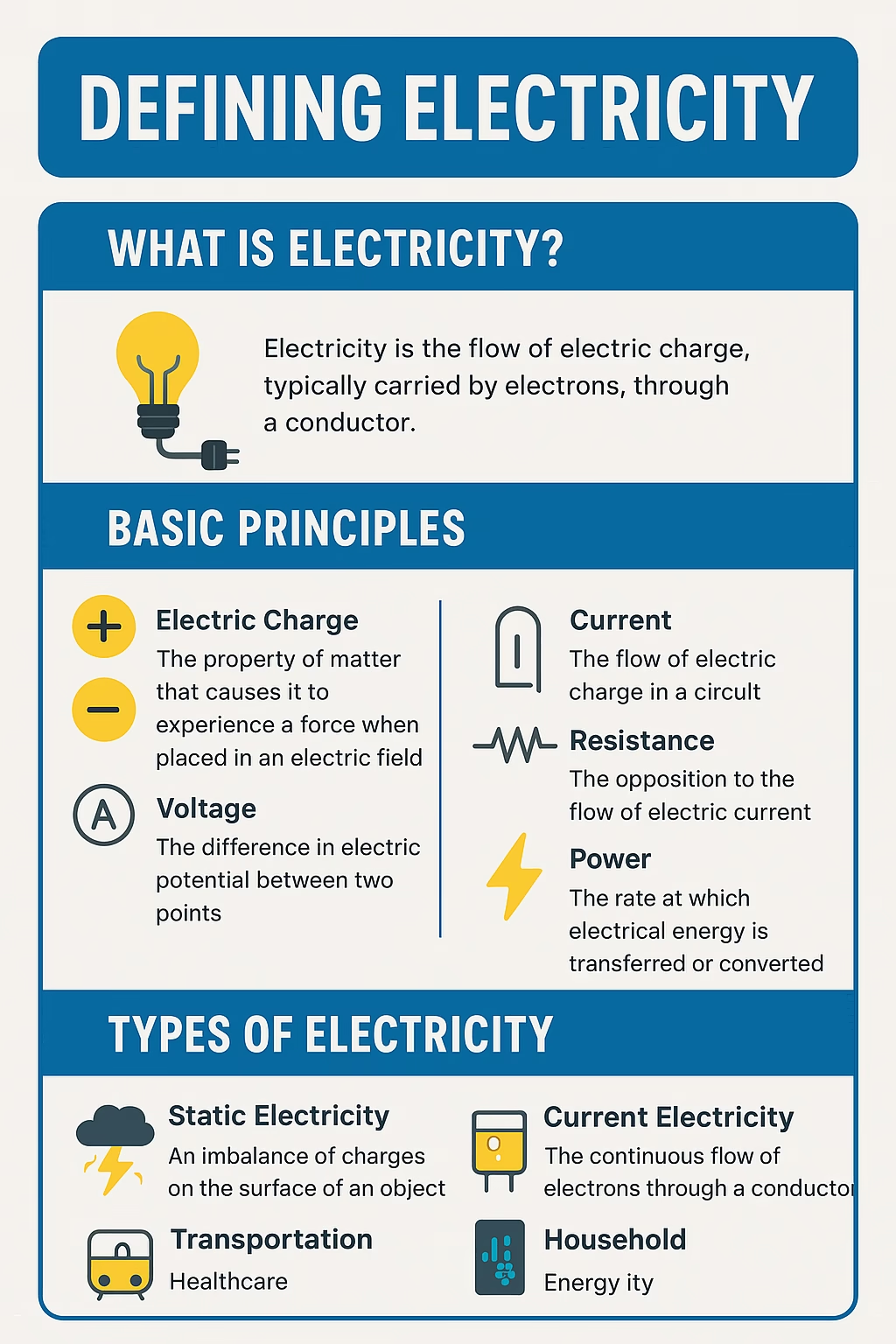
Electricity is a form of energy resulting from the movement of electrons. It occurs naturally (such as in lightning) and can also be generated artificially to power machines and devices. Scientifically, it refers to the presence and flow of electric charge.
Electricity is not a substance you can touch or see directly—it’s the effect caused by electrons (negatively charged particles) moving through a conductor, such as a wire.
2. What is Electricity: The Basic Components of Electricity
To understand electricity better, it helps to break it down into its key components:
a. Charge
Charge is the fundamental property of matter that causes it to experience a force when placed in an electric field. There are two types of electric charges:
- Positive charge (carried by protons)
- Negative charge (carried by electrons)
Like charges repel each other, and opposite charges attract.
b. Current (I)
Electric current is the flow of electric charge through a material. It is measured in amperes (A). One ampere is equal to one coulomb of charge passing through a point in one second.
c. Voltage (V)
Voltage, or electric potential difference, is the “pressure” that pushes electric charges to move in a circuit. It’s measured in volts (V) and can be thought of as the force that drives electrons from one point to another.
d. Resistance (R)
Resistance is the opposition that a material offers to the flow of electric current. It’s measured in ohms (Ω). Materials like copper have low resistance, while materials like rubber have high resistance.
3. What is Electricity: Types of Electricity
Electricity comes in two main forms:
a. Static Electricity
Static electricity is the build-up of electric charge on the surface of an object. It doesn’t flow like current but can be released suddenly, such as when you touch a doorknob and feel a spark.
b. Current Electricity
This is the type of electricity that flows through wires and powers devices. It comes in two types:
- Direct Current (DC): The electric charge flows in one direction only (used in batteries).
- Alternating Current (AC): The electric charge changes direction periodically (used in home electrical systems).
4. What is Electricity: Sources of Electricity
Electricity can be generated from various sources, both renewable and non-renewable:
a. Non-renewable Sources:
- Fossil fuels (coal, oil, natural gas)
- Nuclear power
b. Renewable Sources:
- Solar power (photovoltaic cells)
- Wind power (turbines)
- Hydropower (dams and water flow)
- Geothermal energy
- Biomass
Renewable energy is gaining popularity due to its sustainability and environmental friendliness.
5. What is Electricity: How Electricity Is Generated
Electricity is typically generated in power plants using a generator. Here’s a simplified process:
- A fuel source (e.g., coal or wind) is used to rotate a turbine.
- The turbine spins a magnet inside a coil of wire (generator).
- This movement induces an electric current based on Faraday’s Law of Electromagnetic Induction.
- The electricity is then transmitted through power lines to homes and businesses.
6. Conductors and Insulators
Materials are classified based on their ability to conduct electricity:
- Conductors: Materials that allow electricity to flow easily (e.g., copper, aluminum, gold).
- Insulators: Materials that resist electric flow (e.g., plastic, rubber, glass).
7. Importance of Electricity in Modern Life
Electricity has countless uses in modern society, including:
- Lighting: Homes, streets, and public places
- Heating and cooling: HVAC systems
- Communication: Phones, internet, radio
- Transportation: Electric trains, cars
- Healthcare: MRI machines, ventilators
- Manufacturing: Automated machines, robotics
Without electricity, most of our technology-dependent lifestyle would collapse.
8. What is Electricity: Safety Considerations
While electricity is useful, it can also be dangerous if not handled properly. Basic safety tips include:
- Never touch exposed wires or outlets.
- Don’t use damaged electrical appliances.
- Keep water away from electrical devices.
- Always turn off the power before repairs.
Electric shocks and electrical fires are common hazards that can be avoided with proper precautions.


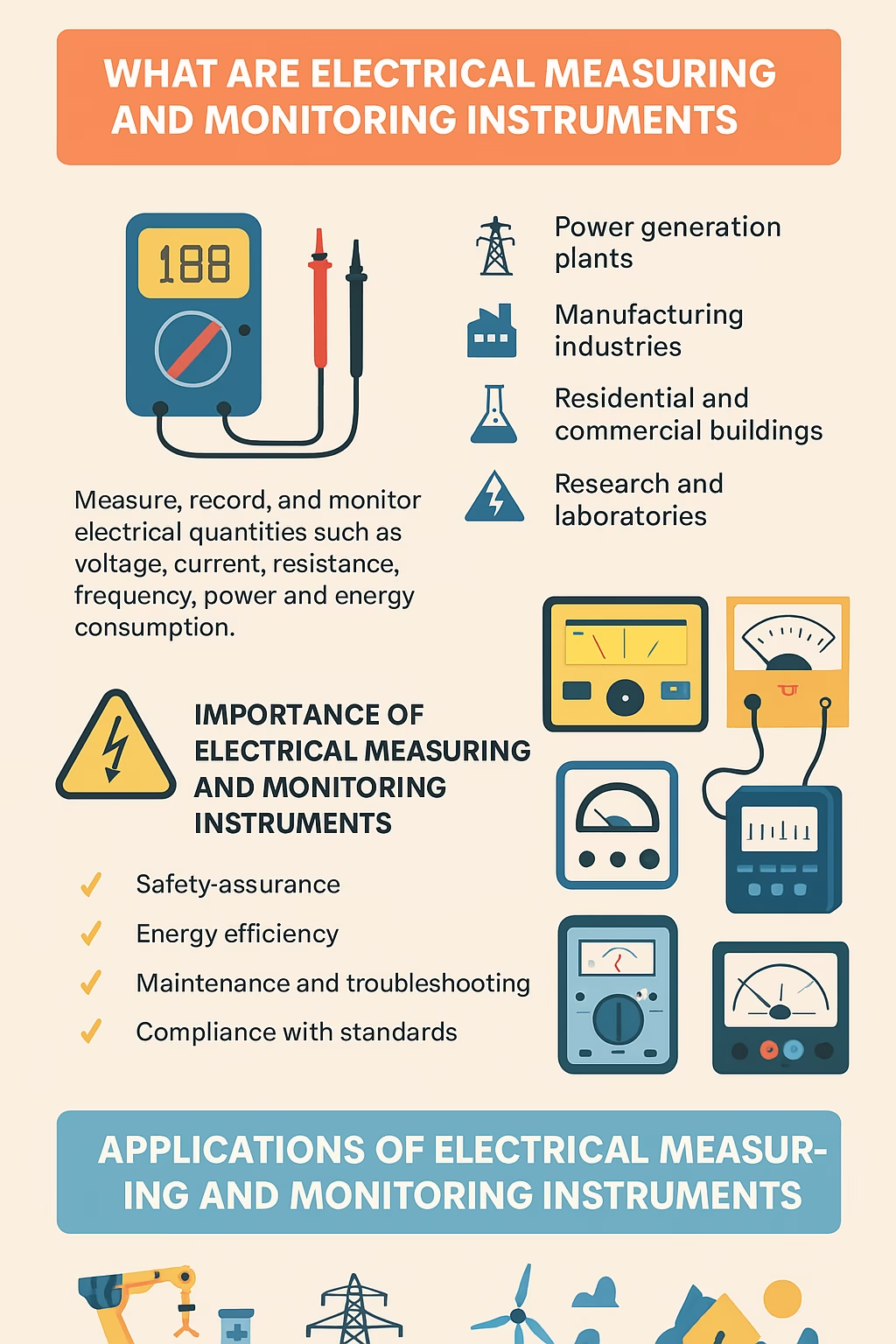
9. What is Electricity: Measuring Electricity
Some key units used to measure electricity include:
| Property | Unit | Symbol |
|---|---|---|
| Electric Current | Ampere | A |
| Voltage | Volt | V |
| Resistance | Ohm | Ω |
| Power | Watt | W |
| Energy | Kilowatt-hour | kWh |
Most electric bills are calculated based on kilowatt-hours (kWh), which measures how much energy you consume.
10. Fun Facts About Electricity
- Lightning is a natural form of static electricity that can reach temperatures hotter than the sun’s surface.
- The first practical use of electricity began in the 19th century.
- Benjamin Franklin’s kite experiment helped prove that lightning is a form of electricity.
- Thomas Edison and Nikola Tesla had a famous rivalry over AC vs. DC electricity.
Conclusion of What is Electricity
Electricity is a fundamental force that powers virtually every aspect of modern life. From the tiniest smartphone to massive industrial machines, electricity makes our world function. Understanding what electricity is and how it works is essential not only for engineers but for everyone living in a technology-driven society.
As we continue to innovate and transition toward greener energy, electricity will remain at the center of human progress—lighting our homes, driving our vehicles, and connecting our world.