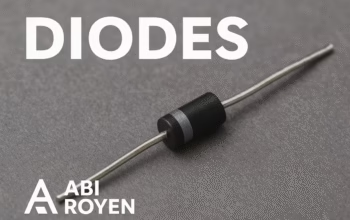


What is a Diode? ~ Electronics would not be where it is today without the invention of the diode. As one of the simplest yet most important semiconductor devices, a diode is found in nearly every electronic circuit, from power supplies and radios to solar panels and smartphones. Despite its small size, it plays a critical role in controlling the flow of electricity.
In this article, we will explore what a diode is, how it works, its main types, and where it is used. Whether you are a beginner in electronics, a student, or a professional, understanding diodes is essential.
Understanding the Basics: What is a Diode?
A diode is a two-terminal electronic component that allows current to flow in only one direction. It acts as a one-way valve for electric current. When voltage is applied in the correct direction (forward bias), the diode conducts electricity. When the voltage is applied in the opposite direction (reverse bias), it blocks the flow of current.
This property makes diodes essential for converting alternating current (AC) into direct current (DC), protecting circuits, and enabling signal processing.
Structure of a Diode
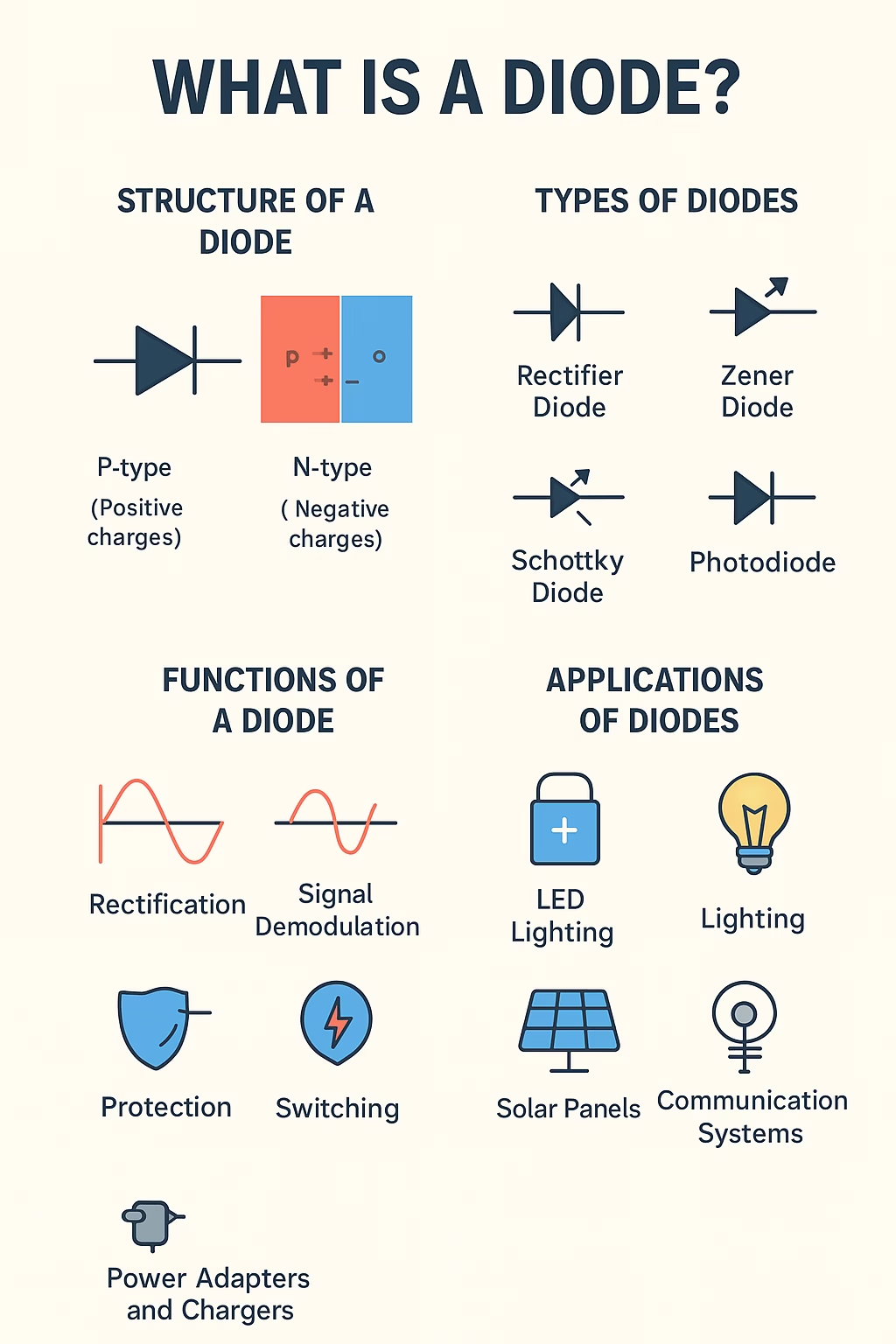
Most diodes are made from semiconductor materials, typically silicon or germanium. A diode consists of two regions:
- P-type (Positive region): Contains an abundance of holes (positive charge carriers).
- N-type (Negative region): Contains an abundance of electrons (negative charge carriers).
The boundary between these two regions is called the PN junction. When voltage is applied across this junction, it determines whether current flows or is blocked.
How Does a Diode Work?
The operation of a diode depends on how it is biased:
- Forward Bias:
- When the positive terminal of the voltage source is connected to the P-side and the negative terminal to the N-side.
- The depletion layer becomes thinner, and current flows through the diode.
- Reverse Bias:
- When the positive terminal is connected to the N-side and the negative terminal to the P-side.
- The depletion layer becomes wider, and current does not flow (except for a tiny leakage current).
This simple mechanism makes diodes extremely useful in many circuits.

Types of Diodes
There are several types of diodes, each designed for specific applications:
1. Rectifier Diode
- Used in power supplies to convert AC into DC.
- Commonly used in adapters, chargers, and household electronics.
2. Zener Diode
- Allows current to flow in reverse once a specific breakdown voltage is reached.
- Widely used in voltage regulation and circuit protection.
3. Light Emitting Diode (LED)
- Emits light when current flows through it.
- Used in displays, indicators, lighting, and automotive applications.
4. Schottky Diode
- Known for low forward voltage drop and fast switching speed.
- Commonly used in high-frequency circuits and power rectifiers.
5. Photodiode
- Converts light into electrical current.
- Used in sensors, cameras, and solar panels.
6. Varactor Diode
- Used in tuning circuits such as radios and communication systems.
Functions of a Diode
The primary functions of a diode include:
- Rectification – Converting AC to DC in power supply circuits.
- Signal Demodulation – Extracting information from radio signals.
- Voltage Regulation – Using Zener diodes to maintain stable voltage.
- Protection – Preventing reverse polarity and voltage spikes.
- Switching – Acting as electronic switches in digital circuits.
- Light Emission – LEDs provide illumination and indication.
Applications of Diodes in Real Life
Diodes are everywhere, even if you don’t notice them. Some practical applications include:
- Power Adapters and Chargers: Rectifier diodes convert AC power into DC for devices.
- LED Lighting: Energy-efficient lighting solutions in homes, cars, and streets.
- Solar Panels: Photodiodes help convert sunlight into electricity.
- Communication Systems: Diodes are used in signal detection and modulation.
- Circuit Protection: Diodes safeguard circuits from voltage spikes and reverse connections.
Advantages of Using Diodes
- Small size and lightweight.
- Low cost and widely available.
- High efficiency in controlling current.
- Long lifespan with minimal maintenance.
- Essential in both analog and digital electronics.
Limitations of Diodes
While diodes are extremely useful, they have some limitations:
- Only allow current in one direction.
- Voltage drop (0.3V for germanium, 0.7V for silicon) reduces efficiency.
- Limited current and voltage handling capacity.
- Sensitive to overheating if not properly rated.
Future of Diodes in Modern Technology
With advances in semiconductor technology, diodes continue to evolve. High-performance diodes such as Silicon Carbide (SiC) and Gallium Nitride (GaN) diodes are now being used in high-power and high-frequency applications, such as electric vehicles, renewable energy systems, and 5G communication devices.
As technology moves forward, diodes will remain a fundamental building block of electronics, enabling more efficient, compact, and powerful systems.
Conclusion of What is a Diode?
So, what is a diode? It is one of the simplest semiconductor devices, yet it plays a crucial role in almost every piece of electronic equipment. By allowing current to flow in only one direction, diodes enable rectification, protection, voltage regulation, signal processing, and even light emission.
From rectifier diodes in power supplies to LEDs in displays, diodes are everywhere. As semiconductor technology advances, new diode materials and designs will continue to shape the future of electronics.
Whether you are a beginner learning about electronic components or a professional designing advanced circuits, understanding diodes is a must.