Introduction of Artificial Intelligence Automotive Industry
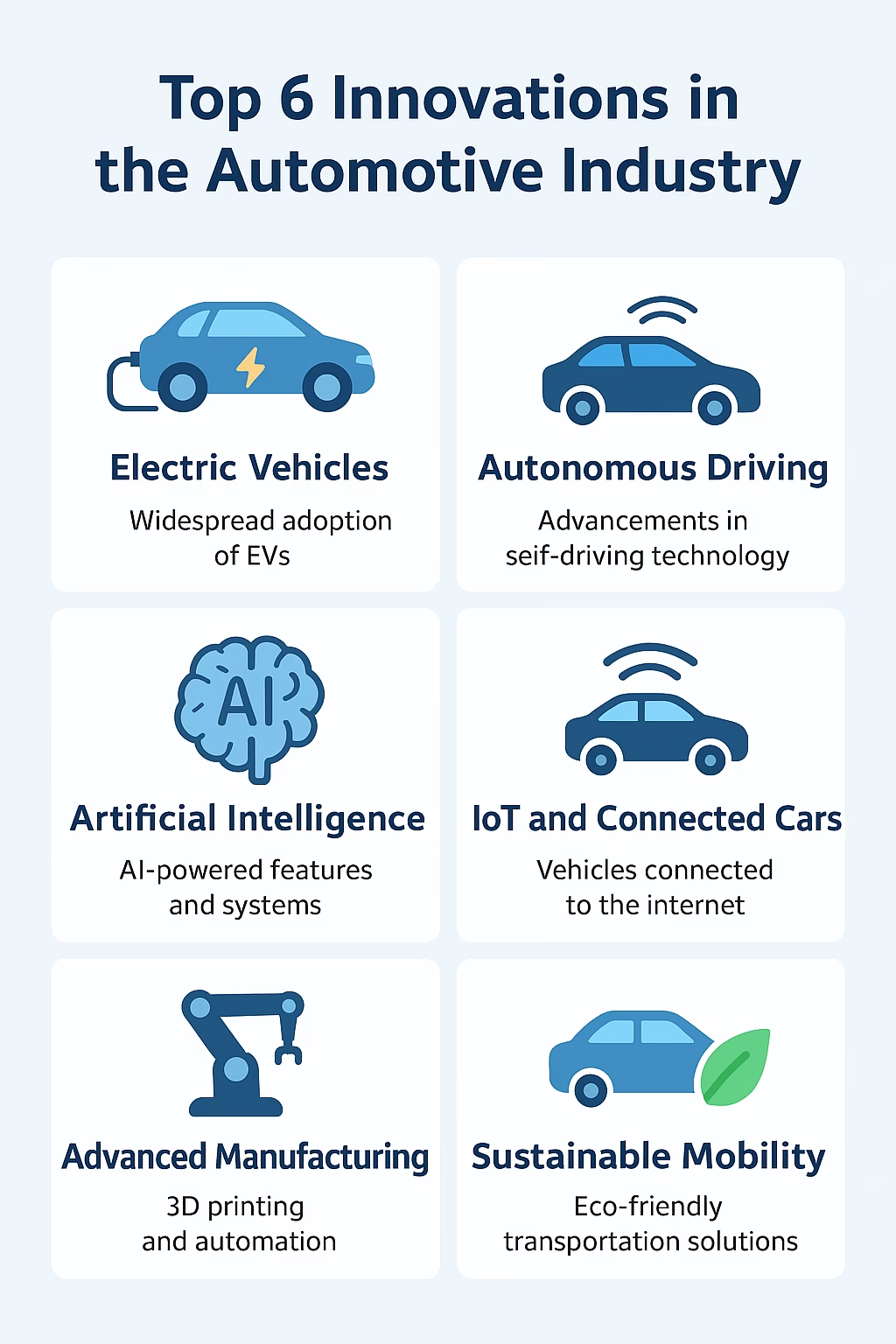
Artificial Intelligence Automotive Industry ~ The automotive industry has always been at the forefront of technological innovation, from the invention of the internal combustion engine to the rise of electric vehicles. Today, one of the most transformative forces reshaping the sector is artificial intelligence (AI). With advancements in machine learning, computer vision, natural language processing, and big data analytics, AI is playing a critical role in how vehicles are designed, manufactured, and operated.
This article explores the major applications of AI in the automotive industry, its benefits, challenges, and the future trends that will define the next generation of smart mobility.


1. The Role of Artificial Intelligence Automotive Industry
Artificial intelligence enables vehicles and automotive systems to make intelligent decisions, learn from data, and operate autonomously. AI technologies are applied across multiple areas of the automotive industry:
- Autonomous driving systems
- Predictive maintenance
- Smart manufacturing
- Enhanced safety features
- Personalized in-car experiences
These innovations not only improve efficiency but also reshape how consumers interact with vehicles.
2. AI in Autonomous Driving
One of the most well-known applications of AI in automotive is autonomous driving. Self-driving cars rely heavily on AI technologies such as:
- Computer vision for object detection and recognition (pedestrians, vehicles, traffic lights).
- Machine learning to predict road conditions and make split-second decisions.
- Sensor fusion combining data from LiDAR, radar, GPS, and cameras to understand the environment.
Companies like Tesla, Waymo, and BMW are investing heavily in autonomous vehicle (AV) technology. While fully autonomous vehicles are still in testing phases, AI is already enhancing driver assistance systems through features such as lane-keeping assist, adaptive cruise control, and automated emergency braking.
3. AI in Automotive Manufacturing
Artificial intelligence is revolutionizing the way cars are built. In smart factories, AI-powered robotics and automation improve production efficiency, precision, and quality control.
- Robotics and Automation: AI-driven robots handle repetitive tasks such as welding, painting, and assembly with high precision.
- Predictive Maintenance in Manufacturing: Machine learning algorithms analyze equipment data to predict failures before they happen, minimizing downtime.
- Quality Control with AI Vision Systems: Advanced cameras and AI models detect defects in real-time during production.
This reduces waste, lowers costs, and accelerates production cycles.
4. AI for Safety and Security
Safety has always been a top priority in the automotive industry, and AI is taking it to the next level.
- Driver Monitoring Systems: AI tracks driver behavior, detecting drowsiness or distraction and alerting them to refocus.
- Collision Avoidance Systems: AI predicts potential collisions and takes preventive actions, such as automatic braking.
- Cybersecurity: As vehicles become more connected, AI helps detect and mitigate cyber threats targeting automotive systems.
By leveraging real-time data, AI enhances both passenger safety and vehicle security.
5. AI in Customer Experience and Personalization
Beyond manufacturing and safety, AI plays a crucial role in enhancing the customer experience.
- In-Car Voice Assistants: Natural language processing (NLP) enables cars to understand voice commands for navigation, entertainment, and climate control.
- Predictive Infotainment Systems: AI suggests music, routes, or services based on driver preferences.
- Personalized Driving Modes: Cars can adapt to individual driving styles, offering customized performance and comfort settings.
This level of personalization increases customer satisfaction and strengthens brand loyalty.
6. Predictive Maintenance with AI
Traditional vehicle maintenance often relies on scheduled servicing, which may not accurately reflect the real condition of the car. AI changes this by enabling predictive maintenance.
- Data from IoT sensors monitors engine health, tire pressure, brake performance, and battery life.
- Machine learning models predict potential failures before they occur.
- Reduced Downtime and Cost Savings: Drivers and fleet operators benefit from optimized maintenance schedules and fewer unexpected breakdowns.
This approach is particularly valuable for commercial fleets, where efficiency and uptime are critical.
7. Challenges of Implementing Artificial Intelligence Automotive Industry
Despite its benefits, AI adoption in the automotive industry faces several challenges:
- High Development Costs: AI-based automotive solutions require significant investment in research, sensors, and data infrastructure.
- Data Privacy Concerns: Connected vehicles collect large amounts of data, raising questions about security and user privacy.
- Regulatory and Safety Issues: Autonomous vehicles face strict regulations and require extensive testing before mass adoption.
- Technology Limitations: AI models still struggle with unpredictable environments and extreme weather conditions.
Addressing these challenges will be key to fully unlocking the potential of AI in mobility.
8. Future Trends of Artificial Intelligence Automotive Industry
The future of AI in automotive looks promising, with several emerging trends:
- Level 5 Autonomous Vehicles: Fully self-driving cars without human intervention.
- AI-Powered Electric Vehicles (EVs): Optimized battery performance, energy management, and charging infrastructure.
- Connected Vehicle Ecosystems: AI enabling vehicle-to-vehicle (V2V) and vehicle-to-infrastructure (V2I) communication.
- Augmented Reality Dashboards: AI-driven AR displays for real-time navigation and hazard detection.
- Sustainable Manufacturing: AI optimizing energy consumption and reducing carbon emissions in factories.
These innovations will redefine how we drive, own, and interact with cars in the coming decades.
Conclusion of Artificial Intelligence Automotive Industry
Artificial intelligence is transforming the automotive industry at every level—from how vehicles are manufactured to how they operate on the road. With AI-driven innovations such as autonomous driving, predictive maintenance, enhanced safety, and personalized customer experiences, the industry is moving toward a future of smarter, safer, and more sustainable mobility.
While challenges such as cost, regulations, and data privacy remain, the continued advancement of AI promises to reshape the automotive landscape. For automakers, suppliers, and consumers, embracing AI is not just an option—it is the path forward in the era of intelligent mobility.