Introduction
The early 20th century marked a transformative period in human history, known as the Electromechanical Era. This era bridged the gap between purely mechanical systems of the 19th century and the electronic revolution that followed in the mid-20th century. During this time, engineers, inventors, and scientists combined mechanical devices with emerging electrical technologies, giving birth to innovations that revolutionized industries, communication, transportation, and eventually computing.
In this article, we will explore the origins, key inventions, and long-term impact of the Electromechanical Era, highlighting how it set the foundation for the digital age we live in today.
What Was the Electromechanical Era?
The Electromechanical Era refers to a period, roughly spanning the early decades of the 20th century, when mechanical devices were enhanced and automated through the integration of electrical systems. Unlike the purely mechanical machines of the Industrial Revolution, electromechanical devices used motors, relays, switches, and other electrical components to improve precision, efficiency, and scalability.
This combination of mechanics and electricity created a wave of technological advancements that were critical for fields such as:
- Industrial automation
- Communication technology (telegraphs, telephones, radio)
- Transportation systems (electric trains, elevators)
- Early computing and data processing
Key Characteristics of the Electromechanical Era
- Integration of Electricity with Machines
Mechanical tools and engines were equipped with electrical motors, relays, and circuits, making them faster and more reliable. - Automation and Control
Devices could be automated through electromechanical switches and relays, a precursor to modern digital logic circuits. - Mass Production and Scalability
Innovations in assembly lines and powered machinery increased productivity in industries worldwide. - Data Processing Beginnings
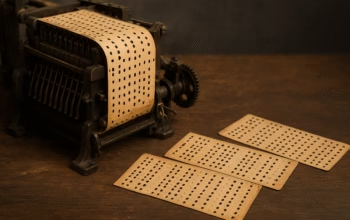
Electromechanical tabulating machines, such as those developed by Herman Hollerith and IBM, laid the groundwork for modern computing.
Major Innovations of the Electromechanical Era
1. Electromechanical Relays
Electromechanical relays were fundamental in enabling automated systems. These switches, controlled by electric currents, allowed machines to perform logical operations, which became essential in early computing and telecommunications.
2. Telecommunication Devices
The telephone, radio, and telegraph evolved significantly during this period. The use of electromechanical exchanges automated telephone switching, reducing reliance on human operators and increasing global connectivity.
3. Early Computing Machines
The era saw the rise of data-processing devices like Hollerith’s tabulating machine, which used punched cards to process census data. This invention was a major step toward modern computing and later influenced IBM’s growth.
4. Electromechanical Calculators
Before electronic computers, electromechanical calculators were widely used in business and government for tasks like accounting, logistics, and engineering calculations.
5. Transportation and Infrastructure
Electromechanical control systems powered trains, elevators, and escalators, shaping urban development and mobility.
The Role of Electromechanical Systems in Early Computing
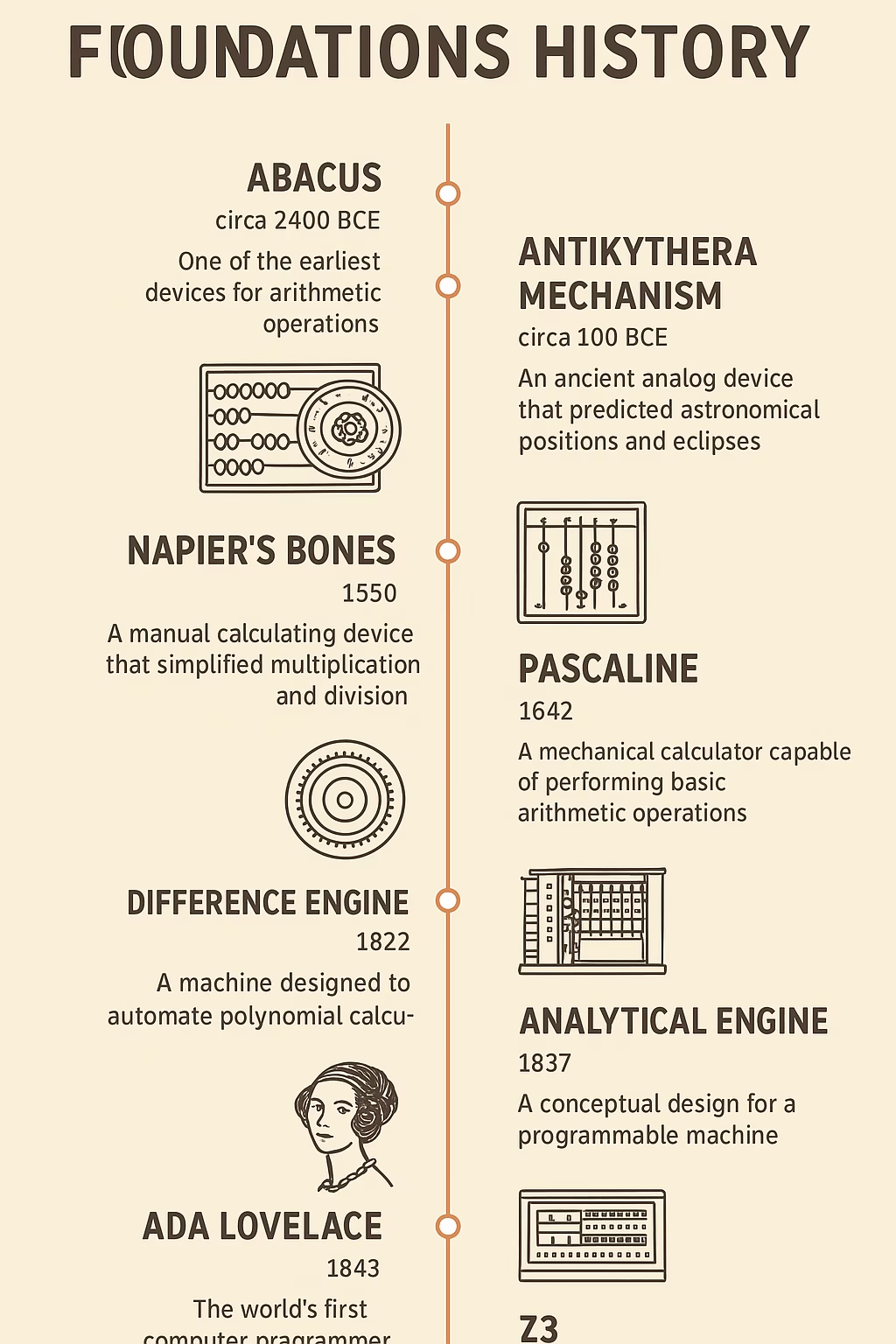
The Electromechanical Era was especially significant in computing history. Machines such as the Zuse Z3 (1941) in Germany and Harvard Mark I (1944) in the United States were built with electromechanical components. These machines relied on relays and switches to execute operations, representing the first large-scale programmable computers.
Although relatively slow compared to later electronic computers, they proved that automated computation was possible, paving the way for the digital revolution.


Impact on Society and Industry
The Electromechanical Era had widespread influence across multiple sectors:
- Manufacturing: Automated machinery improved productivity and reduced costs.
- Communication: Faster and more reliable communication systems reshaped global business and personal interaction.
- Urbanization: Electromechanical infrastructure such as elevators and electric trains enabled skyscrapers and expanded cities.
- Military Technology: World War I and II accelerated research into radar, computing, and telecommunications, many of which relied heavily on electromechanical systems.
Transition to the Electronic Era
While the Electromechanical Era was groundbreaking, its limitations eventually gave rise to the Electronic Era. Electromechanical relays were slow, bulky, and prone to wear and tear. The invention of the vacuum tube in the early 20th century marked the beginning of electronic computing, which ultimately replaced electromechanical systems.
However, without the innovations of the Electromechanical Era, the transition to electronics would not have been possible. This era established the framework for programmable logic, data processing, and automated control systems.
Legacy of the Electromechanical Era
Today, we can still see the influence of the Electromechanical Era in several ways:
- Computing Principles: The concept of binary logic and switching operations began with electromechanical relays.
- Automation Systems: Modern robotics and control systems trace their roots back to electromechanical automation.
- Industrial Design: The era inspired a culture of combining engineering disciplines to create hybrid technologies.
Ultimately, the Electromechanical Era was not just a transitional phase—it was the foundation upon which modern technology was built.
Conclusion of The Electromechanical Era
The Electromechanical Era of the early 20th century was a defining period in technological history. By merging mechanical systems with electricity, this era enabled innovations in communication, industry, transportation, and computing that shaped the modern world.
While later replaced by the faster and more efficient Electronic Era, the electromechanical innovations of the time remain a crucial milestone. They demonstrated the potential of automation, paved the way for computing, and established the groundwork for the digital technologies we rely on today.
For industries, researchers, and technology enthusiasts, understanding the Electromechanical Era is key to appreciating how far we have come—and how the past continues to influence the future of innovation.