Introduction
Steam boilers have been a cornerstone of industrial development for centuries, providing thermal energy to power machines, generate electricity, and process materials. Their continued relevance in today’s technologically advanced world speaks to their efficiency and versatility. In this article, we’ll take a deep dive into the fundamentals of steam boilers — from their basic working principles to the various types and wide-ranging applications in different sectors.
What is a Steam Boilers?
A steam boiler is a closed vessel that converts water into steam using thermal energy from combustion. This steam is then used for various purposes such as heating, power generation, and mechanical work. Boilers play a vital role in industries where heat is an essential part of the production process.
Working Principle of a Steam Boilers
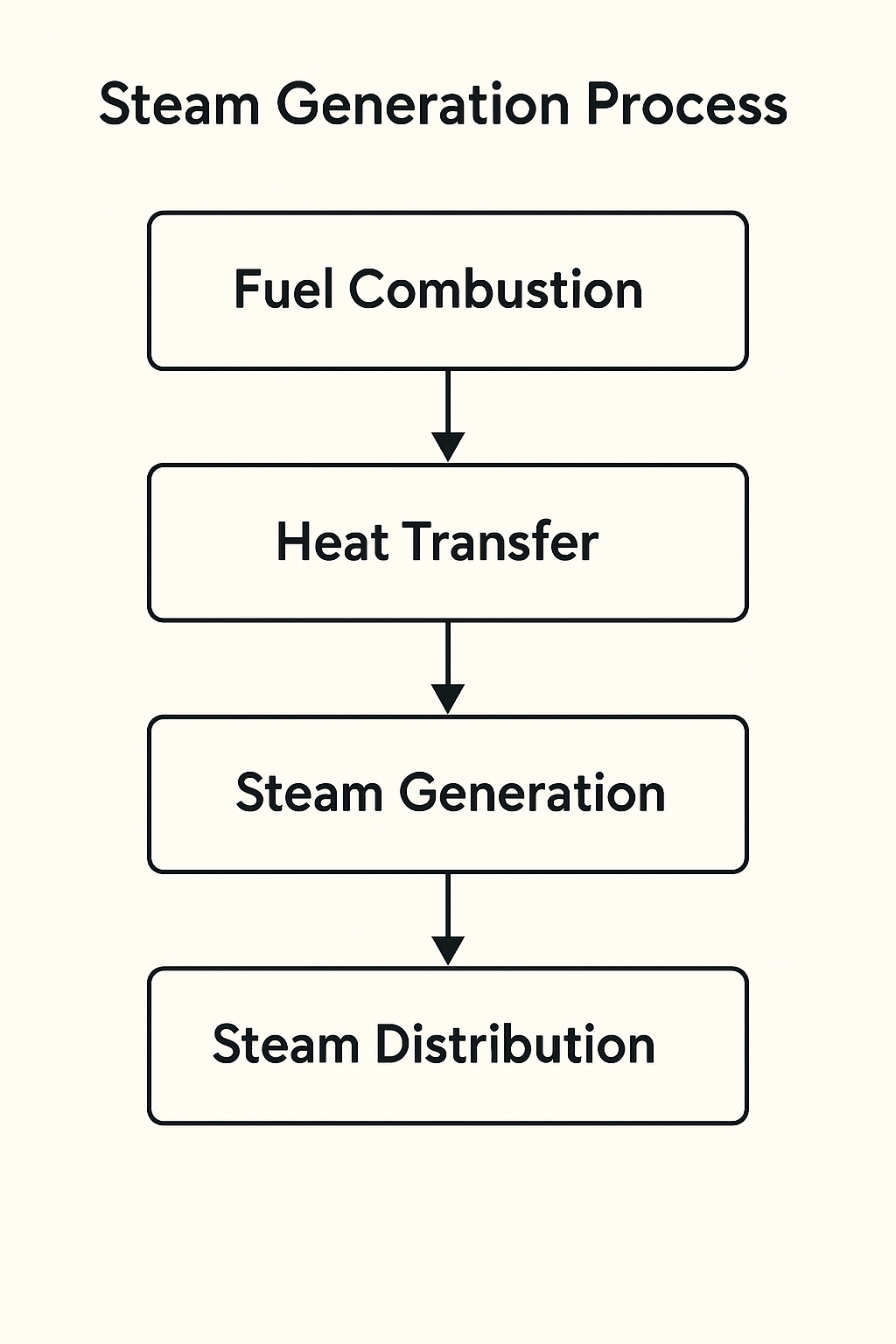
The basic operation of a steam boiler involves:
- Fuel Combustion: Fuel (such as coal, oil, gas, or biomass) is burned in a combustion chamber.
- Heat Transfer: The generated heat is transferred to water through boiler tubes.
- Steam Generation: As water absorbs heat, it changes into steam.
- Steam Distribution: The steam is then collected and directed through a piping system to be used in different applications.
Main Components of a Steam Boilers
- Burner – Initiates the combustion process to generate heat.
- Combustion Chamber – Where the fuel burns and produces heat.
- Heat Exchanger (Boiler Tubes) – Transfers heat from the combustion gases to the water.
- Water Tank or Drum – Stores the water to be converted into steam.
- Steam Output Line – Directs the generated steam to the target equipment or process.
- Control Systems – Regulate temperature, pressure, and safety features.
Types of Steam Boilers
Steam boilers can be categorized based on several criteria:
1. Based on Tube Configuration:
- Fire-Tube Boilers: Hot gases pass through tubes surrounded by water. Suitable for low-pressure applications.
- Water-Tube Boilers: Water flows through tubes heated by external combustion gases. Ideal for high-pressure, high-capacity systems.
2. Based on Fuel Type:
- Coal-Fired Boilers
- Oil-Fired Boilers
- Gas-Fired Boilers
- Biomass Boilers
- Electric Boilers
3. Based on Operation:
- Natural Circulation Boilers
- Forced Circulation Boilers
4. Based on Pressure:
- Low-Pressure Steam Boilers (<15 psi)
- High-Pressure Steam Boilers (>15 psi)
5. Special Types:
- Package Boilers: Pre-assembled boilers ideal for smaller facilities.
- Waste Heat Recovery Boilers (WHRB): Use exhaust gases from industrial processes to generate steam.
- Supercritical Boilers: Operate above the critical point of water, highly efficient but complex.
Applications of Steam Boilers
Steam boilers are essential across a variety of industries:
1. Power Generation
Used in thermal power plants to drive turbines and generate electricity.
2. Manufacturing & Processing
- Food and beverage industry: For cooking, cleaning, and sterilization.
- Textile industry: For dyeing, drying, and fabric processing.
- Chemical plants: Involved in reactions requiring heat.
3. HVAC & Heating
Used for central heating in buildings and institutions.
4. Petrochemical & Refining
Steam is used in cracking and reforming processes.
5. Marine and Locomotive
Historically, steam boilers powered ships and trains. Some vessels and heritage locomotives still use them.

Advantages of Steam Boilers
- Efficient Heat Transfer: High latent heat of steam provides consistent thermal energy.
- Scalability: Available in small and large capacities.
- Reliability: Proven and mature technology with well-understood maintenance needs.
- Flexibility in Fuel: Can operate on various fuel types depending on design.
Challenges and Considerations
- Initial Cost: High upfront cost for installation and setup.
- Maintenance Needs: Requires regular inspection, cleaning, and monitoring.
- Efficiency Loss: Older models may suffer from heat loss and lower efficiency.
- Safety Concerns: High-pressure steam systems can be dangerous if not managed correctly.
Environmental Impact and Sustainability
The environmental footprint of steam boilers largely depends on the fuel used. Coal and oil-fired boilers release significant amounts of CO₂, SOx, and NOx. However, newer technologies are focusing on:
- Cleaner Combustion Techniques
- Biomass and Renewable Fuels
- Electric Steam Boilers Powered by Renewable Energy
- Waste Heat Recovery to Reduce Energy Consumption
These innovations help reduce emissions and improve overall energy efficiency.
Steam Boilers Maintenance Tips
- Regular Inspections – Check for corrosion, leaks, and scale buildup.
- Water Treatment – Prevent scale and sludge by using treated feedwater.
- Pressure Testing – Ensure safe operating pressure is maintained.
- Blowdown – Periodically remove sludge and impurities.
- Calibration of Controls – Verify that sensors and automation work as intended.
Conclusion of Steam Boilers
Steam boilers continue to be a vital part of industrial infrastructure, providing reliable and efficient thermal energy across multiple sectors. Whether you’re managing a power plant, manufacturing facility, or HVAC system, understanding the different types and applications of steam boilers will help you make informed decisions.
As the world moves toward greener solutions, steam boiler technology is also evolving, integrating renewable fuels and advanced monitoring systems. Investing in the right steam boiler not only ensures operational efficiency but also aligns with sustainability goals.