Safety and life-saving equipment are crucial elements in ensuring human protection during emergencies, accidents, or hazardous situations. Whether in workplaces, homes, schools, or public areas, having the right equipment available can make the difference between life and death. These tools not only prevent accidents but also provide immediate support during critical events such as fires, floods, accidents, or medical emergencies.
This article will explore the importance of safety and life-saving equipment, their types, real-world applications, and best practices for maintenance and usage.
Why Safety and Life-Saving Equipment Matters
Every year, millions of lives are saved because of properly used safety and rescue equipment. For instance, fire extinguishers prevent small fires from turning into catastrophic blazes, while automated external defibrillators (AEDs) revive individuals experiencing cardiac arrest.
The importance of such equipment can be summarized as follows:
- Risk Reduction – Minimizes the likelihood of injury or fatality.
- Emergency Preparedness – Ensures readiness for unexpected incidents.
- Workplace Compliance – Meets legal and occupational safety requirements.
- Peace of Mind – Provides confidence in dealing with emergencies effectively.
Categories of Safety and Life-Saving Equipment
Safety and life-saving equipment comes in different categories depending on the environment and the type of hazards.
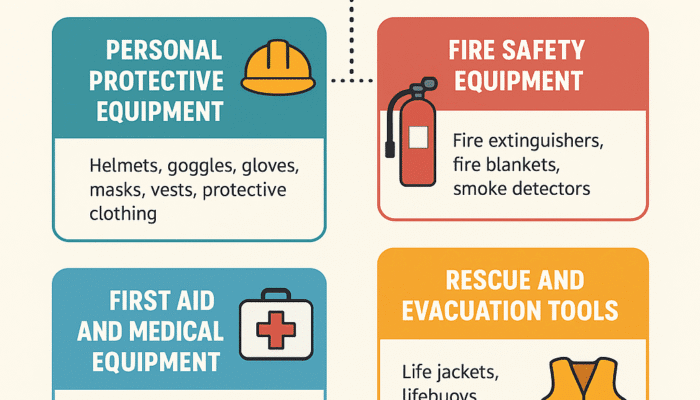
1. Personal Protective Equipment (PPE)
PPE is designed to protect individuals from injury or health risks. Common PPE includes:
- Helmets and hard hats
- Safety goggles and face shields
- Respirators and masks
- Gloves (chemical, thermal, cut-resistant)
- Safety shoes and boots
- Reflective vests and protective clothing
2. Fire Safety Equipment
Fire is one of the most common hazards in industrial, commercial, and residential environments. Life-saving fire equipment includes:
- Fire extinguishers
- Fire blankets
- Smoke detectors and fire alarms
- Fire hoses and sprinkler systems
- Emergency exit signs and lighting
3. First Aid and Medical Equipment
Immediate medical response is critical in emergencies. Important items include:
- First aid kits (bandages, antiseptics, scissors, burn creams)
- Automated external defibrillators (AEDs)
- Oxygen masks and resuscitation kits
- Stretchers and spine boards
4. Rescue and Evacuation Tools
Rescue tools help extract or protect individuals in emergencies such as natural disasters or accidents. These include:
- Life jackets and lifebuoys (for drowning prevention)
- Safety ropes and harnesses
- Emergency ladders
- Hydraulic rescue tools (e.g., the “jaws of life”)
- Inflatable rafts and survival kits
5. Workplace and Industrial Safety Equipment
Workplaces, especially high-risk industries, require specialized equipment:
- Gas detectors and alarm systems
- Safety showers and eyewash stations
- Guardrails and safety nets
- Lockout/tagout devices for machinery safety
Applications in Different Environments
The effectiveness of safety and life-saving equipment depends on its proper placement and application. Here are some common settings:
Homes and Residential Areas
- Smoke detectors to alert residents of fire.
- Fire extinguishers in kitchens.
- First aid kits for minor injuries.
Workplaces and Industries
- PPE for workers in construction, chemical, and manufacturing industries.
- Gas detectors in oil and gas industries.
- Safety harnesses for high-rise construction workers.
Public Spaces
- AEDs in airports, malls, and stadiums.
- Fire extinguishers and emergency lighting in schools and offices.
- Life jackets near swimming pools and beaches.
Transportation
- Life vests and lifeboats in ships.
- Oxygen masks in airplanes.
- Emergency exits and hammers in buses and trains.
Maintenance and Training: Key to Effectiveness
Owning safety and life-saving equipment is not enough; proper maintenance and user training are equally important.
- Regular Inspection: Fire extinguishers, alarms, and PPE must be checked periodically.
- Proper Storage: First aid kits and rescue equipment should be stored in accessible locations.
- Employee Training: Workers should be trained in using PPE, fire extinguishers, and AEDs.
- Expiration Awareness: Medical supplies, fire extinguishers, and protective gear have shelf lives and must be replaced when expired.

Global Standards and Regulations Safety and Life-Saving Equipment
International organizations such as OSHA (Occupational Safety and Health Administration), NFPA (National Fire Protection Association), and ISO (International Organization for Standardization) establish guidelines to ensure that safety equipment is reliable and effective. Businesses and public institutions must comply with these standards to protect lives and avoid legal consequences.
Future Trends in Safety and Life-Saving Equipment
With technology evolving, safety equipment is also advancing:
- Smart PPE: Helmets and vests with sensors to detect hazardous gases or fatigue.
- Automated Rescue Drones: Used in search and rescue operations.
- AI-Based Monitoring Systems: Real-time hazard detection and alerts.
- Wearable Health Devices: Tracking vital signs in dangerous workplaces.
These innovations show how the future of safety will integrate digital technology with traditional protective equipment.
Conclusion of Safety and Life-Saving Equipment
Safety and life-saving equipment is an indispensable part of modern life. From homes to workplaces and public spaces, these tools ensure preparedness, minimize risks, and ultimately save lives. However, their effectiveness depends on proper maintenance, training, and compliance with safety standards.
By investing in reliable safety and life-saving equipment, individuals and organizations contribute to a safer environment where risks are minimized, and emergency responses are faster and more effective.