Introduction
Radio technology has played a vital role in communication and entertainment for more than a century. Among the key components that make radio broadcasting possible is the radio tuner. A radio tuner allows devices to select specific frequencies, filter signals, and deliver clear audio output to listeners. While traditional tuners were primarily associated with AM and FM radios, modern tuners are now integrated into smartphones, car systems, home audio systems, and even digital broadcasting platforms.
In this article, we will explore what a radio tuner is, how it works, the types available, and its applications in today’s modern world.
What is a Radio Tuner?
A radio tuner is an electronic device or circuit that selects a specific frequency from the wide range of radio signals available in the airwaves. Its primary purpose is to tune in to a desired station while rejecting unwanted frequencies.
For example, when you adjust the frequency dial on an FM radio to 101.5 MHz, the tuner isolates that frequency from the countless signals around it, ensuring you only hear that particular station.
How a Radio Tuner Works
The operation of a radio tuner can be broken down into several stages:
- Antenna Reception
- The antenna captures electromagnetic waves transmitted by radio stations.
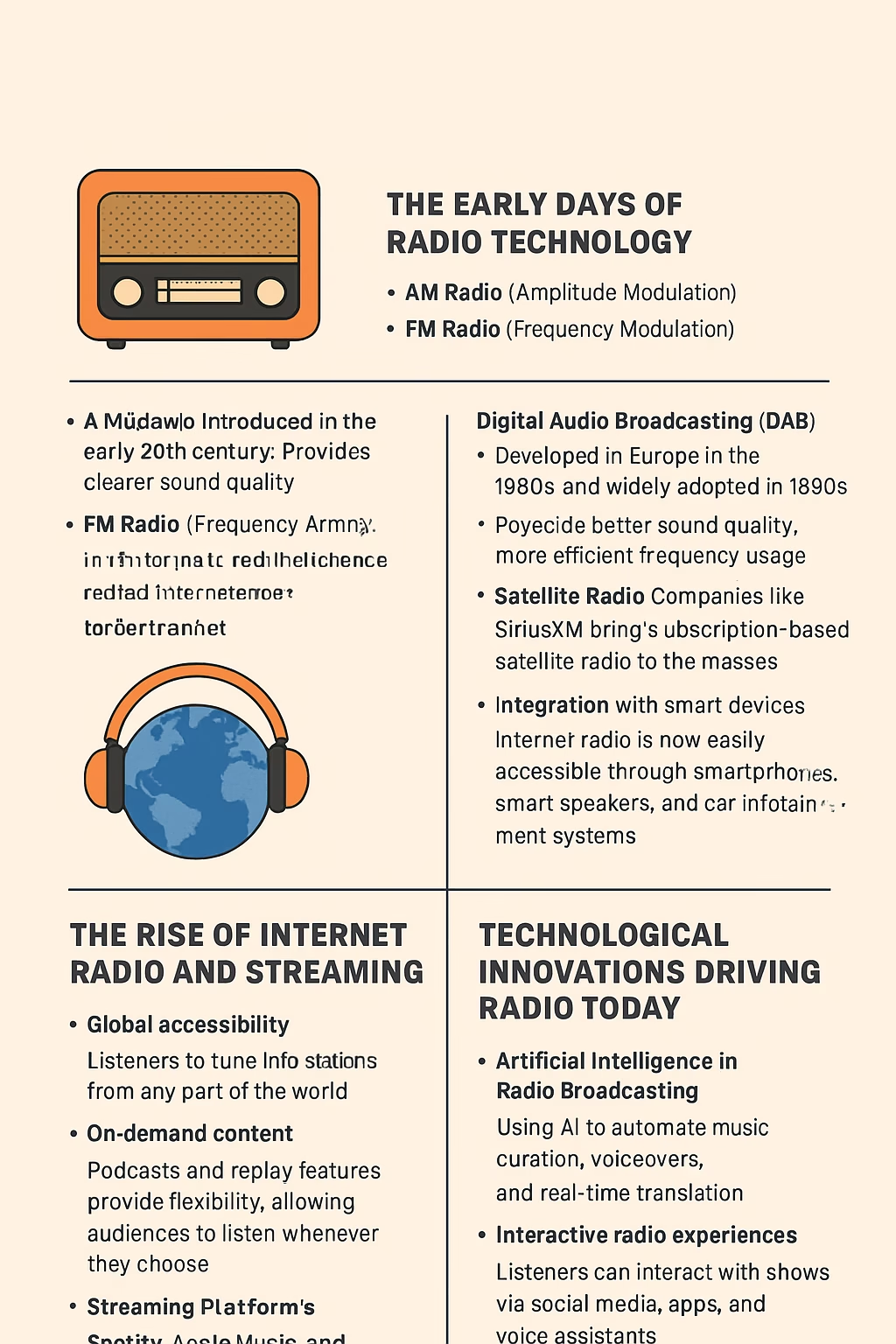
- These waves contain different frequencies, both AM (Amplitude Modulation) and FM (Frequency Modulation).
- Signal Filtering
- The tuner uses a resonant circuit (often made of coils and capacitors) to filter out unwanted signals.
- Only the desired frequency is allowed to pass through.
- Frequency Conversion
- In superheterodyne tuners (the most common type), the incoming frequency is converted to an intermediate frequency (IF).
- This makes it easier to amplify and process the signal.
- Demodulation
- The tuner extracts the audio information carried by the radio wave.
- AM demodulation retrieves amplitude variations, while FM demodulation extracts frequency variations.
- Audio Output
- Finally, the tuner sends the signal to an amplifier and speaker, producing the sound we hear.
Types of Radio Tuner
Radio tuners have evolved over the years, from simple analog dials to advanced digital interfaces. Below are the main types:
1. Analog Tuners
- Traditional tuners that use a manual dial to adjust frequency.
- Common in older radios and vintage equipment.
- Provide a nostalgic feel but lack precision compared to digital tuners.
2. Digital Tuners
- Use microprocessors and digital circuits to tune stations automatically.
- Often feature LED or LCD displays for precise frequency selection.
- Found in modern radios, smartphones, and car audio systems.
3. AM/FM Tuners
- The most widespread type, designed to receive AM and FM signals.
- AM is typically used for talk radio and news, while FM is preferred for music due to better sound quality.
4. Shortwave and Longwave Tuners
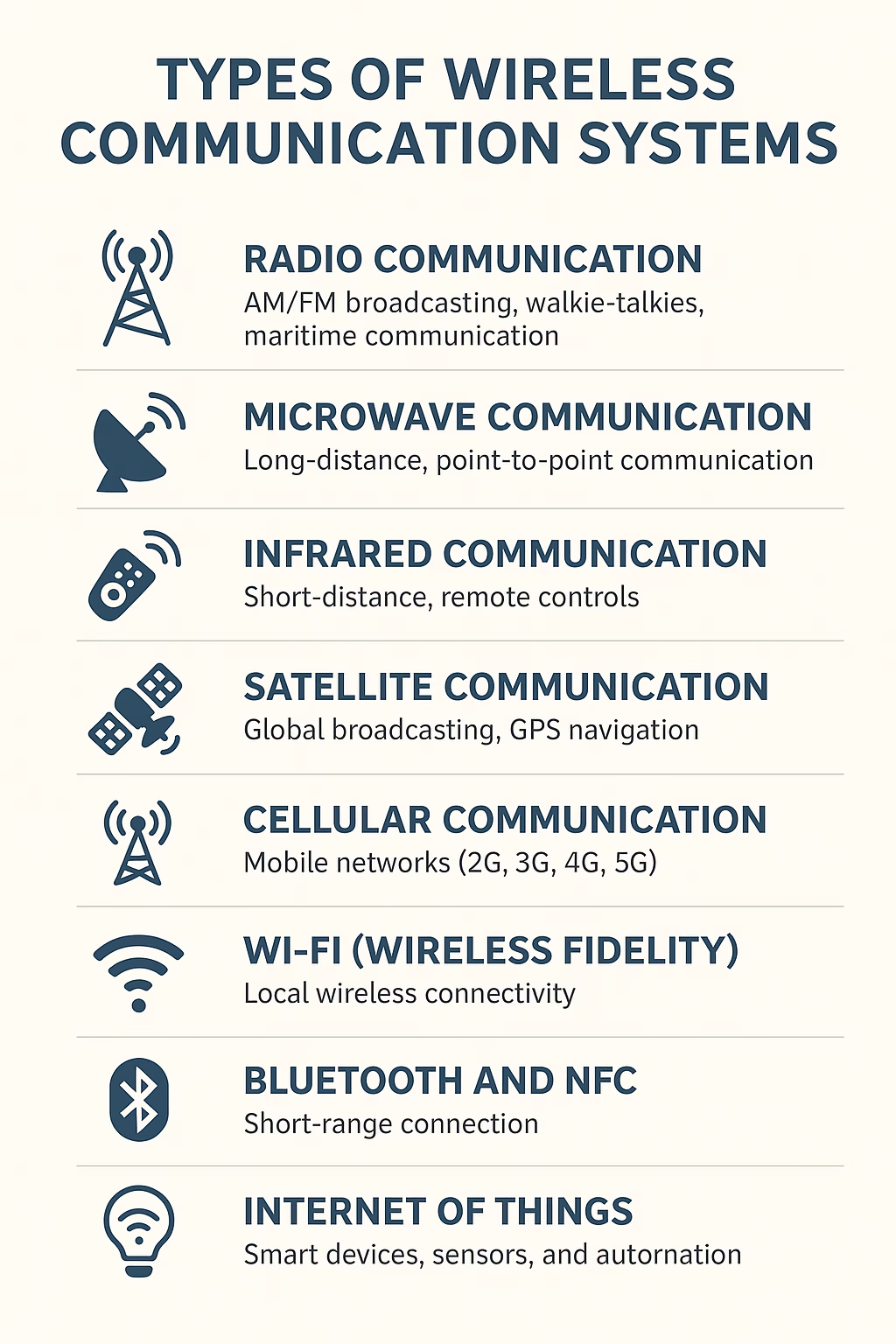
- Allow access to international broadcasts, aviation communications, and maritime transmissions.
- Still popular among enthusiasts who enjoy listening to global stations.
5. Internet and Digital Radio Tuners (DAB/DAB+)
- Receive digital signals via the internet or through digital audio broadcasting.
- Offer clearer sound, more channels, and extra features like song information.
- Becoming the standard in many parts of Europe and Asia.
6. Car Radio Tuners
- Specially designed to work in vehicles.
- Often integrated with GPS, Bluetooth, and infotainment systems.
Applications of Radio Tuner in Modern Technology
Radio tuners remain highly relevant despite the rise of digital streaming platforms. Their applications include:
- Broadcast Entertainment
- Still widely used in cars, homes, and portable radios.
- Provides access to music, news, and sports.
- Emergency Communication
- Essential during natural disasters when internet and phone networks fail.
- Battery-powered radios with tuners can provide life-saving updates.
- Aviation and Maritime Communication
- Tuners are used in aviation radios to communicate with control towers.
- Maritime radios rely on tuners for navigation, safety, and ship-to-ship communication.
- Military and Security
- Secure communication systems use tuners to operate on specific encrypted frequencies.
- Educational and Scientific Use
- Radio tuners help in studying atmospheric conditions and astronomy.
- Shortwave tuners are used in research and global monitoring.
- Home Audio and Hi-Fi Systems
- Many stereo receivers include high-quality radio tuners for enhanced listening.


Advantages of Radio Tuner
- Accessibility: Free access to information and entertainment.
- Reliability: Works even in areas with poor internet coverage.
- Diversity: Access to local and international content.
- Portability: Found in compact devices like pocket radios and smartphones.
- Integration: Easily embedded into modern gadgets like cars, TVs, and mobile phones.
Challenges and Future of Radio Tuner
While radio tuners remain popular, they face challenges in the digital era:
- Competition with Streaming Services: Many people now prefer Spotify, YouTube, or podcasts.
- Signal Interference: Radio signals can be affected by weather, terrain, and electronic devices.
- Decline of AM Broadcasting: Many countries are phasing out AM stations due to low demand.
However, the future of radio tuners is still promising:
- Digital Transformation: Digital Audio Broadcasting (DAB) and HD Radio are improving sound quality.
- Smart Integration: Tuners are increasingly integrated with smartphones, smart speakers, and connected cars.
- Global Reach: Internet radio tuners provide access to thousands of stations worldwide.
Conclusion
The radio tuner is one of the most important innovations in communication technology. From its humble beginnings in analog devices to its integration in modern digital platforms, radio tuners continue to connect people to music, information, and global events.
Despite the rise of digital streaming, tuners remain reliable, accessible, and essential, especially in critical areas such as aviation, maritime navigation, and emergency communication. As technology evolves, the radio tuner will continue to adapt, ensuring it remains a vital tool in both everyday life and specialized industries.