

Maintenance ship’s deck equipment plays a crucial role in ensuring the safety, efficiency, and reliability of a vessel during its operations at sea. From mooring winches to anchor handling gear, and from cranes to hatch covers, these systems must be maintained regularly to avoid mechanical failure, delays, or even catastrophic accidents. This article outlines the key aspects of maintaining ship’s deck equipment, including types of equipment, maintenance strategies, inspection protocols, and troubleshooting tips.
1. Importance of Maintenance Ship’s Deck Equipment
Deck machinery and equipment endure harsh marine environments—exposed to saltwater, humidity, mechanical stress, and extreme weather conditions. Regular maintenance ensures:
- Operational Readiness: Equipment functions optimally when needed, especially in emergency situations.
- Safety Assurance: Reduces the risk of accidents due to equipment malfunction.
- Compliance with Maritime Regulations: Aligns with SOLAS, IMO, and class society standards.
- Extended Equipment Lifespan: Prevents premature wear and corrosion.
- Cost Efficiency: Minimizes the risk of costly breakdowns and dock repairs.
2. Types of Maintenance Ship’s Deck Equipment That Require Regular
a. Mooring Equipment
- Winches and Capstans
- Bollards, Fairleads, and Chocks
- Ropes and Wires
b. Anchoring Equipment
- Windlasses
- Anchor Chains and Shackles
- Hawse Pipes and Stoppers
c. Cargo Handling Gear
- Cranes and Derricks
- Grabs and Hooks
- Hydraulic Power Units
d. Hatch Covers
- Rolling and Folding Mechanisms
- Sealing Systems and Drains
e. Safety and Rescue Equipment
- Life Raft Davits
- Rescue Boats and Launching Devices
3. Maintenance Ship’s Deck Equipment Best Practices
a. Maintenance Ship’s Deck Equipment: Planned Maintenance System (PMS)
A robust PMS helps track and schedule periodic maintenance tasks. It should be aligned with manufacturer recommendations and class society requirements.
b. Lubrication Routines
- Use marine-grade lubricants for all rotating, sliding, or load-bearing components.
- Avoid over-lubrication as it attracts dust and contaminants.
c. Corrosion Prevention
- Clean and repaint exposed metal parts.
- Apply anti-corrosion coatings and conduct touch-ups as needed.
- Inspect sacrificial anodes and replace them when depleted.
d. Maintenance Ship’s Deck Equipment: Alignment and Tension Checks
- Align rotating machinery such as winches and windlasses.
- Ensure proper tension in wire ropes and hydraulic lines.
e. Electrical and Hydraulic System Checks
- Inspect all control panels, switches, and junction boxes for signs of wear or water ingress.
- Check hydraulic fluid levels and pressure gauges regularly.
4. Inspection Maintenance Ship’s Deck Equipment Guidelines
Routine inspections are vital for early fault detection. These include:
Daily Checks:
- Visual inspection for leaks, cracks, or corrosion.
- Function tests on mooring and anchoring gear.
- Ensure safety guards are intact.
Weekly/Monthly Checks:
- Measure brake holding capacity of winches and windlasses.
- Test emergency operation systems for cranes and davits.
- Inspect all moving parts for wear and lubrication needs.
Annual Inspections:
- Non-Destructive Testing (NDT) on critical components.
- Calibration of load sensors and limit switches.
- Overhaul of machinery like windlass gearboxes.
5. Troubleshooting / Maintenance Ship’s Deck Equipment Common Issues
a. Abnormal Noises or Vibrations
- Cause: Worn bearings, misalignment.
- Solution: Stop operation, inspect, and replace damaged parts.
b. Hydraulic System Failure
- Cause: Low fluid levels, air in the system.
- Solution: Refill hydraulic fluid, bleed the system, check seals and hoses.
c. Ineffective Braking System
- Cause: Brake lining wear or oil contamination.
- Solution: Replace linings, clean system, check for leaks.
d. Rust and Paint Peeling
- Cause: Saltwater exposure, inadequate surface preparation.
- Solution: Sandblast affected areas, apply primer and topcoat.

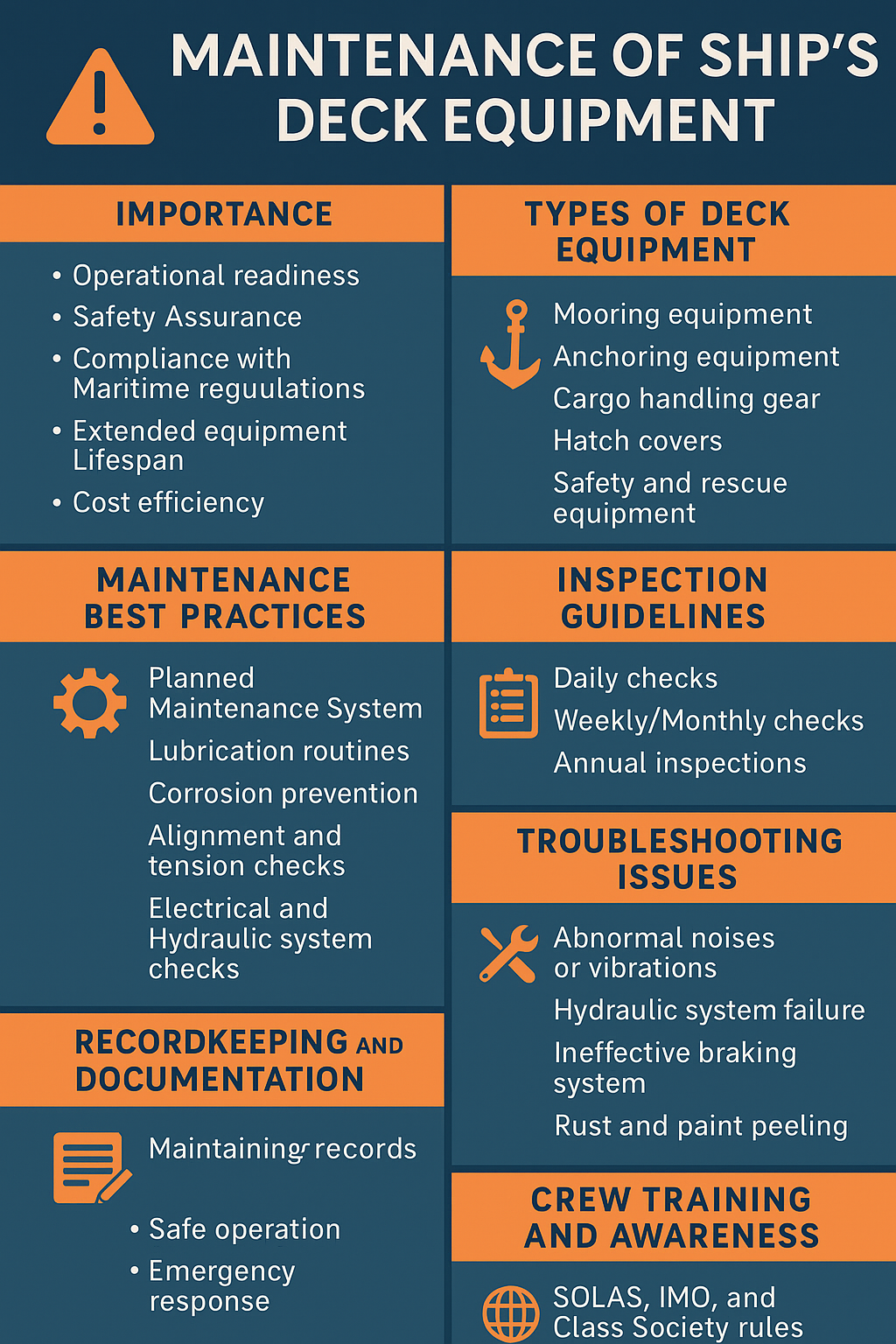
6. Recordkeeping and Documentation
Maintaining proper records is essential for audits and long-term performance monitoring. Include:
- Date and details of inspections
- Spare parts replaced
- Photographic evidence (before and after repairs)
- Signatures of responsible crew members
7. Crew Training and Awareness
Crew should be well-trained on:
- Safe operating procedures
- Emergency response related to deck equipment
- Using maintenance tools correctly
- Reading manufacturer manuals and maintenance logs
Training programs should be updated regularly to match evolving maritime standards and technologies.
8. Maintenance Ship’s Deck Equipment Compliance with Maritime Regulations
Maintenance of ship’s deck equipment is governed by:
- SOLAS Chapter II-1 (Construction – Subdivision and Stability, Machinery, and Electrical Installations)
- IMO Circulars and MSC Guidelines
- Class Society Rules (e.g., DNV, ABS, LR)
Vessels must be prepared for Port State Control (PSC) inspections and flag surveys by keeping deck equipment fully operational.
9. Role of Third-Party Services and OEMs
When in doubt, it is advisable to seek support from:
- Original Equipment Manufacturers (OEMs)
- Certified service providers for calibration and overhaul
- Marine surveyors for independent inspections
These parties often provide warranty-compliant service and certification.
Conclusion of Maintenance Ship’s Deck Equipment
Maintaining ship’s deck equipment is not merely about ticking boxes on a checklist; it is a critical operational necessity. Well-maintained equipment guarantees safety, ensures regulatory compliance, and boosts the overall efficiency of maritime operations. Through planned inspections, timely repairs, and proper crew training, shipowners can significantly reduce downtime, prevent accidents, and extend the lifespan of their deck gear.