Introduction
In today’s fast-paced digital world, organizations are constantly seeking ways to improve efficiency, reduce human error, and enhance productivity. One of the most transformative solutions in modern IT is automation. IT automation refers to the use of software, scripts, and advanced tools to perform repetitive tasks without human intervention. From cloud resource provisioning to monitoring network performance, IT automation has become the backbone of digital transformation across industries.
This article explores the fundamentals of IT automation, its key benefits, common use cases, challenges, and its role in shaping the future of business operations.
What is IT Automation?
IT automation is the process of creating and deploying systems that can automatically perform tasks within IT infrastructure and applications. These tasks include configuration management, security monitoring, application deployment, and incident response.
Instead of IT teams spending hours manually resolving repetitive issues, automation allows them to set predefined rules and workflows, enabling systems to execute tasks automatically. This not only increases speed and accuracy but also frees up IT professionals to focus on more strategic initiatives.
Why IT Automation Matters
The adoption of IT automation is not just a trend—it’s a necessity for modern businesses. Here are some reasons why IT automation matters today:
- Efficiency and Speed – Automation reduces manual work and accelerates processes that would otherwise take hours or even days.
- Cost Savings – By reducing the need for human intervention in repetitive tasks, organizations save labor costs and minimize errors.
- Scalability – Businesses can scale operations faster by automating provisioning and deployment across multiple environments.
- Consistency and Accuracy – Automated systems follow pre-defined rules, ensuring consistency and reducing the chances of mistakes.
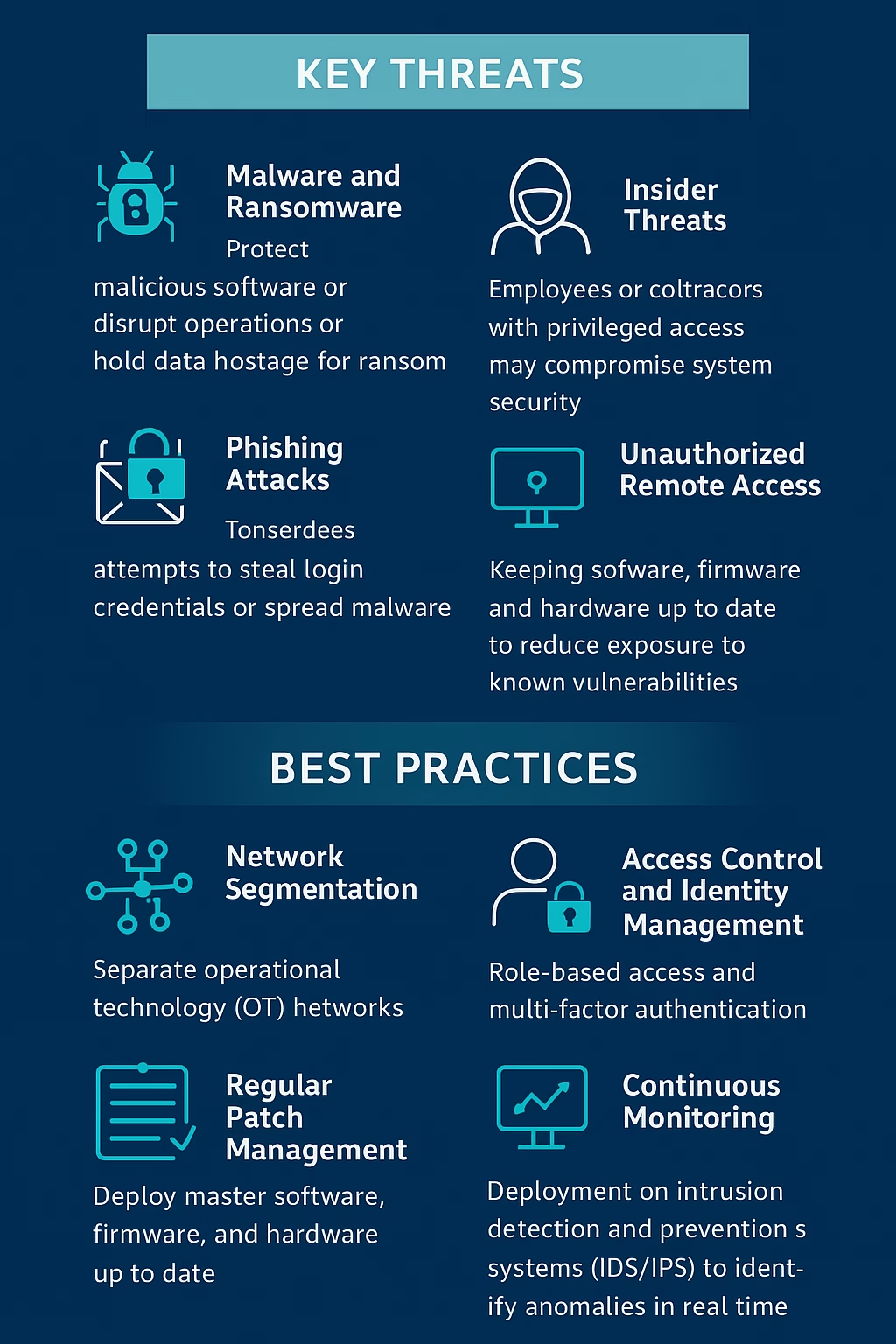
- Improved Security – Automated monitoring tools can detect unusual activities and trigger security responses instantly.
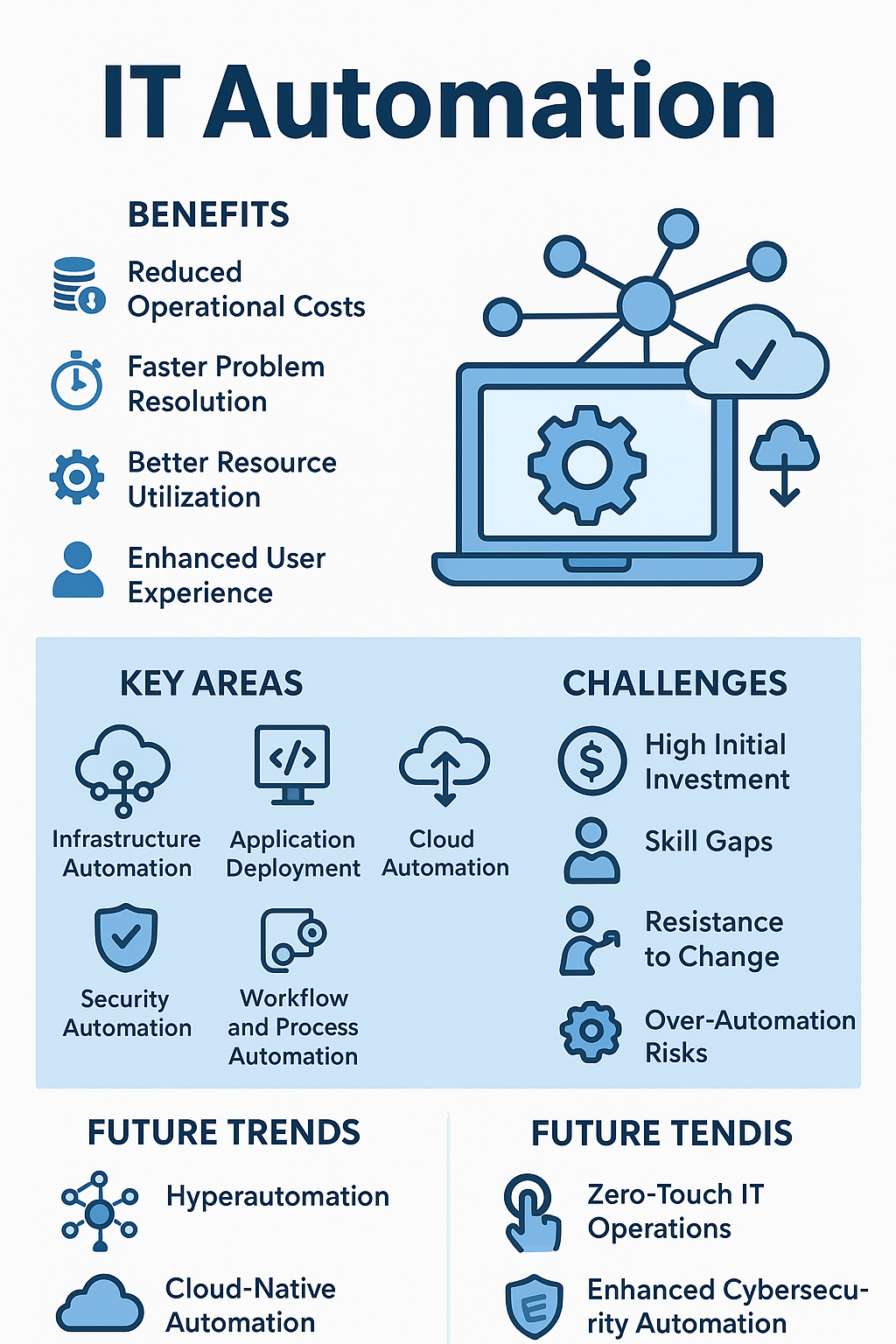
Key Areas of IT Automation
IT automation spans multiple domains of business and technology operations. The most impactful areas include:
1. Infrastructure Automation
Managing servers, networks, and storage systems can be time-consuming. Infrastructure automation tools like Ansible, Puppet, and Terraform help automate provisioning, configuration, and scaling of IT resources.
2. Application Deployment
Automation enables faster DevOps pipelines by streamlining code integration, testing, and deployment. Continuous Integration and Continuous Deployment (CI/CD) pipelines ensure faster release cycles.
3. Cloud Automation
With the rise of cloud platforms such as AWS, Azure, and Google Cloud, automation tools allow businesses to provision, manage, and scale cloud resources without manual intervention.
4. Security Automation
Automated security tools monitor systems for threats, patch vulnerabilities, and trigger alerts or remediation steps to reduce cybersecurity risks.
5. Workflow and Process Automation
Automation platforms can optimize workflows in IT service management (ITSM), handling tasks like ticket routing, approval processes, and customer service requests.
Benefits of IT Automation
Implementing IT automation brings a wide range of business benefits:
- Reduced Operational Costs: Less manual labor leads to lower overhead.
- Faster Problem Resolution: Automated incident detection and response minimizes downtime.
- Better Resource Utilization: IT staff can focus on innovation rather than repetitive tasks.
- Enhanced User Experience: End-users experience fewer disruptions and faster service delivery.
- Stronger Compliance: Automation ensures that compliance rules and policies are consistently enforced.
Challenges of IT Automation
Despite its advantages, IT automation is not without challenges:
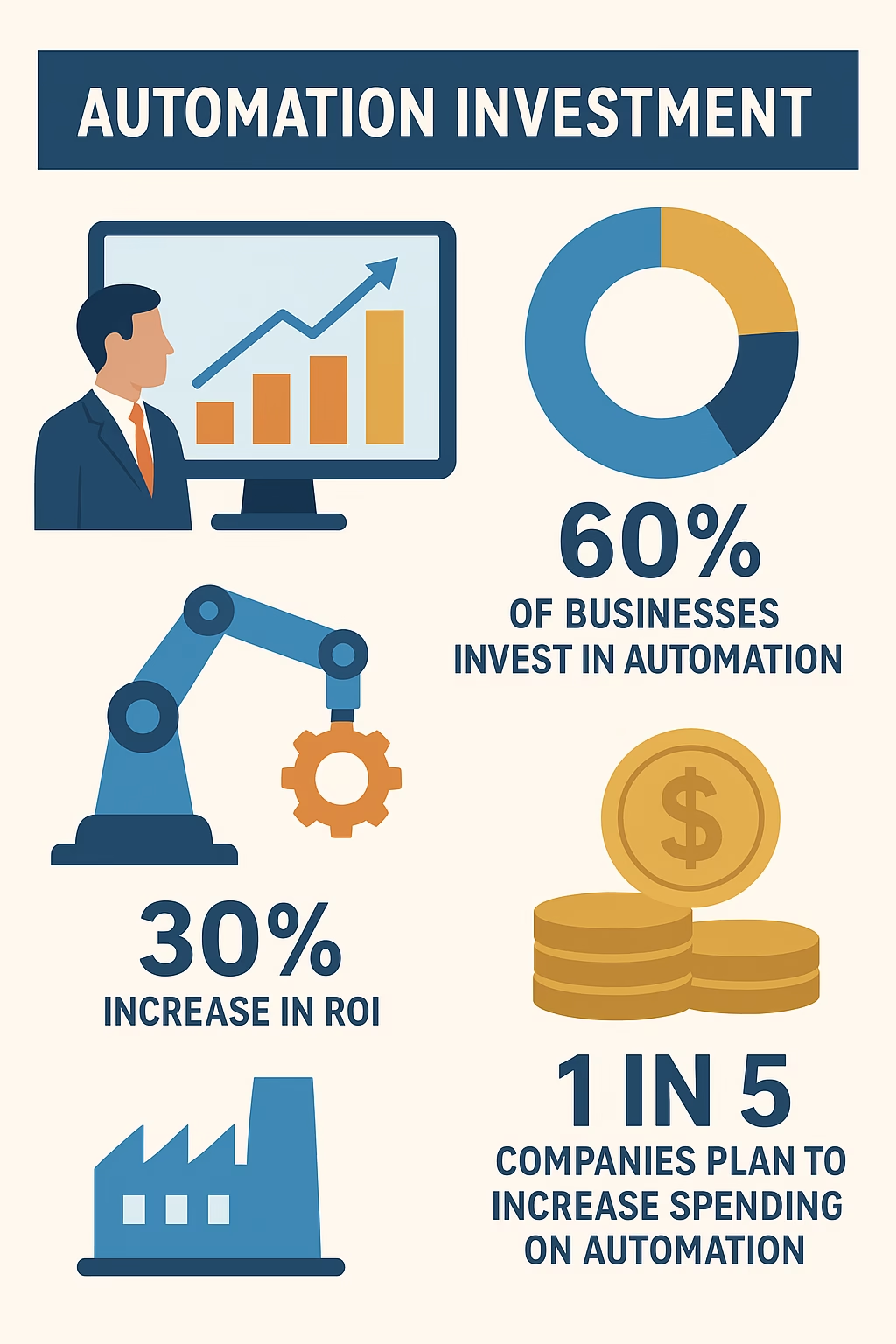
- High Initial Investment – Implementing automation requires investment in tools, training, and system upgrades.
- Skill Gaps – IT teams need specialized knowledge to design, deploy, and maintain automation solutions.
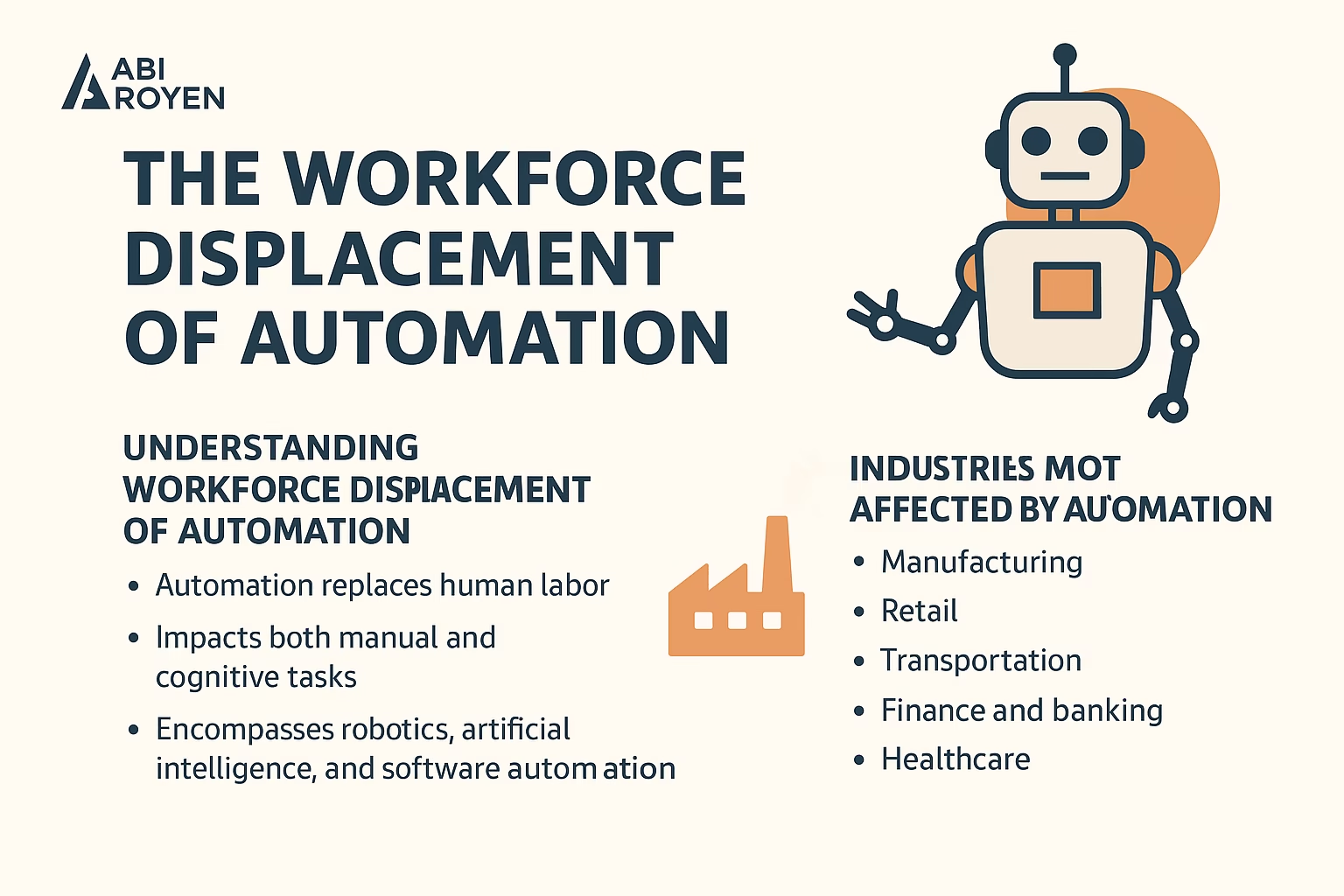
- Resistance to Change – Employees may be hesitant to embrace automation due to fear of job replacement.
- Complexity in Integration – Integrating automation across multiple platforms and systems can be complicated.
- Over-Automation Risks – Relying too much on automation may reduce flexibility and human oversight.
Real-World Applications of IT Automation
Many industries are already leveraging IT automation to drive innovation:
- Banking & Finance: Automated fraud detection, regulatory reporting, and customer support chatbots.
- Healthcare: Streamlined patient data management, scheduling, and medical equipment monitoring.
- E-Commerce: Inventory management, automated pricing, and customer engagement workflows.
- Manufacturing: Automated supply chain management, predictive maintenance, and quality control.
- Telecommunications: Network performance monitoring, outage detection, and automated troubleshooting.

The Role of AI and Machine Learning in IT Automation
Artificial Intelligence (AI) and Machine Learning (ML) are taking IT automation to the next level. Unlike traditional automation that follows static rules, AI-driven automation adapts to changing conditions. For example:
- Predictive Analytics: AI can predict hardware failures before they happen.
- Intelligent Monitoring: Machine learning models detect unusual patterns in system logs.
- Self-Healing Systems: Automated systems can fix certain issues without human intervention.
This evolution, often referred to as AIOps (Artificial Intelligence for IT Operations), is shaping the future of IT automation.
The Future of IT Automation
As organizations continue to embrace digital transformation, IT automation will play a pivotal role. The future trends include:
- Hyperautomation: Combining multiple automation tools, AI, and analytics to automate complex business processes end-to-end.
- Cloud-Native Automation: Increased reliance on containerization and microservices automation with tools like Kubernetes.
- Zero-Touch IT Operations: Fully automated IT management with minimal human intervention.
- Enhanced Cybersecurity Automation: AI-driven security automation that reacts to threats in real-time.
Conclusion
IT automation is no longer just an option—it is a strategic necessity for businesses seeking efficiency, scalability, and innovation. From reducing costs to enabling advanced AI-driven operations, automation is transforming the way organizations operate.
Companies that invest in IT automation today will not only stay competitive but also future-proof their operations for the rapidly evolving digital era.