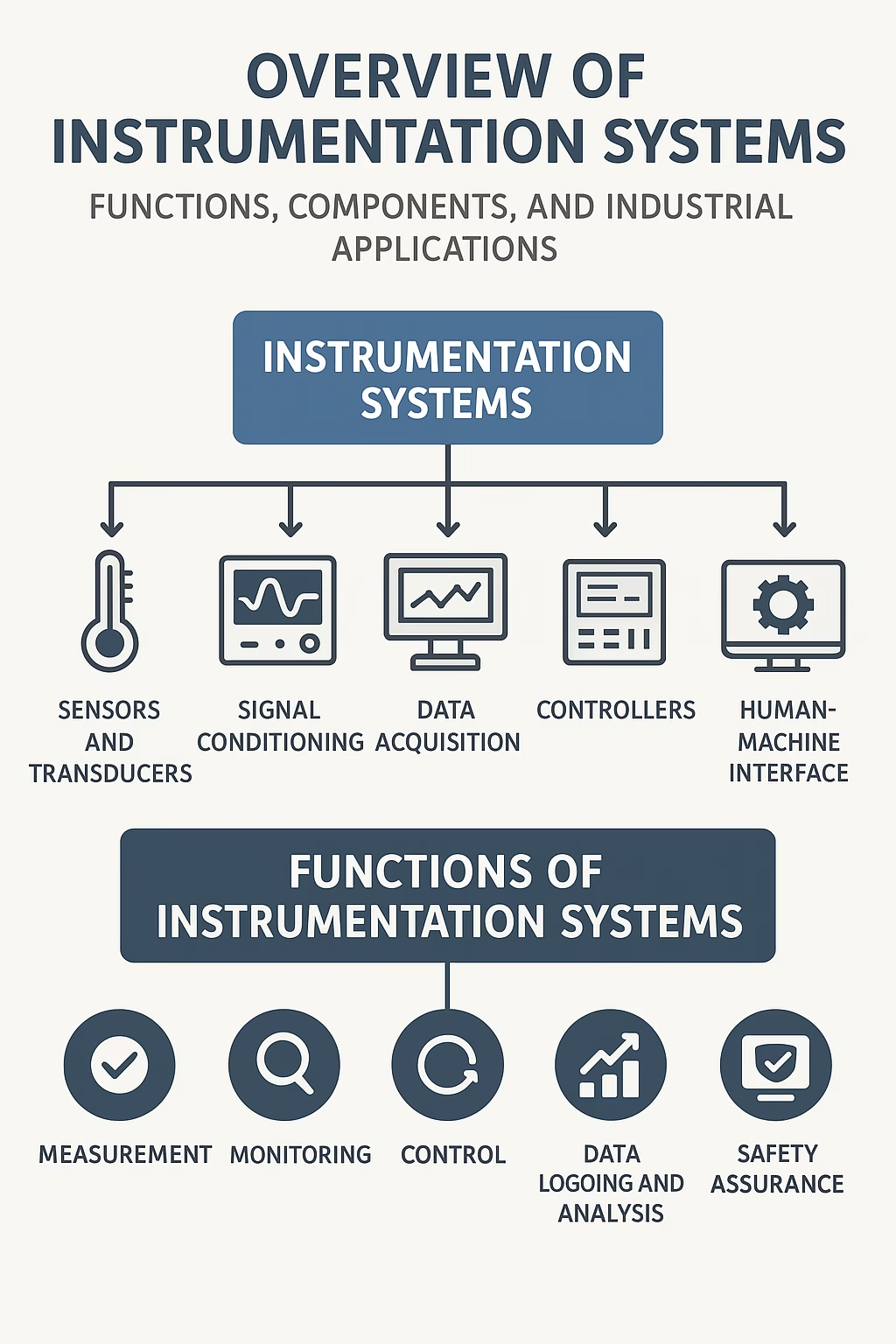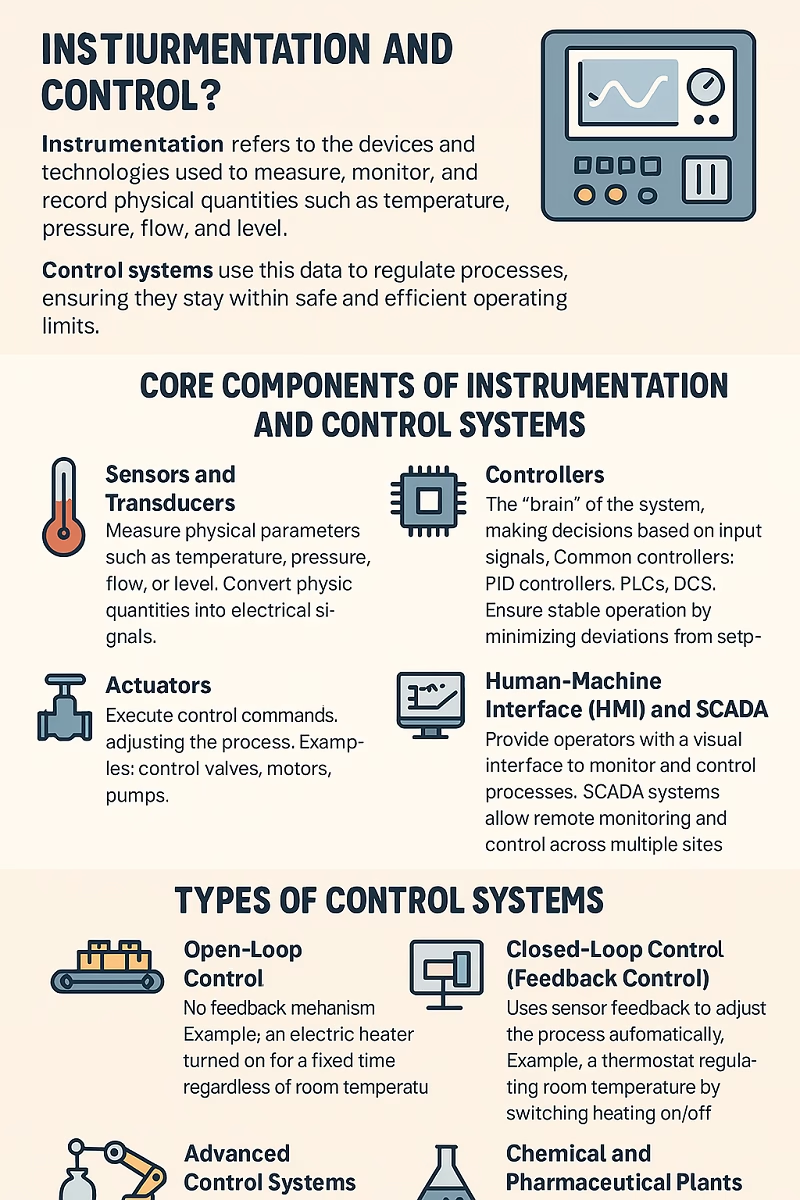


Instrumentation Careers and Skills ~ In today’s fast-paced industrial environment, instrumentation plays a critical role in ensuring efficiency, safety, and precision. From manufacturing plants to oil refineries and power generation facilities, instrumentation professionals are the backbone of industrial operations, responsible for monitoring and controlling processes through advanced devices and systems.
With the rise of Industry 4.0, the demand for skilled instrumentation engineers, technicians, and specialists has grown significantly. This article explores career paths in instrumentation, essential skills for success, and the future opportunities in this exciting technical field.
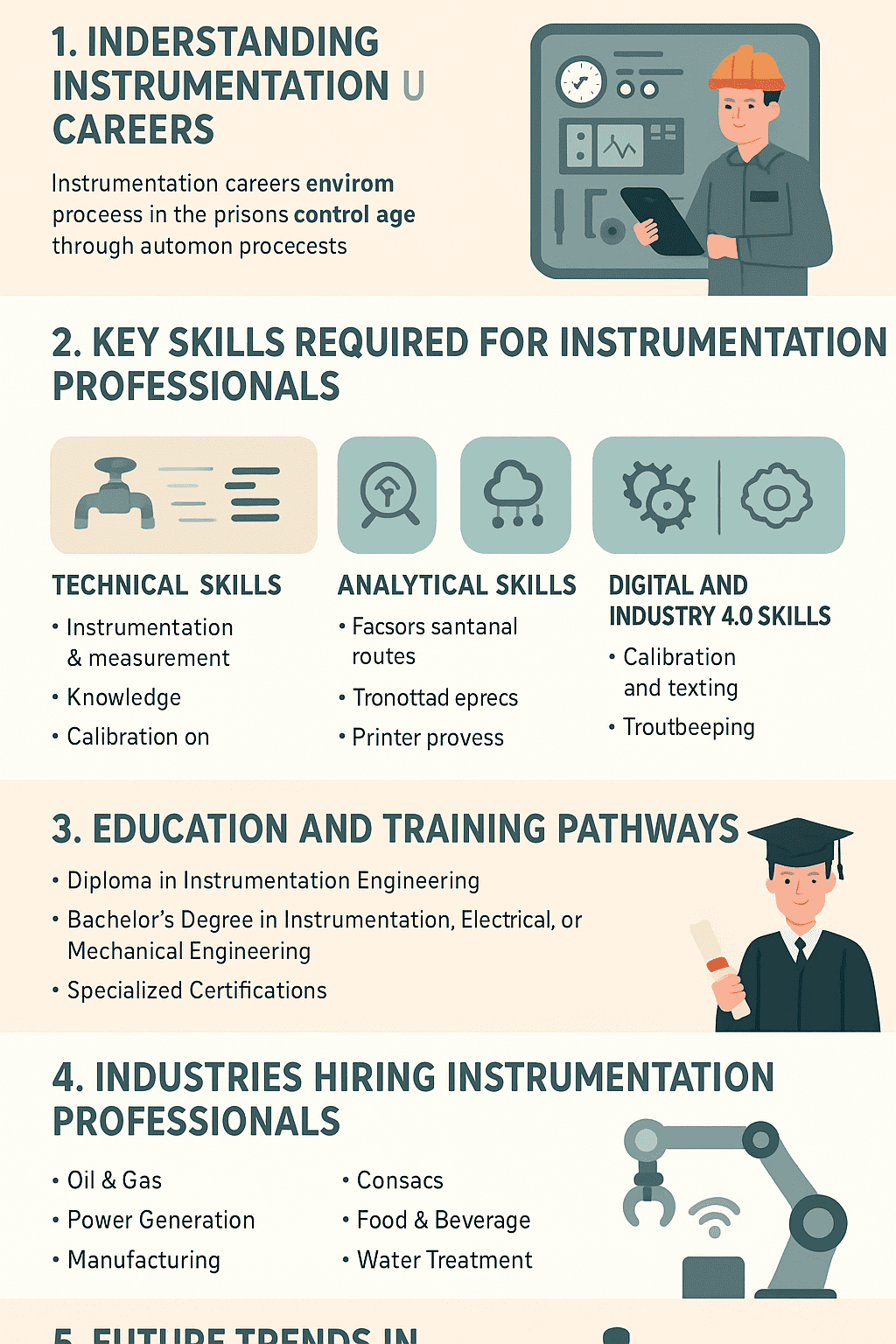
1. Understanding Instrumentation Careers and Skills
Instrumentation careers revolve around the design, installation, calibration, maintenance, and repair of instruments that measure and control physical quantities like pressure, temperature, flow, and level. These devices feed critical data into control systems, enabling automated decision-making and efficient plant operations.
Common Job Roles in Instrumentation:
- Instrumentation Engineer – Designs and implements instrumentation systems, works on control strategies, and ensures integration with automation platforms.
- Instrumentation Technician – Performs installation, testing, troubleshooting, and maintenance of field instruments.
- Control Systems Engineer – Focuses on programming and optimizing PLCs, DCS, and SCADA systems.
- Calibration Technician – Specializes in calibrating measurement devices to meet industry standards.
- Process Control Specialist – Analyzes data to fine-tune process parameters for optimal production.
- Automation Engineer – Combines instrumentation knowledge with robotics and automation technologies.
2. Key Instrumentation Careers and Skills Professionals
Instrumentation careers demand a combination of technical expertise, analytical thinking, and problem-solving skills. Employers look for professionals who can adapt to evolving technology while ensuring precision in their work.
a. Technical Skills
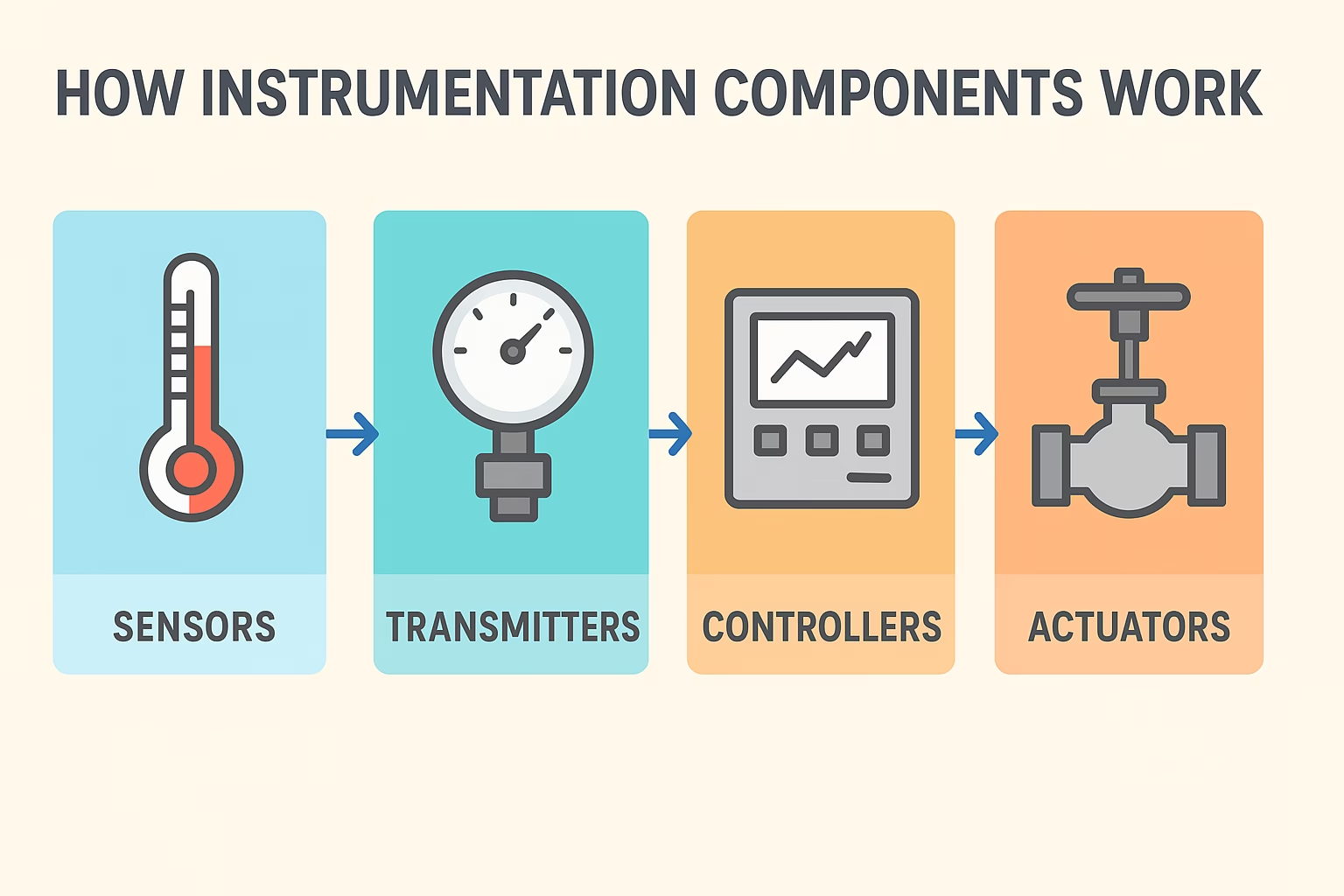
- Instrumentation & Measurement Knowledge – Understanding principles of sensors, transmitters, and controllers.
- Control Systems Expertise – Familiarity with PLC, DCS, SCADA, and HMI systems.
- Calibration and Testing – Skills in calibrating devices according to international standards.
- Electronics & Electrical Knowledge – Understanding wiring, circuits, and signal processing.
- Pneumatic & Hydraulic Systems – Knowledge of fluid power control systems.
b. Analytical Skills
- Ability to interpret process data for system optimization.
- Understanding of statistical process control.
- Proficiency in troubleshooting complex systems.
c. Digital and Industry 4.0 Skills
- Knowledge of IoT-enabled devices for smart factories.
- Experience with data acquisition systems and industrial networking.
- Understanding cybersecurity principles in automation.
d. Soft Skills
- Communication – Ability to work with multidisciplinary teams.
- Attention to Detail – Ensuring accuracy in readings and system configurations.
- Problem-Solving – Rapid diagnosis and resolution of system faults.
- Project Management – Coordinating installation or upgrade projects.
3. Education and Training Pathways
A successful career in instrumentation typically begins with technical education in engineering or related fields. There are multiple educational routes:
- Diploma in Instrumentation Engineering – Focuses on hands-on technical skills for entry-level roles.
- Bachelor’s Degree in Instrumentation, Electrical, or Mechanical Engineering – Opens doors to engineering and management positions.
- Specialized Certifications – Courses in PLC programming, industrial automation, and process control systems.
- On-the-Job Training – Practical experience in calibration, installation, and troubleshooting.
Popular Certifications:
- ISA Certified Control Systems Technician (CCST)
- Certified Automation Professional (CAP)
- Siemens PLC Programming Certification
- Yokogawa and Emerson DCS Training
4. Industries Hiring Instrumentation Careers and Skills Professionals
Instrumentation careers span a wide range of industries, including:
- Oil & Gas – Monitoring drilling, refining, and distribution processes.
- Power Generation – Controlling turbines, boilers, and electrical grids.
- Manufacturing – Automation in production lines for higher efficiency.
- Pharmaceuticals – Maintaining precision in drug manufacturing.
- Food & Beverage – Ensuring product quality and compliance.
- Water Treatment – Controlling purification and distribution systems.
5. Future Trends in Instrumentation Careers and Skills
As industries embrace digital transformation, the role of instrumentation professionals is evolving. Key trends shaping the future include:
- Smart Sensors and IoT Integration – Real-time monitoring and predictive maintenance.
- Artificial Intelligence in Process Control – Using AI for automated decision-making.
- Remote Instrumentation Management – Cloud-based monitoring for global operations.
- Sustainable and Green Technologies – Energy-efficient control systems.
- Cybersecurity for Industrial Systems – Protecting automation from cyber threats.

6. Salary and Career Growth Opportunities
Instrumentation professionals often enjoy competitive salaries and stable career prospects. Factors affecting salary include experience, education, industry, and location.
Approximate Global Salary Ranges:
- Instrumentation Technician: $40,000 – $70,000/year
- Instrumentation Engineer: $60,000 – $100,000/year
- Control Systems Engineer: $70,000 – $120,000/year
With experience, professionals can progress into supervisory roles, project management, or specialized consultancy.
7. How to Succeed in an Instrumentation Careers and Skills
To thrive in this field:
- Stay Updated – Learn about new technologies and standards.
- Network with Industry Experts – Join organizations like ISA (International Society of Automation).
- Gain Hands-On Experience – Practical skills are as important as theoretical knowledge.
- Develop Digital Skills – Master software tools for process simulation and control.
Conclusion
Instrumentation careers are at the heart of modern industrial operations, offering diverse job opportunities, competitive salaries, and future growth. With the right mix of technical skills, adaptability, and continuous learning, professionals can build a successful and fulfilling career in this ever-evolving industry.
Whether you’re a student considering your career path or a technician looking to advance, the field of instrumentation promises an exciting journey at the intersection of technology, precision, and innovation.