

Introduction to Humidity Instrumentation
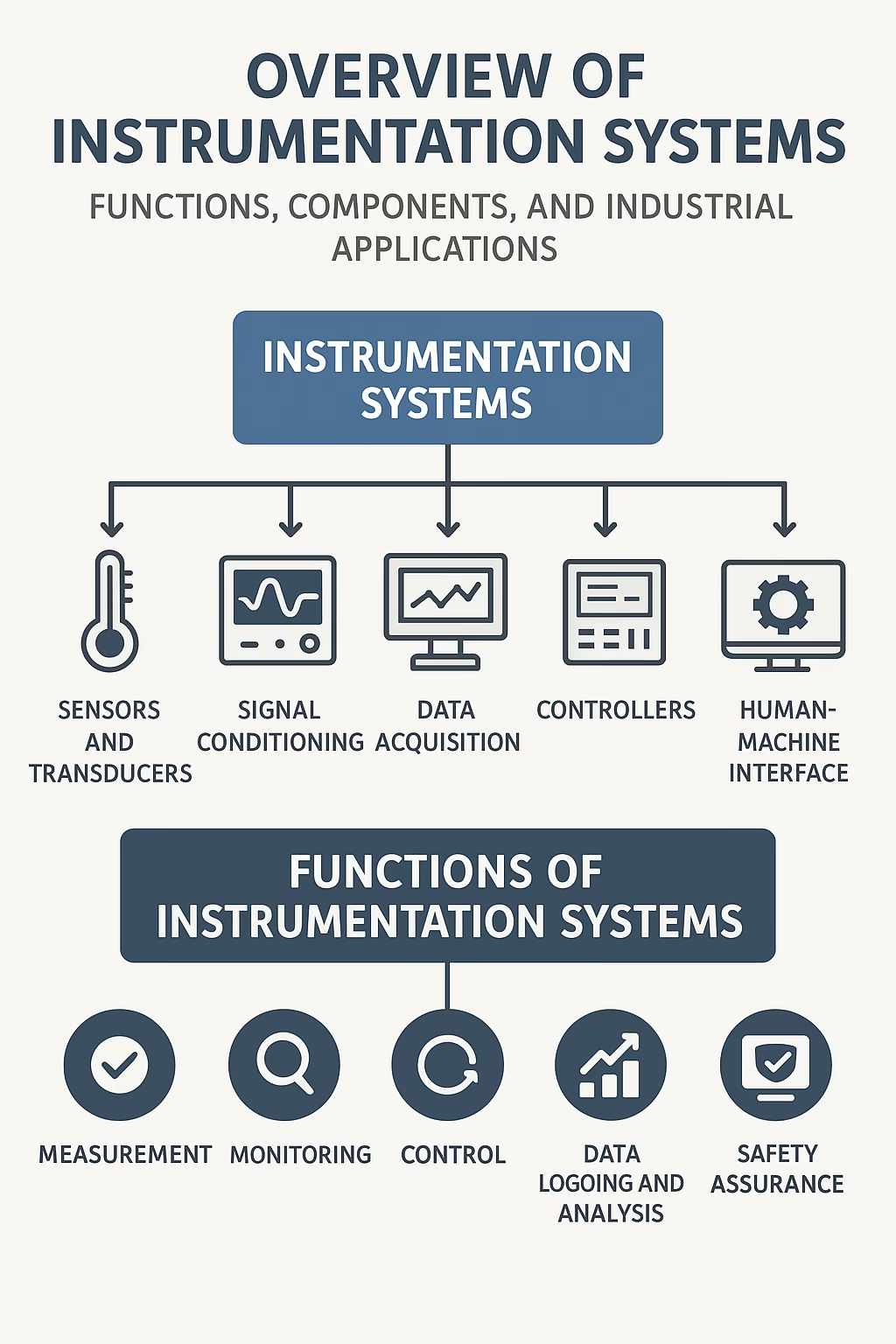
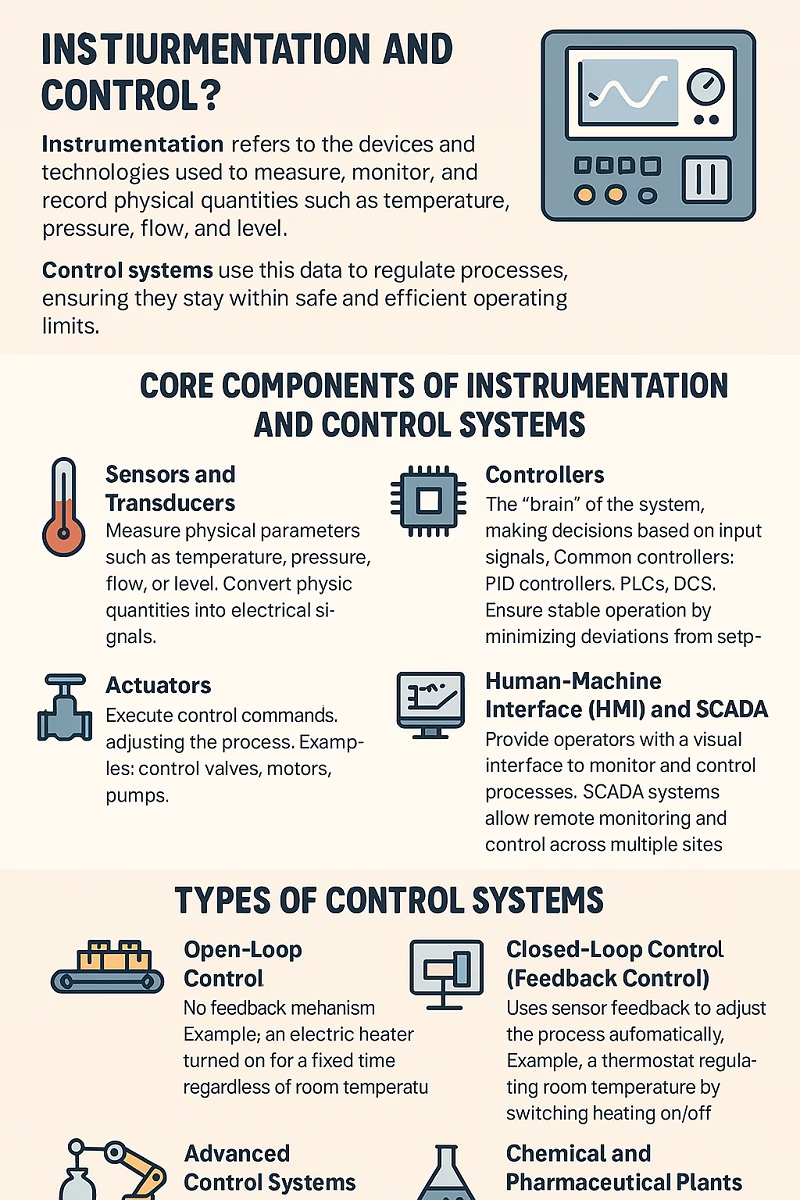
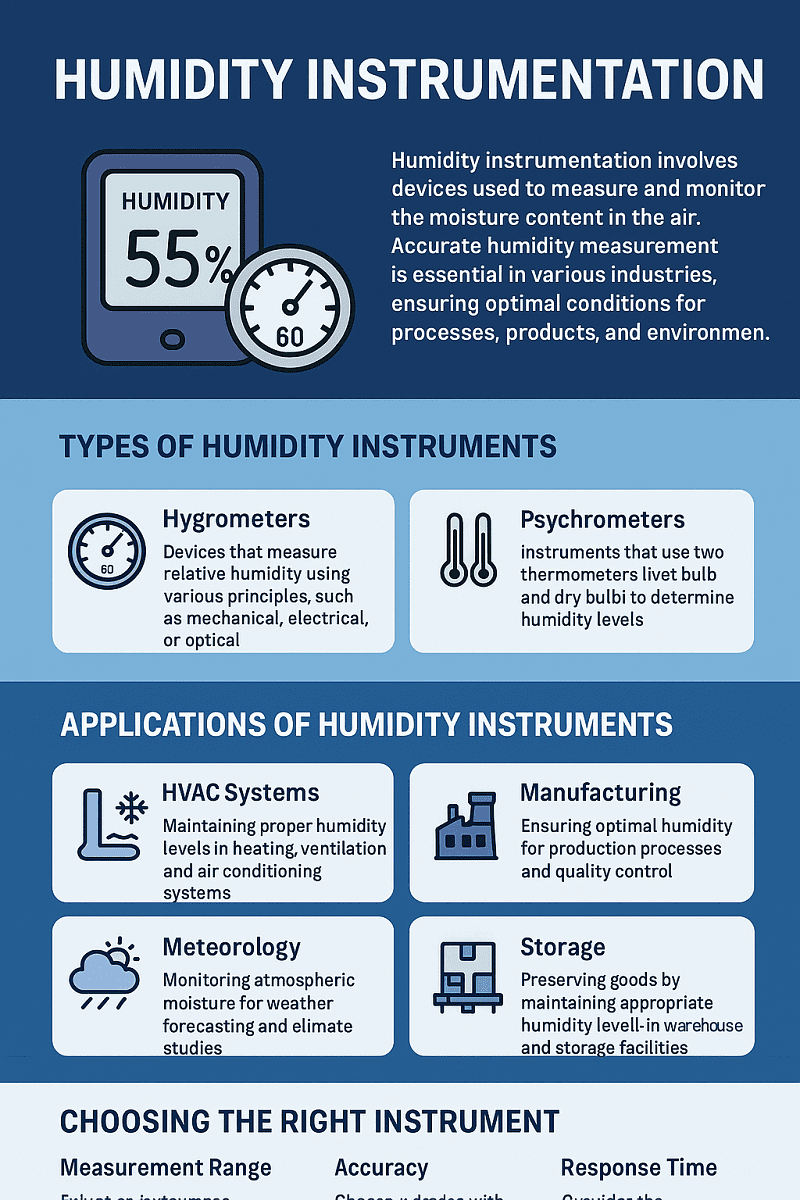
Humidity is a critical parameter in many industrial processes, environmental monitoring, and scientific applications. Accurate measurement of humidity ensures optimal performance, safety, and quality control in industries ranging from pharmaceuticals to food production. Humidity instrumentation refers to the devices and systems used to measure and monitor moisture levels in gases or environments. This article explores the principles, types, and applications of humidity instrumentation.
What is Humidity?
Humidity is the concentration of water vapor present in the air or a gas. It can be expressed in several ways:
- Absolute Humidity (AH): The mass of water vapor per unit volume of air, typically expressed in grams per cubic meter (g/m³).
- Relative Humidity (RH): The ratio of the current absolute humidity to the maximum possible humidity at a given temperature, expressed as a percentage.
- Specific Humidity: The mass of water vapor per mass of air, expressed in grams per kilogram (g/kg).
- Dew Point: The temperature at which air becomes saturated and water vapor begins to condense.
Understanding these parameters is essential for designing and using humidity instrumentation effectively.
Working Principles of Humidity Instruments
Humidity instruments operate based on different principles to detect and quantify moisture levels. The most common methods include:
- Capacitive Sensors: These sensors use a hygroscopic dielectric material between two electrodes. As humidity changes, the dielectric constant varies, altering capacitance. Capacitive sensors are widely used due to their accuracy, stability, and wide RH range (0-100%).
- Resistive Sensors: These sensors measure the change in electrical resistance of a hygroscopic material as it absorbs moisture. They are cost-effective and commonly used in HVAC systems.
- Thermal Conductivity Sensors: These sensors compare the thermal conductivity of dry air and humid air. They are ideal for high-humidity environments and industrial drying processes.
- Gravimetric Method: This laboratory-based method measures the mass change in a sample as it absorbs or loses moisture. It is highly accurate but not suitable for continuous monitoring.
- Psychrometric Method: Uses two thermometers (wet bulb and dry bulb) to calculate humidity levels based on temperature differences.
Types of Humidity Instruments
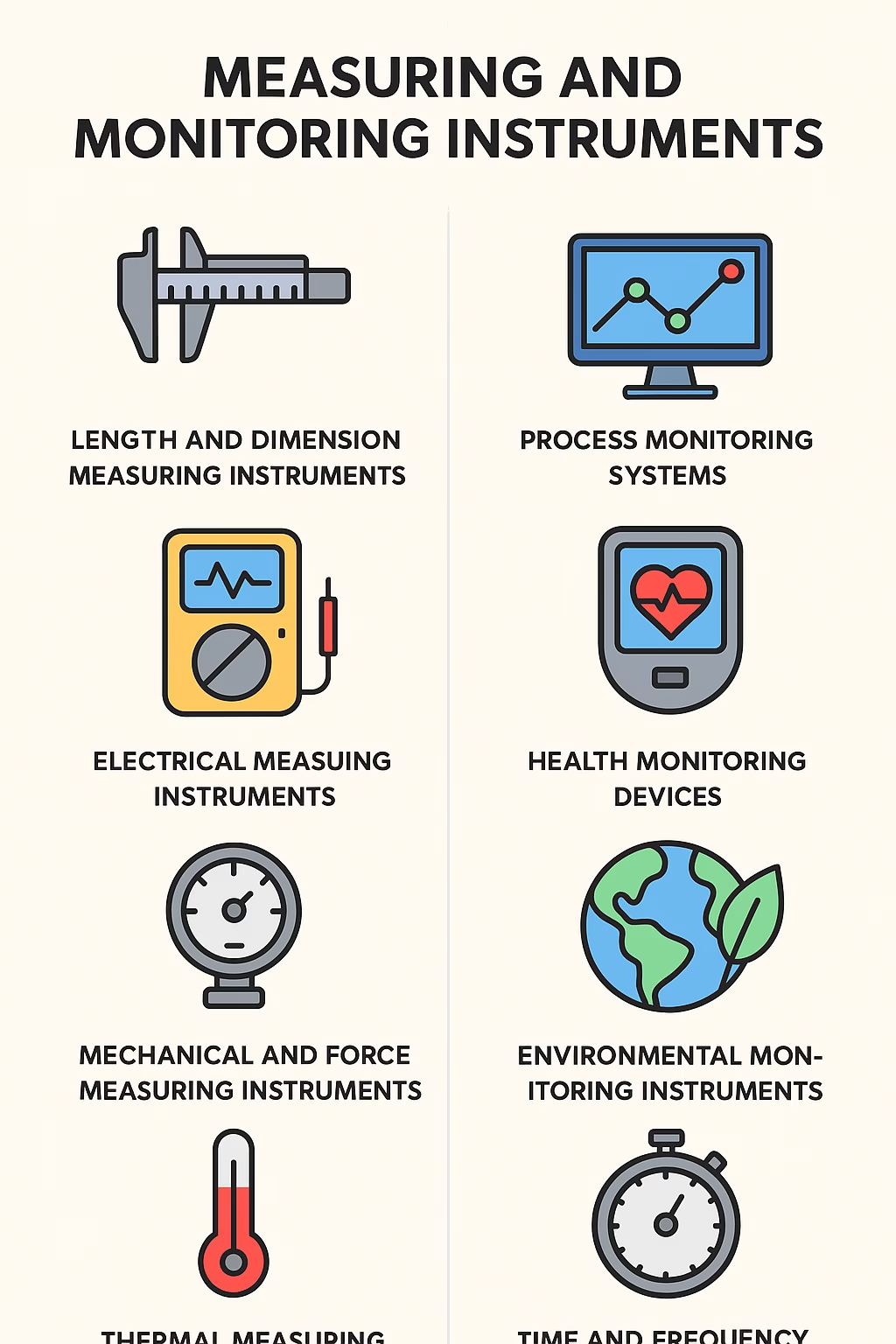
- Hygrometers: General instruments used for measuring humidity. They include various types such as capacitive, resistive, and hair tension hygrometers.
- Dew Point Meters: Measure the temperature at which air becomes saturated. Widely used in gas processing and compressed air systems.
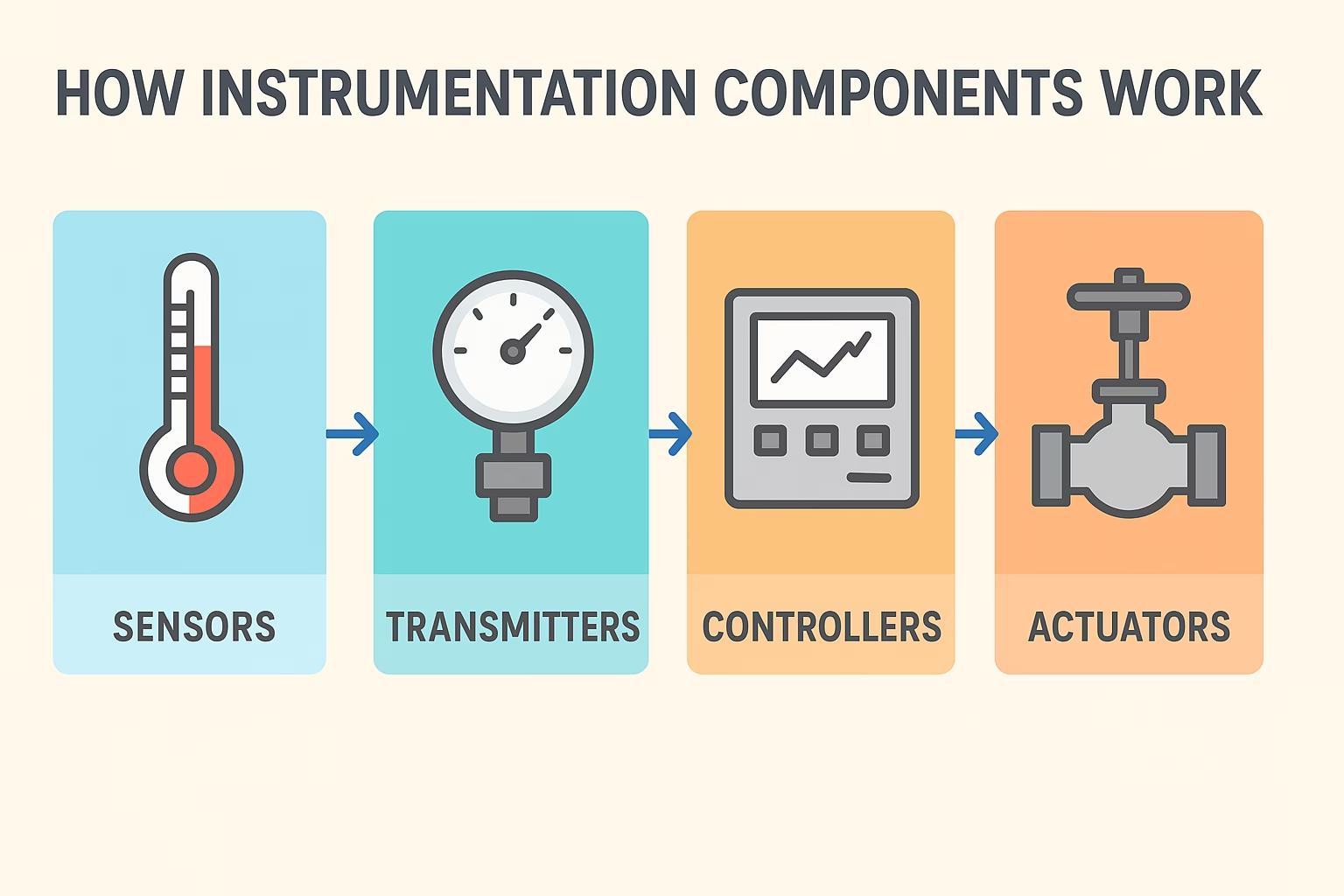
- Humidity Transmitters: Provide continuous electronic signals for process control systems, integrating with SCADA or PLC systems.
- Portable Humidity Meters: Handheld devices for on-site humidity measurements, used in field inspections and maintenance.
- Data Loggers: Record humidity and temperature data over time for analysis in environmental studies or industrial audits.
Applications of Humidity Instrumentation
Humidity instrumentation plays a vital role across industries and applications, including:
- Pharmaceutical Industry: Ensuring controlled humidity in manufacturing and storage to maintain drug stability.
- Food and Beverage: Preventing spoilage and maintaining quality during production, packaging, and storage.
- HVAC Systems: Monitoring and controlling indoor air quality for comfort and energy efficiency.
- Agriculture: Regulating greenhouse humidity for optimal crop growth.
- Electronics Manufacturing: Protecting sensitive components from moisture-related damage.
- Energy Industry: Monitoring humidity in fuel processing, turbines, and compressed air systems.
- Environmental Monitoring: Assessing climate conditions for research and pollution control.
Factors to Consider When Choosing Humidity Instrumentation
- Measurement Range and Accuracy: Ensure the instrument meets the required operational range and precision.
- Environmental Conditions: Consider temperature, pressure, and chemical exposure in the application area.
- Response Time: Critical in dynamic environments where humidity changes rapidly.
- Maintenance Requirements: Some sensors require periodic calibration and cleaning.
- Integration Capability: For industrial applications, compatibility with control systems (e.g., 4-20mA, Modbus) is essential.

Future Trends in Humidity Instrumentation
Advancements in sensor technology are making humidity instruments more reliable, compact, and connected. Key trends include:
- IoT-Enabled Humidity Sensors: Real-time monitoring via cloud platforms.
- Miniaturized Sensors: Integrated into smartphones, wearables, and portable devices.
- Self-Calibrating Sensors: Reducing downtime and maintenance costs.
- Enhanced Durability: Improved resistance to harsh environments and chemical contaminants.
Conclusion
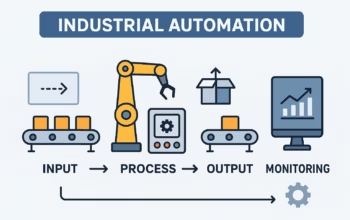
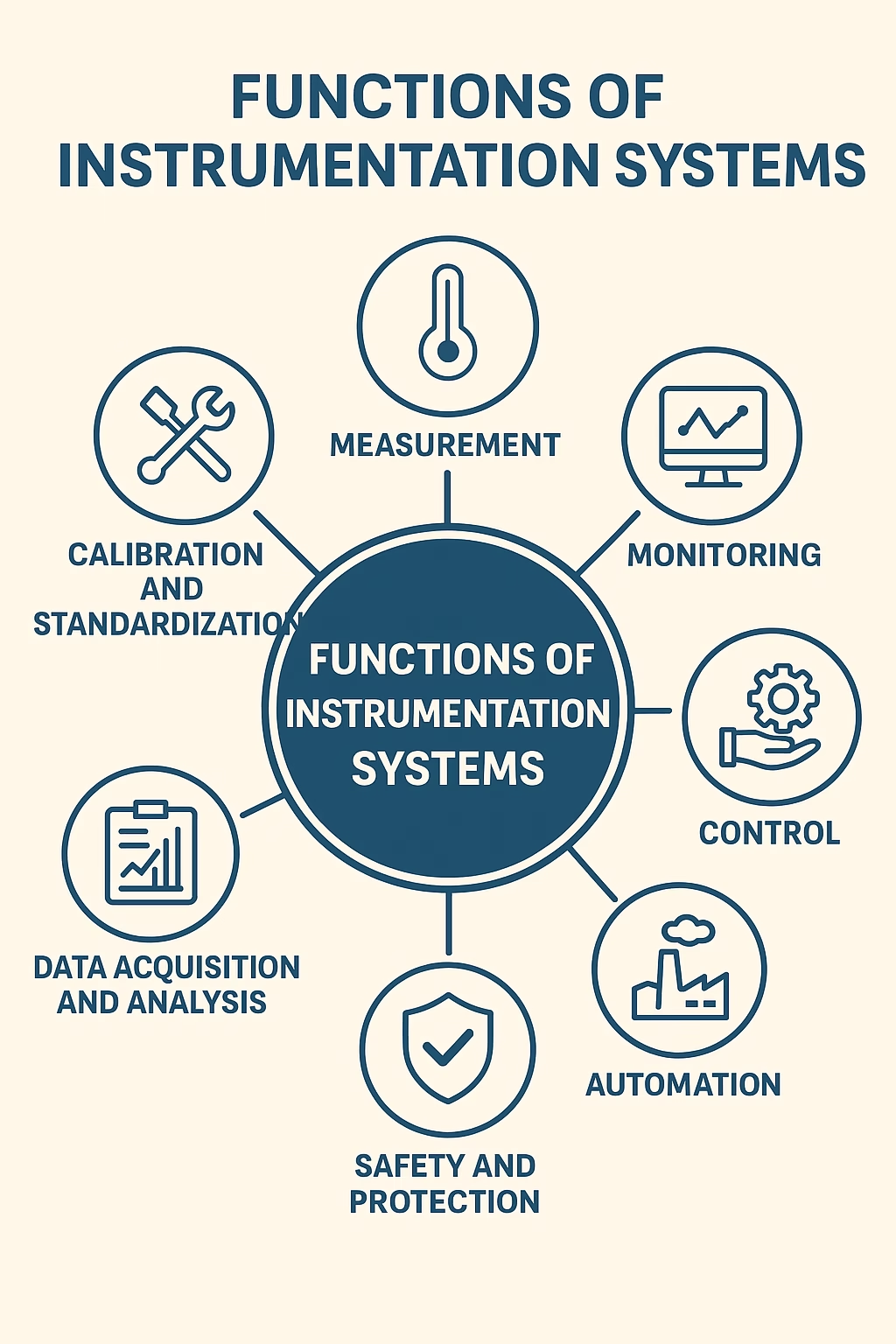
Humidity instrumentation is indispensable for ensuring product quality, operational efficiency, and safety in various industries. Understanding the types, principles, and applications of these instruments helps professionals choose the right solutions for their needs. As technology evolves, humidity measurement will continue to play a pivotal role in industrial automation, environmental monitoring, and everyday life.
By integrating accurate humidity instrumentation, industries can achieve better process control, improve product reliability, and reduce operational risks. This makes humidity measurement not just a technical necessity, but a strategic advantage in modern industrial applications.