In today’s digital era, homes are no longer just places to live—they are evolving into intelligent environments powered by automation. Home automation, also known as smart home technology, integrates devices, systems, and applications to create a connected living space where convenience, energy efficiency, and security are enhanced. From automated lighting and smart thermostats to AI-powered security cameras, home automation is transforming the way people interact with their living spaces.
This article explores the definition, benefits, applications, and future trends of home automation, helping you understand why it is becoming an essential part of modern living.
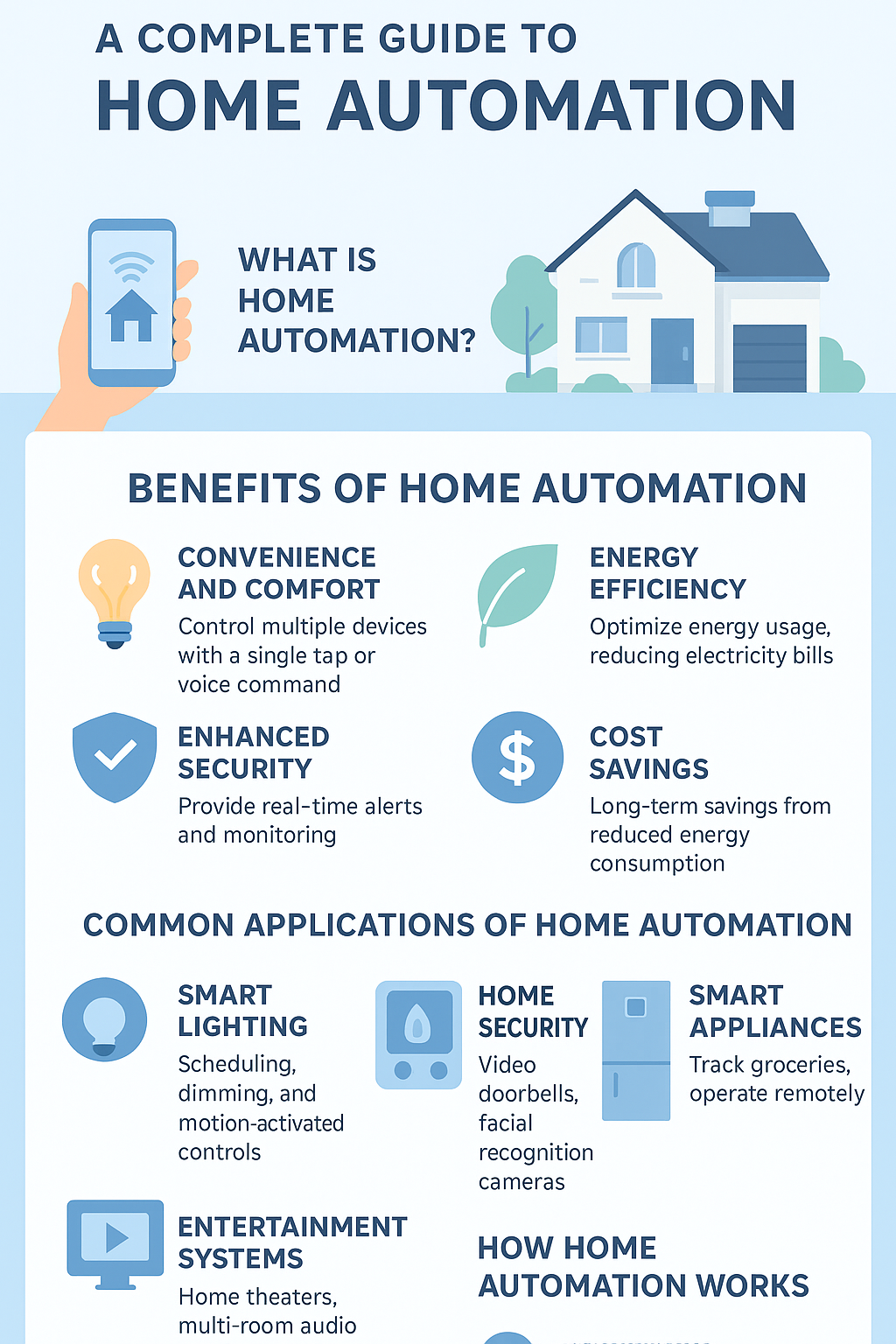
What is Home Automation?
Home automation refers to the use of technology to control household systems and devices remotely or automatically. Through smart devices, sensors, and wireless connectivity, homeowners can manage everything from lighting and climate control to entertainment and security systems with just a smartphone or voice command.
Key components of home automation include:
- Smart Controllers: Hubs or apps that connect all devices.
- Smart Devices: Appliances and systems (e.g., lights, thermostats, locks) that can be automated.
- Communication Protocols: Wi-Fi, Bluetooth, Zigbee, or Z-Wave for connectivity.
- Artificial Intelligence & IoT: Allowing predictive adjustments and seamless integration.
Benefits of Home Automation
The growing popularity of home automation is fueled by the many advantages it provides:
1. Convenience and Comfort
With automation, homeowners can control multiple devices with a single tap or voice command. For example, you can turn off all lights, lock doors, and adjust the thermostat before bed simply by saying, “Good night” to a smart assistant.
2. Energy Efficiency
Smart thermostats and lighting systems optimize energy usage, reducing electricity bills and minimizing waste. Motion sensors ensure lights only stay on when needed.
3. Enhanced Security
Automated locks, video doorbells, and AI-powered surveillance systems provide real-time alerts and monitoring, giving homeowners peace of mind even when away from home.
4. Cost Savings
Though initial setup may require investment, long-term savings from reduced energy consumption and improved efficiency can be significant.
5. Remote Accessibility
Through mobile apps, users can control and monitor home systems from anywhere in the world. This feature is especially beneficial for frequent travelers.
Common Applications of Home Automation
Home automation covers a wide range of applications, each improving daily living in unique ways:
Smart Lighting
Automated lighting allows scheduling, dimming, and motion-activated controls. It enhances energy efficiency and can even simulate presence when homeowners are away.
Climate Control
Smart thermostats learn user habits, automatically adjusting temperatures for maximum comfort while reducing energy consumption.
Home Security
From video doorbells to facial recognition cameras, home automation strengthens safety. Automated systems can lock doors, sound alarms, or notify authorities when unusual activity is detected.
Smart Appliances
Modern appliances, such as refrigerators that track groceries or washing machines that operate remotely, add a new layer of convenience.
Entertainment Systems
Home theaters and multi-room audio can be synchronized and controlled through smartphones or voice assistants.
Health and Wellness
Wearable devices and integrated sensors can track health data, improve indoor air quality, and promote a healthier lifestyle at home.
How Home Automation Works
Home automation relies on three core functions:
- Monitoring – Smart sensors gather real-time data, such as temperature, motion, or energy consumption.
- Control – Devices are managed through apps, hubs, or voice assistants like Amazon Alexa, Google Assistant, or Apple HomeKit.
- Automation – Predefined rules and AI-driven learning allow devices to perform tasks automatically, such as adjusting lighting at sunset or lowering blinds when the sun rises.

Challenges in Home Automation
While home automation offers numerous benefits, some challenges remain:
- High Initial Cost: Advanced systems can be expensive to install.
- Compatibility Issues: Not all smart devices work seamlessly together.
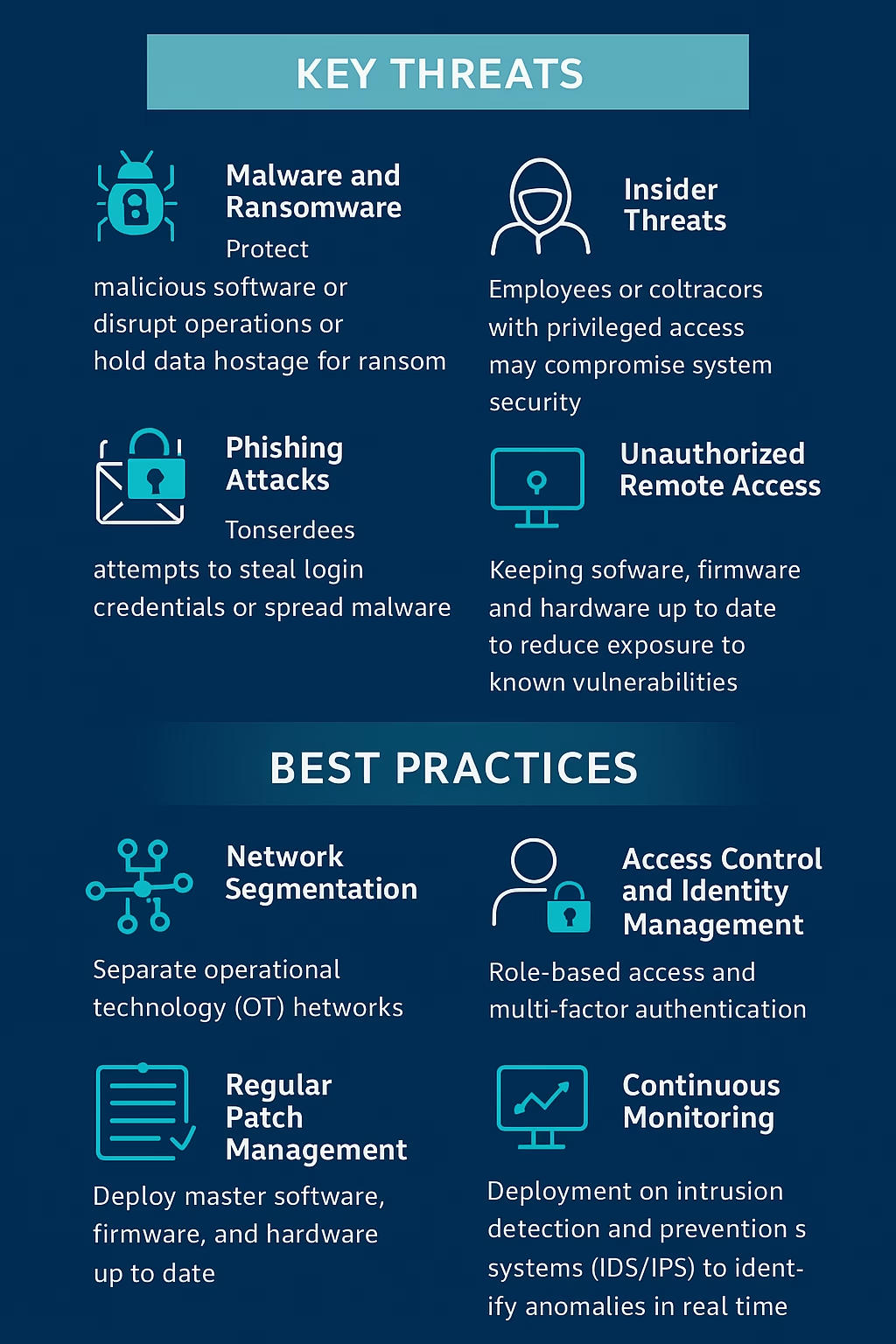
- Cybersecurity Risks: Smart homes connected to the internet are vulnerable to hacking if not properly secured.
- Complexity: Managing multiple devices can be overwhelming without a unified platform.
The Future of Home Automation
The future of home automation looks promising, driven by innovations in Artificial Intelligence (AI), Internet of Things (IoT), and 5G connectivity. Some upcoming trends include:
- Voice-First Homes: Increased reliance on voice assistants for seamless control.
- Predictive Automation: AI predicting needs based on user behavior.
- Integration with Renewable Energy: Smart homes optimizing solar energy use.
- Elderly and Assisted Living Support: Automation for health monitoring and daily care assistance.
- Sustainability Focus: Eco-friendly smart devices reducing carbon footprint.
Conclusion
Home automation is no longer a futuristic dream—it is a reality shaping modern living. From energy savings to enhanced security, the benefits of smart home technology make it an essential investment for homeowners. As technology evolves, automation will continue to integrate deeper into our daily lives, offering not just convenience but also a smarter, safer, and more sustainable way of living.
By embracing home automation, you are not just upgrading your house—you are transforming it into a smart, connected ecosystem that improves quality of life.