Introduction of Functions of Integrated Circuits
Functions of Integrated Circuits ~ Integrated circuits (ICs) have revolutionized the world of electronics by condensing millions—even billions—of transistors and electronic components into a single small chip. These microelectronic devices are the building blocks of almost every piece of modern technology, from smartphones and computers to cars, medical devices, and industrial machinery.
Understanding the functions of integrated circuits is essential for engineers, students, and technology enthusiasts who want to grasp how today’s devices operate. In this article, we will explore the definition of ICs, their main functions, types, applications, and their impact on the modern world.
What is an Integrated Circuit?
An integrated circuit is a compact arrangement of interconnected electronic components—mainly transistors, diodes, resistors, and capacitors—fabricated on a single semiconductor wafer, typically silicon. These circuits perform specific electronic functions such as amplification, signal processing, logic operations, or power regulation.
The miniaturization offered by ICs has allowed manufacturers to build smaller, faster, more reliable, and energy-efficient devices compared to older technologies using discrete components.
Main Functions of Integrated Circuits
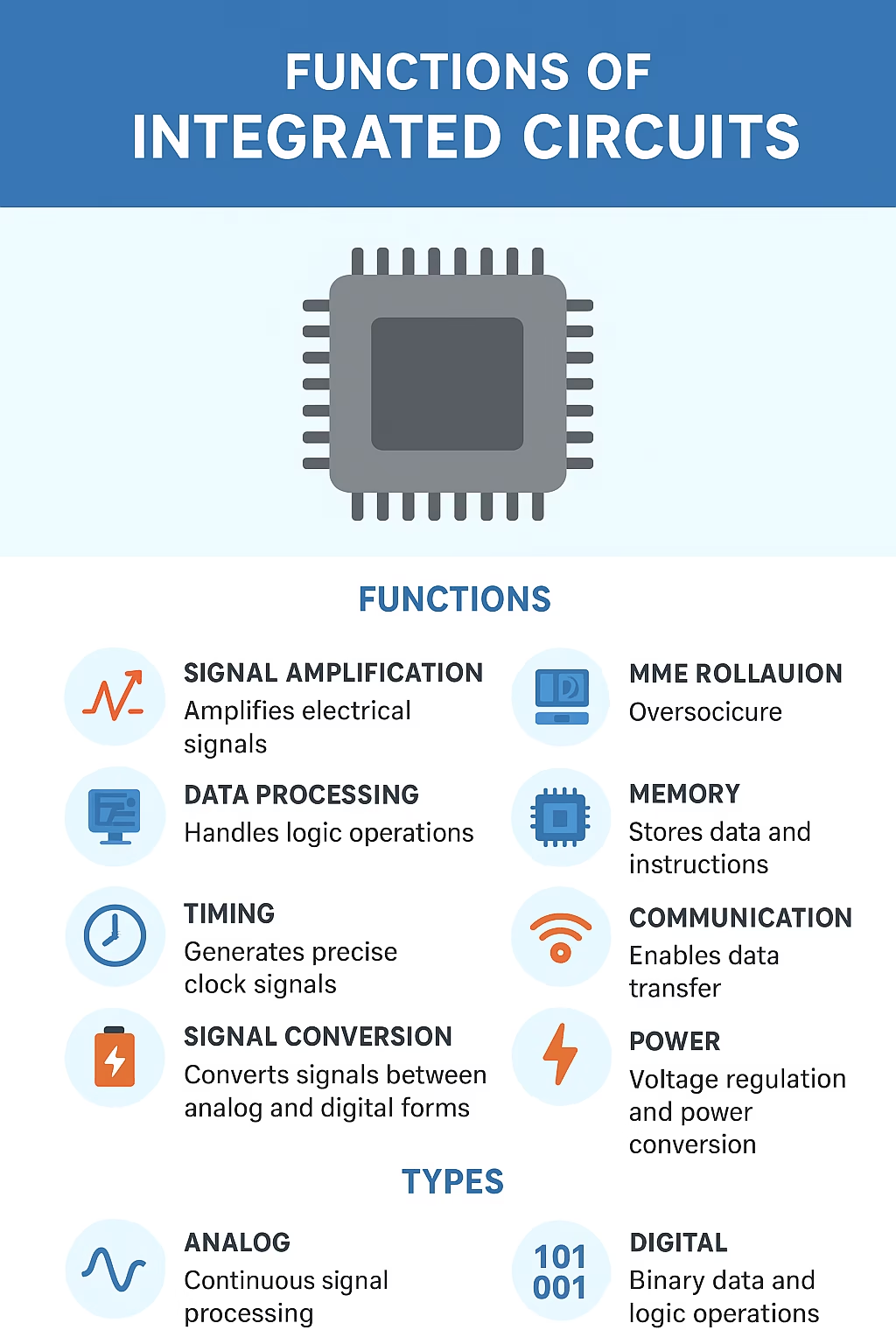
Integrated circuits are designed to perform different tasks depending on their type and application. Below are the key functions of ICs in electronics:
1. Signal Amplification
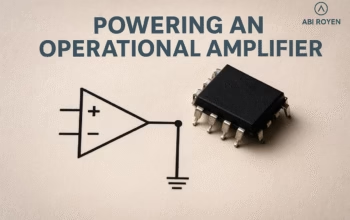
One of the fundamental functions of ICs is to amplify electrical signals. For instance, audio ICs enhance weak sound signals from microphones so they can drive speakers with higher output power. Similarly, operational amplifier (op-amp) ICs are widely used in instrumentation, audio systems, and control systems.
2. Data Processing and Logic Operations
Digital integrated circuits handle logical operations and process data in binary form. They are the foundation of microprocessors, microcontrollers, and memory chips, enabling devices like computers, smartphones, and embedded systems to perform calculations, run programs, and store information.
3. Timing and Oscillation
Certain ICs generate precise clock signals and oscillations, which are essential for synchronization in digital systems. These timing ICs are critical in applications like communication systems, digital watches, and processors.
4. Power Management
Integrated circuits play a vital role in voltage regulation, power conversion, and energy efficiency. Power ICs manage battery charging, convert AC to DC, and ensure stable voltage levels for different components within a device.
5. Signal Conversion (Analog to Digital and Vice Versa)
ICs such as Analog-to-Digital Converters (ADC) and Digital-to-Analog Converters (DAC) enable devices to interact with the real world by converting continuous analog signals into digital data and vice versa. For example, a microphone’s analog sound input can be converted into digital signals for processing in a smartphone.
6. Memory and Storage
Memory ICs, including RAM, ROM, flash, and EEPROM, store data, software, and system instructions. They are indispensable for modern computing, networking, and IoT devices.
7. Communication and Networking
ICs enable wireless and wired communication by managing protocols such as Bluetooth, Wi-Fi, Ethernet, and cellular standards. They ensure smooth data transmission across devices and networks.
Types of Integrated Circuits
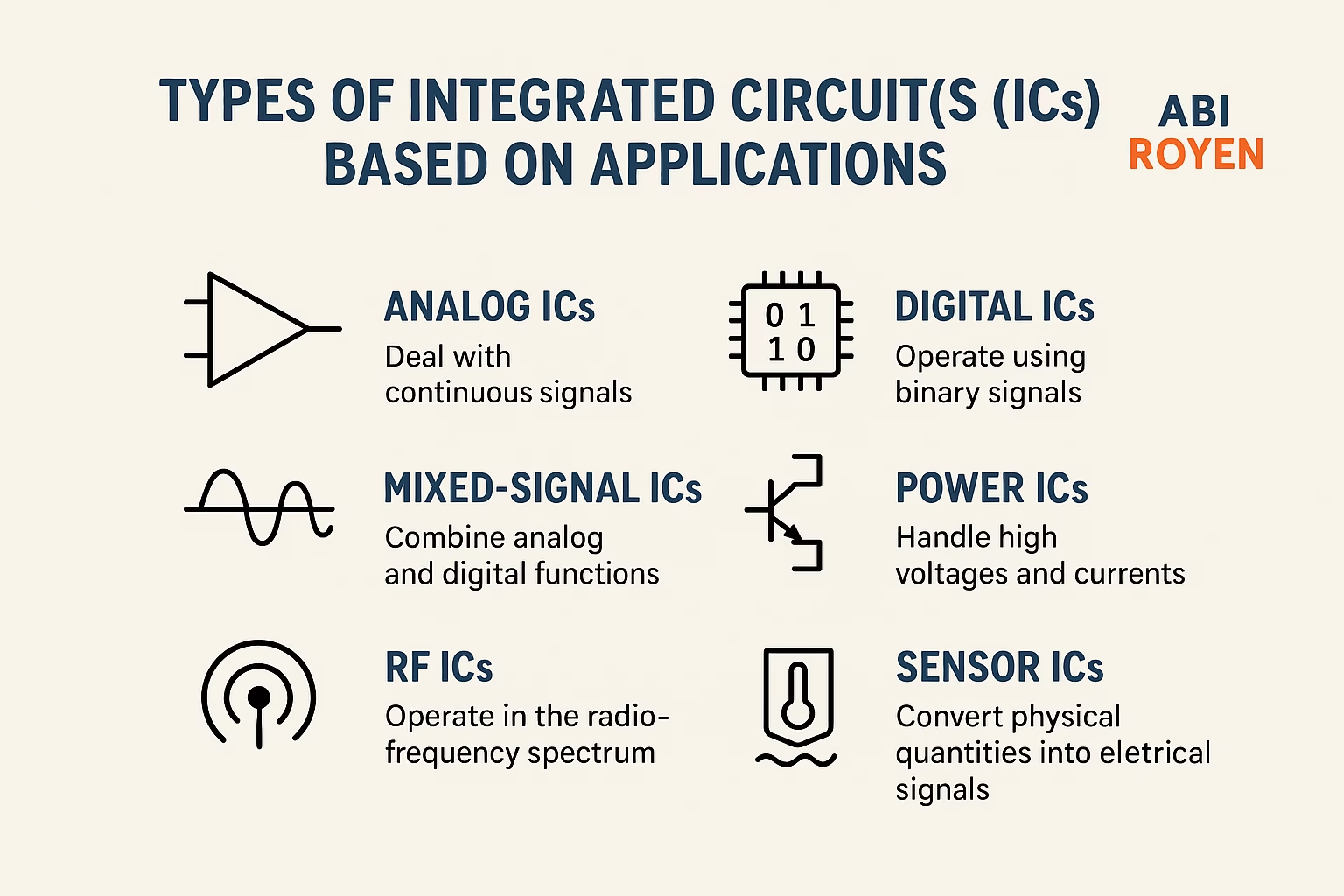
Integrated circuits can be broadly categorized based on their functions:
- Analog ICs – Designed for continuous signal processing (e.g., op-amps, voltage regulators, audio ICs).
- Digital ICs – Handle binary data and logical operations (e.g., microprocessors, memory chips, digital logic gates).
- Mixed-Signal ICs – Combine analog and digital functionalities (e.g., ADCs, DACs, communication ICs).
- Power ICs – Specially designed for power management, motor drivers, and energy conversion.
- Application-Specific ICs (ASICs) – Customized for a particular application, such as cryptocurrency mining or automotive control systems.
Applications of Integrated Circuits
The wide-ranging applications of ICs show their critical role in every sector of technology:
- Consumer Electronics: Smartphones, TVs, gaming consoles, and wearables all depend on ICs for processing, storage, and connectivity.
- Computing: CPUs, GPUs, memory modules, and SSDs are all integrated circuits powering modern computers.
- Automotive Industry: ICs manage engine control units (ECUs), infotainment systems, navigation, and safety systems like ABS and airbags.
- Healthcare Devices: ICs power pacemakers, diagnostic imaging equipment, and portable medical monitors.
- Industrial Automation: From robotics to factory automation, ICs enable precision control and data acquisition.
- Communication Systems: ICs drive cellular networks, satellite systems, Wi-Fi, and IoT devices.

Advantages of Integrated Circuits
ICs have replaced bulky and expensive discrete circuits because they offer:
- Miniaturization – Smaller devices with higher functionality.
- Low Power Consumption – Efficient operation with reduced heat dissipation.
- Reliability – Fewer solder joints and connections reduce failures.
- Mass Production – Cost-effective manufacturing on a large scale.
- High-Speed Operation – Faster processing with integrated transistors.
The Future of Integrated Circuits
The future of integrated circuits is heading toward smaller nodes, higher integration, and AI-driven architectures. Emerging technologies like quantum computing, neuromorphic chips, and 3D ICs are expected to push performance boundaries further. Additionally, ICs will continue to play a central role in the growth of IoT, autonomous vehicles, smart cities, and renewable energy systems.
Conclusion of Functions of Integrated Circuits
Integrated circuits are the heart of modern electronics, enabling everything from everyday gadgets to advanced industrial systems. Their functions—ranging from amplification and processing to memory storage and communication—make them indispensable in today’s world.
By understanding the functions of integrated circuits, we can better appreciate how they shape modern technology and anticipate their role in future innovations.