

Introduction of Classification of Integrated Circuits (ICs)
Classification of Integrated Circuits (ICs) ~ Integrated Circuits (ICs) are the backbone of modern electronics. Found in smartphones, computers, automobiles, medical devices, and countless other applications, ICs have revolutionized technology by making devices smaller, faster, and more efficient. Since their invention in the late 1950s, ICs have become increasingly complex, integrating millions or even billions of transistors into a single chip.
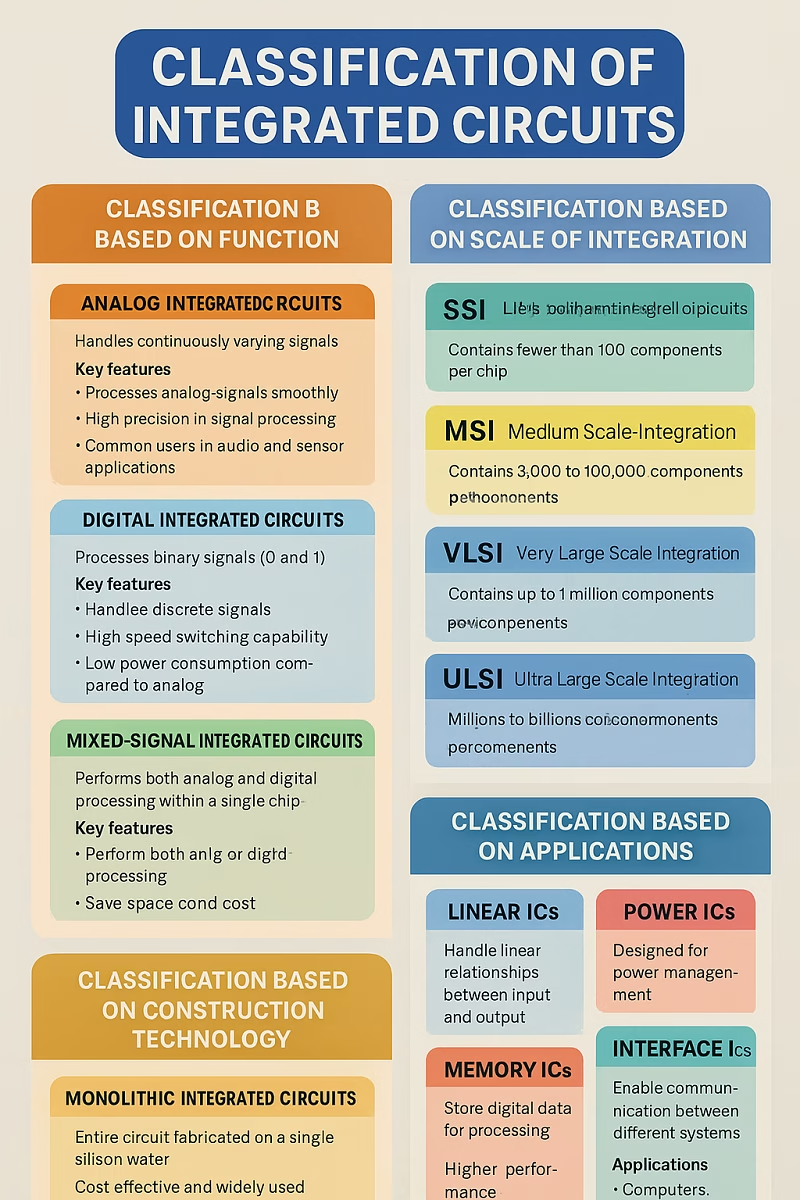
To understand ICs thoroughly, it is essential to study their classification. Integrated Circuits can be classified based on their function, scale of integration, construction, and applications. This article provides a comprehensive overview of the classification of Integrated Circuits, covering everything from basic categories to modern applications.
1. Classification of Integrated Circuits (ICs) Based on Function
1.1 Analog Integrated Circuits
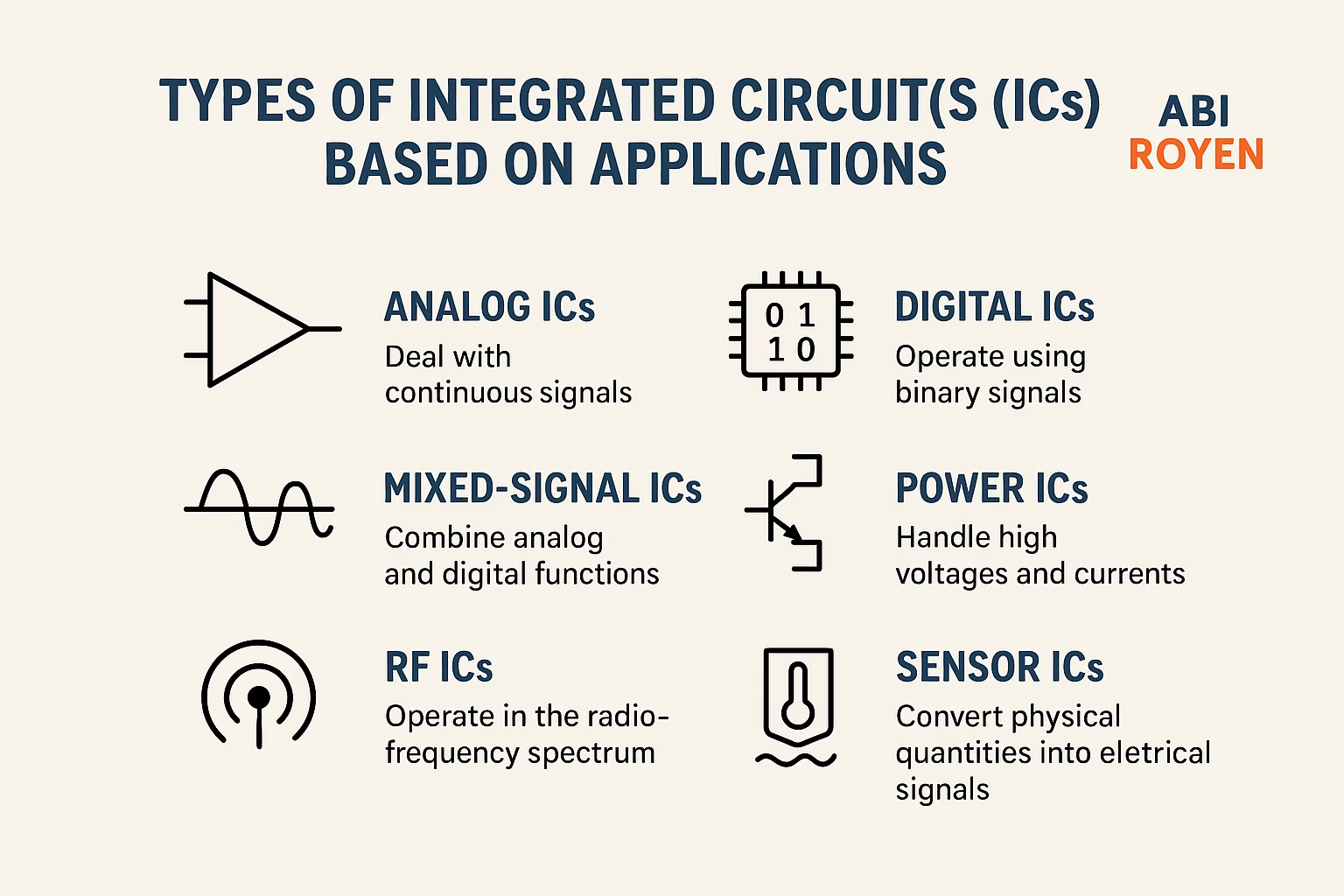
Analog ICs handle continuously varying signals. They are widely used in amplification, modulation, and filtering tasks. Common examples include operational amplifiers, voltage regulators, and audio amplifiers.
- Key Features:
- Process analog signals smoothly
- High precision in signal processing
- Commonly used in audio and sensor applications
- Applications:
- Audio systems
- Medical instrumentation
- Communication systems
1.2 Digital Integrated Circuits
Digital ICs process binary signals (0 and 1). They form the foundation of computing and digital communication.
- Key Features:
- Handle discrete signals
- High-speed switching capability
- Low power consumption compared to analog
- Applications:
- Microprocessors and microcontrollers
- Memory chips (RAM, ROM, Flash)
- Digital communication devices
1.3 Mixed-Signal Integrated Circuits
Mixed-signal ICs combine both analog and digital functions within a single chip. This makes them highly versatile for modern applications.
- Key Features:
- Perform both analog and digital processing
- Reduce the need for separate chips
- Save space and cost
- Applications:
- Smartphones
- IoT devices
- Data converters (ADC, DAC)
2. Classification of Integrated Circuits (ICs) Based on Scale of Integration
Integrated Circuits are also categorized based on the number of components integrated on a single chip. This classification reflects the evolution of IC technology over time.
2.1 SSI (Small Scale Integration)
- Contains fewer than 100 components per chip.
- Examples: Basic logic gates, flip-flops.
- Early technology used in calculators and simple circuits.
2.2 MSI (Medium Scale Integration)
- Contains between 100 to 3,000 components.
- Examples: Multiplexers, decoders, counters.
- Widely used in the 1970s for electronic calculators.
2.3 LSI (Large Scale Integration)
- Contains 3,000 to 100,000 components.
- Examples: Simple microprocessors, memory chips.
- Marked the beginning of modern computing.
2.4 VLSI (Very Large Scale Integration)
- Contains up to 1 million components.
- Examples: Advanced microprocessors, complex controllers.
- Enabled personal computers and advanced digital devices.
2.5 ULSI (Ultra Large Scale Integration)
- Contains millions to billions of components.
- Examples: Modern CPUs, GPUs, AI processors.
- Powers today’s supercomputers and smartphones.
3. Classification of Integrated Circuits (ICs) Based on Construction Technology
3.1 Monolithic Integrated Circuits
- Entire circuit fabricated on a single silicon wafer.
- Cost-effective and widely used.
- Applications: Consumer electronics, computers.
3.2 Hybrid Integrated Circuits
- Combines multiple semiconductor devices and passive components in a single package.
- Offers higher performance and flexibility.
- Applications: Military, aerospace, and medical systems.
4. Classification of Integrated Circuits (ICs) Based on Applications
4.1 Linear ICs
- Handle linear relationships between input and output.
- Examples: Operational amplifiers, regulators, comparators.
- Applications: Signal conditioning, control systems.
4.2 Power ICs
- Designed for power management.
- Examples: Power amplifiers, voltage regulators.
- Applications: Battery chargers, motor controllers.
4.3 Memory ICs
- Store digital data for processing.
- Types: RAM, ROM, Flash memory.
- Applications: Computers, smartphones, embedded systems.
4.4 Interface ICs
- Enable communication between different systems.
- Examples: Drivers, receivers, transceivers.
- Applications: Networking and communication devices.

5. Advantages of Integrated Circuits
- Miniaturization: Multiple components in a single chip reduce size.
- Reliability: Lower failure rate compared to discrete circuits.
- Low Cost: Mass production lowers price.
- Power Efficiency: Consume less energy.
- High Performance: Faster operation due to reduced signal delays.
6. Future of Integrated Circuits
The evolution of ICs is ongoing, with researchers working on Nano-scale ICs, Quantum ICs, and Bio-ICs. The demand for high-speed, energy-efficient circuits in fields like Artificial Intelligence (AI), 5G, Internet of Things (IoT), and autonomous vehicles will continue to drive innovation.
Some expected future trends include:
- 3D IC technology for better performance and reduced footprint.
- Neuromorphic chips that mimic human brain functions.
- Flexible ICs for wearable and foldable devices.
Conclusion of Classification of Integrated Circuits (ICs)
The classification of Integrated Circuits provides a structured understanding of how ICs function, how they are manufactured, and where they are applied. From analog and digital ICs to VLSI and ULSI chips, these tiny devices have become the lifeblood of modern technology. As advancements continue, ICs will become even more powerful, efficient, and adaptable, shaping the future of electronics and beyond.
Whether you are a student, engineer, or technology enthusiast, mastering the classification of ICs is crucial to understanding the world of electronics.