Evolution of Computers ~ Computers are an integral part of modern life, powering everything from smartphones and medical devices to transportation systems and global communication networks. But how did we arrive at this digital age? The story of computers spans centuries, marked by innovation, creativity, and groundbreaking discoveries. This article takes you through a brief yet comprehensive history of computers, highlighting key milestones that shaped the world of computing as we know it today.
1. Evolution of Computers: The Early Foundations of Computing (Before the 19th Century)
The concept of computing predates modern machines by centuries. Early humans used basic tools to aid in counting and calculations. Some of the most significant early computing devices include:
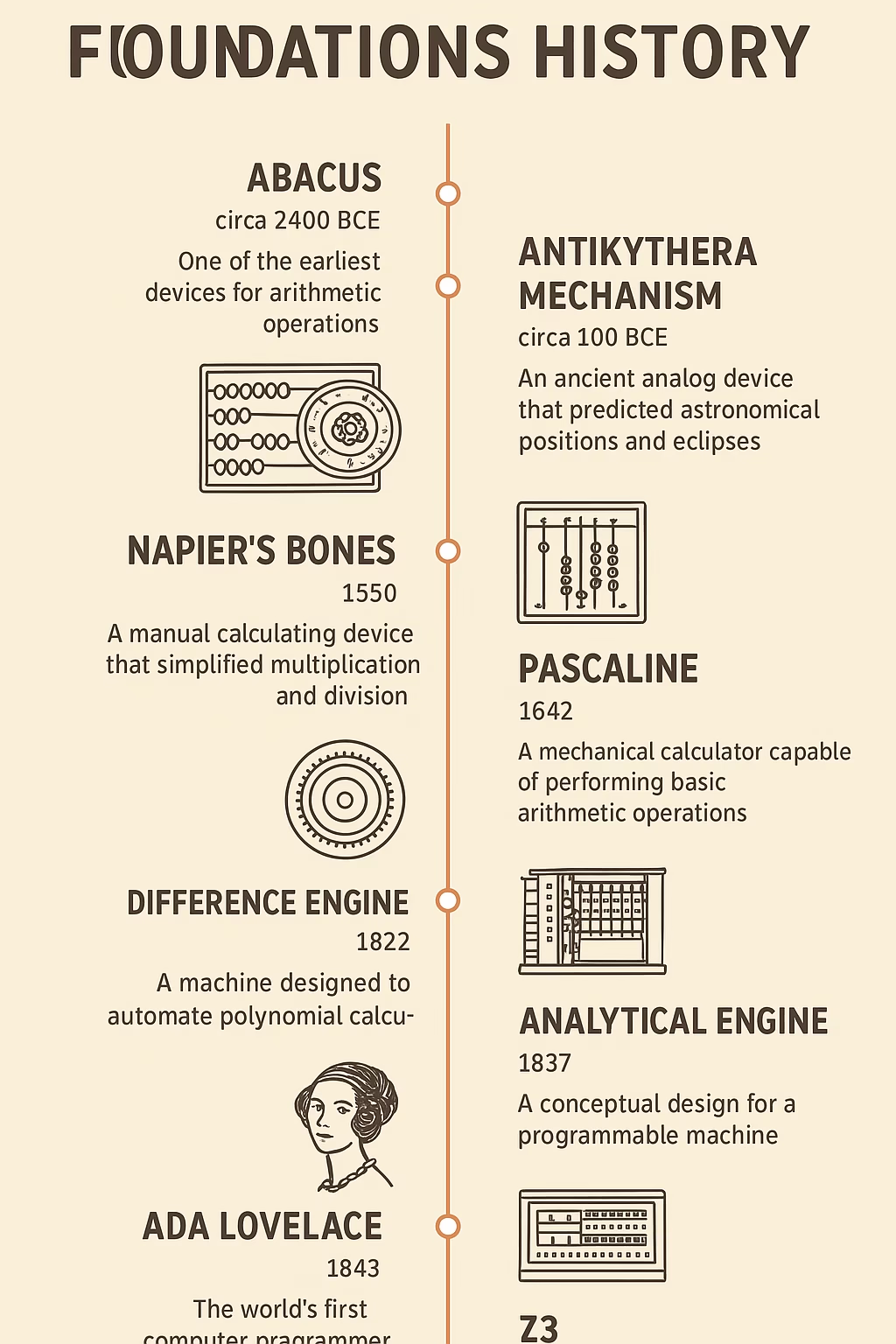
- The Abacus (circa 3000 BC):
One of the first known tools for arithmetic operations, the abacus was widely used in ancient civilizations such as Mesopotamia, China, and Egypt. It consisted of beads on rods, enabling quick manual calculations. - Mechanical Calculators (17th Century):
Pioneers like Blaise Pascal and Gottfried Wilhelm Leibniz developed mechanical calculators capable of performing addition, subtraction, and later multiplication and division. These devices laid the groundwork for more complex computing machinery.
2. The Birth of Programmable Machines (19th Century)
The 19th century marked a revolutionary shift from simple calculation tools to conceptual machines that could be programmed.
- Charles Babbage and the Analytical Engine:
Often called the “Father of the Computer,” Charles Babbage designed the Analytical Engine in the 1830s. Though never completed during his lifetime, the machine featured essential components of modern computers, including an arithmetic unit, memory, and the ability to use punched cards for input. - Ada Lovelace – The First Programmer:
Working with Babbage, Ada Lovelace wrote what is considered the first algorithm intended for a machine. Her visionary ideas highlighted the potential of computers beyond mere calculation, predicting their future role in processing symbols and even creating music.
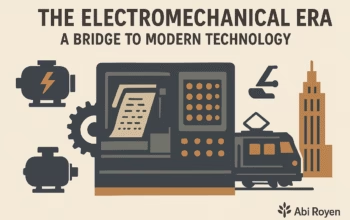
3. Evolution of Computers: The Electromechanical Era (Early 20th Century)
As electricity became a driving force in technology, computers evolved from mechanical devices to electromechanical machines.
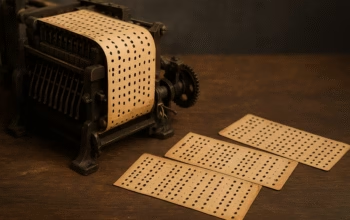
- The Tabulating Machine (1890s):
Invented by Herman Hollerith, this punch-card-based machine was used for the U.S. Census, significantly reducing data processing time. Hollerith’s company later became part of IBM, a leading name in computing. - Alan Turing and the Concept of Computability (1930s):
British mathematician Alan Turing introduced the concept of a “universal machine,” capable of performing any computation given the right algorithm. His theoretical work became the foundation of modern computer science. - World War II Computers:
The need for code-breaking and military calculations during WWII spurred the creation of machines like Colossus in the UK and ENIAC in the USA, considered among the first general-purpose electronic computers.
4. Evolution of Computers: The Rise of Digital Computers (Mid-20th Century)
The post-war era witnessed rapid advancements in computing technology, leading to the digital revolution.
- Transistors Replace Vacuum Tubes (1947):
The invention of the transistor by Bell Labs transformed computers, making them smaller, faster, and more reliable. - Integrated Circuits (1958):
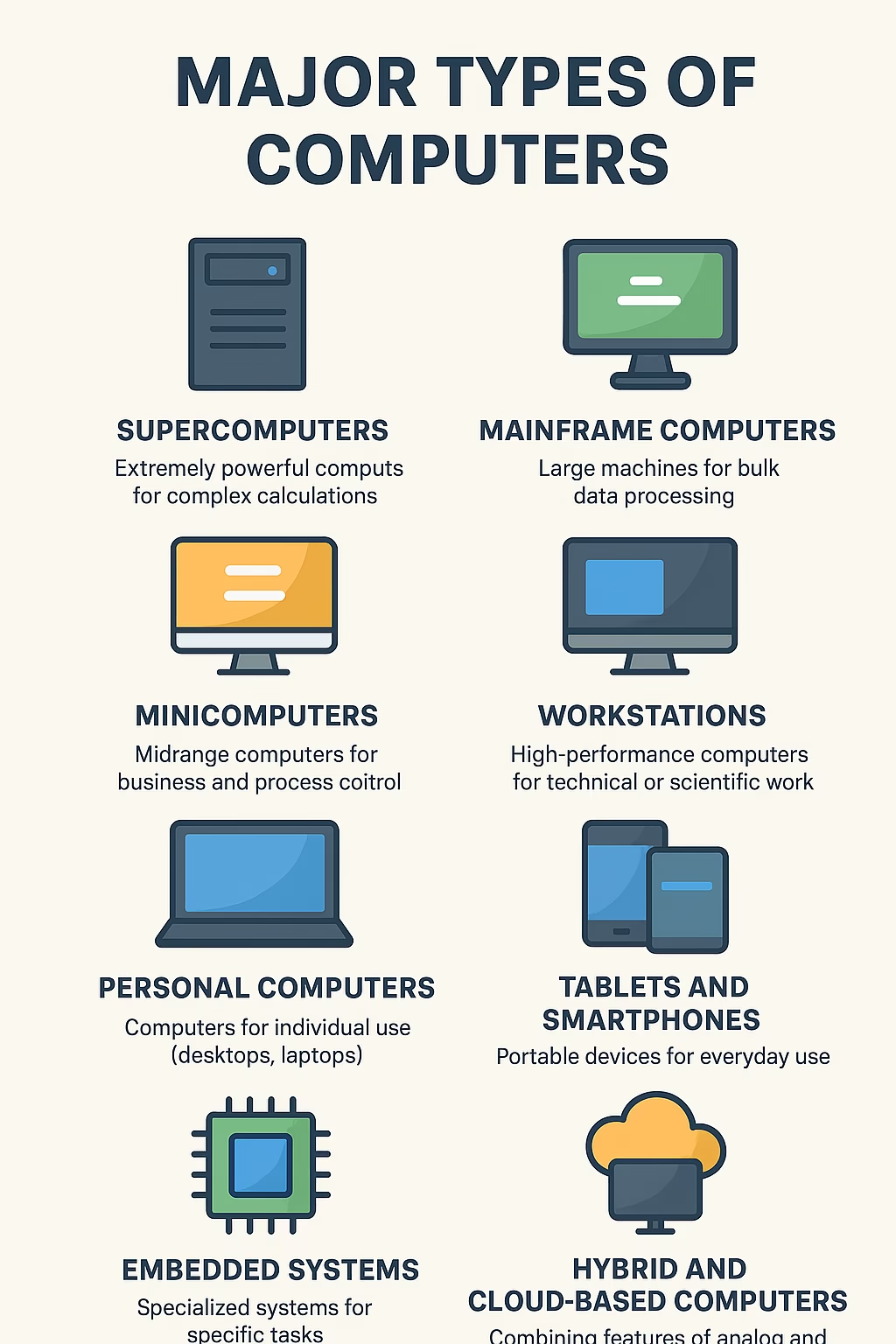
Integrated circuits (ICs) combined multiple transistors on a single chip, paving the way for the development of compact and affordable computers. - Mainframes and Minicomputers (1950s–1960s):
Large companies and government institutions began using mainframe computers for business and scientific applications. At the same time, smaller minicomputers made computing accessible to more organizations.
5. The Personal Computer Revolution (1970s–1980s)
The introduction of personal computers (PCs) brought computing into homes and small businesses.
- Microprocessors (1971):
Intel’s 4004 microprocessor made it possible to build affordable and powerful small computers. - Apple, IBM, and Microsoft:
Companies like Apple, IBM, and Microsoft played pivotal roles in making PCs mainstream. Apple’s Apple II (1977) and IBM’s IBM PC (1981) changed the way people worked, learned, and communicated. - Graphical User Interfaces (GUIs):
Xerox PARC’s research led to the development of GUIs, later popularized by Apple’s Macintosh (1984) and Microsoft Windows (1985), making computers easier to use for non-technical users.
6. Evolution of Computers: The Internet and Mobile Computing Era (1990s–Present)
With the rise of the internet and mobile devices, computers became interconnected, portable, and essential for everyday life.
- The World Wide Web (1991):
Developed by Tim Berners-Lee, the web transformed computers from isolated machines into gateways of global information. - Laptops, Smartphones, and Tablets:
Portable computing devices have enabled work, communication, and entertainment on the go, reshaping lifestyles worldwide. - Cloud Computing and Artificial Intelligence:
Today’s computers leverage cloud infrastructure and AI to deliver services like data storage, machine learning, and automation, fueling innovations in every industry.


Conclusion: The Ever-Evolving Future of Computers
From the humble abacus to today’s quantum computing research, the history of computers is a testament to human ingenuity and progress. As technology continues to advance, future computers may transcend current limitations, ushering in new eras of artificial intelligence, biotechnology integration, and beyond.
Understanding the history of computers not only gives us insight into the past but also helps us appreciate the incredible journey that brought us to the digital age—and prepares us for the exciting innovations yet to come.