

The electromagnetic spectrum (EM spectrum) is one of the most fascinating and essential concepts in physics, engineering, and everyday technology. It encompasses the full range of all electromagnetic radiation—waves of electric and magnetic energy that travel through space. These waves differ in frequency and wavelength, creating a continuous range from long-wavelength radio waves to high-frequency gamma rays.
Whether it’s your smartphone, X-ray machine, or even sunlight—everything operates using some part of the EM spectrum. This article provides a thorough overview of the electromagnetic spectrum, its regions, properties, and real-world applications.
📘 What is the Electromagnetic Spectrum?
The electromagnetic spectrum refers to the complete range of electromagnetic radiation arranged according to frequency or wavelength. These waves travel at the speed of light in a vacuum and include:
- Radio Waves
- Microwaves
- Infrared Radiation
- Visible Light
- Ultraviolet (UV) Rays
- X-Rays
- Gamma Rays
The energy carried by electromagnetic waves increases with frequency and decreases with wavelength. This is why gamma rays are far more energetic and dangerous compared to radio waves.
🌈 The Major Regions of the Electromagnetic Spectrum
1. Radio Waves (30 Hz – 300 GHz)
Wavelength: >1 mm
Applications:
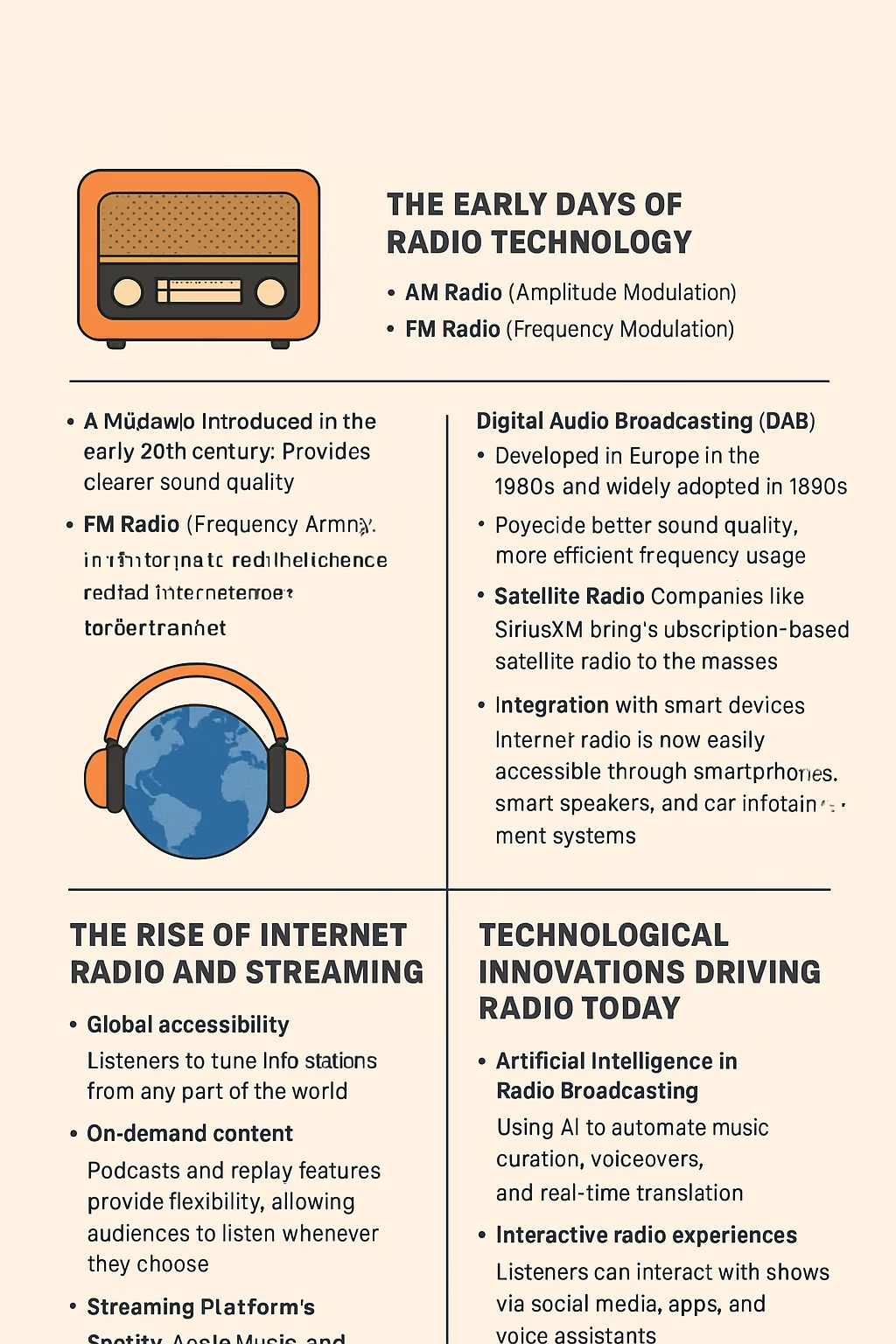
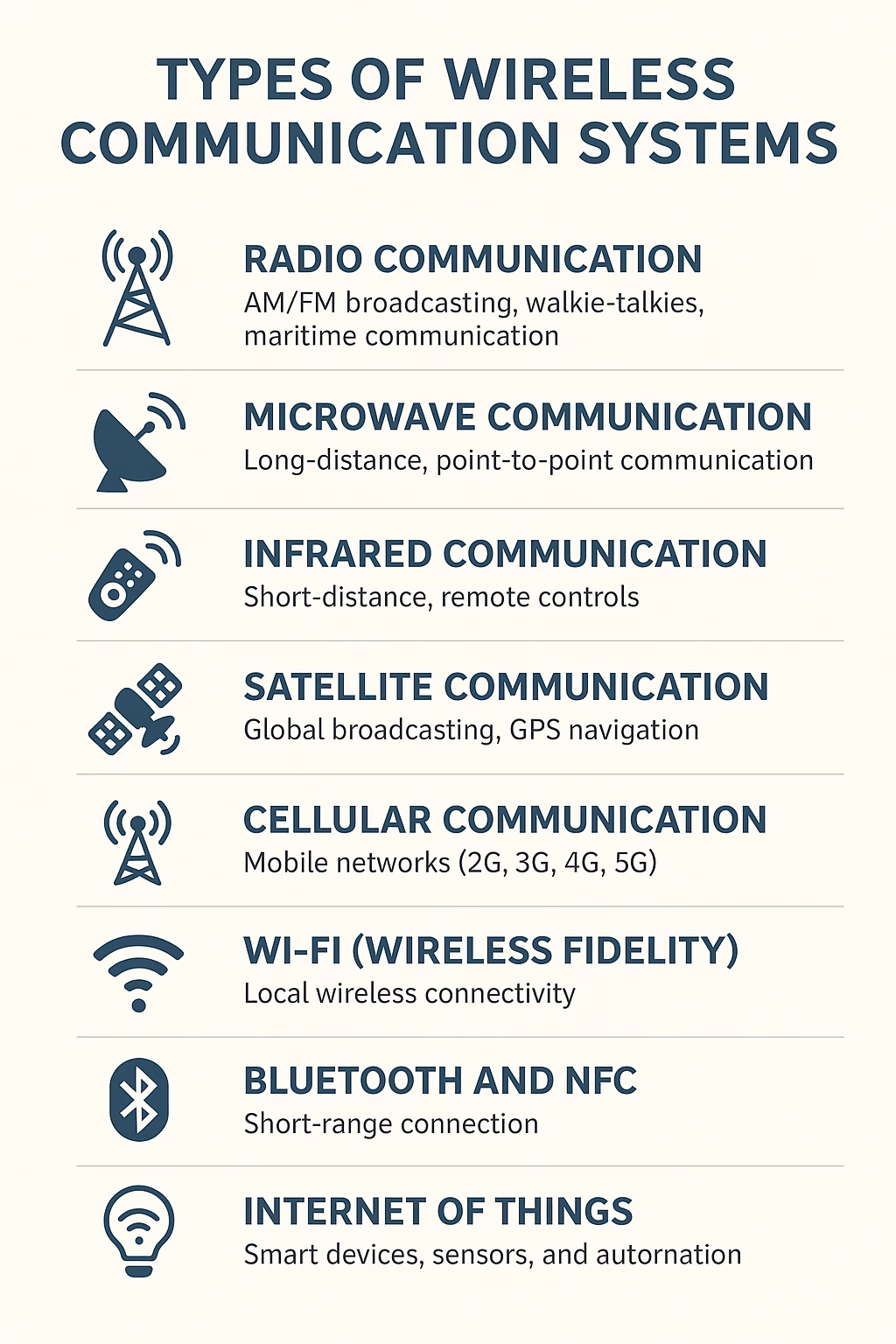
- AM/FM radio broadcasting
- Television signals
- Mobile communications
- Satellite transmission
Radio waves are the lowest frequency and longest wavelength electromagnetic waves. They’re essential for wireless communication and are widely used in broadcasting and navigation.
2. Microwaves (300 MHz – 300 GHz)
Wavelength: 1 mm – 30 cm
Applications:
- Microwave ovens
- Wi-Fi (2.4 GHz, 5 GHz)
- Radar systems
- Bluetooth and satellite links
Microwaves penetrate clouds, rain, and smoke, making them ideal for radar and weather monitoring.
3. Infrared Radiation (IR) (300 GHz – 430 THz)
Wavelength: 700 nm – 1 mm
Applications:
- Remote controls
- Thermal imaging cameras
- Night vision goggles
- Industrial heat detection
Infrared radiation is primarily associated with heat. Every object above absolute zero emits infrared radiation.
4. Visible Light (430 THz – 770 THz)
Wavelength: 380 – 700 nm
Applications:
- Human vision
- Photography
- Optics and fiber optics
- Lighting and laser systems
This narrow band of the spectrum is the only part visible to the human eye. White light is a mix of all visible wavelengths.
5. Ultraviolet (UV) Radiation (770 THz – 30 PHz)
Wavelength: 10 – 400 nm
Applications:
- Sterilization and disinfection
- Tanning beds
- Fluorescent lamps
- Detecting forged banknotes
UV radiation is invisible but can cause sunburns and skin cancer. It plays an important role in vitamin D production.
6. X-Rays (30 PHz – 30 EHz)
Wavelength: 0.01 – 10 nm
Applications:
- Medical imaging (X-ray scans)
- Airport security scanners
- Industrial inspection
- Astronomy
X-rays can penetrate soft tissues, making them invaluable for diagnostics and structural analysis.
7. Gamma Rays (>30 EHz)
Wavelength: <0.01 nm
Applications:
- Cancer radiotherapy
- Nuclear reactions
- Astrophysical observations
- Gamma-ray imaging in research
Gamma rays are the most energetic waves in the EM spectrum. They are produced by radioactive decay and cosmic events like supernovae.


🧠 Key Properties of Electromagnetic Waves
- Wavelength (λ): Distance between two successive peaks of the wave
- Frequency (f): Number of wave cycles per second
- Speed (c): In a vacuum, all electromagnetic waves travel at the speed of light (~299,792,458 m/s)
- Energy (E): Directly proportional to frequency and inversely proportional to wavelength (E = hf)
🧪 Scientific Importance of the Electromagnetic Spectrum
The electromagnetic spectrum is the foundation of numerous scientific fields:
- Astronomy: Study of celestial objects through radio, infrared, UV, and X-ray telescopes
- Quantum Physics: Analysis of light-matter interaction
- Spectroscopy: Identifying chemical compositions using spectral lines
- Environmental Monitoring: Detecting pollution and climate patterns via satellites
📱 Everyday Applications of Electromagnetic Spectrum
- Radio waves: Listening to FM radio or calling on your phone
- Microwaves: Reheating food or connecting to Wi-Fi
- Infrared: TV remote and automatic doors
- Visible light: Lighting, displays, photography
- UV rays: Checking banknotes or using sunscreen
- X-rays: Getting a chest scan
- Gamma rays: Undergoing cancer treatment
⚠️ Health Effects and Safety
Not all parts of the EM spectrum are safe. While visible light and radio waves are relatively harmless, UV, X-rays, and gamma rays carry risks such as:
- DNA damage
- Skin burns
- Cancer (prolonged exposure)
Proper shielding, time limits, and regulations help minimize exposure risks.
🛰️ Role of Electromagnetic Spectrum in Modern Technology
Modern innovations rely heavily on EM waves:
- Communication: 5G, satellites, optical fiber
- Medicine: MRI, PET scans, radiation therapy
- Defense: RADAR, infrared night vision
- Space Exploration: Hubble telescope, James Webb, radio astronomy
Understanding and manipulating the EM spectrum is critical for advancing technology and scientific discovery.
🧩 Fun Facts About the Electromagnetic Spectrum
- Bees can see ultraviolet light, which helps them find nectar in flowers.
- The cosmic microwave background radiation is the oldest light in the universe.
- Human bodies emit infrared radiation, which is how thermal cameras “see” us.
- Gamma-ray bursts are the most energetic explosions in the universe.
🔚 Conclusion Electromagnetic Spectrum
The electromagnetic spectrum is not just a scientific concept—it’s an integral part of our daily lives. From basic communication to advanced medical treatment and deep-space exploration, understanding the spectrum allows us to harness the invisible forces of the universe for human progress.
As technology evolves, the future will continue to rely on our mastery of electromagnetic radiation. Whether you’re an engineer, a student, or a science enthusiast, grasping the EM spectrum is essential to understanding the world and its underlying phenomena.