In the world of industrial process automation and control, accurate measurement of pressure plays a critical role in ensuring efficiency, safety, and productivity. One of the most reliable instruments for this purpose is the Differential Pressure Transmitter. Widely used across various industries, a DP transmitter helps in monitoring pressure differences in systems, which can further be used to measure flow, level, and even filter conditions.
This article provides a comprehensive understanding of what a Differential Pressure Transmitter is, how it works, its key applications, and the advantages it brings to industrial operations.
What is a Differential Pressure Transmitter?
A Differential Pressure Transmitter is a type of pressure sensor that measures the difference in pressure between two points in a process system. Unlike a gauge or absolute pressure transmitter, which measures pressure at a single point, a DP transmitter compares high-pressure (HP) and low-pressure (LP) inputs to provide an output proportional to the pressure difference.
This pressure difference is often crucial in applications such as flow measurement, liquid level monitoring, and filter condition assessment. By converting the differential pressure into an electrical signal (analog or digital), it enables real-time process monitoring and control.
Working Principle of a Differential Pressure Transmitter
The basic operation of a DP transmitter involves:
- Two Pressure Inputs:
- High Pressure (HP) Port: Connected to the higher-pressure side of the system.
- Low Pressure (LP) Port: Connected to the lower-pressure side.
- Sensing Element:
Inside the transmitter, a diaphragm or other pressure-sensing element detects the pressure difference between HP and LP. This differential pressure causes mechanical deflection of the diaphragm. - Transduction Mechanism:
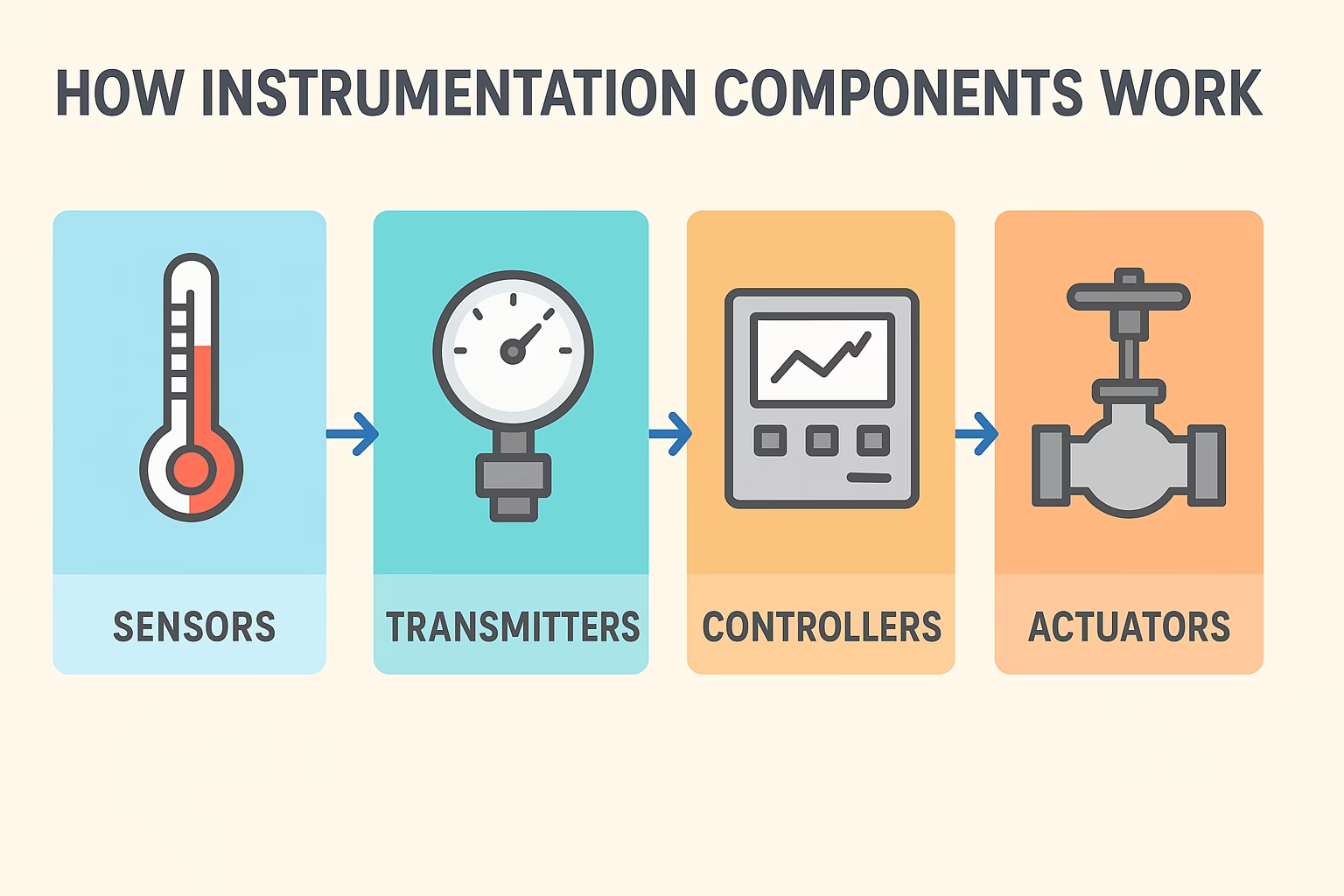
The mechanical movement is converted into an electrical signal, often through strain gauges, capacitance, or piezoelectric sensors. - Signal Processing & Output:
The electrical signal is processed, linearized, and transmitted as a standardized output (4–20 mA, HART, Modbus, or other protocols) to the control system.
This accurate and reliable conversion allows process engineers to monitor and adjust industrial operations effectively.
Key Applications of Differential Pressure Transmitter
DP transmitters are versatile and find applications across multiple industries:
1. Flow Measurement
One of the most common uses of a DP transmitter is in flow measurement using primary elements such as orifice plates, venturi tubes, or flow nozzles. The pressure drop across these devices is directly proportional to the square of the flow rate, enabling precise flow calculation.
2. Liquid Level Measurement
In pressurized tanks, DP transmitters are used to measure liquid levels by sensing the pressure difference between the bottom and the top of the vessel. This method is highly accurate and unaffected by changes in process temperature or density.
3. Filter and Pump Monitoring
By measuring the pressure drop across filters or pumps, DP transmitters help detect clogging, fouling, or pump performance issues in real-time, ensuring preventive maintenance.
4. Boiler and HVAC Systems
DP transmitters are essential in maintaining proper draft, monitoring air filters, and optimizing performance in boilers and HVAC systems.
5. Safety and Compliance
In industries like oil & gas, chemicals, and pharmaceuticals, accurate pressure differential monitoring is critical for ensuring safety, regulatory compliance, and process efficiency.


Advantages of Using Differential Pressure Transmitter
- High Accuracy & Reliability: DP transmitters offer precise measurements critical for process optimization.
- Versatility: Suitable for measuring flow, level, and filter conditions.
- Durability: Designed to withstand harsh industrial environments with options for corrosive media and extreme conditions.
- Cost-Effectiveness: A single DP transmitter can serve multiple measurement purposes, reducing instrumentation costs.
- Easy Integration: Compatible with modern digital communication protocols for seamless integration with control systems.
Selecting the Right Differential Pressure Transmitter
When choosing a DP transmitter, consider:
- Pressure Range & Overpressure Limits
- Process Media Compatibility
- Accuracy Requirements
- Temperature Conditions
- Output Signal & Communication Protocols
Proper selection ensures optimal performance, longevity, and return on investment.
Conclusion of Differential Pressure Transmitter
A Differential Pressure Transmitter is a fundamental instrument in modern industrial automation. By providing accurate and reliable pressure difference data, it enables precise control over flow, level, and other critical process parameters. Industries ranging from oil & gas to pharmaceuticals rely on DP transmitters to enhance productivity, ensure safety, and maintain compliance.
As industrial processes continue to evolve towards digitalization and smart automation, the importance of DP transmitters will only grow, making them indispensable tools for process engineers and plant operators.