Computers have become an inseparable part of human life, revolutionizing the way we work, communicate, and think. From smartphones in our pockets to powerful servers running global businesses, the word “computer” carries an extensive meaning that goes far beyond a simple electronic device. But what exactly is the Definition of Computer? How has it evolved, and what are its essential functions and applications in the modern world?
This article explores the complete meaning, definition, types, and applications of computers, helping readers understand why computers are often called the backbone of the digital era.
1. What is the Definition of Computer?
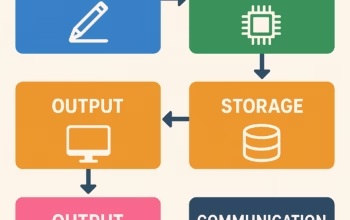
A computer can be defined as an electronic device that receives input, processes data, stores information, and produces output. It operates according to a set of instructions called programs. In simple words, a computer takes data, processes it, and provides meaningful information.
The word “computer” originates from the Latin word computare, which means “to calculate.” Historically, the term referred to humans who performed calculations manually. Over time, the definition shifted to describe machines that perform automated calculations and logical operations.
Key Elements in the Definition of Computer:
- Input: The process of entering data or instructions (e.g., via keyboard, mouse, or sensors).
- Processing: The manipulation of data using the computer’s CPU (Central Processing Unit).
- Storage: Saving information permanently or temporarily (hard drives, SSDs, or memory).
- Output: Displaying results through monitors, printers, or speakers.
Thus, a computer is not just about calculation—it is a versatile machine designed to perform millions of instructions per second across various tasks.
2. Core Functions of a Computer
To understand the true meaning of a computer, it is essential to know its primary functions. Every computer, regardless of size or type, performs four major tasks:
- Data Input – Accepting raw data or instructions from the user.
- Processing – Transforming input into meaningful results using hardware and software.
- Storage – Keeping data in memory (temporary RAM or permanent storage).
- Output – Delivering processed information in a usable format.
These core functions make computers a universal tool applicable in education, business, healthcare, entertainment, and scientific research.
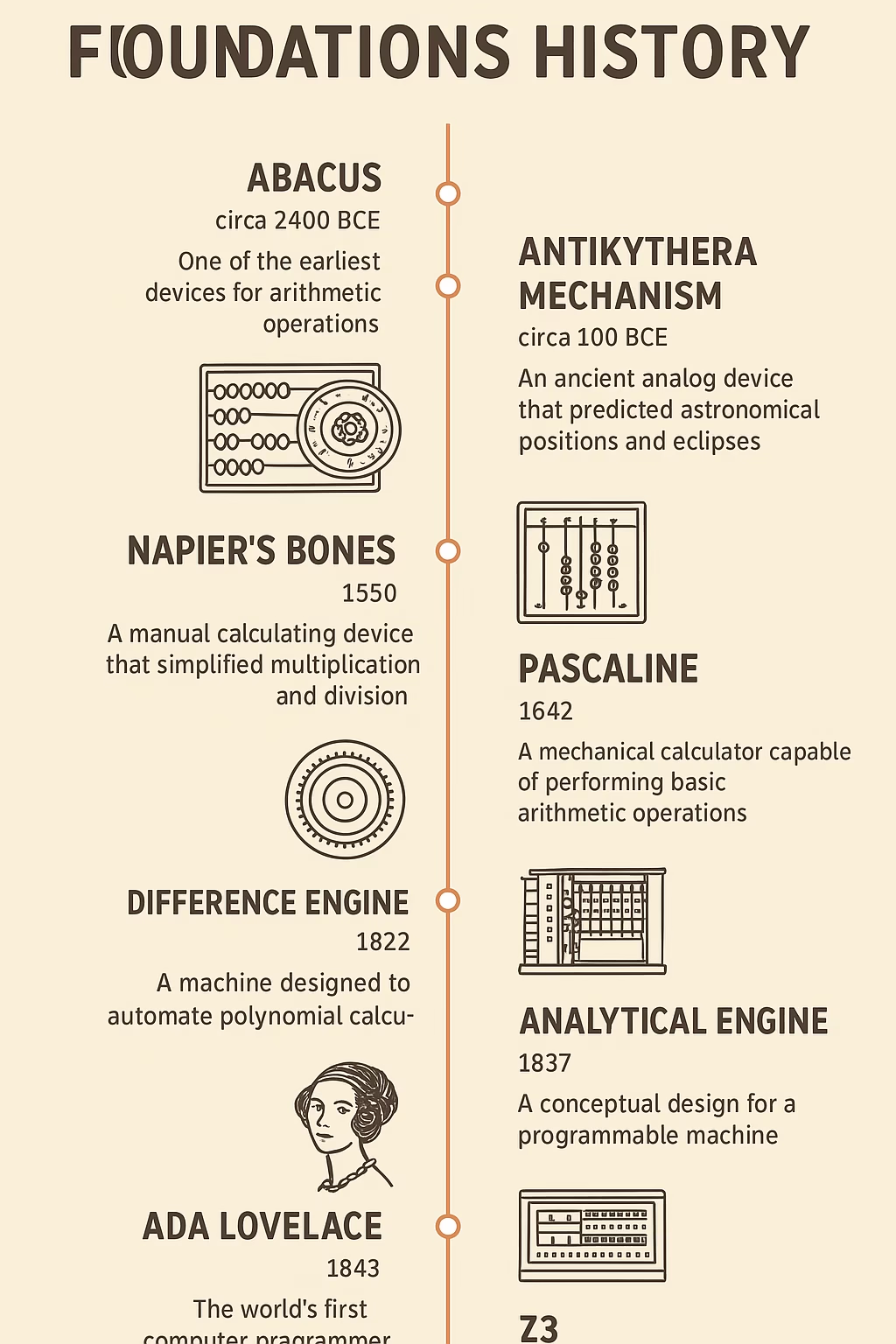
3. A Brief History of Computers
The evolution of computers has been marked by remarkable progress. The history can be divided into generations:
- First Generation (1940s–1950s): Vacuum tube-based computers like ENIAC, used mainly for scientific calculations.
- Second Generation (1950s–1960s): Introduction of transistors, making computers faster, smaller, and more reliable.
- Third Generation (1960s–1970s): Use of integrated circuits (ICs), leading to more efficient and affordable machines.
- Fourth Generation (1970s–Present): Microprocessors allowed personal computers (PCs) to become widespread.
- Fifth Generation (Present and Beyond): Focus on artificial intelligence (AI), machine learning, and quantum computing.
Today, computers are embedded everywhere, from cars and medical equipment to smart homes and cloud data centers.
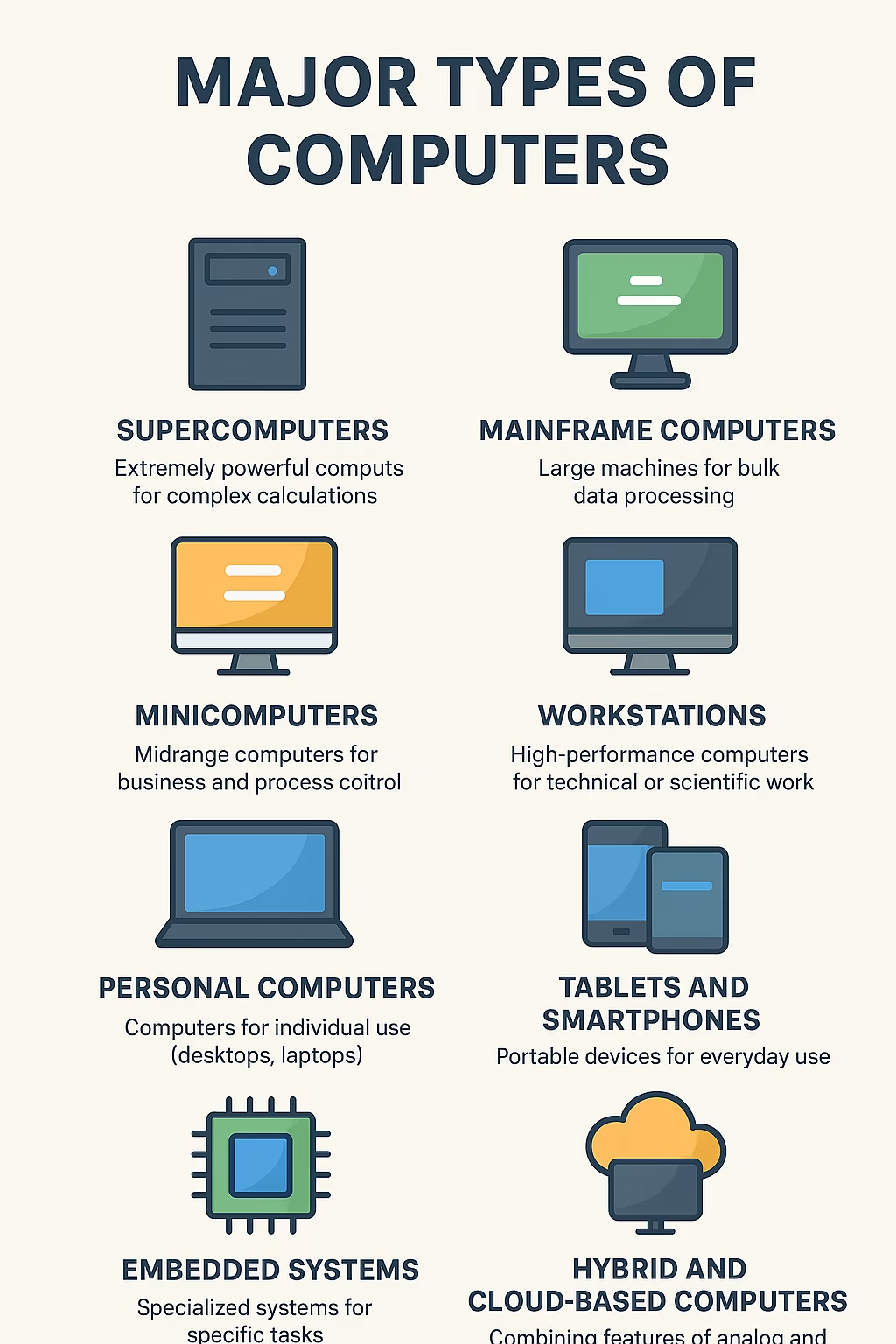
4. Types of Computers
Computers can be classified based on size, function, and purpose. Below are the main types:
A. Based on Size and Power
- Supercomputers: Extremely powerful machines used for complex simulations (e.g., climate modeling, nuclear research).
- Mainframes: Large systems designed for handling bulk data processing in banks and enterprises.
- Minicomputers (Mid-range): Smaller than mainframes, used in organizations for specialized tasks.
- Microcomputers (Personal Computers): Includes desktops, laptops, and tablets for everyday use.
B. Based on Purpose
- General-Purpose Computers: Designed for versatile tasks like word processing, gaming, and browsing.
- Special-Purpose Computers: Built for a specific function, such as ATMs, GPS devices, or medical scanners.
C. Based on Data Handling
- Analog Computers: Work with continuous signals (e.g., used in engineering simulations).
- Digital Computers: Work with binary data (0s and 1s), forming the basis of modern computing.
- Hybrid Computers: Combine features of analog and digital systems.
5. Applications of Computers in Modern Life
The definition of a computer is best understood by exploring its wide range of applications. Computers have become indispensable in almost every field:
- Education: Online learning platforms, research, and digital classrooms.
- Business: Accounting, payroll systems, e-commerce, and data analysis.
- Healthcare: Patient records, diagnostic tools, robotic surgery, and AI in medical imaging.
- Communication: Emails, video conferencing, and social media.
- Entertainment: Gaming, streaming, music production, and video editing.
- Science and Research: Space exploration, genetic engineering, and artificial intelligence.
- Government and Security: Data management, surveillance, and cyber defense.
This widespread use shows why computers are called the most versatile invention of modern times.
6. Importance of Computers in the Digital Era
The significance of computers lies not just in performing calculations but in transforming society and business. Some key benefits include:
- Speed: Capable of performing millions of instructions in seconds.
- Accuracy: Reduces human errors in data handling.
- Automation: Replaces repetitive tasks with automated systems.
- Connectivity: Links people and businesses worldwide.
- Innovation: Drives advancements in AI, robotics, and biotechnology.
Without computers, modern civilization would struggle to function efficiently.


7. The Future of Computers
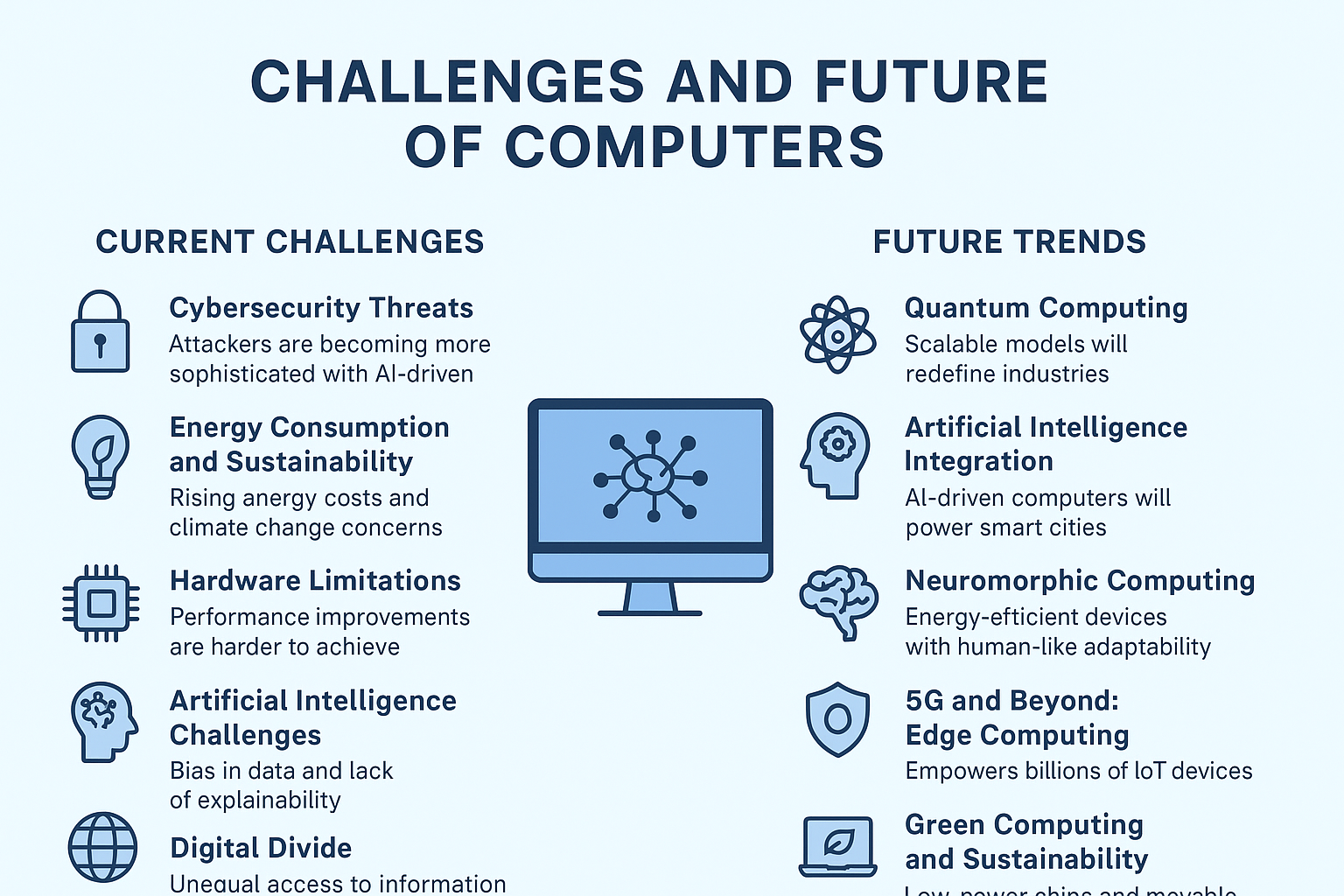
Looking forward, the future of computers is tied to advanced technologies such as:
- Artificial Intelligence (AI): Machines learning and making decisions.
- Quantum Computing: Offering unimaginable processing power.
- Cloud Computing: Enabling access to global resources and storage.
- IoT (Internet of Things): Connecting billions of devices seamlessly.
- Green Computing: Focus on energy efficiency and sustainability.
These advancements will further redefine the definition of computer for future generations.
Conclusion of Definition of Computer
The definition of a computer extends beyond being an electronic device—it is a powerful tool that shapes economies, enhances knowledge, and simplifies everyday life. From historical origins as calculating machines to today’s AI-powered systems, computers represent one of the greatest human inventions.
By understanding its meaning, functions, types, and applications, we can appreciate how integral computers are in education, business, healthcare, and almost every aspect of modern living.
In essence, a computer is not just a machine—it is a catalyst of progress and innovation in the digital age.