Introduction of Birth of Programmable Machines
The 19th century was a period of rapid technological innovation. The Industrial Revolution brought machinery that transformed industries, societies, and economies worldwide. Among the most groundbreaking advancements was the birth of programmable machines, which laid the foundation for modern computing and automation. Long before the invention of digital computers, visionaries such as Joseph Marie Jacquard, Charles Babbage, and Ada Lovelace introduced the idea that machines could follow instructions, adapt to different tasks, and perform repetitive work with precision.
This article explores the origins of programmable machines in the 19th century, their inventors, their impact on industry and society, and how they influenced the rise of modern computing.

1. The Industrial Revolution and the Need for Programmability
The Industrial Revolution created unprecedented demand for efficiency and productivity. Factories relied heavily on machinery, but most machines were designed for a single purpose. As industries expanded, so did the need for machines that could adapt to new tasks without being rebuilt entirely. This necessity gave rise to programmable mechanisms that could modify their behavior through external instructions.
2. The Jacquard Loom: The First Birth of Programmable Machines
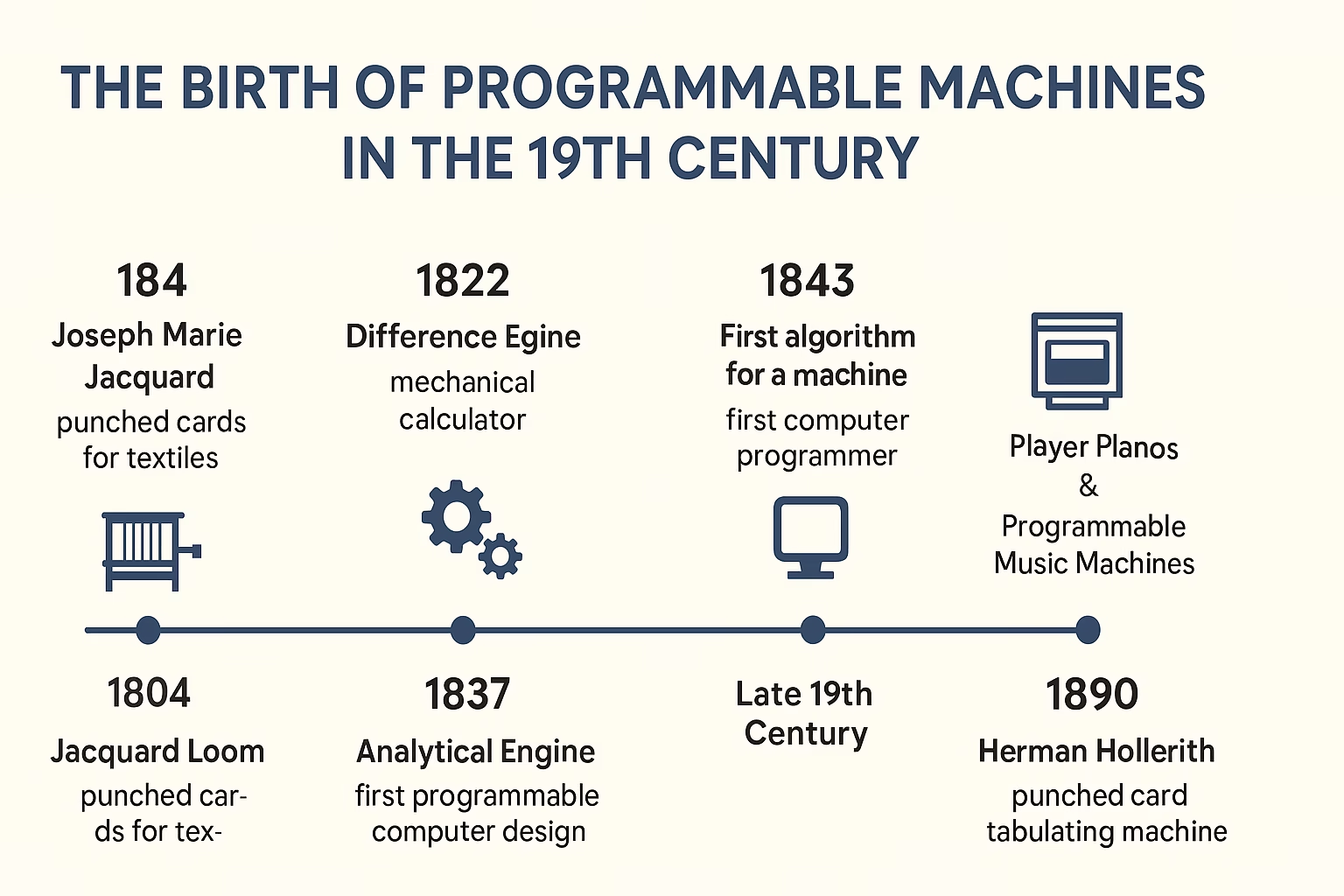
One of the earliest and most significant inventions in this era was the Jacquard Loom, introduced in 1804 by Joseph Marie Jacquard.
- How It Worked:
The loom used punched cards to control the weaving of complex textile patterns. Each card represented a set of instructions for weaving, enabling the loom to produce intricate designs without manual intervention. - Impact on Industry:
The Jacquard Loom revolutionized the textile industry by:- Increasing production speed
- Reducing human error
- Making complex designs more affordable
- Inspiring future programmable technologies
- Legacy:
The punched-card concept would later inspire early computers, including those designed by Charles Babbage and Herman Hollerith.
3. Charles Babbage and the Analytical Engine
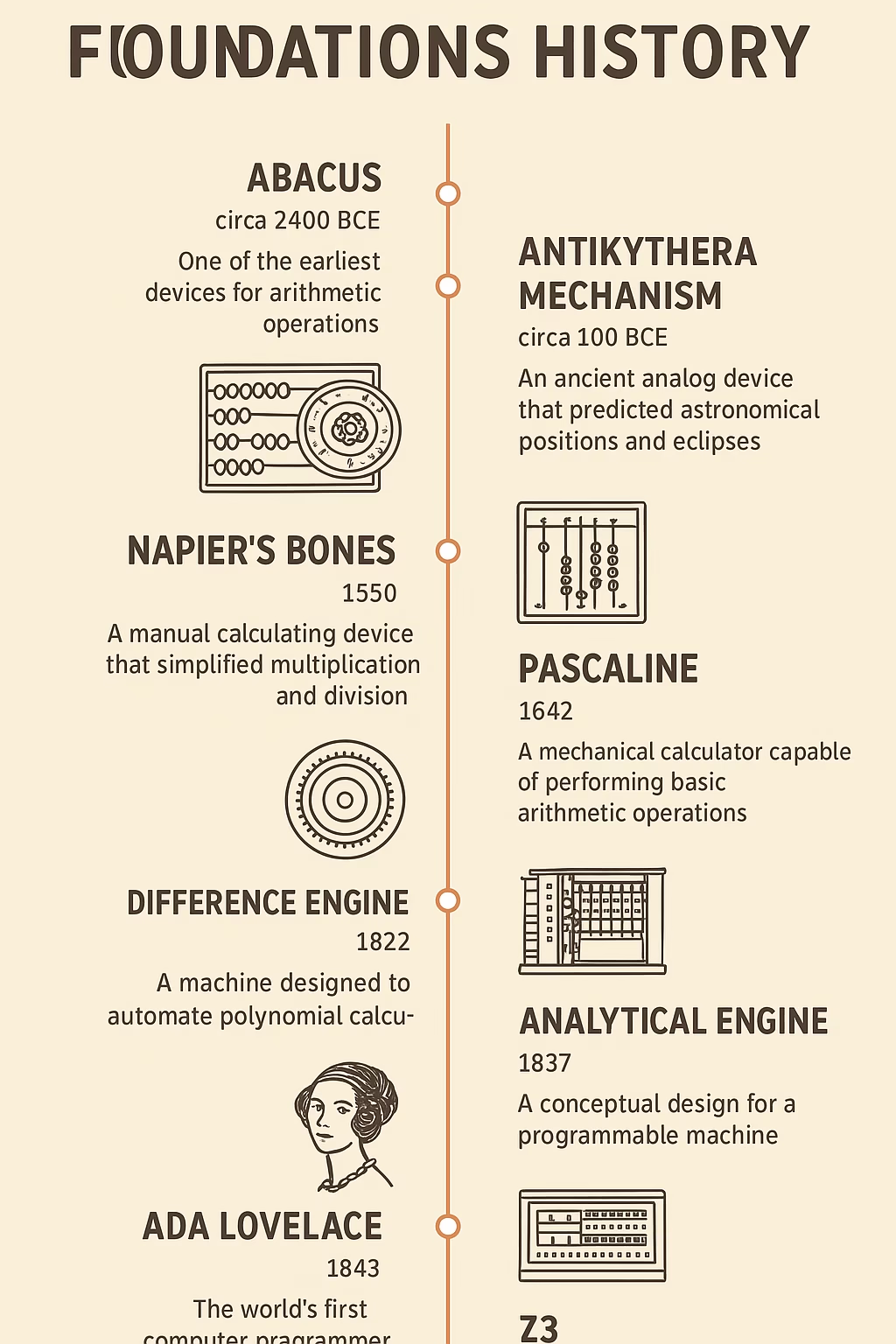
Perhaps the most influential 19th-century visionary of programmable machines was Charles Babbage, often called the “Father of the Computer.”
- The Difference Engine (1822):
Babbage’s first invention was a mechanical calculator capable of producing mathematical tables. While revolutionary, it was limited to a specific function. - The Analytical Engine (1837):
Babbage’s next design, the Analytical Engine, introduced the concept of a fully programmable computing machine. It incorporated:- An Arithmetic Logic Unit (ALU) for calculations
- Memory storage for intermediate results
- Conditional branching and loops
- Input via punched cards, inspired by the Jacquard Loom
Though never completed in his lifetime, the Analytical Engine was the first machine to embody the principles of modern computers.
4. Ada Lovelace: The First Computer Programmer
While Babbage provided the machine, Ada Lovelace provided the vision. Working alongside Babbage, she wrote detailed notes describing how the Analytical Engine could be programmed to perform tasks beyond mere calculation.
- Contribution:
Lovelace developed the first algorithm intended for a machine, earning her the title of the world’s first computer programmer. - Visionary Thinking:
She foresaw that programmable machines could go beyond mathematics to manipulate symbols, music, and language—ideas that anticipate today’s computers.
5. Programmable Music Machines
In addition to looms and mechanical computers, the 19th century also saw the rise of programmable music devices such as barrel organs and player pianos. These machines used punched paper rolls or metal cylinders to automate musical performance.
- Cultural Impact:
They made music more accessible to the public and highlighted the versatility of programmability in creative fields.
6. The Broader Impact of 19th-Century Programmable Machines
The emergence of programmable machines in the 19th century had wide-reaching consequences:
- Industrial Efficiency: Factories became more productive with flexible automation.
- Employment Shifts: Some workers resisted programmable machines, fearing job loss, as seen in the Luddite movement.
- Foundation for Modern Computing: Concepts such as memory, algorithms, and conditional operations were established long before the digital era.
- Data Processing: Herman Hollerith’s punched card tabulating machine, inspired by Jacquard’s loom, was used in the 1890 U.S. Census and later became the foundation of IBM.
7. From Mechanical to Digital: A Legacy That Lasts
Although 19th-century programmable machines were mechanical, their concepts carried directly into the 20th century and beyond:
- Punched Cards → Early Computers
- Analytical Engine → Modern CPUs
- Ada Lovelace’s Algorithms → Software Development
The transition from mechanical to electronic systems shows that the true birth of programmable thinking began in the 19th century.
Conclusion of Birth of Programmable Machines
The 19th century was more than just the age of steam and steel—it was the birthplace of programmable machines. From the Jacquard Loom to Charles Babbage’s Analytical Engine, these innovations introduced the revolutionary idea that machines could follow instructions, adapt to tasks, and automate complex processes. Ada Lovelace’s visionary writings further expanded this concept, foreshadowing the digital age.
Today’s computers, artificial intelligence, and automation systems all trace their roots back to these early 19th-century inventions. Understanding this history not only highlights the brilliance of past inventors but also shows us how far we have come in the journey of technology.