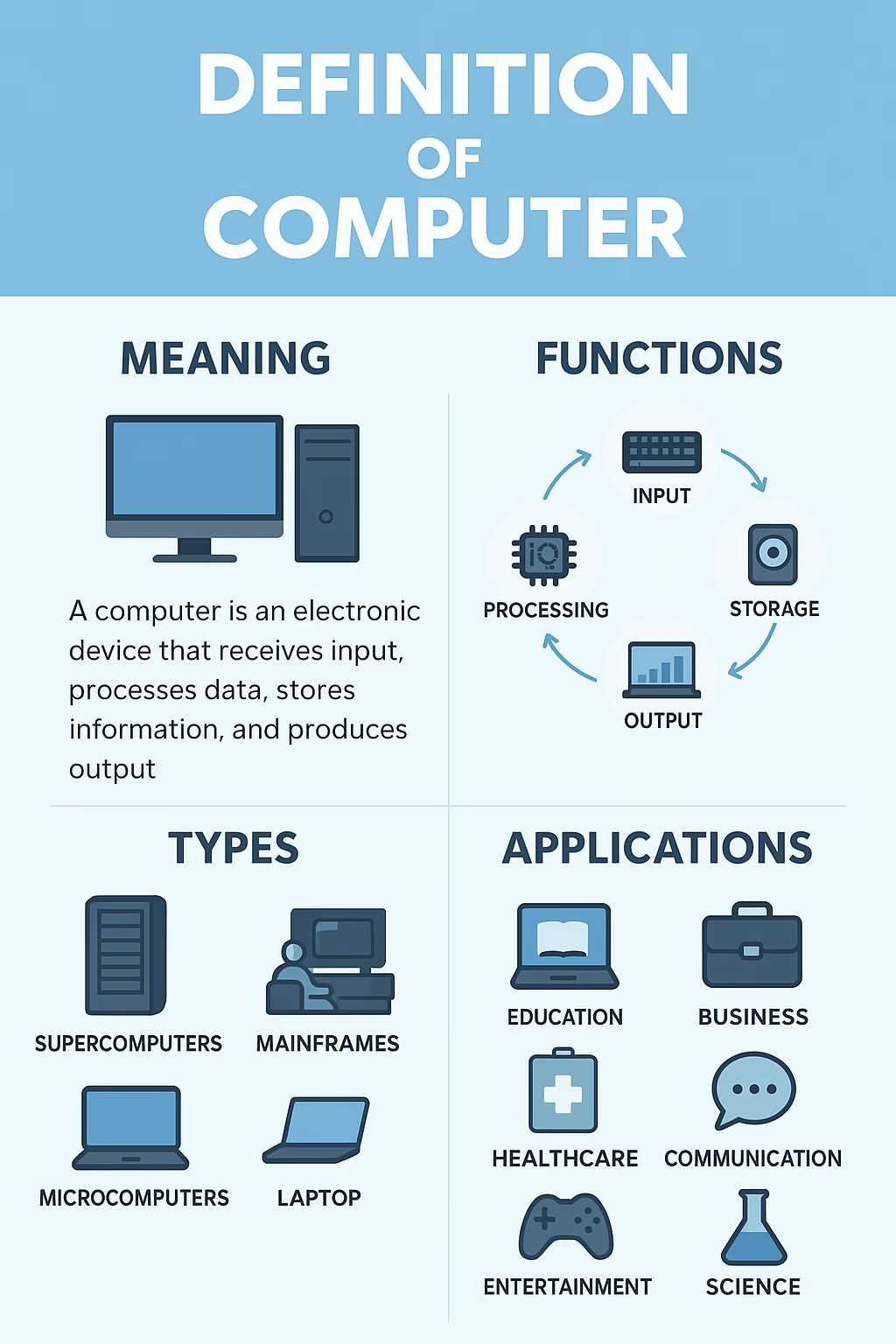
Benefits of Computers ~ Computers have become an inseparable part of modern human life. From simple daily tasks to complex scientific research, computers play a crucial role in improving efficiency, productivity, and connectivity. What was once a machine for calculations has now evolved into a powerful tool that shapes how we work, learn, and interact with the world.
In this article, we will explore the key benefits of computers, highlighting their impact on different areas such as education, business, healthcare, communication, and entertainment. Understanding these benefits will give us deeper insight into why computers are considered one of the most important inventions of the 20th and 21st centuries.
1. Benefits of Computers: Efficiency and Speed in Work
One of the most significant benefits of computers is their speed and efficiency. Tasks that once took hours or even days can now be completed within minutes. Whether it is processing financial transactions, analyzing data, or automating repetitive tasks, computers help businesses and individuals save valuable time.
For example, word processing software allows documents to be created, edited, and stored easily without the need for paper-based processes. Spreadsheets simplify calculations, while advanced software enables companies to manage operations more effectively.
Key Point: Computers transform time-consuming manual work into fast, automated, and accurate processes.
2. Education and Learning
The education sector has experienced revolutionary changes due to computers. Online learning platforms, virtual classrooms, and digital libraries make knowledge more accessible than ever before. Students can now learn at their own pace, access global resources, and even pursue higher education without leaving their homes.
Teachers also benefit from computers by using presentation software, simulation programs, and multimedia tools to make lessons more interactive and engaging. Additionally, research becomes easier with search engines and digital journals providing endless academic resources.
Example: During the COVID-19 pandemic, computers became the backbone of education, enabling students worldwide to continue learning remotely.
3. Business and Economic Growth
In the business world, computers are essential for growth and competitiveness. They are used for:
- Accounting and Finance – Accurate bookkeeping and financial analysis.
- Marketing – Digital marketing campaigns, social media, and customer analytics.
- Communication – Email, video conferencing, and instant messaging.
- Automation – Reducing manual labor and increasing productivity.
Small businesses benefit from affordable software, while large corporations rely on advanced computer systems to manage supply chains and global operations. E-commerce, for example, would not exist without computer technology.
Key Point: Computers drive economic development by helping businesses operate faster, smarter, and more efficiently.
4. Benefits of Computers: Healthcare and Medicine
Another major benefit of computers is their application in healthcare. From patient records to medical imaging, computers are integral to modern healthcare systems. Doctors and nurses use computers to store patient histories, track treatments, and analyze lab results.
Advanced computer systems also support diagnostic tools such as MRI and CT scans, which provide accurate images for better decision-making. Furthermore, telemedicine—powered by computers—allows patients to consult doctors remotely, increasing access to healthcare worldwide.
Example: Artificial intelligence (AI) in computers helps detect diseases like cancer at early stages, saving countless lives.
5. Communication and Connectivity
The way people communicate has drastically changed with the help of computers. Email, instant messaging, video calls, and social media platforms enable instant communication regardless of distance. Computers have eliminated geographical barriers, making global collaboration possible.
For businesses, this means faster decision-making and closer connections with international clients. For individuals, it means staying connected with friends and family across the globe.
Key Point: Computers have made the world a “global village” by improving human connection.
6. Entertainment and Creativity
Computers are not just about work—they also provide endless entertainment. People use computers to stream movies, listen to music, play games, and create digital art. Professional creators rely on advanced software for graphic design, video editing, and 3D modeling.
Gaming, one of the fastest-growing industries, thrives because of powerful computers that deliver high-quality experiences. In addition, platforms like YouTube and Spotify would not exist without computer technology.
Example: Computers empower independent musicians, filmmakers, and artists to share their work with global audiences.
7. Scientific Research and Innovation
Scientific advancements heavily depend on computers. From space exploration to climate modeling, computers handle massive amounts of data that humans cannot process manually.
For instance, researchers use supercomputers to simulate weather patterns, study genetic structures, and even design new medicines. Without computers, many modern scientific discoveries would not have been possible.
Key Point: Computers accelerate innovation by supporting research and experimentation.
8. Benefits of Computers: Personal Productivity and Daily Life
In daily life, computers simplify tasks such as budgeting, online shopping, and personal communication. People use computers to manage finances, plan schedules, and even control smart home devices.
Online banking and e-commerce platforms save time and reduce the need for physical presence, while productivity apps keep users organized. This shows how computers are integrated into nearly every aspect of our routines.


Conclusion
The benefits of computers are undeniable. They are powerful tools that enhance efficiency, education, business, healthcare, communication, creativity, and scientific research. Computers have transformed modern life, making tasks faster, simpler, and more accessible.
As technology continues to evolve, the role of computers will only expand further, shaping the future of humanity. Whether in personal use or professional environments, computers remain a cornerstone of progress.