

Automation Investment Cost Challenges ~ Automation has become one of the most transformative forces in modern industries, revolutionizing how businesses operate and compete in a rapidly changing market. From manufacturing plants to logistics, healthcare, and service sectors, automation brings undeniable advantages: higher efficiency, reduced errors, faster production, and improved safety. However, alongside these benefits comes one of the most pressing concerns for organizations considering automation adoption—the high initial investment cost.
This article explores the key challenges businesses face in automation investment, why these costs are significant, and what strategies can be used to overcome financial barriers while maximizing return on investment (ROI).
1. Understanding Automation and Its Rising Importance
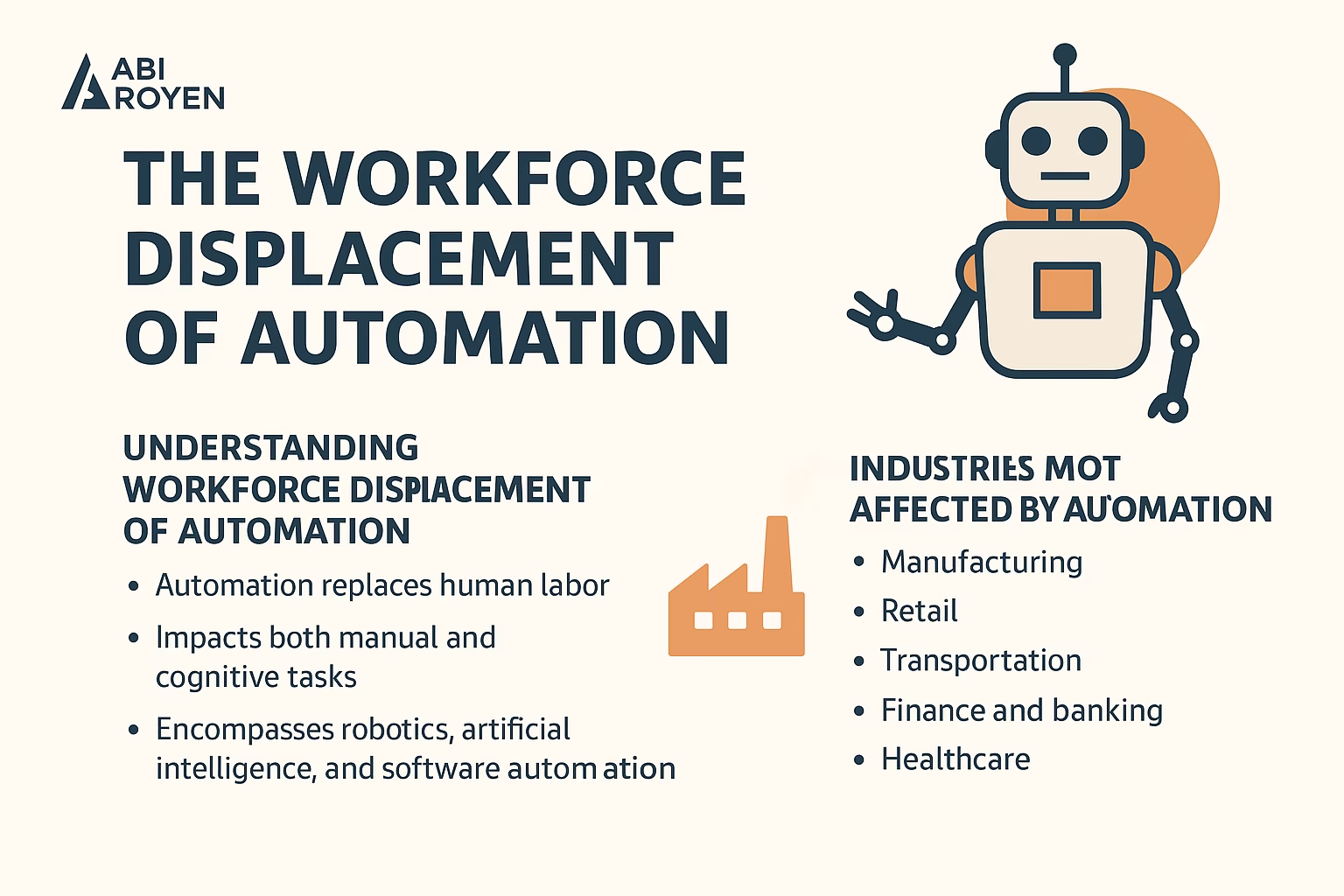
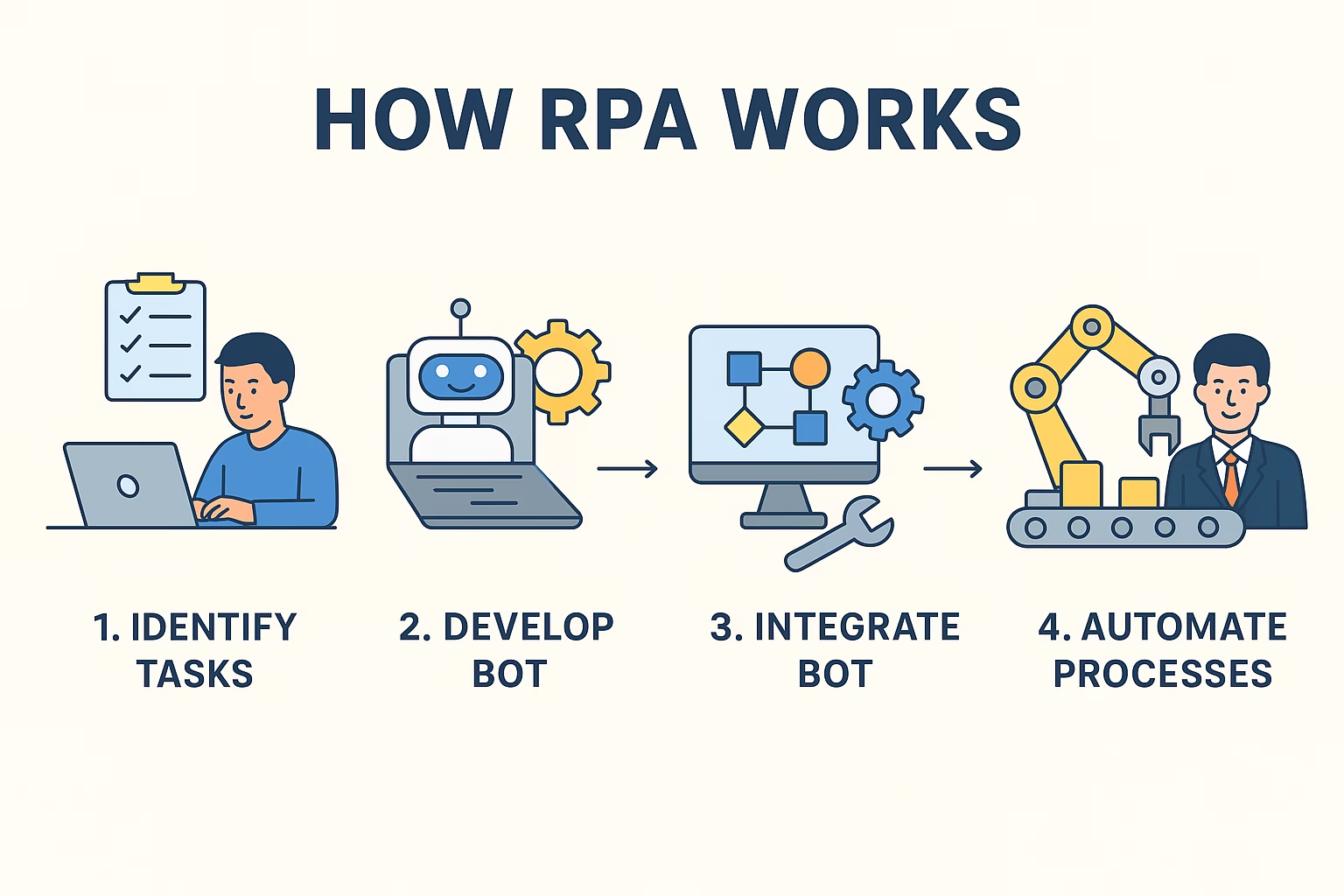
Automation refers to the application of technology to perform tasks with minimal human intervention. It includes robotics, artificial intelligence (AI), machine learning, control systems, and digital monitoring tools.
Industries worldwide are increasingly adopting automation to:
- Improve efficiency and output quality.
- Reduce dependency on manual labor.
- Enhance workplace safety.
- Lower long-term operational costs.
- Gain competitive advantage in global markets.
Yet, despite its long-term value, the initial costs involved often discourage small and medium-sized enterprises (SMEs) from implementing automation systems.
2. The Nature of Automation Investment Cost Challenges
Automation costs are not just about buying machines or robots. A comprehensive investment involves several factors, such as:
- Hardware and Equipment: Robotic arms, conveyor systems, sensors, and controllers.
- Software Solutions: AI platforms, machine learning models, and industrial monitoring systems.
- Installation and Integration: Setting up the system and ensuring compatibility with existing processes.
- Training and Workforce Development: Upskilling employees to manage and maintain automated systems.
- Maintenance and Upgrades: Regular servicing, software updates, and hardware replacements.
These costs can accumulate rapidly, especially for industries with complex operations, making automation appear as an intimidating financial commitment.
3. Key of Automation Investment Cost Challenges
a. High Initial Capital Expenditure
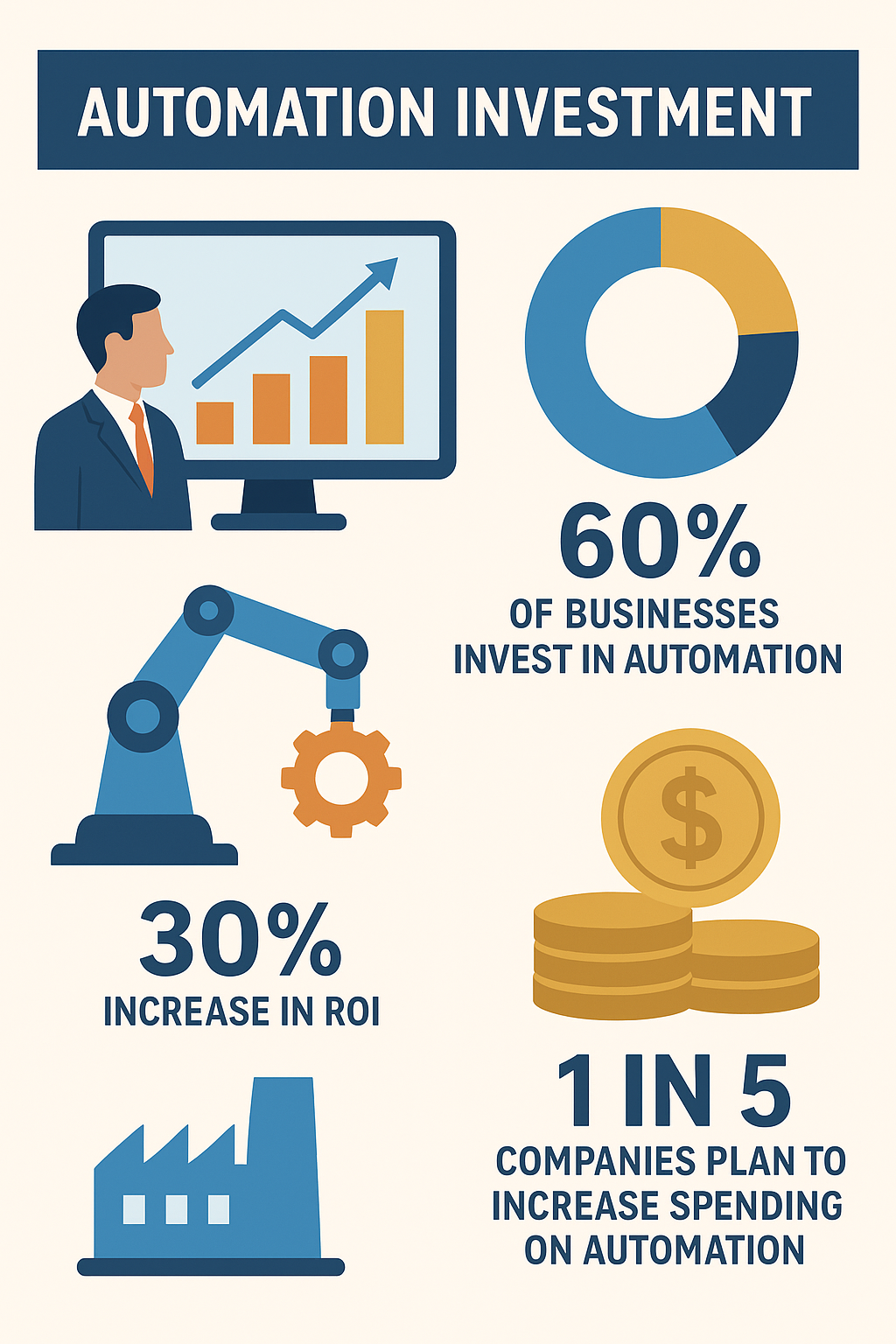
The upfront cost of automation is often the biggest barrier. For instance, purchasing industrial robots can cost anywhere from tens of thousands to hundreds of thousands of dollars. When combined with integration and setup expenses, the financial burden can be overwhelming.
b. Long Payback Periods
Automation systems do not always generate instant returns. Depending on the scale of investment, businesses may wait several years to achieve positive ROI. For companies with tight budgets, this waiting period can be risky.
c. Hidden Costs
Beyond the purchase price, hidden costs such as staff retraining, downtime during implementation, and unexpected technical issues can increase total expenses significantly.
d. Uncertainty in ROI
Market changes, technology obsolescence, or shifting customer demands can make ROI calculations less predictable. Businesses may hesitate to invest if they are unsure about long-term gains.
e. Financing Limitations for SMEs
While large corporations may allocate sufficient funds, small and medium enterprises often struggle to secure financing, loans, or government grants for automation projects.
4. The Long-Term Benefits of Automation
Despite the challenges, it’s crucial to consider the long-term perspective. Automation provides substantial returns that often outweigh the initial costs.
- Reduced Operational Costs: Lower labor expenses and improved efficiency.
- Consistent Quality: Automation reduces human errors, ensuring uniform output.
- Scalability: Automated systems can easily adjust to increased demand.
- Workplace Safety: Reduces risks in hazardous environments.
- Data-Driven Insights: Smart automation collects and analyzes data, helping improve decision-making.
Over time, these advantages enable companies to stay competitive and achieve sustainable growth.
5. Strategies to Overcome Automation Investment Cost Challenges
a. Start Small and Scale Gradually
Instead of automating entire operations at once, businesses can begin with smaller processes that deliver quick wins. This approach reduces risk and allows companies to reinvest savings into further automation.
b. Leverage Government Incentives and Grants
Many governments encourage digital transformation by offering subsidies, tax benefits, or low-interest loans for automation projects. Companies should explore these opportunities to ease financial pressure.
c. Focus on ROI-Driven Investments
Prioritize automation in areas with the highest potential savings or productivity gains. This ensures faster payback periods and builds confidence for future investments.
d. Use Leasing or Subscription Models
Some automation providers offer equipment leasing or “automation as a service” models. These flexible options reduce upfront costs and spread expenses over time.
e. Collaborate with Technology Partners
Partnerships with technology providers can help companies design customized automation solutions that are cost-effective and scalable.
f. Upskill the Workforce
Training employees to handle new technology minimizes errors, downtime, and reliance on external support—reducing long-term expenses.

6. Real-World Examples of Overcoming Automation Investment Cost Challenges
- Automotive Industry: Many car manufacturers started with partial automation in assembly lines before scaling up to fully automated production plants.
- Food Processing: Small food companies adopted automation in packaging before expanding to production systems.
- Healthcare: Hospitals initially invested in automated lab testing systems, which later led to broader applications in surgery and patient monitoring.
These examples highlight how a step-by-step approach can balance costs with tangible results.
7. The Future of Automation and Investment Trends
The cost of automation is expected to decrease as technology advances. AI-driven robotics, cloud-based solutions, and modular automation systems are becoming more affordable and accessible. Moreover, as competition increases among technology providers, businesses will benefit from lower pricing and innovative financing models.
Sectors such as logistics, retail, and healthcare are projected to experience rapid automation adoption in the coming years, driven by demand for efficiency and cost reduction. Businesses that plan strategically for automation now will be better positioned for future success.
Conclusion of Automation Investment Cost Challenges
The challenges of automation investment costs are real and significant, but they should not overshadow the long-term benefits that automation provides. By adopting strategic approaches—such as starting small, leveraging incentives, focusing on ROI, and exploring flexible financing—businesses can successfully overcome financial barriers.
Ultimately, automation is not just an expense; it is a strategic investment that ensures long-term competitiveness, resilience, and growth in a technology-driven world.