Introduction of Applications Basic Concepts Electricity
Electricity is one of the most fundamental forces shaping our modern world. From the light bulbs in our homes to the complex data centers powering the internet, electricity serves as the backbone of technological progress. Understanding the Applications Basic Concepts Electricity can help us appreciate not only how dependent society is on this invisible force but also how it continues to evolve.
This article explores the foundational principles of electricity, followed by a deep dive into its everyday, industrial, medical, and future-oriented applications.
Applications Basic Concepts Electricity
Before exploring applications, it is essential to understand what electricity is and how it works.
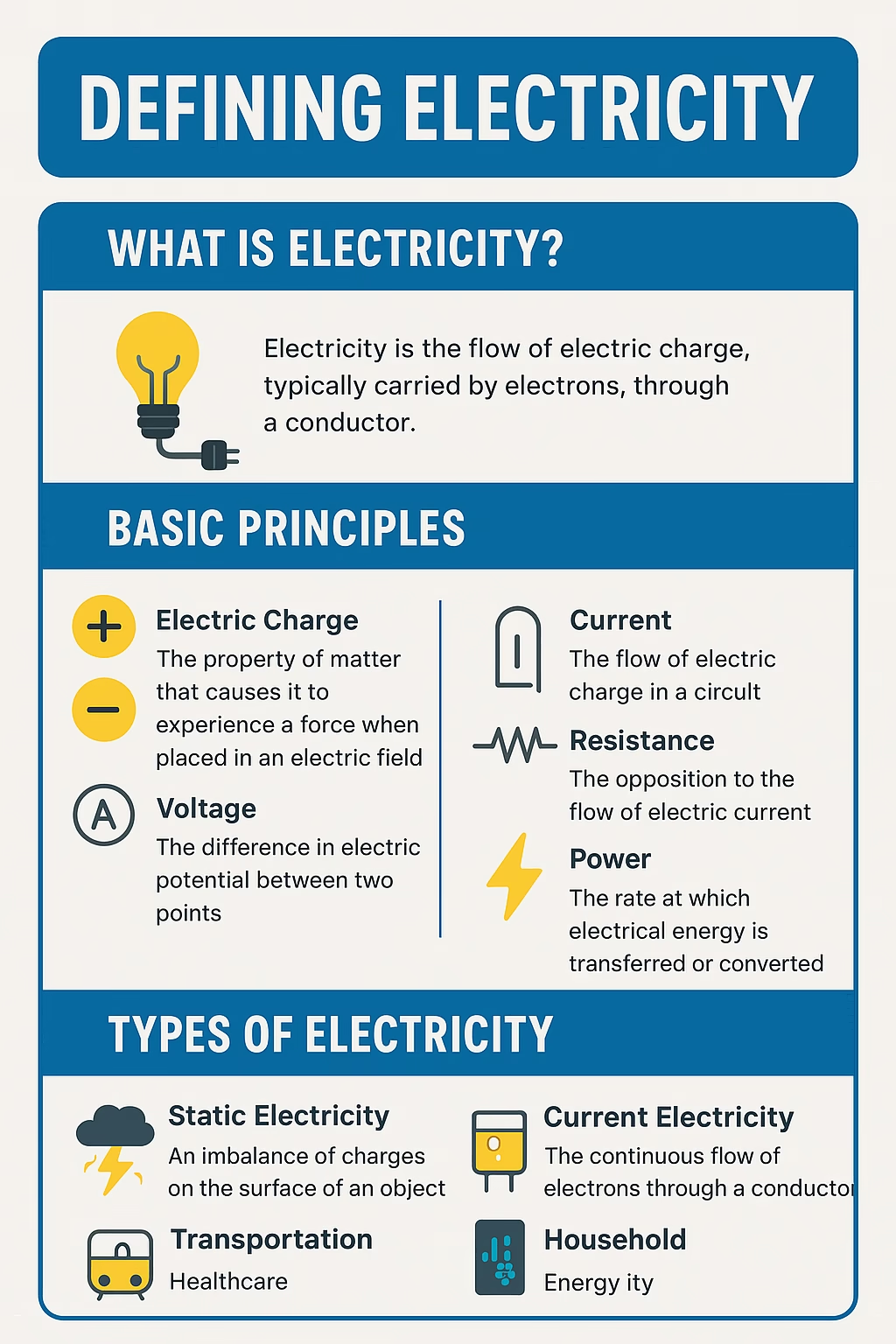
1. Definition of Electricity
Electricity is the flow of electric charge, typically carried by electrons through a conductor such as copper wire. It can be generated, stored, and used to perform work, such as powering machines or lighting a room.
2. Current, Voltage, and Resistance
- Current (I): The flow of electric charge measured in amperes (A).
- Voltage (V): The potential difference between two points, measured in volts (V).
- Resistance (R): The opposition to current flow, measured in ohms (Ω).
Ohm’s Law describes their relationship:
V = I × R
3. Types of Current
- Direct Current (DC): Current flows in one direction only (e.g., batteries).
- Alternating Current (AC): Current changes direction periodically (e.g., household electricity).
4. Power and Energy
- Power (P): The rate of electrical energy consumption, measured in watts (W).
- Energy (E): The total electrical work done, measured in kilowatt-hours (kWh).
These concepts form the foundation for all electrical applications.
Applications of Electricity
Electricity is everywhere. Its applications can be broadly categorized into different fields:
1. Domestic Applications
Electricity revolutionized home life by making it safer, more efficient, and more comfortable.
- Lighting: Electric bulbs, LEDs, and smart lighting systems.
- Heating & Cooling: Electric stoves, water heaters, air conditioners, and refrigerators.
- Entertainment: Televisions, computers, gaming consoles, and audio systems.
- Smart Homes: IoT-enabled devices such as smart thermostats, cameras, and voice-controlled assistants.
2. Industrial Applications
Factories and industries rely heavily on electricity for production and automation.
- Machinery: Electric motors drive conveyor belts, pumps, compressors, and robots.
- Manufacturing: Welding, electroplating, and CNC machines.
- Automation & Robotics: Advanced control systems powered by electricity enhance productivity.
- Data Centers: Servers and cloud computing infrastructure run on stable electricity.
3. Medical Applications
Modern healthcare depends on reliable electricity.
- Medical Equipment: MRI machines, X-rays, ultrasound scanners, and ventilators.
- Surgical Tools: Electrically powered instruments for precision operations.
- Patient Monitoring: ECG, blood pressure monitors, and life-support systems.
- Telemedicine: Electricity enables global healthcare connectivity.
4. Transportation Applications
Electricity is reshaping how people and goods move.
- Electric Vehicles (EVs): Cars, buses, and bikes powered by rechargeable batteries.
- Railways: Electric locomotives and metro systems reduce emissions.
- Aviation: Research into electric planes and hybrid aircraft.
- Shipping: Electrified propulsion systems for cleaner marine transport.
5. Communication Applications
Without electricity, modern communication would collapse.
- Telecommunications: Mobile networks, satellite systems, and broadband rely on electricity.
- Internet Infrastructure: Servers, routers, and fiber optic equipment all need stable power.
- Broadcasting: Television and radio transmission powered by electricity.
6. Agricultural Applications
Electricity has modernized agriculture, increasing food production.
- Irrigation Systems: Electrically powered pumps.
- Processing & Storage: Refrigeration and milling machines.
- Smart Farming: Sensors, drones, and automation for precision agriculture.
7. Renewable Energy Applications
Electricity is central to the renewable energy revolution.
- Solar Power: Solar panels convert sunlight into electricity.
- Wind Power: Wind turbines generate clean electricity.
- Hydroelectric Power: Dams and turbines harness water flow.
- Energy Storage: Batteries and supercapacitors store renewable energy.


Future of Electricity Applications
The applications of electricity continue to expand with technological advancements. Some emerging areas include:
- Artificial Intelligence (AI) & Automation: Powering data centers and intelligent machines.
- Smart Grids: Enhancing efficiency, reliability, and integration of renewables.
- Wireless Power Transmission: Charging devices without cables.
- Quantum Computing: Requires stable electrical systems to operate.
The future promises cleaner, smarter, and more efficient ways to use electricity.
Conclusion of Applications Basic Concepts Electricity
Electricity is not just a utility; it is the foundation of modern civilization. Understanding its basic concepts helps us appreciate its role, while exploring its applications shows how deeply embedded it is in every aspect of life—from homes and industries to healthcare and renewable energy.
As technology advances, electricity will remain a driving force shaping our future. Investing in knowledge and sustainable applications ensures that this powerful energy continues to benefit humanity in more efficient and eco-friendly ways.