Introduction of Advantages of using ICs
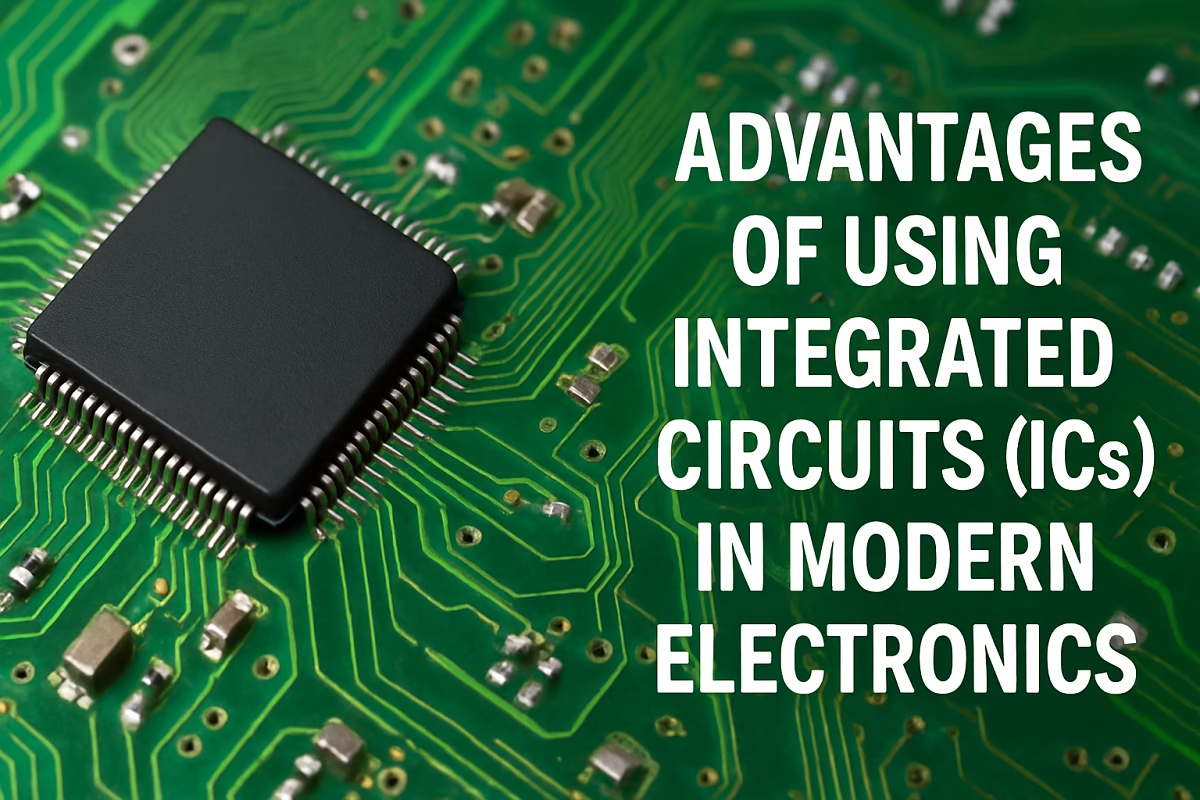
Advantages of using ICs ~ Integrated Circuits (ICs) have become the backbone of modern electronics. From smartphones and computers to industrial machines and medical equipment, ICs play a critical role in shaping the way technology operates. Before ICs were developed, electronic devices were built using individual components such as transistors, resistors, and capacitors wired together manually. This approach not only required significant physical space but also limited the efficiency and reliability of devices.
The invention of ICs revolutionized the electronics industry by combining multiple components into a single small chip. Today, they provide countless advantages in terms of size, cost, performance, and durability. This article will explore in depth the advantages of using Integrated Circuits (ICs) and why they are indispensable in modern technology.

1. Advantages of using ICs: Miniaturization of Devices
One of the biggest advantages of ICs is miniaturization. Since ICs can integrate thousands or even millions of components on a single chip, devices can be made significantly smaller. This is the reason why smartphones today are thinner, lighter, and more powerful compared to computers that once filled entire rooms in the 1950s.
- Compact design allows more functions to be embedded in a single device.
- Miniaturization improves portability and user convenience.
- Enables the development of wearable technology such as smartwatches and medical implants.
2. Cost Efficiency
ICs are mass-produced using semiconductor fabrication processes, making them affordable and widely available. Manufacturing individual transistors and wiring them together would be extremely expensive and time-consuming.
- Economies of scale reduce the production cost per unit.
- Affordable components encourage innovation and rapid product development.
- ICs make consumer electronics accessible to millions of people worldwide.
3. Advantages of using ICs: High Reliability
Traditional electronic circuits with discrete components often suffered from wiring errors, loose connections, and component failures. ICs, on the other hand, are built using photolithography techniques with all components encapsulated on a single chip.
- Fewer soldered joints reduce the chance of mechanical failure.
- ICs are designed to be robust and long-lasting.
- Enhanced reliability ensures that devices like medical instruments and aerospace systems perform without errors.
4. Improved Performance and Speed
Another critical advantage of ICs is higher performance. Since all components are fabricated on a single semiconductor substrate, the electrical path between them is extremely short.
- Reduced signal transmission time leads to faster processing speeds.
- Lower power consumption compared to discrete circuits.
- Essential for high-speed computing, telecommunications, and data processing.
5. Advantages of using ICs: Low Power Consumption
Modern ICs are designed to consume very little power, making them ideal for battery-operated devices.
- Critical for smartphones, laptops, and IoT devices that require long battery life.
- Reduces heat generation, improving device efficiency.
- Contributes to sustainable and energy-efficient technologies.
6. Versatility in Applications
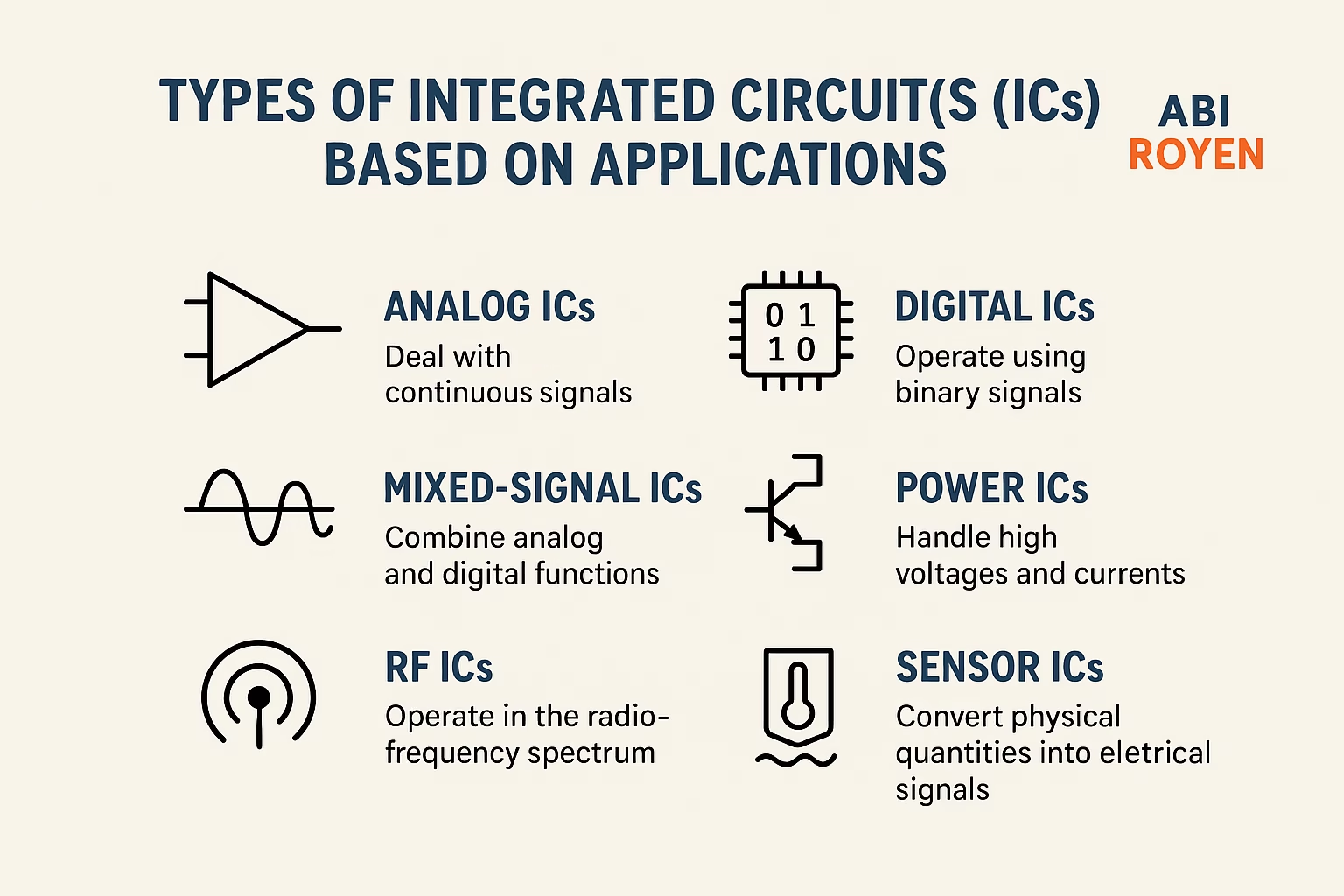
ICs come in many types and can be customized for specific applications. Whether analog, digital, or mixed-signal, ICs are versatile enough to be used across industries.
- Consumer electronics: smartphones, TVs, audio systems.
- Industrial automation: robotics, sensors, and controllers.
- Medical technology: pacemakers, diagnostic equipment.
- Military and aerospace: navigation systems, communication devices.
This flexibility makes ICs a cornerstone of nearly every field of technology.
7. Advantages of using ICs: Space and Weight Savings
By integrating multiple functions into a single chip, ICs reduce the need for bulky components.
- Lighter and smaller devices are easier to handle and transport.
- Space savings are crucial in industries like aerospace and satellites, where every gram counts.
8. Scalability and Integration
With advances in semiconductor manufacturing, ICs can now integrate millions to billions of transistors on a single chip (as seen in modern microprocessors).
- Allows the development of high-performance processors and memory chips.
- Enables system-on-chip (SoC) solutions that integrate CPU, GPU, and other functions in one package.
- Supports the growing demand for Artificial Intelligence (AI) and machine learning applications.
9. Advantages of using ICs: Consistency in Mass Production
ICs ensure uniform performance across thousands or millions of units. Unlike manually assembled circuits, which may have variations, ICs are produced under strict manufacturing standards.
- Ensures quality control in consumer and industrial products.
- Reduces the risk of device malfunction due to component differences.
10. Support for Advanced Technologies
Integrated Circuits are not just passive components—they are enabling the future of technology.
- ICs make possible innovations like 5G communication, autonomous vehicles, and quantum computing research.
- Support the Internet of Things (IoT), allowing devices to connect and communicate seamlessly.
- Provide the foundation for renewable energy systems and smart grids.
Conclusion of Advantages of using ICs
The advantages of using Integrated Circuits (ICs) are undeniable. They have transformed electronics from bulky, unreliable systems into powerful, compact, and energy-efficient devices that shape our daily lives. With continuous advancements in semiconductor technology, ICs will only become more powerful, versatile, and essential in the coming years.
Whether it is in consumer electronics, industrial automation, or cutting-edge research, ICs remain the cornerstone of modern innovation. Understanding their advantages not only highlights their importance but also gives us a glimpse into the limitless possibilities of technology in the future.