Introduction of Applications of Thyristors
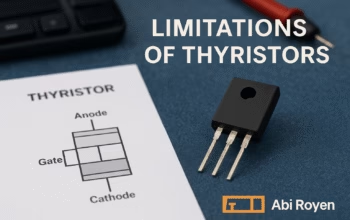
Applications of Thyristors ~ In the ever-evolving world of power electronics, one component stands out for its durability and versatility: the thyristor. A thyristor, also known as a Silicon Controlled Rectifier (SCR), is a semiconductor device used to control large amounts of current and voltage with minimal effort. Since its introduction in the 1950s, thyristors have become an essential part of electrical engineering, playing a vital role in industries ranging from energy conversion to motor control.
This article explores the applications of thyristors, focusing on how they are used in various electronic and power systems, and why they remain a cornerstone in modern technology.

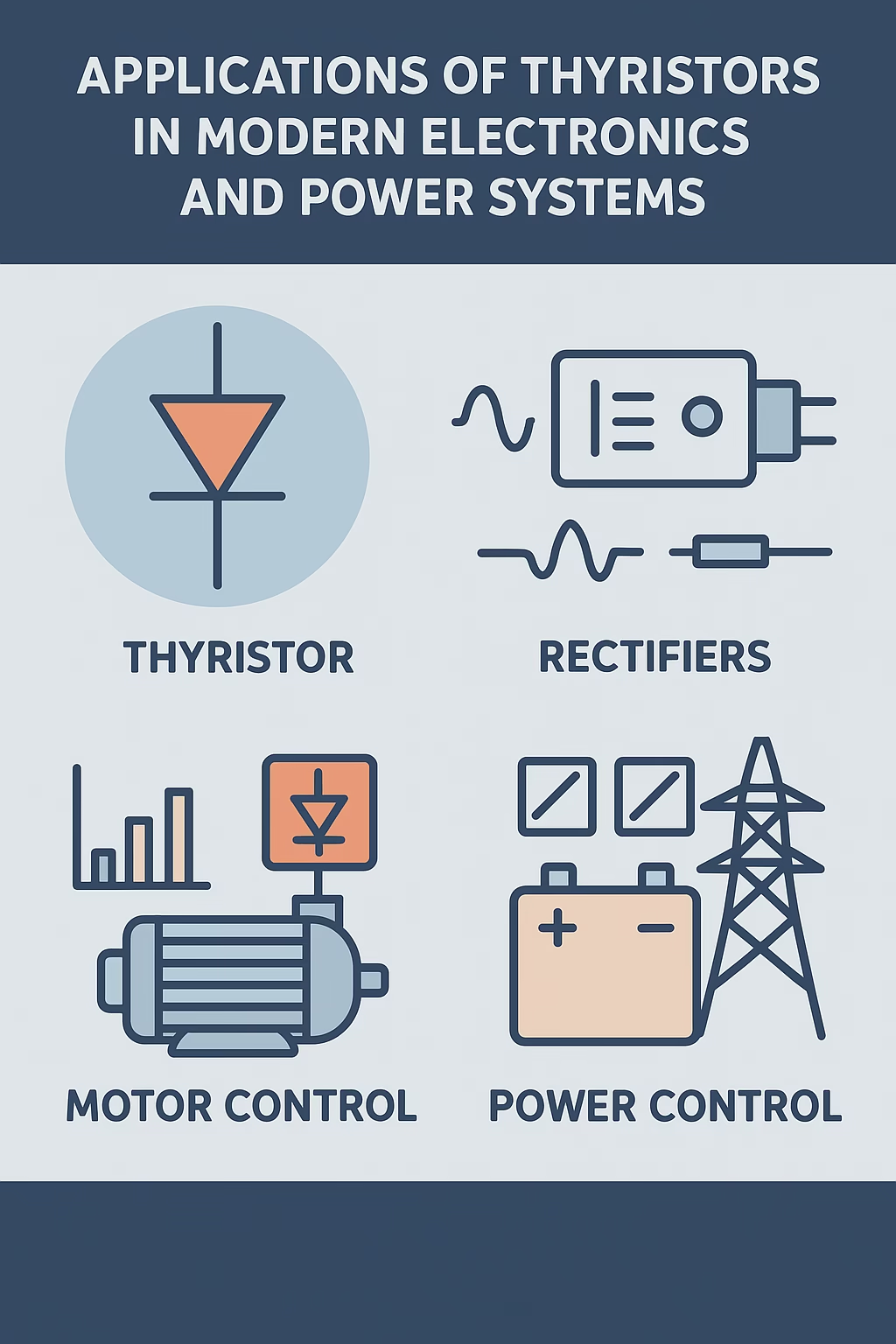
1. Applications of Thyristors as Power Control and Regulation
One of the most common applications of thyristors is in power control systems. Thyristors can handle high voltages and currents, making them ideal for regulating power in industrial and domestic equipment.
- AC Power Control: Thyristors are widely used in dimmer switches for lights, heater controls, and fans. By adjusting the firing angle, the device can control how much current passes through the load.
- Voltage Regulation: In industrial applications, thyristors stabilize voltage in systems where power fluctuations could damage sensitive equipment.
2. Rectifiers and AC to DC Conversion
Thyristors are often used in controlled rectifiers, converting Alternating Current (AC) into Direct Current (DC). Unlike traditional diodes, thyristors allow for controlled rectification by adjusting the conduction angle.
- Industrial Power Supplies: Many factories and plants use thyristor-based rectifiers to run DC motors and electrolysis processes.
- Battery Charging Systems: Thyristors are used in controlled charging circuits for large batteries, ensuring efficient and safe charging.
3. Applications of Thyristors as Motor Speed Control
One of the most valuable applications of thyristors is in motor speed control. Industries rely heavily on motors, and controlling their speed efficiently is crucial.
- DC Motor Drives: Thyristors provide smooth and precise control of DC motors, widely used in rolling mills, paper manufacturing, and conveyor systems.
- AC Motor Control: With phase-control techniques, thyristors help adjust the speed of AC induction motors in industrial and commercial applications.
4. Inverters and Converters
Thyristors are also fundamental in inverter circuits, which convert DC power back into AC. This application is crucial in renewable energy and UPS (Uninterruptible Power Supply) systems.
- Renewable Energy Systems: Solar and wind power systems use thyristor-based inverters to integrate generated power into the electrical grid.
- UPS Systems: Thyristors ensure reliable power conversion in UPS devices, providing backup power during outages.
5. Applications of Thyristors as Overvoltage and Protection Circuits
Protection is another key area where thyristors are applied.
- Crowbar Circuits: Thyristors are used in crowbar protection to prevent overvoltage conditions. When excess voltage occurs, the thyristor triggers, short-circuiting the supply and protecting sensitive equipment.
- Circuit Breakers: Solid-state circuit breakers use thyristors for fast switching and reliable protection in power systems.
6. Light Dimmers and Heating Control
In consumer electronics, thyristors are used in light dimming circuits and temperature control systems.
- Light Dimmers: By controlling the conduction angle, thyristors adjust brightness without significant power loss.
- Heating Elements: Electric stoves, furnaces, and industrial heaters use thyristor-based controllers for precise heat regulation.
7. Applications of Thyristors in Industrial Automation Systems
Modern industries depend on automation, and thyristors play a vital role in controlling power and motion.
- Programmable Controllers: Thyristors are used in programmable automation systems where controlled power delivery is essential.
- Welding Equipment: Industrial welding systems use thyristor-based power supplies to regulate current during the welding process.
8. Traction and Railway Systems
Thyristors have revolutionized railway traction systems. They control power in electric trains, ensuring efficient acceleration, braking, and speed regulation.
- DC Traction Motors: Thyristor converters supply controlled DC power to traction motors in electric locomotives.
- Regenerative Braking: Thyristors help feed excess energy back into the grid during braking, improving efficiency.
9. Applications of Thyristors in High-Voltage DC (HVDC) Transmission
One of the most advanced applications of thyristors is in HVDC transmission systems. HVDC technology is used to transmit power over long distances with minimal losses.
- Line-Commutated Converters (LCC): Thyristors are the backbone of LCC systems, which are widely used in HVDC power lines.
- Renewable Integration: Thyristors enable efficient long-distance transmission of renewable energy from remote solar or wind farms.
10. Induction Heating and Static Switches
- Induction Heating: Thyristors provide controlled high-frequency current for induction furnaces, used in steel production and metal processing.
- Static Switches: Thyristors act as static relays or switches in industrial applications where high-speed switching is needed.
Advantages of Thyristor Applications
The popularity of thyristors in these applications comes from their distinct advantages:
- High power handling capacity
- Compact and robust design
- Fast switching speed
- Low maintenance compared to mechanical switches
- Energy-efficient operation
Future Applications of Thyristors
With the rise of smart grids, renewable energy, and electric vehicles, thyristors will continue to evolve. Newer versions like Gate Turn-Off Thyristors (GTOs) and Insulated Gate Bipolar Thyristors (IGBTs) are extending their applications into modern high-power and high-frequency domains.
Conclusion
Thyristors have proven themselves indispensable in modern power electronics. From motor control and power conversion to industrial automation and HVDC transmission, their applications span across industries, ensuring efficiency, reliability, and sustainability.
As technology advances, thyristors will remain at the forefront of power control solutions, particularly in renewable energy integration and smart electrical systems.
For anyone involved in electronics engineering, industrial automation, or power systems, understanding the applications of thyristors is crucial for designing efficient and future-ready systems.