In the vast field of electronics, components are typically classified into two categories: passive and active components. While passive components such as resistors and capacitors can only store or dissipate energy, active electronic components are capable of controlling the flow of electrical current, amplifying signals, and performing logic operations. These components are essential in modern electronic circuits, powering everything from mobile phones to advanced computing systems.
This article provides a comprehensive guide to active electronic components, including their types, functions, characteristics, and real-world applications.
🔌 What Are Active Electronic Components?
Active electronic components are devices that require an external source of power to operate and are able to inject power into a circuit. Unlike passive components, active components can control electric current flow and provide power gain. They are the building blocks of modern digital and analog systems.
These components are generally made from semiconductor materials, most commonly silicon and germanium.
⚙️ Key Characteristics of Active Electronic Components
- Require external power source to function
- Amplify or switch electrical signals
- Non-linear in nature
- Can generate energy, not just store or dissipate it
- Typically made using semiconductor technology
🔧 Common Types of Active Electronic Components
1. Transistors
Transistors are the most critical and widely used active components in modern electronics. They are used to amplify signals and act as electronic switches.
- Types of transistors:
- Bipolar Junction Transistors (BJT): Suitable for amplification applications
- Field Effect Transistors (FET): Used for high input impedance and switching
- MOSFETs (Metal-Oxide-Semiconductor FET): Widely used in digital circuits and power electronics
Applications:
- Signal amplification
- Switching regulators
- Oscillators
- Logic gates
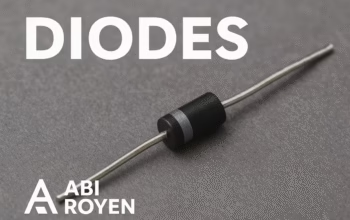
2. Diodes
Although often misunderstood as passive, diodes are active components due to their non-linear behavior and ability to control current flow direction.
- Types of diodes:
- PN Junction Diode
- Zener Diode (for voltage regulation)
- Schottky Diode (for fast switching)
- Light Emitting Diode (LED)
Applications:
- Rectifiers
- Voltage regulation
- Signal demodulation
- LED lighting
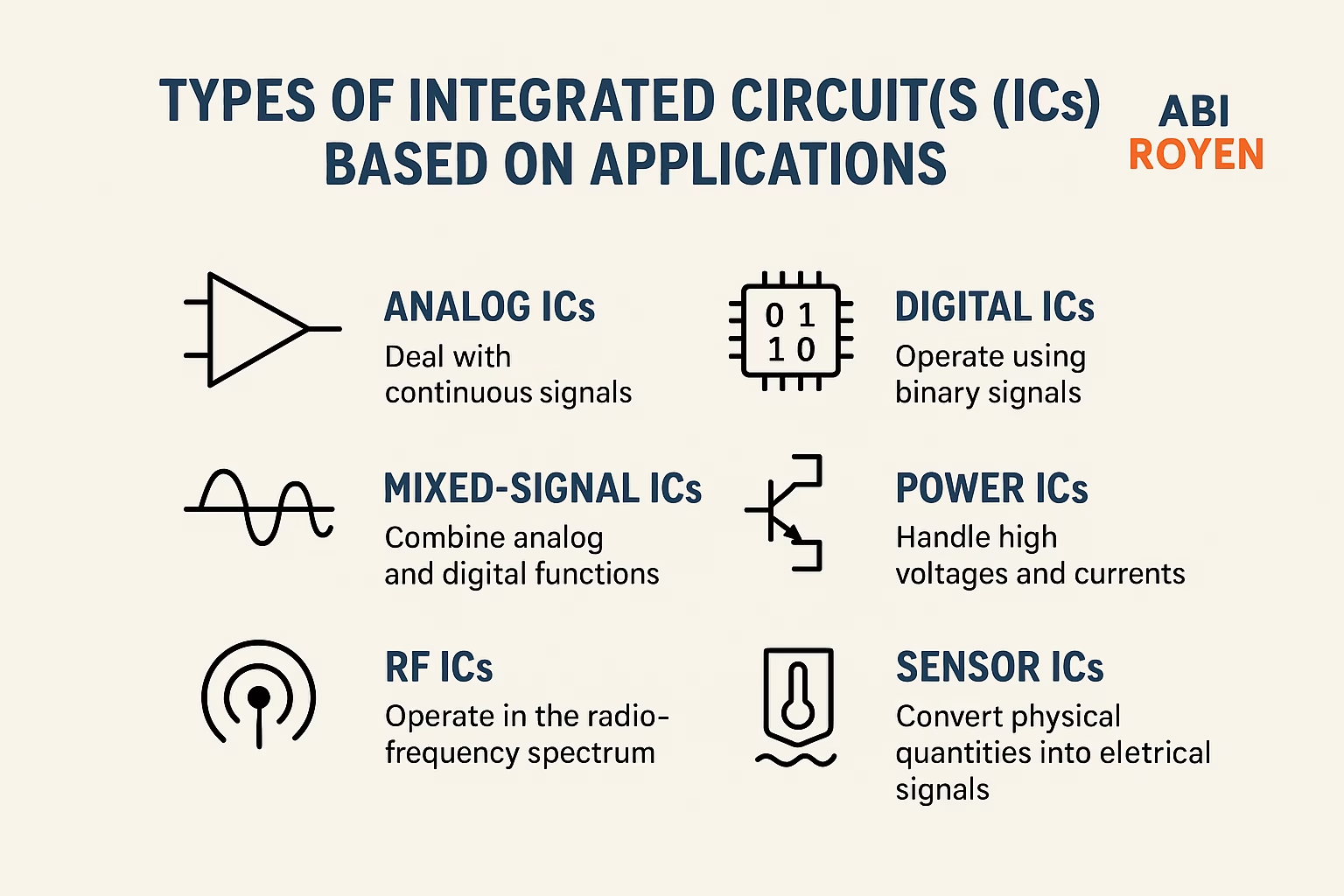
3. Integrated Circuits (ICs)
Integrated Circuits are complex active devices that combine multiple transistors, resistors, capacitors, and other components onto a single semiconductor chip.
- Types of ICs:
- Analog ICs (e.g., amplifiers, voltage regulators)
- Digital ICs (e.g., microprocessors, memory chips)
- Mixed-signal ICs (combine analog and digital functionalities)
Applications:
- Microcontrollers
- Signal processing
- Embedded systems
- Control systems
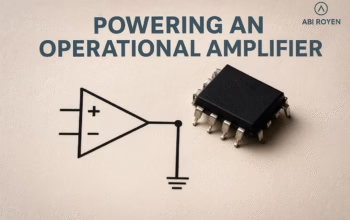
4. Operational Amplifiers (Op-Amps)
Operational amplifiers are versatile active devices used primarily for amplification, signal conditioning, and mathematical operations.
Applications:
- Audio preamplifiers
- Analog filters
- Voltage comparators
- Sensing circuits
5. Power Electronics Devices
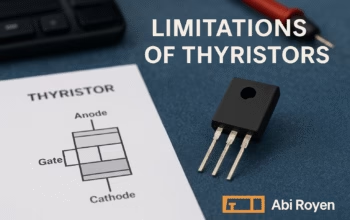
This category includes active components like IGBTs (Insulated Gate Bipolar Transistors) and SCRs (Silicon Controlled Rectifiers) which are used in high power applications.
Applications:
- Motor drives
- Power inverters
- High-voltage AC/DC conversion
🧠 Functions and Roles in Electronic Circuits
Active components play crucial roles in electronic system design, such as:
- Signal Amplification
Amplify weak signals in audio, RF, or sensor applications. - Switching
Turn on/off circuits electronically in microcontrollers or power supplies. - Voltage Regulation
Maintain stable voltage levels using ICs or Zener diodes. - Energy Conversion
Convert AC to DC or DC to different voltage levels. - Logic & Computing
Build logic gates, microprocessors, and memory units.


🏭 Real-World Applications of Active Electronic Components
| Industry | Applications |
|---|---|
| Consumer Electronics | Mobile phones, laptops, televisions, wearables |
| Automotive | Engine control units, infotainment, ADAS systems |
| Industrial | Automation systems, PLCs, power converters |
| Aerospace | Navigation systems, satellite electronics, communication |
| Healthcare | Diagnostic devices, patient monitors, imaging systems |
🔍 Differences Between Active and Passive Components
| Feature | Active Components | Passive Components |
|---|---|---|
| Power Source | Requires external power | No power required |
| Signal Amplification | Yes | No |
| Energy Generation | Can generate energy | Cannot generate energy |
| Examples | Transistor, IC, Diode | Resistor, Capacitor, Inductor |
📈 Future Trends in Active Electronic Components Development
With the rise of IoT, AI, and green energy, the demand for advanced active components is growing rapidly. Trends include:
- Miniaturization of ICs
- Low-power semiconductor devices
- Wide Bandgap materials like GaN and SiC for high-power efficiency
- Integration with flexible electronics
- Use in quantum computing and neuromorphic processors
💡 Tips for Selecting Active Electronic Components
- Define the Application – Understand whether you need switching, amplification, or logic control.
- Check Voltage & Current Ratings – Ensure compatibility with your circuit.
- Evaluate Power Dissipation – Prevent overheating or failure.
- Consider Package Type – Choose between SMD and through-hole based on assembly needs.
- Refer to Manufacturer Datasheets – Always validate specs and tolerances.
🧰 Recommended Tools and Resources
- LTspice – For simulating circuits with active components
- Datasheet Archive – For component specifications
- Digikey / Mouser – For component sourcing
- KiCad / Eagle – For PCB design using active elements
🧾 Conclusion of Active Electronic Components
Active electronic components are at the heart of today’s electronic systems. From simple transistor-based amplifiers to complex microprocessors, these components enable innovation across every industry. Whether you’re an electronics enthusiast or a professional engineer, understanding how these components work—and how to choose them—will help you build smarter, more efficient, and more powerful electronic solutions.
For more insights and technical guides, be sure to explore other articles on Abi Royen, your trusted source for electronics knowledge.