Power Electronics Devices is a fundamental field in electrical engineering that deals with the control and conversion of electric power using electronic devices. As global demand for energy-efficient solutions continues to grow—especially in the renewable energy, automotive, and industrial automation sectors—power electronics devices are playing an increasingly critical role in modern technology.
In this article, we’ll explore what power electronics devices are, their main types, how they work, where they are used, and what the future holds for this vital area of engineering.
🔌 What Are Power Electronics Devices?
Power electronics devices are components or systems that process and control the flow of electrical energy by converting it from one form to another using semiconductor-based switches. These devices work efficiently over a wide range of power levels, from milliwatts to megawatts, and are essential for regulating voltage, current, and frequency in various electronic systems.
Unlike traditional electrical devices, which handle power in a linear fashion, power electronics devices utilize switching techniques that allow for higher efficiency and greater control.
⚙️ How Do Power Electronics Devices Work?
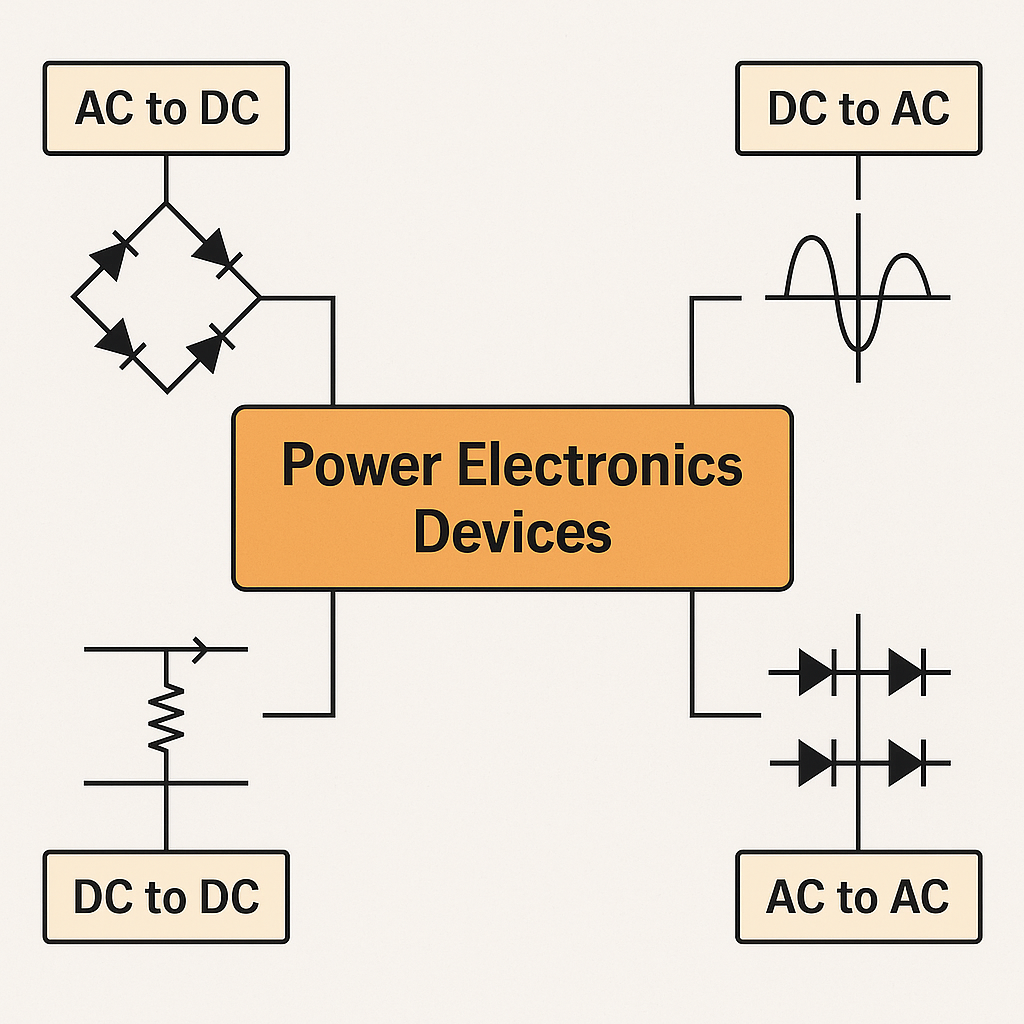
Power electronics operate based on switching principles. Semiconductor devices such as diodes, thyristors, MOSFETs, and IGBTs act as fast-acting switches that turn on and off rapidly to control the flow of electricity. This switching behavior allows the conversion of electric power from:
- AC to DC (Rectifiers)
- DC to AC (Inverters)
- DC to DC (Choppers)
- AC to AC (Cycloconverters)
By using these conversion techniques, power electronics systems can match the power supply characteristics to the needs of specific loads, improving efficiency and performance.
🔍 Types of Power Electronics Devices
Power electronics devices can be broadly categorized into passive components and active semiconductor devices.
1. Passive Components
- Inductors: Store energy in magnetic fields.
- Capacitors: Store energy in electric fields.
- Transformers: Convert voltage levels in AC circuits.
2. Active Semiconductor Devices
These are the core of power electronics systems and include:
➤ Diodes
- Unidirectional current flow
- Used in rectifiers and voltage clamping
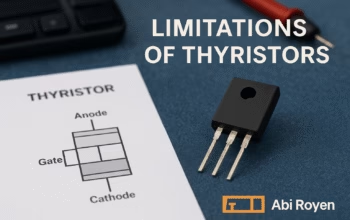
➤ Thyristors (SCRs)
- High-voltage, high-current applications
- Common in motor control and industrial AC power
➤ Bipolar Junction Transistors (BJTs)
- Used in analog switching and amplification
➤ MOSFETs (Metal-Oxide-Semiconductor Field-Effect Transistors)
- Fast switching and efficient at low voltages
- Ideal for DC-DC converters and low-power inverters
➤ IGBTs (Insulated Gate Bipolar Transistors)
- Combines BJT and MOSFET advantages
- Preferred for medium to high-power applications
🌍 Applications of Power Electronics Devices
Power electronics devices are integral to almost every modern electrical system. Some key application areas include:
🔋 1. Renewable Energy Systems
- Solar inverters convert DC from panels to AC for grid use.
- Wind turbines use converters for variable-speed generators.
🚗 2. Electric Vehicles (EVs)
- Battery management systems
- Motor drives using IGBTs and MOSFETs
- Onboard chargers
🏭 3. Industrial Automation
- Variable frequency drives (VFDs) for motors
- Robotics and programmable logic controllers (PLCs)
🏡 4. Consumer Electronics
- Power supplies for laptops and smartphones
- Smart home appliances with energy-saving features
⚡ 5. Smart Grids and Utilities
- Grid-tied inverters
- Flexible AC transmission systems (FACTS)
- Energy storage systems (ESS)

🌐 The Role of Power Electronics Devices in a Sustainable Future
Power electronics is a key enabler for clean and efficient energy systems. With global efforts to reduce carbon emissions, power electronics helps integrate:
- Solar and wind energy into traditional grids
- Battery storage to balance energy supply and demand
- High-efficiency power supplies to reduce waste in electronics
Moreover, in smart grid systems, real-time data and responsive power electronics devices allow for better energy management, reducing blackouts and improving grid resilience.
🔮 Future Trends in Power Electronics Devices
The future of power electronics is shaped by both technological innovation and environmental necessity. Here are some key trends:
1. Wide Bandgap (WBG) Semiconductors
- Materials like Silicon Carbide (SiC) and Gallium Nitride (GaN) offer faster switching, higher efficiency, and operate at higher temperatures than traditional silicon.
- Used in EVs, aerospace, and fast chargers.
2. Miniaturization
- Devices are becoming smaller, lighter, and more integrated without sacrificing performance.
- Essential for portable electronics and medical devices.
3. Artificial Intelligence and Machine Learning
- AI-based predictive maintenance and system optimization.
- Adaptive control of converters and inverters in real time.
4. Improved Thermal Management
- As power density increases, better heat dissipation technologies are required.
- Innovations in liquid cooling and advanced heat sinks.
🧠 Conclusion of Power Electronics Devices
Power electronics devices are the building blocks of modern energy systems. From driving electric vehicles to optimizing renewable energy generation, their impact is profound and ever-growing.
As the world shifts toward a more sustainable and efficient future, the evolution of power electronics will play a pivotal role in achieving energy goals. By understanding their function, types, and applications, engineers and technology enthusiasts can better appreciate the silent force powering our modern world.
📢 About Abi Royen
Abi Royen is your trusted source for in-depth content on technology, engineering, and innovations shaping the future. Stay connected for expert insights, tutorials, and updates in the world of electronics and beyond.