

Introduction of What Are Electromechanical Components?
What Are Electromechanical Components? ~ In today’s world of advanced engineering and automation, electromechanical components play a vital role in bridging the gap between electrical signals and mechanical actions. From the switches in your home appliances to the motors powering industrial machines, these components ensure that electrical energy can be effectively converted into controlled physical movements.
This article provides a comprehensive overview of electromechanical components—covering their definition, principles of operation, common types, and applications in everyday technology and industrial systems.
What Are Electromechanical Components?
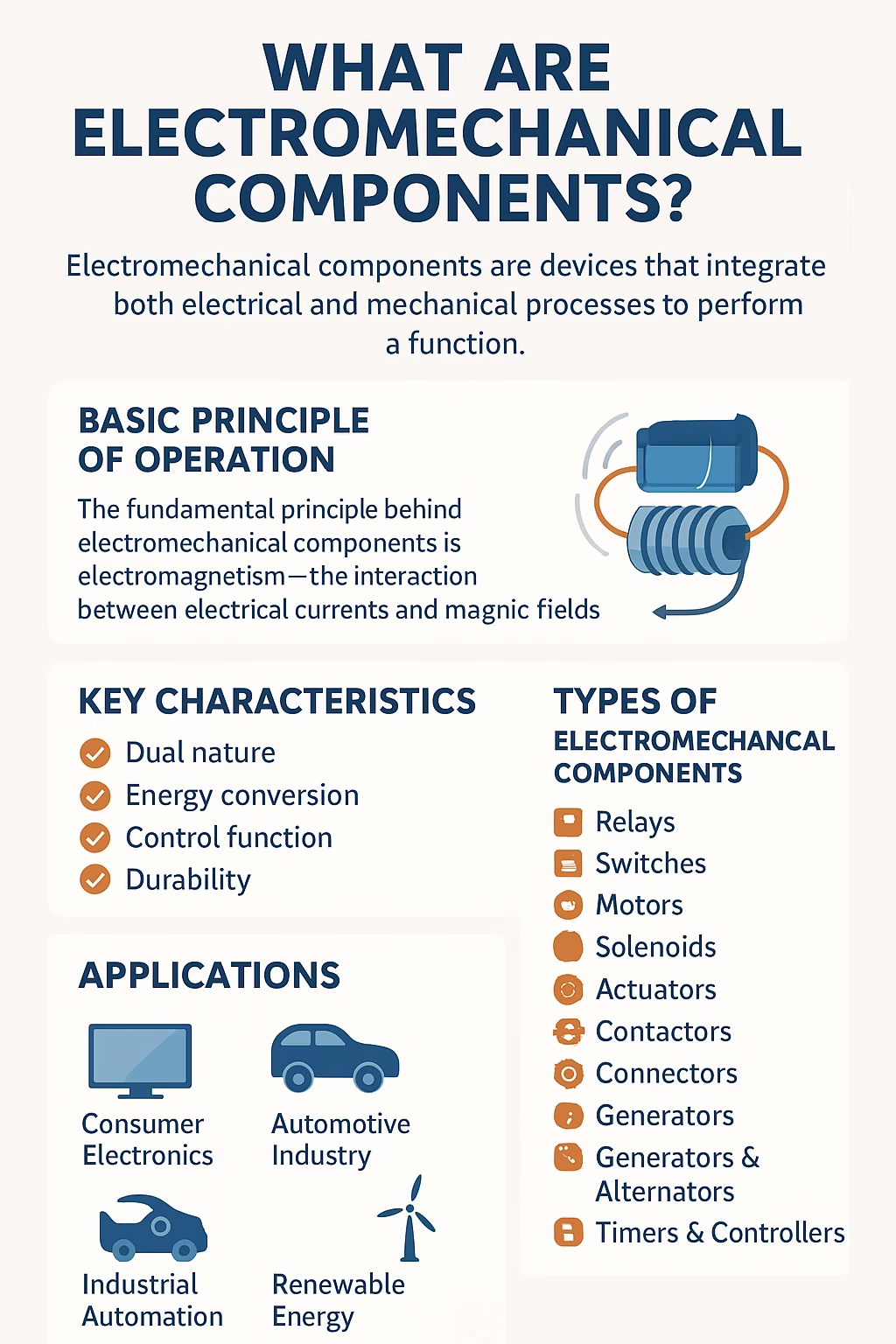
Electromechanical components are devices that integrate both electrical and mechanical processes to perform a function. In simple terms, they use electricity to create mechanical motion or, in some cases, generate electrical signals from mechanical actions.
These components are essential in modern electronics and automation systems because they allow for:
- Conversion of energy: Electrical energy is converted into mechanical energy (e.g., motors, solenoids).
- Control and switching: Managing the flow of current or signals (e.g., relays, switches).
- Signal transmission: Enabling communication between electrical and mechanical systems (e.g., sensors, connectors).
Basic Principle of Operation
The fundamental principle behind electromechanical components is electromagnetism—the interaction between electrical currents and magnetic fields.
- When electric current flows through a coil or conductor, it generates a magnetic field.
- This magnetic field can then be used to produce mechanical motion (rotation, push, pull).
- Conversely, mechanical motion (such as movement in a generator) can induce an electric current, following Faraday’s Law of Electromagnetic Induction.
This principle forms the foundation of most electromechanical devices we use today.
Key Characteristics of Electromechanical Components
Electromechanical components can be recognized by several features:
- Dual nature: They involve both electrical input/output and mechanical action.
- Energy conversion: Their main purpose is often to convert energy between electrical and mechanical forms.
- Control function: Many act as control devices, enabling automation and switching functions.
- Durability: Designed to handle wear and tear due to moving parts, unlike purely electronic components.
Types of Electromechanical Components
Electromechanical components come in many forms depending on their function. Below are the most common types:
1. Relays
- Definition: Electrically operated switches that open or close circuits using electromagnetism.
- Function: Control high-power devices with low-power signals.
- Applications: Automotive systems, industrial control panels, home appliances.
2. Switches
- Definition: Mechanical devices that manually or automatically open and close electrical circuits.
- Types: Toggle switches, push-button switches, rotary switches, limit switches.
- Applications: Lighting systems, machinery control, household electronics.
3. Motors
- Definition: Devices that convert electrical energy into mechanical motion (rotational).
- Types: DC motors, AC motors, stepper motors, servo motors.
- Applications: Electric vehicles, industrial machinery, robotics, fans.
4. Solenoids
- Definition: Electromagnetic actuators that create linear motion when energized.
- Function: Used for pulling or pushing mechanisms.
- Applications: Door locks, printers, automotive ignition systems.
5. Actuators
- Definition: Components that convert energy into mechanical movement.
- Types: Linear actuators, rotary actuators.
- Applications: Robotics, automation systems, aerospace controls.
6. Contactors
- Definition: High-power switches used to control electrical loads.
- Applications: Motor starters, HVAC systems, heavy machinery.
7. Connectors
- Definition: Devices that provide mechanical connection for electrical circuits.
- Applications: Wiring harnesses, industrial equipment, consumer electronics.
8. Generators & Alternators
- Definition: Devices that convert mechanical energy into electrical energy.
- Applications: Power plants, vehicles, backup power systems.
9. Timers & Controllers
- Definition: Electromechanical devices that control processes based on time.
- Applications: Washing machines, industrial automation, process control.
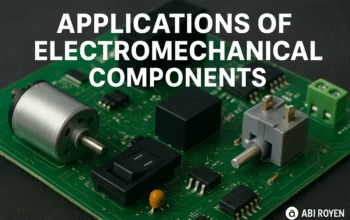
Applications of Electromechanical Components
Electromechanical components are everywhere, from household gadgets to critical industrial systems. Below are some major application areas:
1. Consumer Electronics
- Switches in televisions, radios, and home appliances.
- Motors in fans, washing machines, and refrigerators.
2. Automotive Industry
- Relays for controlling headlights and ignition.
- Solenoids for engine starters and fuel injectors.
- Motors for power windows and windshield wipers.
3. Industrial Automation
- Actuators for robotic arms.
- Motors in conveyor belts and CNC machines.
- Contactors in control panels.
4. Aerospace and Defense
- Electromechanical actuators in aircraft control systems.
- Relays and switches in navigation equipment.
5. Healthcare and Medical Devices
- Motors in surgical robots.
- Solenoids in infusion pumps.
- Electromechanical sensors in diagnostic equipment.
6. Renewable Energy
- Generators in wind turbines.
- Motors and actuators in solar tracking systems.

Advantages of Electromechanical Components
- Reliable energy conversion between electrical and mechanical forms.
- Durability due to robust mechanical designs.
- Cost-effectiveness compared to purely electronic alternatives.
- Versatility across industries and applications.
- Ease of control using simple electrical signals.
Challenges and Limitations
While highly useful, electromechanical components also face some drawbacks:
- Wear and tear: Moving parts lead to mechanical degradation over time.
- Size and weight: Some components are bulkier compared to solid-state alternatives.
- Slower response times compared to purely electronic devices.
- Maintenance requirements due to friction, lubrication, or coil burnout.
Future Trends in Electromechanical Components
The evolution of electromechanical components is being shaped by automation, IoT (Internet of Things), and miniaturization. Some future trends include:
- Smart electromechanical devices with built-in sensors and microcontrollers.
- Miniaturized actuators and motors for medical nanotechnology and robotics.
- Energy-efficient components designed to reduce power consumption.
- Integration with AI and IoT systems for predictive maintenance and advanced automation.
Conclusion of What Are Electromechanical Components?
Electromechanical components are the backbone of modern technology, acting as the crucial interface between electrical energy and mechanical motion. Whether it’s the tiny switch in a smartphone or the massive generator in a power plant, these components drive innovation across industries.
By understanding their types, functions, and applications, engineers and technicians can design more reliable, efficient, and powerful systems. As technology advances, electromechanical components will continue to evolve, becoming smarter, more compact, and more integrated into everyday life.