Introduction of What Are Actuators?
What Are Actuators? ~ In the modern world of engineering, robotics, and automation, actuators play an essential role in converting energy into mechanical motion. If you have ever opened an automatic door, adjusted a car seat, or seen a robot arm in action, you have witnessed actuators at work.
But what exactly is an actuator, and why is it so important in today’s technology-driven industries? This comprehensive article will explore the definition of actuators, their types, working principles, advantages, disadvantages, and practical applications across multiple sectors.
By the end of this guide, you’ll have a clear understanding of how actuators are shaping the future of automation, robotics, and intelligent systems.
What Are Actuators?
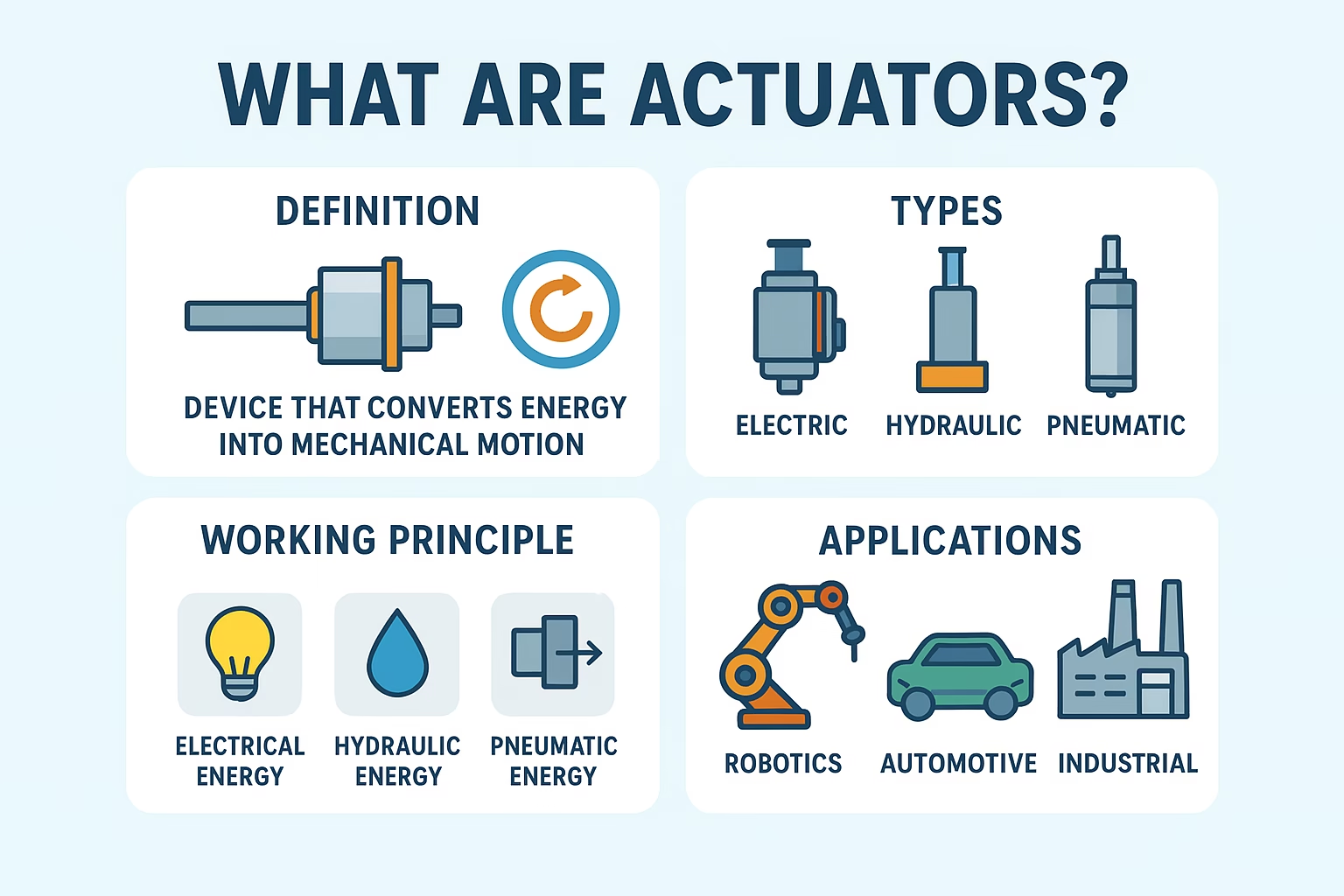
An actuator is a device that converts energy—usually electrical, hydraulic, or pneumatic—into mechanical motion. In simple terms, it is the component responsible for moving or controlling a system or mechanism.
Actuators can perform linear motion (moving back and forth in a straight line) or rotary motion (rotating around an axis), depending on the design and application.
They are considered the muscles of machines, while sensors act as the “nervous system” and controllers act as the “brain.”
How Do Actuators Work?
The working principle of an actuator depends on the type of energy source used:
- Electrical Energy: Converts electrical signals into mechanical movement.
- Hydraulic Energy: Uses pressurized fluid to create motion.
- Pneumatic Energy: Relies on compressed air or gas to produce movement.
In most cases, actuators respond to a control signal provided by a system (for example, a microcontroller in robotics or an ECU in cars). The control signal instructs the actuator to move, rotate, or adjust accordingly.
Types of Actuators
Actuators can be classified based on motion type and energy source. Let’s break them down:
1. Based on Motion
- Linear Actuators: Provide straight-line motion, commonly used in lifting, pushing, or pulling applications.
- Rotary Actuators: Deliver rotational motion, widely used in motors, valves, and robotic joints.
2. Based on Energy Source
a. Electric Actuators
- Use electrical energy to create motion.
- Examples: Stepper motors, servo motors, solenoids.
- Common in robotics, home appliances, and precision systems.
b. Hydraulic Actuators
- Use pressurized fluid (oil or hydraulic liquid).
- Provide high force and power, suitable for heavy-duty applications like construction equipment and aircraft systems.
c. Pneumatic Actuators
- Use compressed air or gas.
- Lightweight and cost-effective, often found in factory automation and industrial processes.
d. Thermal and Magnetic Actuators
- Use temperature changes or magnetic fields for movement.
- Examples include shape-memory alloys and magnetic coils.
Examples of Actuators in Everyday Life
Actuators are everywhere, often unnoticed in daily life. Examples include:
- Automatic car windows (electric linear actuators)
- Car seat adjusters (electric actuators)
- Industrial robots (servo and stepper motors)
- Hydraulic brakes in cars (hydraulic actuators)
- Smart thermostats controlling dampers (pneumatic actuators)
- Automatic washing machines (valve actuators and motors)
Advantages of Actuators
- High precision and control (especially electric actuators)
- Ability to automate repetitive tasks
- Integration with sensors and controllers for smart systems
- Available in various power ranges (from tiny electronics to massive industrial machines)
Disadvantages of Actuators
- Hydraulic actuators require maintenance due to fluid leaks.
- Pneumatic actuators may lack precision in certain tasks.
- Electric actuators may be limited in force compared to hydraulic systems.
- Cost can vary depending on complexity and application.

Applications of Actuators
Actuators are used in nearly every industry. Here are the major sectors where actuators are indispensable:
1. Robotics
- Provide motion in robotic arms, joints, and grippers.
- Essential for automation, manufacturing, and AI-driven machines.
2. Automotive
- Electric seat adjustment, windshield wipers, automatic windows, and engine control systems.
- Advanced driver-assistance systems (ADAS) also rely on actuators.
3. Aerospace
- Hydraulic actuators control landing gear, flaps, and rudders.
- Ensure safety and high precision in flight control systems.
4. Industrial Automation
- Pneumatic actuators operate valves, conveyor belts, and assembly lines.
- Increase efficiency and reduce manual labor.
5. Medical Devices
- Used in surgical robots, prosthetics, infusion pumps, and hospital beds.
- Provide accuracy and assist healthcare professionals.
6. Smart Home Technology
- Automatic door locks, smart blinds, HVAC dampers, and home security systems.
- Enhance convenience and energy efficiency.
The Future of Actuators
As industries move towards Industry 4.0 and smart automation, actuators are evolving with advanced features:
- Miniaturization: Smaller actuators for medical implants and nanotechnology.
- Integration with IoT: Smart actuators controlled via wireless systems.
- Energy Efficiency: Actuators designed to consume less power.
- Artificial Intelligence (AI): Actuators working with AI algorithms for adaptive motion.
Conclusion of What Are Actuators?
Actuators may not always be visible, but they are fundamental to modern engineering and automation. From opening car windows to powering robotic arms in factories, actuators provide the motion needed to transform signals and commands into real-world action.
Understanding what actuators are, their types, and their applications helps us appreciate their role in making machines smarter, safer, and more efficient.
As technology continues to advance, actuators will remain at the heart of innovation—driving the machines of tomorrow.